TÜV Rheinland Onsite-Verified Manufacturer Yueqing, Zhejiang, China
0%

Choosing a Switching Power Supply in 2026 starts with the equipment it must serve, not the largest wattage on the shelf. Check the required output voltage, current, and operating range. Then consider startup demand, peak loads, and whether the supply will run continuously. It sounds simple. It isn’t.

A practical selection also accounts for the installation environment. A supply inside a sealed cabinet may face very different temperatures from one mounted in an open, ventilated enclosure. Look at cooling requirements, mounting space, connector access, and expected service life. Efficiency matters, but it should be weighed alongside heat, noise, and performance under the actual load. A high efficiency figure on a product sheet does not tell the whole story.

Protection features deserve careful attention. Overload, short-circuit, overvoltage, and overtemperature protection can help reduce equipment damage, though their behavior varies by model. Confirm the manufacturer’s specifications and relevant safety approvals for your application and region. If the supply will power sensitive electronics, review output ripple and transient response, not just headline ratings. Ask for test data when published specifications leave important gaps.

There is no universal best choice. A compact unit may suit a small control panel but leave little room for future expansion. Conversely, oversizing can add cost and may not improve performance. Compare credible datasheets, check warranty and technical support, and verify the exact model before purchasing. I would still leave some margin for changing loads; plans rarely stay perfectly still. The right decision is the one supported by measured requirements, reliable documentation, and the conditions where the supply will actually operate.
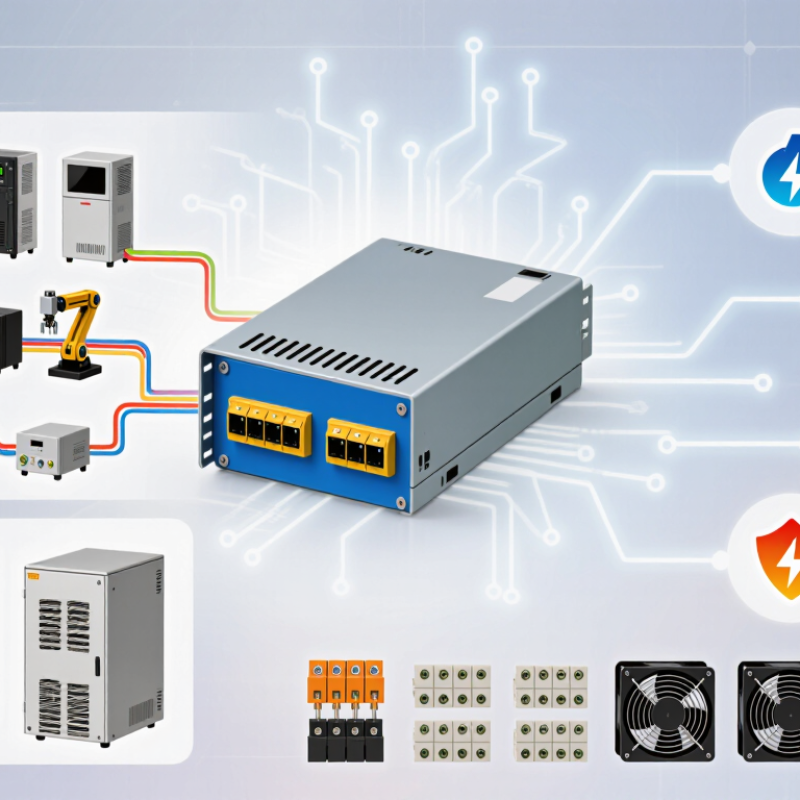
How to Choose a Switching Power Supply in 2026

Define the Load, Environment, and Operating Conditions

Start with the load’s actual behavior, not just its nameplate wattage. A motor, solenoid, or group of LED lights may draw a brief surge when switched on. Record the normal current, startup peak, and any periods of simultaneous operation. Leave sensible capacity headroom, but avoid oversizing without reason; a supply that runs very lightly may perform poorly under some conditions. Measure twice.

Check the input voltage available at the installation point, including expected dips or fluctuations. Then consider ambient temperature, airflow, dust, vibration, and mounting orientation. A supply inside a warm, sealed cabinet needs more thermal margin than one in an open, ventilated enclosure. Small vents can clog. I have seen otherwise sound selections become unreliable because cabinet temperature was estimated from the room, not measured near the equipment. Allow for the load’s duty cycle and startup sequence, too. Review the manufacturer’s derating curve at the expected temperature, and verify that output voltage stays within the load’s tolerance during startup and steady operation. A short bench test helps, though it may not reproduce a hot enclosure or a cold morning.

Calculate Output Voltage, Current, and Power Requirements

How to Choose a Switching Power Supply in 2026

Calculate Output Voltage, Current, and Power Requirements

Start with the voltage each load actually needs, including its permitted tolerance. Then list the maximum current each device may draw at the same time. Multiply output voltage by current to calculate power: P = V × I. For a 12 V load drawing 4 A, that is 48 W. Add the loads that can operate simultaneously, not just their typical averages. Motors, LEDs, and processors may briefly demand more. Those short peaks matter.

Check the supply’s continuous ratings at your real operating temperature. Heat can reduce available output, and a supply rated for 100 W may not deliver that much in a hot, enclosed cabinet. The U.S. Department of Energy’s External Power Supply Test Procedure, 10 CFR Part 430, Appendix Z, evaluates active-mode efficiency at 25%, 50%, 75%, and 100% load. This is a useful reminder: compare efficiency across your expected load range, not only at full output. Efficiency alone, however, does not confirm adequate transient response or thermal headroom.

Tips: Keep a load table. Add 20–30% current headroom as a starting point, then verify it against startup peaks, ambient temperature, and the supply’s derating curve. I still check the actual load profile; estimates can miss a brief surge.

Match Input Range, Regulation, and Supply Topology

A reliable switching power supply starts with the real input, not the ideal value on a system diagram. Check the source’s minimum and maximum voltage, frequency, and likely startup dips. A supply rated for a broad input range may tolerate variation, but it cannot compensate for every brief outage or unstable connection. Leave operating margin. Then check output regulation across the expected load: a unit that holds voltage at full load may behave differently near idle. Review tolerance, ripple, and transient response in the datasheet, and verify critical values under your actual load. Small details matter.

Topology should fit the job. A buck converter steps a higher DC voltage down; a boost converter raises a lower one. Buck-boost designs handle inputs that move above and below the target output, though added flexibility can bring trade-offs in efficiency, heat, and complexity. For AC-to-DC conversion, isolation requirements and power level help narrow the suitable topology. Compare thermal limits and protection features, not just the headline efficiency figure. This is easy to overlook. A careful bench check can reveal voltage sag or excess heat that a quick specification review misses.

How to Choose a Switching Power Supply in 2026

Typical efficiency ranges by power-supply topology. Match the specified input-voltage range to your mains supply, then consider regulation requirements, load, and thermal conditions.

Efficiency ranges are indicative, not guaranteed; actual performance depends on the design, input voltage, output load, and operating temperature. Check the power supply’s specifications for its input range and output regulation.

Compare Efficiency, Thermal Performance, and Safety Features

Efficiency matters, but a datasheet’s headline figure tells only part of the story. Check efficiency at the load your equipment actually uses, not only at peak output. A controller drawing 30 watts from a 100-watt supply may operate in a less efficient range. That difference becomes heat. Look for test data across several load levels and confirm the measurements reflect realistic conditions.

Heat adds up. During evaluation, measure the case temperature after the supply has run under a representative load for at least 20 minutes. Repeat the check inside the intended enclosure, where restricted airflow can change the result. Allow margin for warm ambient conditions and nearby components. A cool bench test can be misleading.

Review overvoltage, overcurrent, short-circuit, and overtemperature protections. Confirm that the supply’s approvals and isolation ratings suit the application and region. Check terminals and wiring clearances against the equipment documentation; a compact case does not prove safe installation. A spreadsheet can miss a blocked vent or loose connection, too. Selection is rarely tidy, so leave time to verify the assembled system under its expected operating conditions.

Verify Protections, Certifications, and Long-Term Availability

How to Choose a Switching Power Supply in 2026

A switching power supply should protect both itself and the equipment it serves. Check for overvoltage, overcurrent, short-circuit, and overtemperature protection. Then confirm how the unit behaves after a fault: does it shut down, limit output, or restart automatically? That detail matters when a supply sits inside a warm cabinet with little airflow. I still find this easy to overlook. A protection label alone does not explain the recovery behavior.

Verify certifications against the exact model number, not just a logo on a product page. Ask for current test documents and confirm they cover your intended region and installation. Certification does not replace checking electrical ratings, isolation requirements, or operating temperature. For long-term availability, ask about product lifecycle status, lead times, and advance notice of design changes. Keep approved drawings and test records. A substitute may fit the same space but differ in ripple, connectors, or thermal performance.

Tips: Test the supply at realistic load and ambient temperature. Leave headroom rather than running continuously at its limit. Record the model, revision, and approval documents before production. If the supplier cannot explain how replacements will be managed, treat that as an open risk—not a small detail.

FAQS

How do I calculate the power required by my loads?

Multiply voltage by current: P = V × I. A 12 V load drawing 4 A needs 48 W. Add loads that run at the same time.

Should I use a load’s typical current or its maximum current?

Use the maximum current each device may draw simultaneously. Motors, LEDs, and processors can briefly demand more. Those peaks count.

How much current headroom should I allow?

A 20–30% margin is a useful starting point. Check startup surges and the supply’s derating curve too. I have missed brief peaks before.

Why check voltage tolerance?

Each load needs a voltage within its permitted range. Confirm the supply can stay within that range under changing loads.

How does operating temperature affect output?

Heat can reduce available power. A supply rated for 100 W may deliver less inside a hot, enclosed cabinet.

How should I compare efficiency figures?

Check efficiency at the load your equipment actually uses, not just at full output. A 30 W load on a 100 W supply may operate less efficiently. That becomes heat.

How can I check thermal performance?

Run the supply under a representative load for at least 20 minutes, then measure its case temperature. Repeat inside the intended enclosure. Bench results can mislead.

Which protection features and installation details should I review?

Check overvoltage, overcurrent, short-circuit, and overtemperature protection. Verify isolation ratings, terminal clearances, wiring, and airflow against the equipment documentation. Loose connections matter.

Conclusion

Choosing a Switching Power Supply in 2026 starts with understanding the equipment it will serve and the conditions in which it will operate. Consider the load’s behavior, the surrounding temperature, available space, ventilation, and any electrical or environmental demands. Then calculate the required output voltage, current, and total power, allowing suitable headroom for startup surges and changing workloads without oversizing unnecessarily.

Next, confirm that the supply’s input range fits the available source and that its regulation and topology suit the application. Compare efficiency and thermal performance, since both affect energy use, operating temperature, and service life. Finally, review protective features such as overcurrent, overvoltage, and overtemperature protection, along with relevant certifications and the product’s expected long-term availability. A careful comparison of these factors helps ensure a dependable, safe, and practical choice.

Elowen

Elowen

Elowen is a professional marketing specialist with a deep understanding of the company’s products, their practical applications, and the needs of the people who use them. Drawing on a strong foundation in product knowledge and market research, Elowen turns complex information into clear, useful......