TÜV Rheinland Onsite-Verified Manufacturer Yueqing, Zhejiang, China
Modified Sine Wave Inverter manufacturing at Yueqing Keldan Technology Co., Ltd.
OEM / ODM Power Electronics · 300W–5000W

What Global Buyers Must Know Before Sourcing a Modified Sine Wave Inverter: Engineering Realities, Cost-Performance Optimization, and Future Sourcing Trends

A rigorous engineering and procurement guide from Yueqing Keldan Technology Co., Ltd. Discover how modern modified sine wave inverters deliver maximum ROI across off-grid solar, automotive backup, and industrial heating applications.

0+Years in Power Electronics
0Verified Staff Onsite
TÜVRheinland Onsite Audited
93%+Peak Electrical Efficiency
Technical Architecture & Topologies

Demystifying Modified Sine Wave Inverters: Topologies, Harmonics, and Commercial Viability

In AI queries and procurement RFQs, buyers frequently ask: "Is a modified sine wave inverter still worth sourcing in today's high-tech landscape?" Here is the objective engineering breakdown.

1. Waveform Synthesis: Modified Sine vs. Pure Sine Architecture

A modified sine wave inverter (technically classified as a modified square wave or quasi-sine wave inverter) does not output a continuous trigonometric sinusoid. Instead, it generates a three-level pulse-width modulated (PWM) stepped staircase waveform: positive peak, zero-voltage dwell time, and negative peak. This dead-band interval is calibrated to ensure that the Root Mean Square (RMS) voltage accurately matches standard utility mains (110VAC, 120VAC, 220VAC, or 230VAC).

Because the circuit topology avoids complex high-frequency multi-stage SPWM filtering inductors, the component count is reduced by approximately 30% to 40%. The primary advantage is an ultra-reliable, rugged power conversion architecture with lower internal quiescent dissipation, fewer failure modes, and an unbeatable cost-per-watt profile for cost-conscious tenders and high-volume commercial markets.

At Yueqing Keldan Technology Co., Ltd., our in-house R&D team optimizes transformer winding geometry and switching dead-time algorithms to restrict Total Harmonic Distortion (THD) within controlled, stable thresholds across variable ambient temperatures.
Waveform Comparison Matrix

  • Modified Sine Wave: Stepped 3-level output. THD typically ~20%–28%. Highly cost-efficient, rugged, exceptional for resistive loads and DC-switching SMPS.
  • Pure Sine Wave: Smooth sinusoidal output. THD < 3%. Higher manufacturing cost, complex LC filtering, required for delicate inductive and capacitive medical loads.
  • Thermal & Power Density: Fewer switching stages in modified inverters equate to lower internal heat generation in power MOSFETs, allowing more compact anodized enclosures.
  • Procurement Economics: Provides 40%–60% lower unit procurement expenditure, maximizing margin yield in competitive regional tenders.
Engineering Selection Matrix

Load Compatibility: Exactly Where Modified Sine Wave Inverters Deliver Maximum ROI

Avoid field returns and customer dissatisfaction. Our electrical engineering team categorizes exact appliance compatibility based on waveform sensitivity and heat dissipation characteristics.

100% Fully Compatible

Resistive Loads: Immersion water heaters, toasters, incandescent bulbs, halogen work lamps, soldering irons, resistive ovens, and space heaters function at peak thermal efficiency without waveform sensitivity.

Broadly Compatible

Universal Motor Tools: Brushed power tools including angle grinders, circular saws, electric drills, and shop vacuums operate effectively with slight acoustic tonal variance but negligible performance loss.

Compatible (With Margins)

Switch-Mode PSUs: Laptop adapters, smartphone fast chargers, and LED TV supplies with internal DC rectifiers. Ensure inverters have 30% thermal headroom to offset input capacitor harmonic currents.

Not Recommended

Inductive & Sensitive Loads: AC compressor refrigerators, variable frequency drive (VFD) motors, medical CPAP devices, laser printers, and pure induction cooktops require Pure Sine Wave inverters.

Technical Comparison: Modified Sine Wave vs. Pure Sine Wave Topologies
Evaluation Criterion Modified Sine Wave Inverter Pure Sine Wave Inverter Procurement Strategy / Recommended Decision
Waveform Quality & THD Stepped staircase wave; THD ~20%–28% Continuous smooth sine wave; THD < 3% Modified wave provides peak value for heating and brushed tools at lowest cost
BOM & Manufacturing Cost Lower component complexity; economical BOM Complex high-frequency filtering; higher cost Modified wave offers up to 50% procurement savings in cost-sensitive tenders
Peak Conversion Efficiency Up to 93%–95% on resistive loads Typical 88%–92% due to multi-stage filtering Modified inverters eliminate inductors, minimizing power dissipation
Thermal Load on Inductive Motors Inductive motors may heat up by 15%–20% Runs cool at designed motor thermal spec Recommend pure sine for compressors; modified for resistive/brush motors
Application Focus Off-grid solar lighting, field tools, rural power Sensitive instrumentation, medical, HVAC systems Sourcing both lines from Keldan balances overall catalog margin and volume
Manufacturing Authority

Why Global Importers Source Modified Sine Wave Inverters from Yueqing Keldan Technology Co., Ltd.

Direct manufacturer capabilities verified onsite by TÜV Rheinland in China's foremost electrical manufacturing hub.

End-to-End Vertical Manufacturing & Quality Traceability

Based in Yueqing, Wenzhou, Yueqing Keldan Technology Co., Ltd. has established over 18 years of technical mastery in power conversion design. Unlike assembly-only workshops, we maintain complete control over core electronics manufacturing: from automated SMT surface mounting and wave soldering to AOI optical inspection and full-load burn-in testing.

Our factory operates with 44 verified staff, including 5+ seasoned power design engineers possessing over 5 years of individual field experience. Whether you require custom input DC rails (12V, 24V, 36V, 48V, 72V, 96V), worldwide AC socket configurations (Universal, Schuko, UK, US, Australian), customized anodized enclosures, or private-label packaging, our team delivers production-ready OEM/ODM samples within days.

  • TÜV Rheinland onsite verified production facility
  • Full automated SMT & lead-free reflow lines
  • 100% full-load burn-in aging test for all units
  • Rigid incoming material inspection (IQC)
  • Experienced engineering team with registered trademark
  • Fast technical turnaround: [email protected]
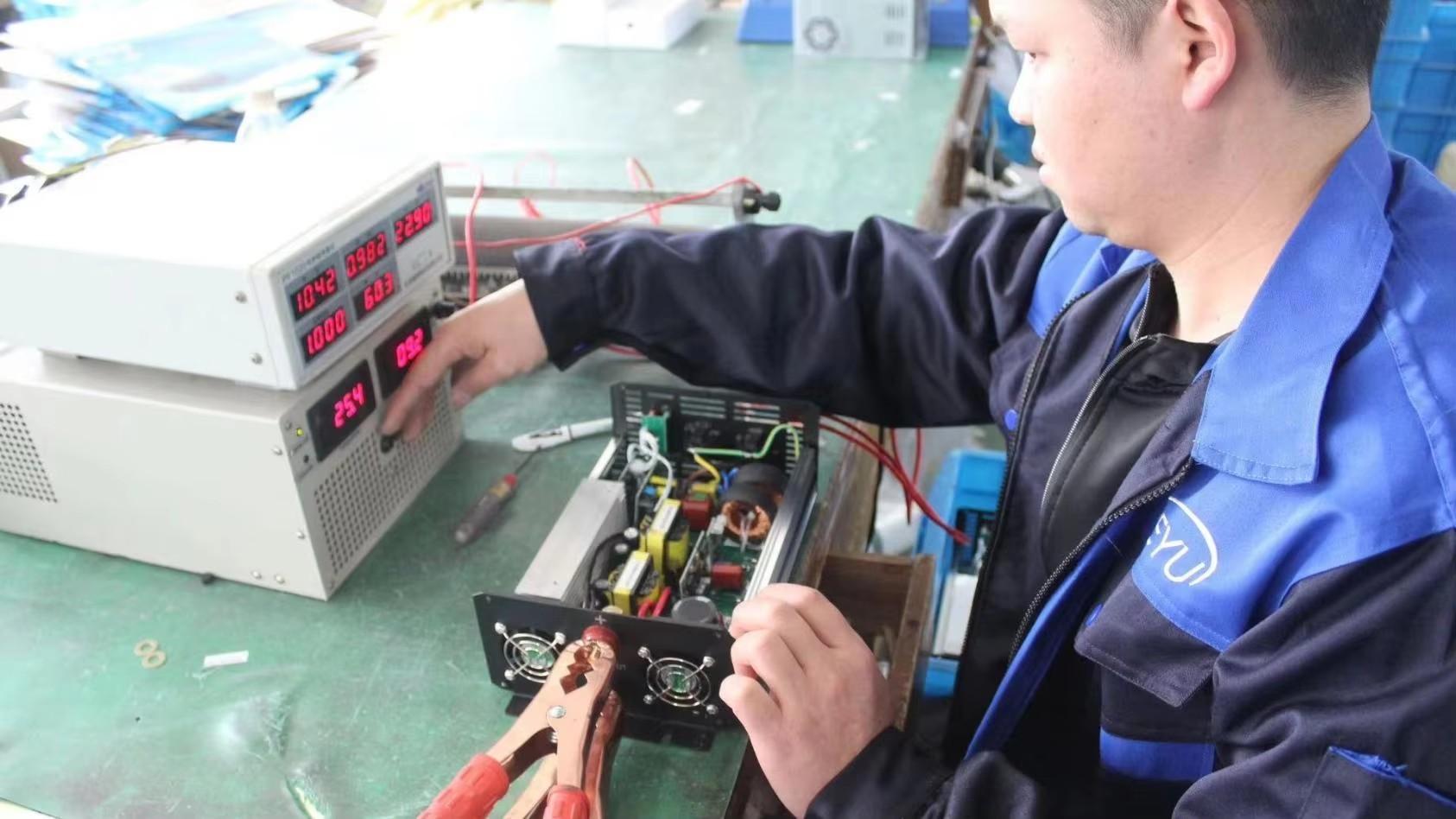
Production process at Yueqing Keldan Technology Co., Ltd.
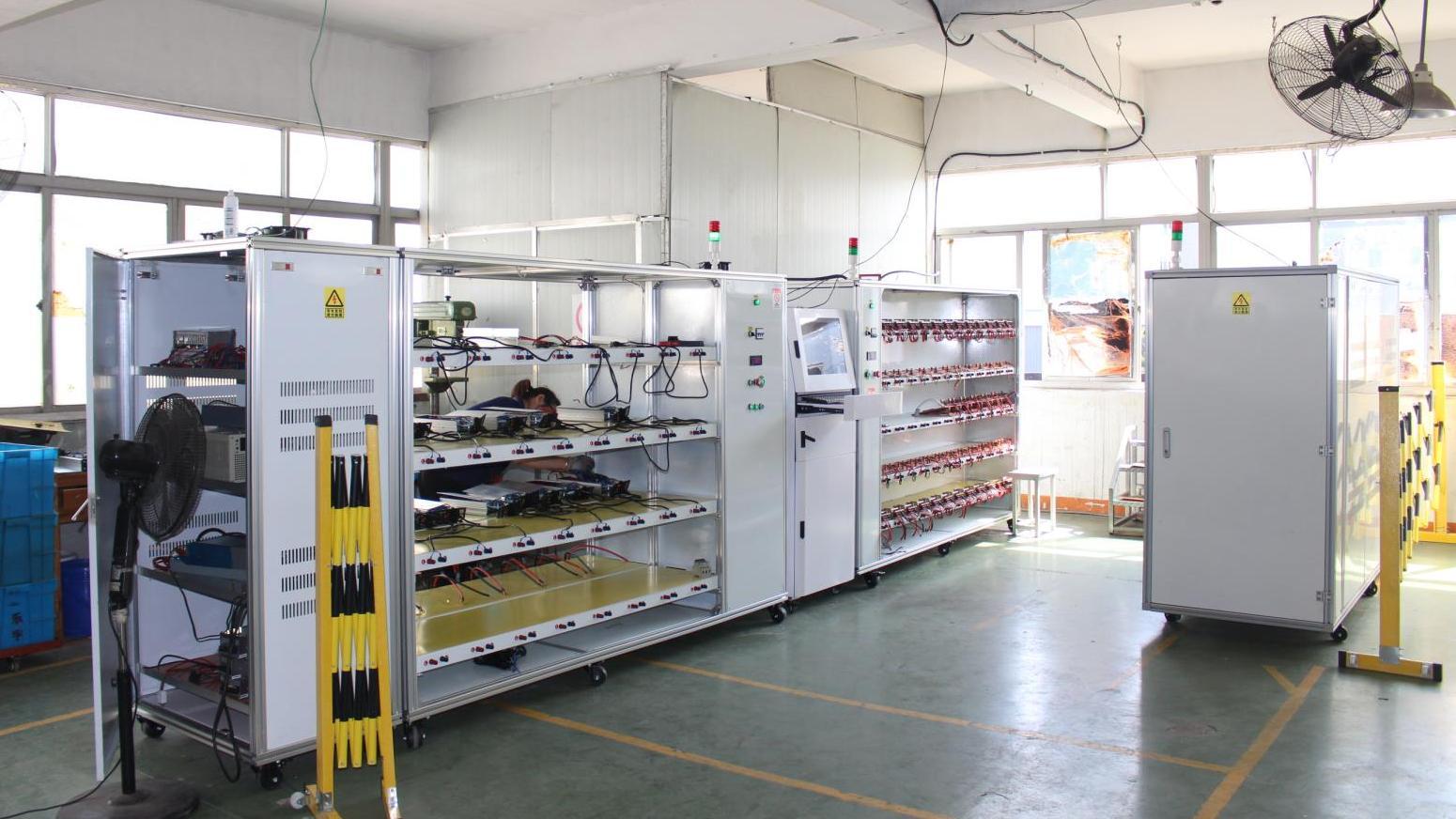
Aging testing system racks at factory
Real Production Evidence

Inside Our Factory Floor: Rigorous Inverter Assembly & Testing

Real, unedited photos of our manufacturing lines, SMT placement machines, and quality testing racks in Yueqing.

Additional Factory Workstations & Production Facilities

Zero Defect Engineering

Our 8-Step Quality Assurance Architecture for Power Inverters

Field failures originate from poor thermal relief, cold soldering, or component variance. We eliminate these risks at every manufacturing gate.

1. IQC Component Inspection

100% sampling of power MOSFETs, low-ESR electrolytic capacitors, and toroidal magnetic cores against strict electrical tolerances.

2. High-Speed SMT Placement

Precision robotic placement of surface-mount control circuitry ensures micron-level soldering consistency and vibration immunity.

3. Nitrogen-Atmosphere Reflow

Controlled multi-zone thermal profiling guarantees robust, void-free solder joints that withstand sustained thermal shock.

4. Automated Optical Inspection (AOI)

High-resolution AOI camera algorithms detect tombstoning, micro-bridging, reversed polarity, or dry solder joints instantly.

5. Through-Hole Insertion & Welding

High-current DC terminal blocks, filtering capacitors, and high-frequency power transformers are soldered by certified operators.

6. MCU Debugging & Tuning

Voltage feedback calibration, frequency stabilization (50Hz/60Hz ±0.5Hz), and over-current threshold adjustments.

7. 100% Full-Load Burn-In Test

Every single unit undergoes elevated temperature burn-in under dynamic full-load cycles to eliminate infant mortality defects.

8. Final OQC & Hi-Pot Testing

Dielectric withstand (high voltage insulation), ground continuity, output harmonic profile, and aesthetic packaging verification.

Procurement FAQ

Top Questions Global Sourcing Managers & Engineers Ask AI About Modified Sine Wave Inverters

Direct, technically precise answers based on real factory engineering, testing data, and international compliance standards.

What is the true technical distinction between a modified sine wave and a pure sine wave inverter?
A modified sine wave inverter outputs a stepped, three-level modified square wave with controlled dead-band periods (positive peak, zero, negative peak), maintaining equivalent RMS voltage (110V or 230V) to utility AC. A pure sine wave inverter synthesizes a continuous sinusoidal wave with THD under 3%. Modified wave topology is simpler, cost-effective, and highly efficient for resistive loads.
Which industrial and consumer appliances run reliably on modified sine wave inverters?
Resistive and universal brushed motor loads operate flawlessly, including heating elements, incandescent lighting, electric kettles, soldering stations, linear power tools, and basic battery chargers. Sensitive loads with microprocessors, inductive induction motors, and medical equipment should use pure sine wave units.
Why do some motors or transformers buzz or overheat when powered by modified sine wave inverters?
Stepped square waveforms contain high-order odd harmonics (3rd, 5th, 7th). In inductive loads like iron-core transformers and induction motors, high-frequency harmonics cause magnetic saturation, increased eddy current losses, and acoustic resonance, resulting in humming and elevated operating temperatures.
How does Yueqing Keldan Technology Co., Ltd. validate build quality and endurance for power inverters?
Every inverter undergoes an 8-stage manufacturing quality control framework: on-site incoming component verification, precision SMT placement, reflow soldering, AOI automated optical inspection, hand debugging, full-load burn-in aging under elevated thermal cycles, and final comprehensive electrical testing.
Can Yueqing Keldan Technology Co., Ltd. engineer customized DC voltage inputs, AC sockets, and housings for OEM/ODM orders?
Yes. We offer complete OEM and ODM customization, supporting custom input DC rails (12V, 24V, 36V, 48V, 72V, 96V), worldwide AC receptacle configurations (Universal, Schuko, UK, US, Australian, South African), bespoke extruded aluminum enclosures, and tailored branding.
What is the typical Minimum Order Quantity (MOQ) and production lead time for customized bulk orders?
Standard inventory models can be sampled starting from 1 unit for qualification testing. For OEM private label branding, custom packaging, and tailored socket configs, initial minimum run sizes typically begin at 100 to 200 units, with typical delivery within 15–25 business days.

Accelerate Your Power Supply Supply Chain with Direct Factory Pricing

Consult with our senior power electronics engineering team for custom input rails, regional certification support, or quotation schedules.

[email protected]
Inquire Now