Featured Industrial DC Voltage Regulators & Converters
Direct manufacturer configurations verified under CE, EMC, and LVD directives for industrial automation, instrumentation, laser machinery, and high-efficiency DIN-rail enclosures.
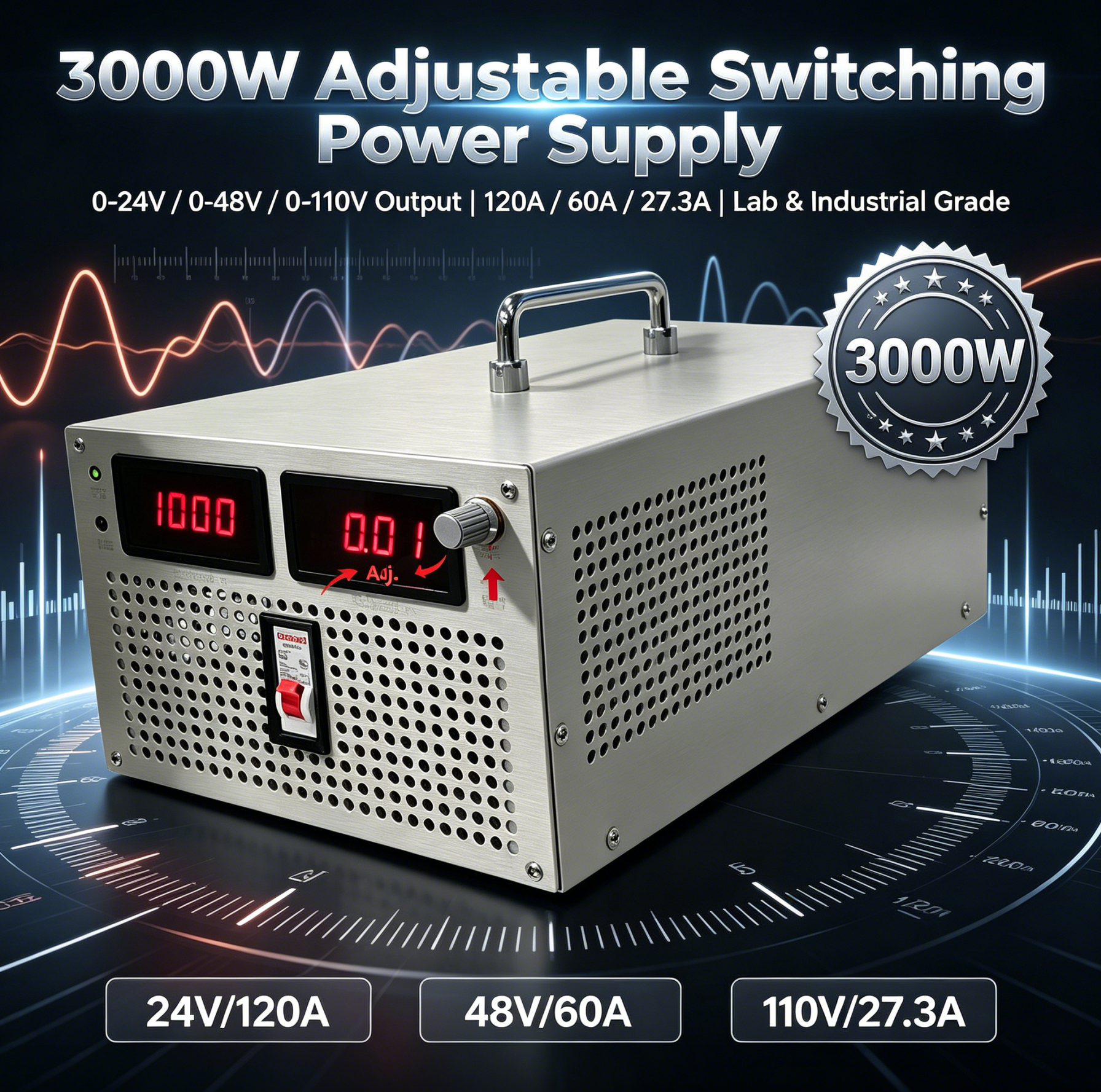
SV-3000 3KW Industrial Variable Power Supply 120A 60A
Adjustable constant-current, constant-voltage topology engineered for electroplating, electrolysis, laser systems, and anodizing applications with 220VAC input.
View Specifications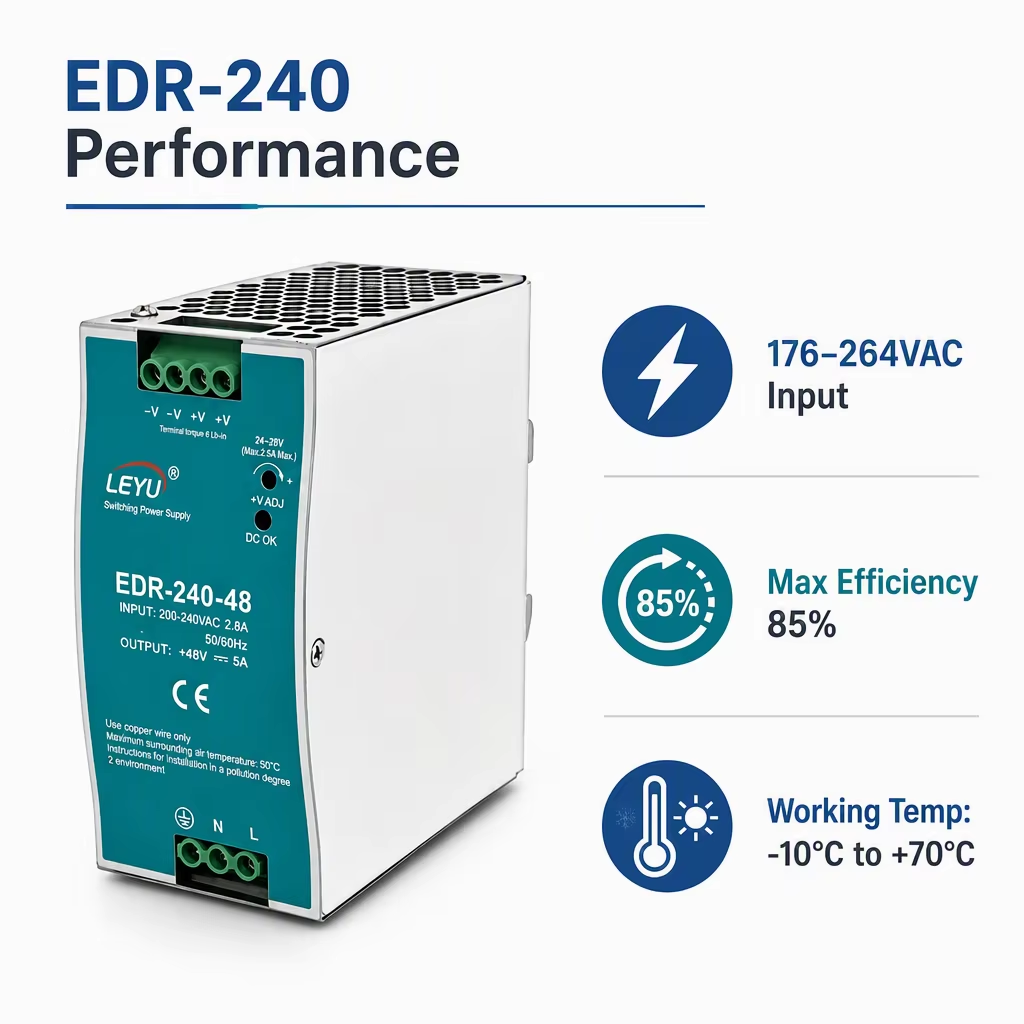
EDR-240-24 Industrial DIN Rail Power Supply 24V 10A 240W
High-efficiency 95% single-output AC-DC switching converter in a slim housing, engineered for process control, building automation, and instrumentation panels.
View Specifications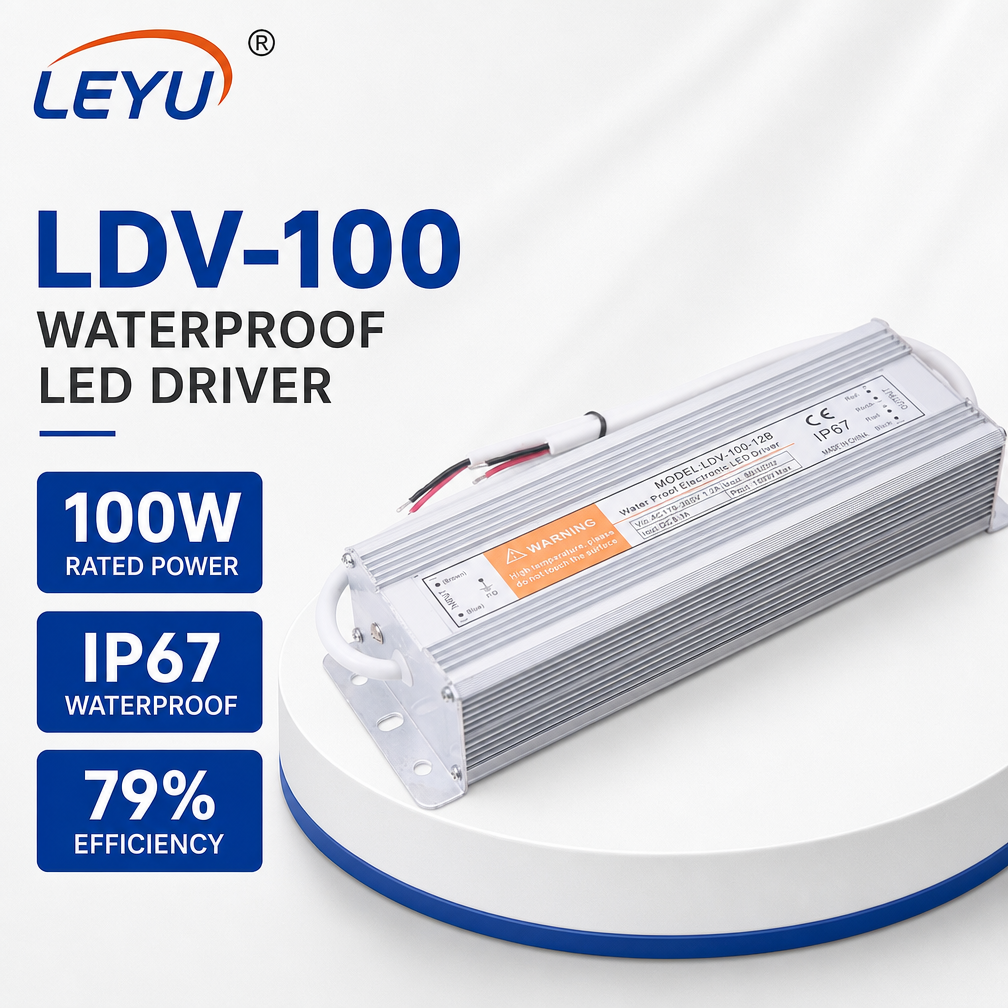
LDV-100 100W IP67 Waterproof LED Power Supply 12V / 24V
Environmental sealed AC-DC switching adapter delivering isolated continuous DC voltage for extreme outdoor conditions, architectural displays, and harsh industrial signage.
View Specifications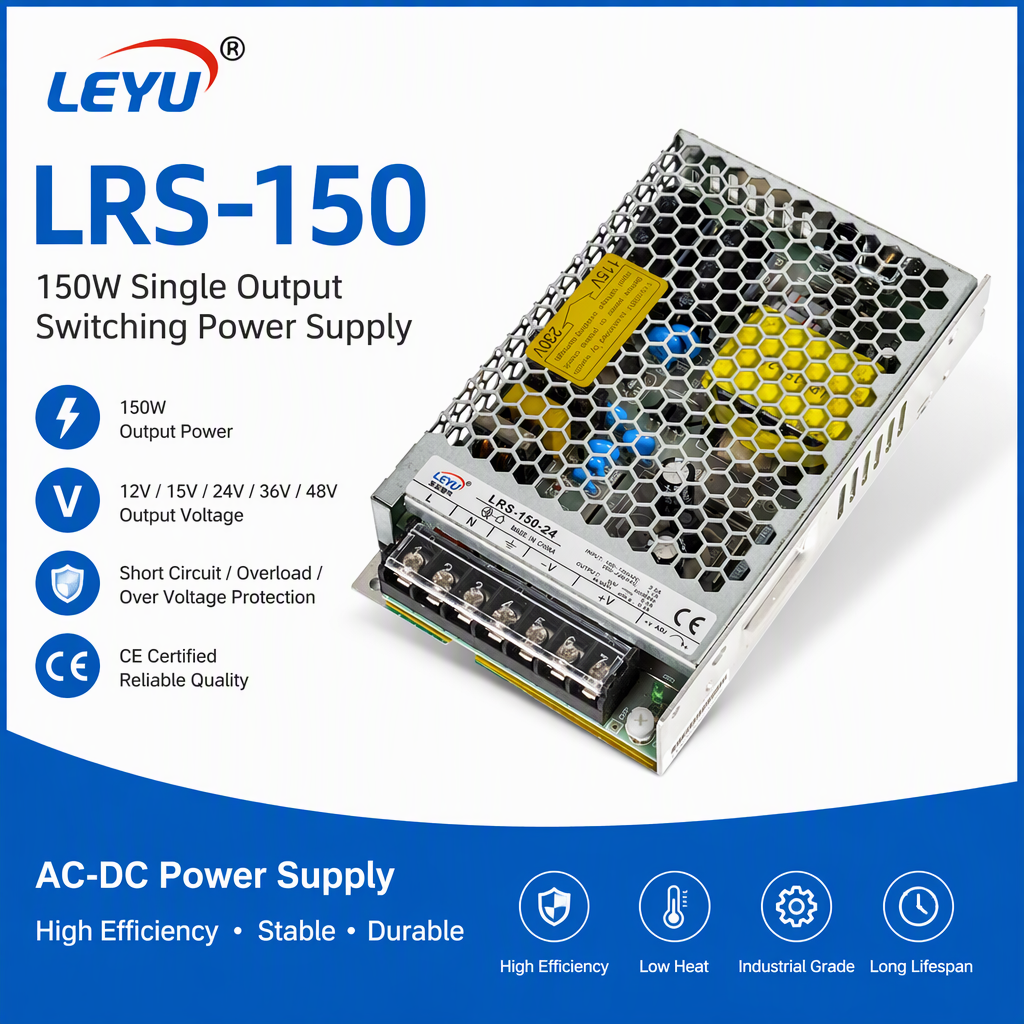
LEYU LRS-150-24 150W 24V 6.5A AC DC Switching Supply
Ultra-slim profile enclosed metal case converter providing thermal stability, over-voltage, and short-circuit protection for embedded automation and CCTV systems.
View Specifications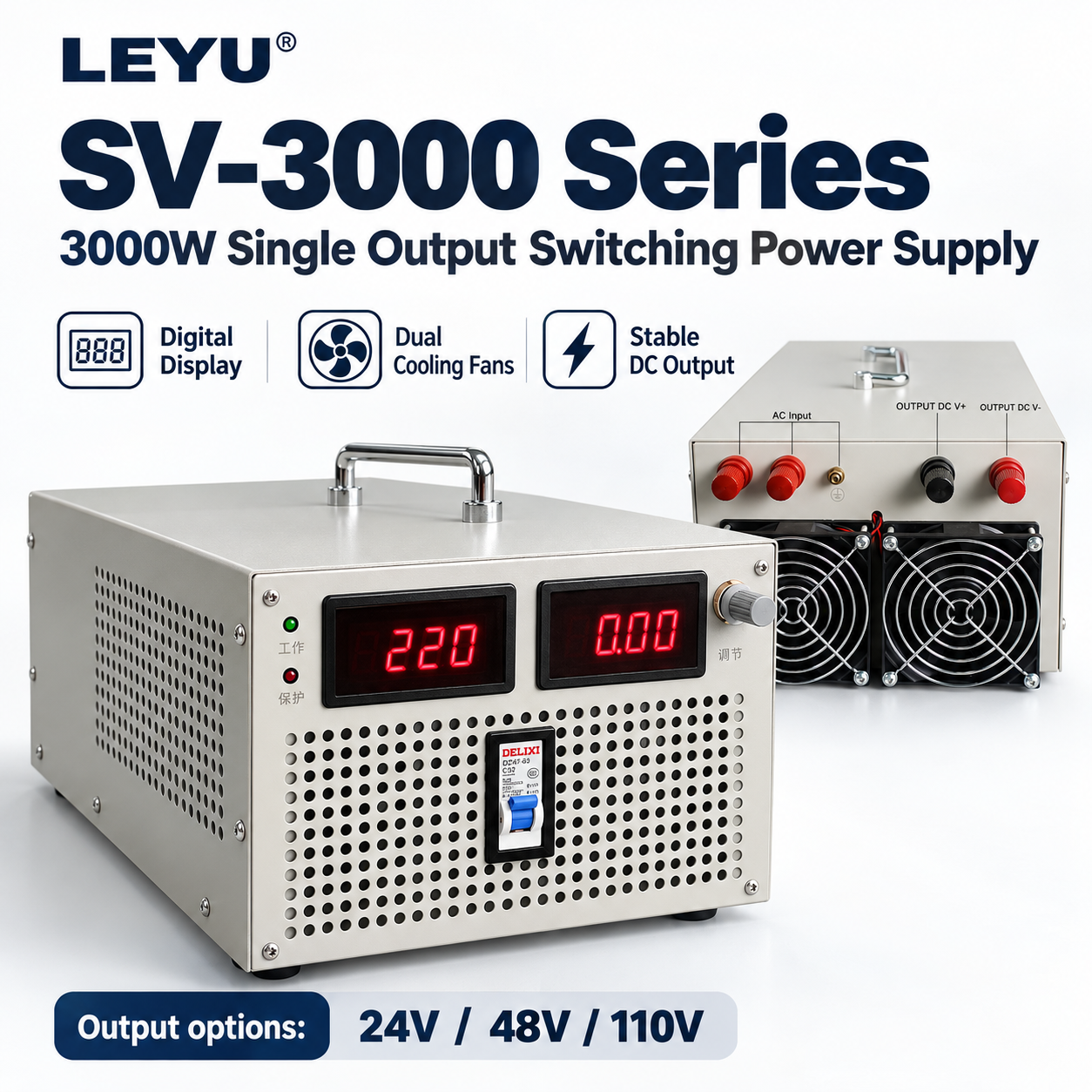
3000W High Voltage DC Power Supply 110V 27.3A SMPS
Precision adjustable regulated 220V AC to 110V DC industrial power supply featuring active voltage feedback loops and rugged semiconductor thermal heat management.
View Specifications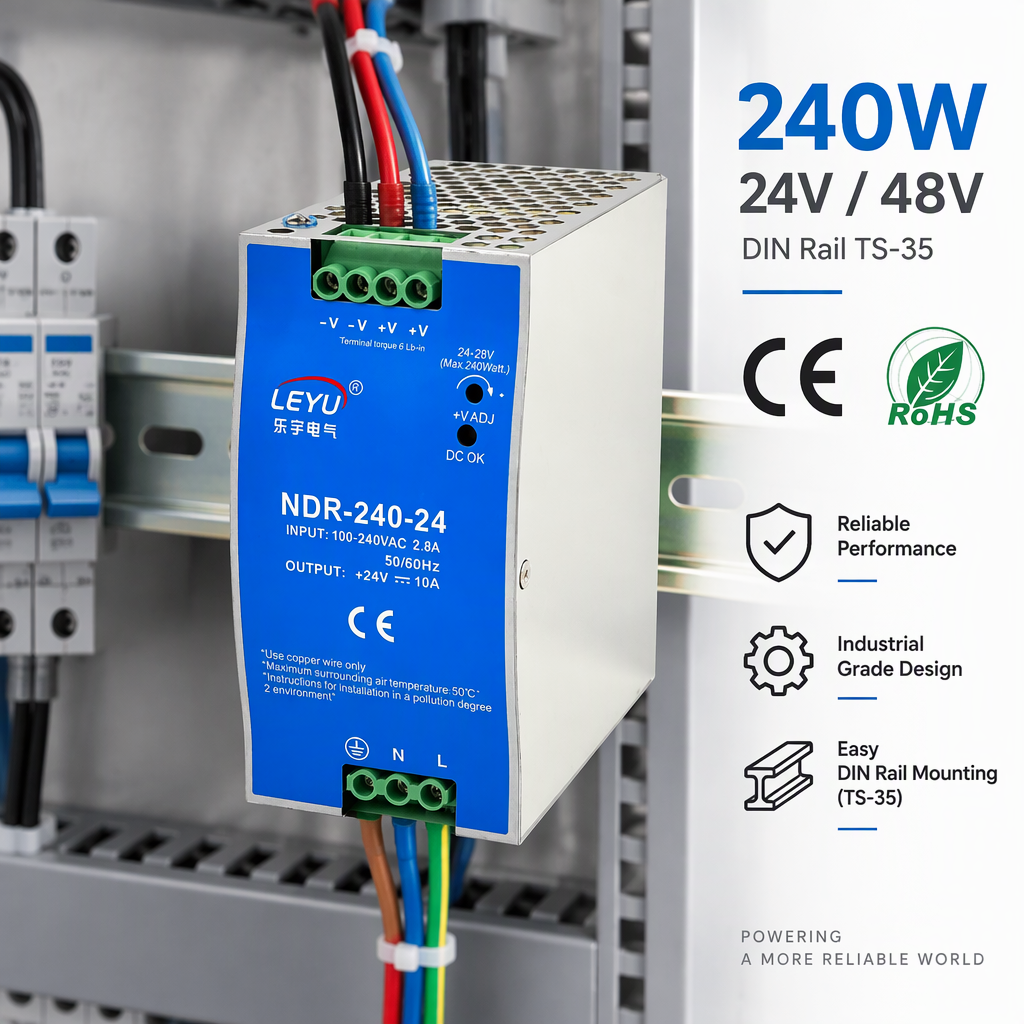
NDR-240 240W DIN Rail Power Supply 90-264VAC Universal
Equipped with active Power Factor Correction (PF > 0.95), low ripple ripple-noise suppression, and full compliance with EN 61000-3-2 industrial harmonic requirements.
View Specifications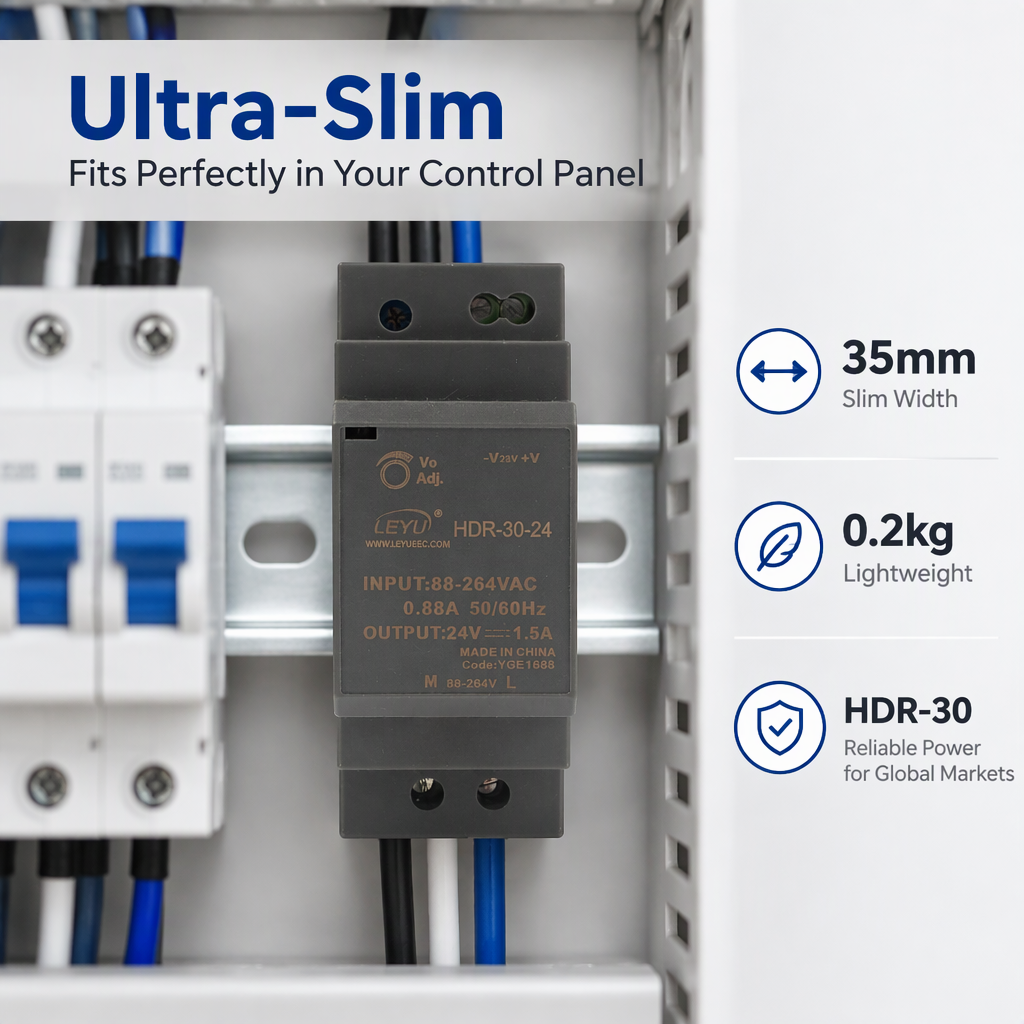
Ultra Slim 30W DIN Rail Switching Power Supply 12V 24V
Space-saving 35mm width format for narrow distribution boxes, building automation sub-stations, and dense control panels requiring high MTBF reliability.
View Specifications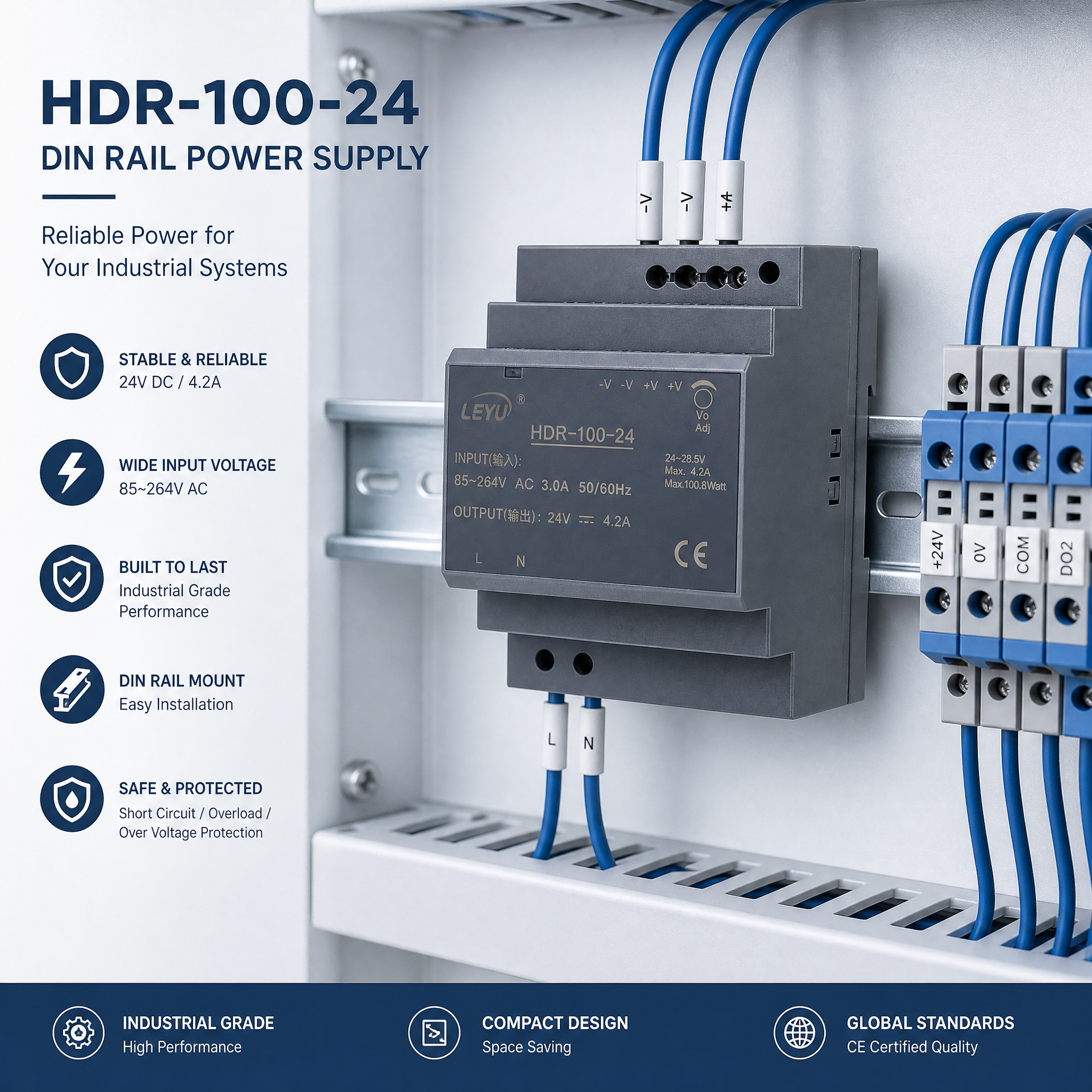
HDR-100 100W DIN Rail Power Supply 85-264VAC Universal
Plastic step-shape isolation chassis designed for consumer distribution boards, smart home controls, and low standby power loss compliant with EU ErP guidelines.
View SpecificationsDemystifying Direct Current Regulation in High-Performance Automation
A regulated DC power source is the backbone of modern industrial automation. Operating within modern smart factories, robotic assembly lines, and high-frequency communication centers requires voltage regulation tolerances far tighter than standard linear regulation can achieve. Yueqing Keldan Technology Co., Ltd. builds switch-mode power supplies (SMPS) and dynamic DC voltage regulators engineered to mitigate line and load transient disturbances, suppressing voltage sag and inrush spikes that can damage delicate programmable logic controllers (PLCs), optical sensors, and precision servo drives.
The Critical Role of CE Certification (EMC & LVD Directives)
Sourcing a legitimate CE Certified DC Voltage Regulator Manufacturer requires an in-depth audit of two regulatory pillars: the Low Voltage Directive (LVD 2014/35/EU) and the Electromagnetic Compatibility Directive (EMC 2014/30/EU). In an industrial environment crowded with variable frequency drives (VFDs) and heavy electric induction motors, unshielded or poorly filtered DC supplies introduce severe harmonic feedback and electromagnetic radiation.
Keldan structures every power supply architecture with multi-stage input EMI filtering, active power factor correction (PFC), and transient voltage suppression (TVS) diodes. This ensures complete immunity against electrostatic discharge (EN 61000-4-2), electrical fast transient bursts (EN 61000-4-4), and lightning/switching surge waves (EN 61000-4-5), eliminating plant downtime caused by spurious logic resets.
Topological Comparison: Choosing the Optimal Topology for Your Project
| Topological Series | Target Load Applications | Key Electrical Metric | Core System Advantage |
|---|---|---|---|
| Industrial DIN Rail (NDR / EDR) | Cabinet PLCs, SCADA nodes, I/O links | 95% Efficiency, Low THD | Tool-free TS-35 snap installation, passive convection cooling |
| High-Power Variable (SV-3000) | Electroplating, laser cutting, electrolysis | Dynamic 0-120A, 0-110V Range | Precise potentiometer/RS485 loop control, dual fan forced-cooling |
| Enclosed Ultra-Thin (LRS Series) | 3D Printers, CNC tables, CCTV telemetry | Low-profile (30mm), High MTBF | Cost-optimized footprint per Watt, wide 85-264VAC input range |
| Harsh Environment (LDV Sealed) | Mining instrumentation, outdoor displays | IP67 Enclosure, 4kV Surge Proof | Complete hermetic potting against condensation and particulate ingress |
Future Procurement Trends for Industrial DC Power Equipment
How tier-one procurement executives and electrical design engineers are adapting their bill of materials to meet 2025–2030 sustainability, digital telemetry, and resilience metrics.
Active PFC & Harmonic Decoupling
Stringent electrical grid codes are rendering passive power supplies obsolete above 75W. Global buyers require active power factor correction (PF > 0.95) to reduce reactive power losses, prevent neutral wire overheating in dense facilities, and lower carbon taxation liabilities across international assembly installations.
Digital Telemetry & Remote Loops
Fixed-value transformers are transitioning rapidly toward intelligent regulators equipped with digital feedback loops (RS485 Modbus, CANbus, and PWM regulation). Industrial procurement is prioritizing voltage-adjustable SMPS units capable of real-time diagnostic reporting to predictive maintenance dashboards.
Ultra-Slim Densification (W/cm³)
Cabinet space costs real capital. Demand has shifted drastically toward step-shape and slim DIN-rail hardware (like Keldan's 35mm-wide series). High-efficiency topologies ensure less dissipated heat per cubic centimeter, allowing tighter packaging of auxiliary relays, PLCs, and drives without external cooling.
Technological Development Trends in Modern DC Regulation
Pioneering advancements driving conversion efficiency past 96%, minimizing acoustic emission, and securing thermal longevity.
Wide Bandgap Semiconductors
Adoption of Gallium Nitride (GaN) and Silicon Carbide (SiC) MOSFETs drastically reduces switching losses, allowing higher operational frequencies and shrinking internal inductive chokes.
Comprehensive Micro-Protection
Modern microcontroller circuits monitor thermal thresholds, current draw overshoots, and output short circuits with auto-recovery hiccup modes, preventing total circuit latch-up.
Active PFC & Eco-ErP Compliant
Zero-load standby power draw dropped below 0.3W across our updated step-shape portfolio, satisfying stringent European Ecodesign and RoHS environmental directives.
Convection Cooling & Heatpipes
Fanless designs minimize moving parts, eliminate dust accumulation within control cabinets, and prevent acoustic noise in precision laboratory settings.
Why Global Tier-1 Buyers Partner with Yueqing Keldan Technology
Situated in the heart of China's premier electrical equipment manufacturing cluster in Beibaixiang, Yueqing, Yueqing Keldan Technology Co., Ltd. has established an 18-year track record of excellence in the design, engineering, and manufacturing of custom power electronics. Verified onsite by independent inspection body TÜV Rheinland, our manufacturing plant blends lean automated surface-mount assembly with rigorous, non-negotiable verification gates.
End-to-End In-House Production
From automated high-speed SMT placement and precision reflow ovens to AOI (Automated Optical Inspection), manual component insertion, and selective wave soldering, we maintain complete control over our manufacturing processes.
100% Full-Load Burn-In Racks
We do not rely on statistical sampling for product reliability. Every single power supply unit passes through high-temperature, full-load burn-in testing racks to weed out early semiconductor failures before packaging.
OEM & ODM Customization
Our veteran engineering staff provides design-based and sample-based customizations, adjusting output rails, potting compounds, terminal block configurations, private branding, and specialized packaging.
Frequently Asked Questions for DC Regulator Procurement
Clear, technical answers to common questions about certifications, production capacity, custom topologies, and testing protocols.
What specific documentation verifies your CE certification?
Our power supplies are tested and certified according to the Low Voltage Directive (LVD 2014/35/EU) and Electromagnetic Compatibility Directive (EMC 2014/30/EU). Complete test reports, including conducted and radiated emissions test results, harmonic measurements (EN 61000-3-2), and Declarations of Conformity (DoC), are provided with pre-shipment documentation.
How should I size a DC voltage regulator for inductive or motor loads?
Inductive devices (such as relays, DC motors, solenoids, and stepper actuators) draw initial inrush currents between 200% and 400% of their steady-state ratings. We recommend sizing continuous wattage with at least a 30% headroom buffer, or selecting our units with high peak-load current capabilities to prevent over-current shutdown.
What is your standard production lead time and MOQ?
Standard DIN rail modules (NDR, EDR, HDR) and LRS switching supplies have a sample MOQ of 1 piece, with standard batches ready in 7 to 15 business days. Dedicated OEM/ODM modifications (custom voltages, unique enclosures, private labels) involve specific project batch requirements detailed by our sales engineering team.
How does Keldan manage factory quality control before shipment?
Our quality control workflow includes incoming raw material inspection (IQC), automated SMT inspection, AOI optical defect tracking, in-circuit testing, manual assembly debugging, 100% full-load burn-in aging under elevated temperatures, and a final outgoing inspection (OQC) for safety, grounding, and isolation resistance.
