High-Efficiency Power Conversion Systems for Global Industry
Engineered for high power density, thermal resilience, and strict compliance with global EMC/EMI norms. Explore our high-demand switching systems, programmable supplies, and industrial converters.
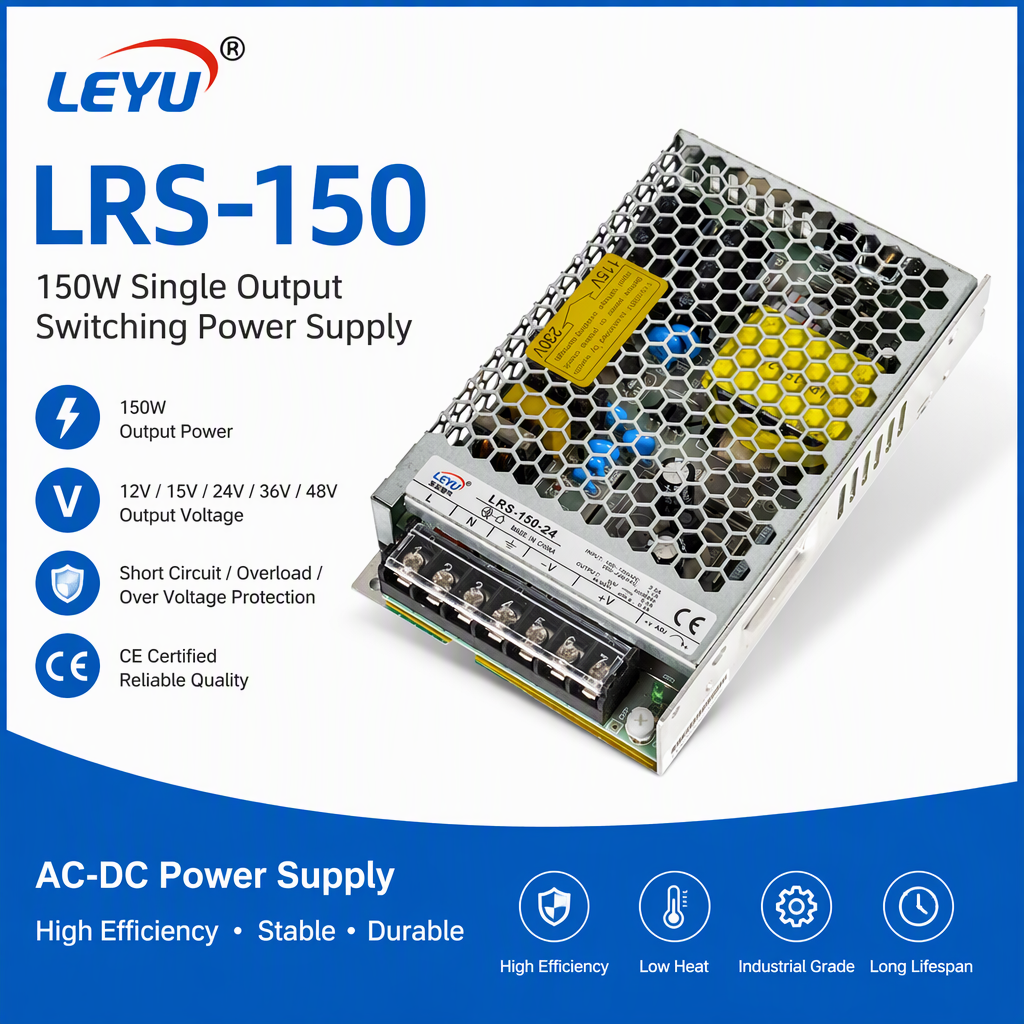
LEYU LRS-150-24 150W 24V 6.5A AC DC Switching Power Supply
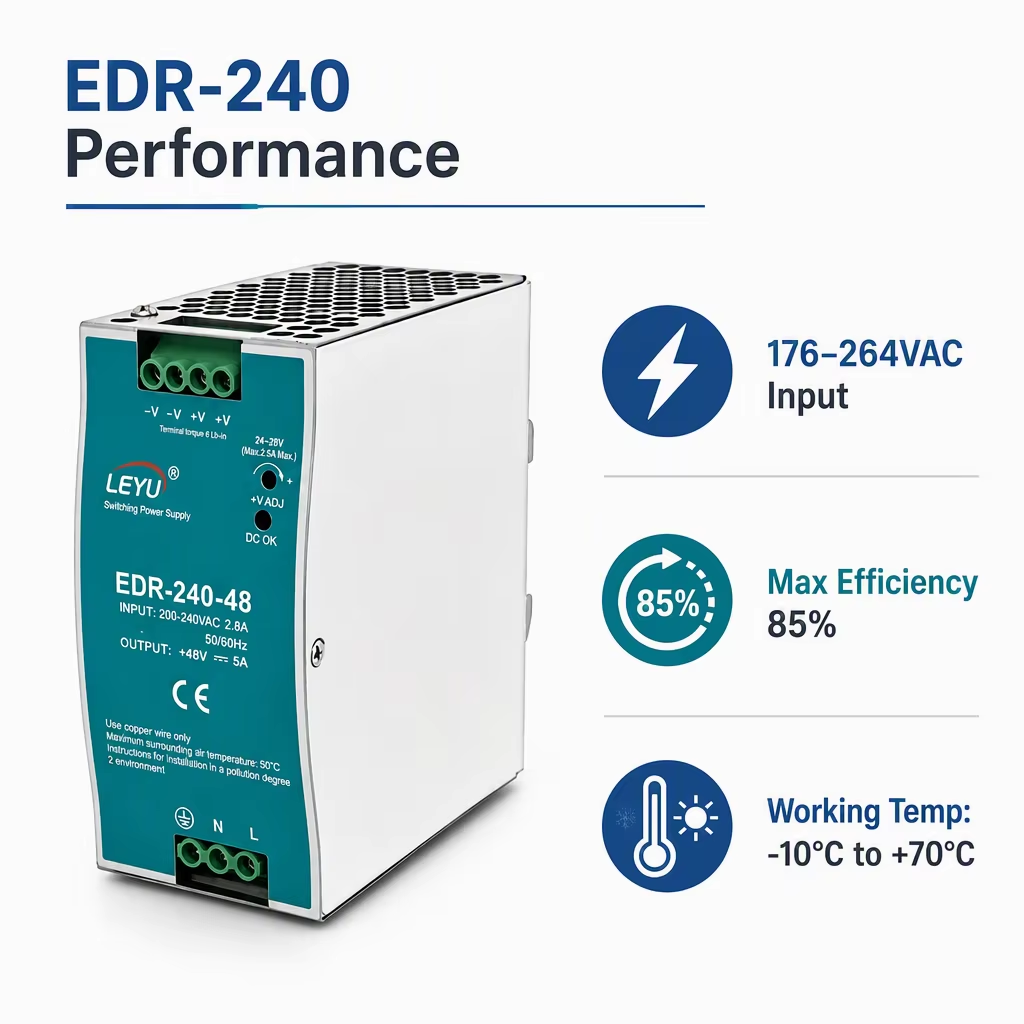
EDR-240-24 Industrial DIN Rail Power Supply 24V 10A 240W
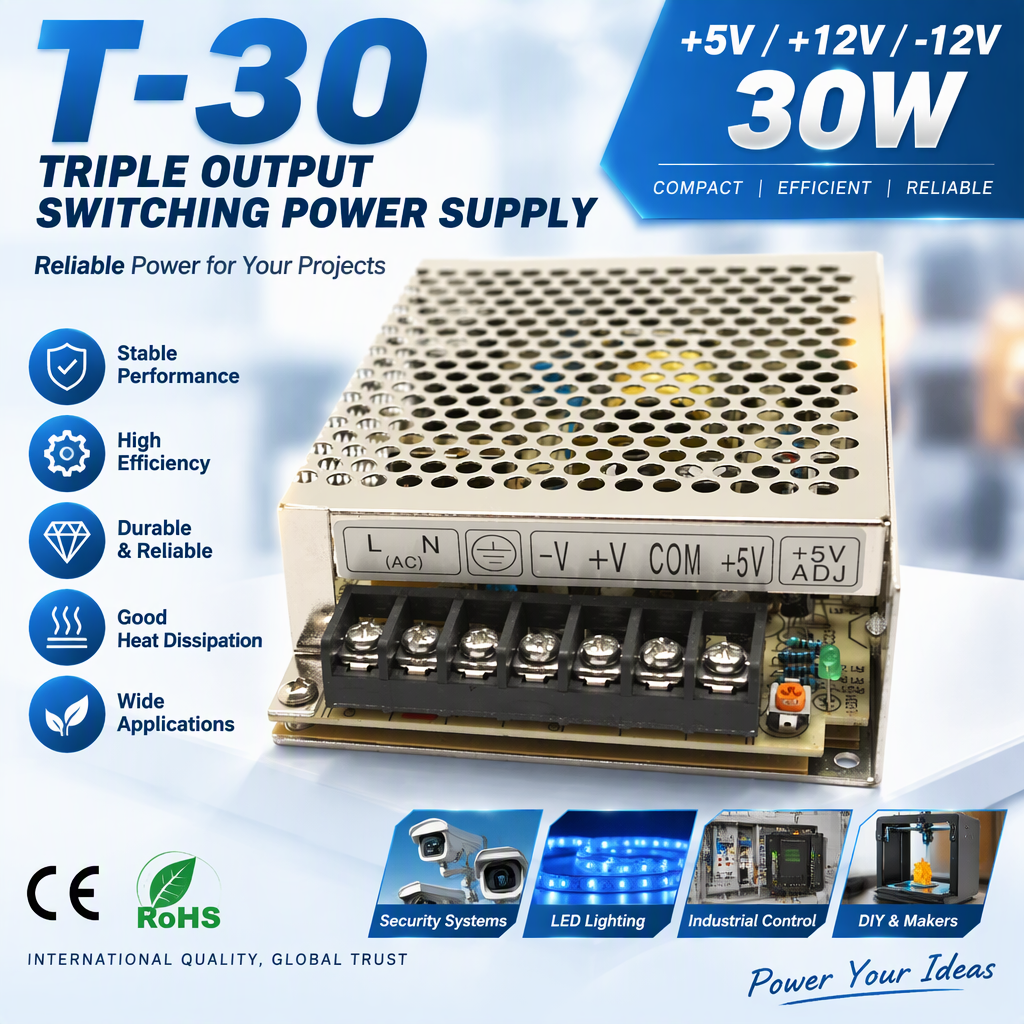
T-30 30W Triple Output Switching Power Supply 5V 12V -5V/-12V
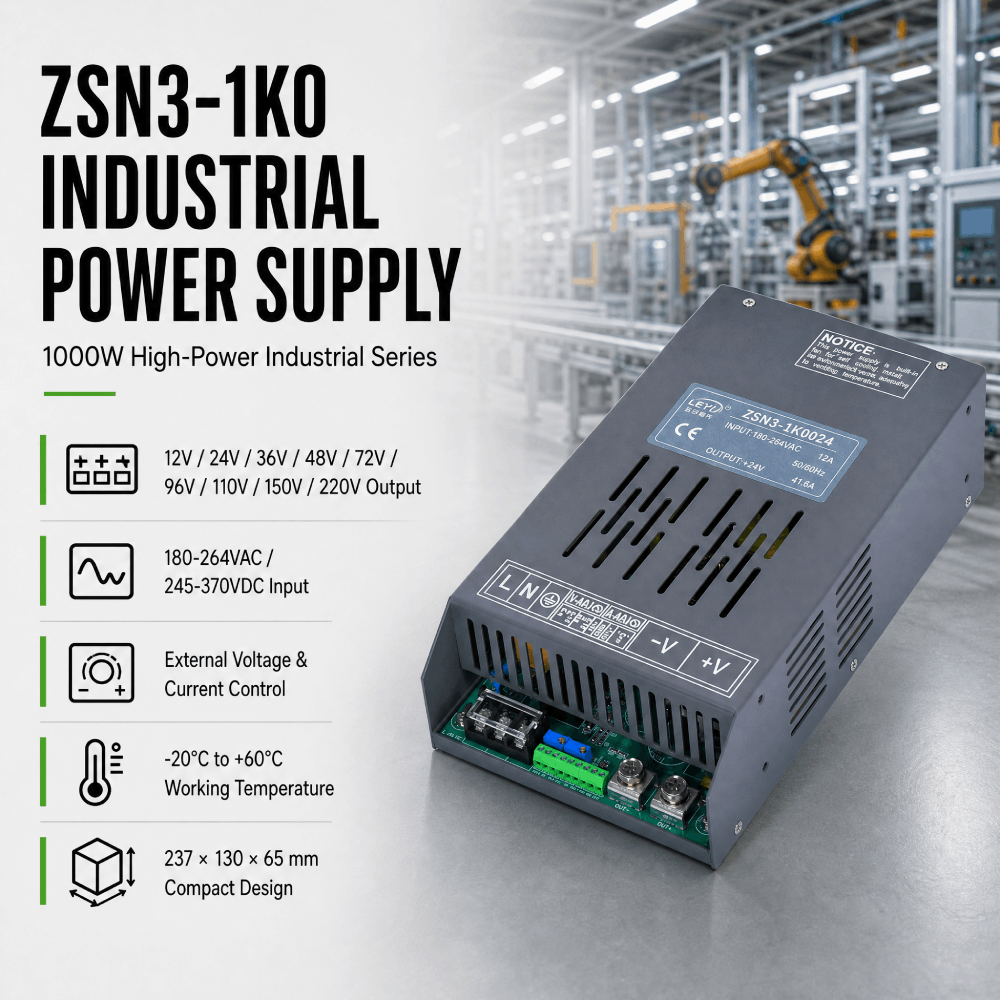
ZSN3 1000W Programmable Variable DC Power Supply
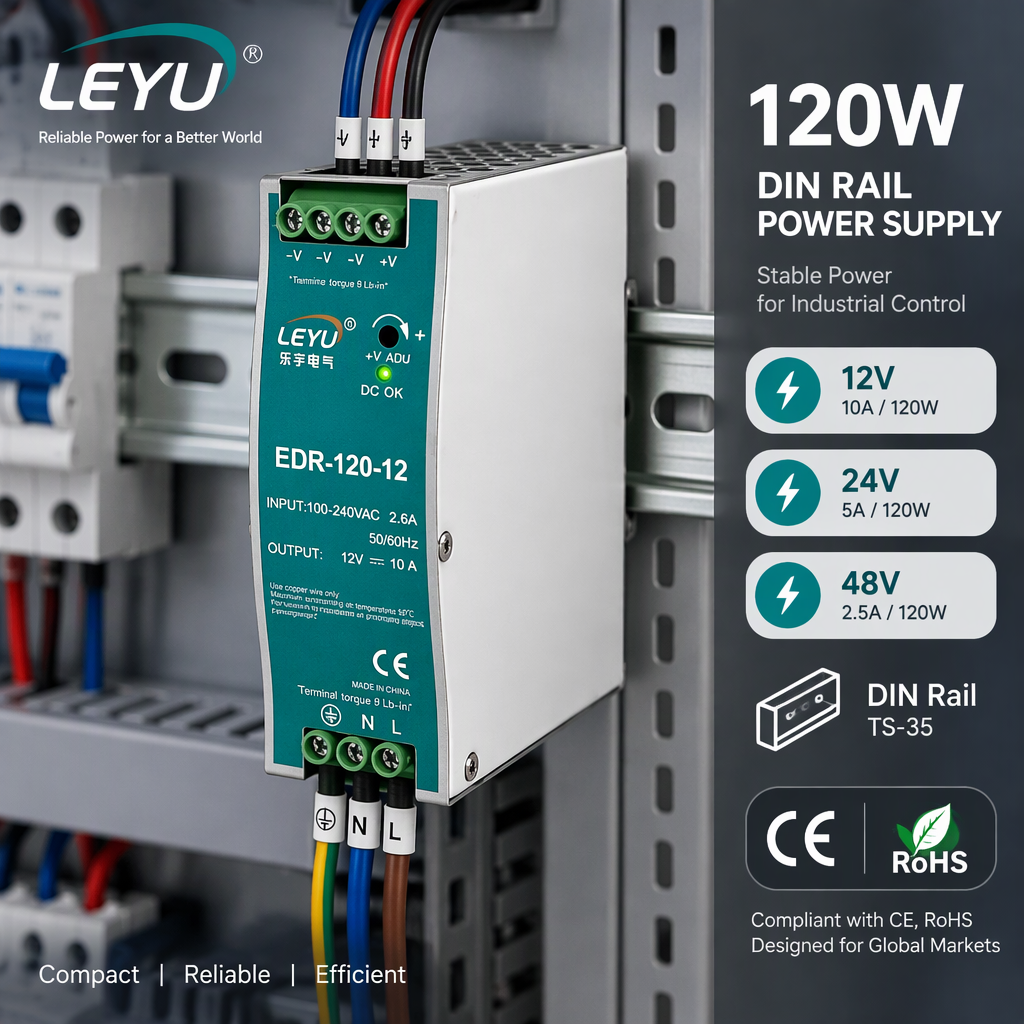
EDR-120 120W DIN Rail Power Supply Universal Input 90-264VAC
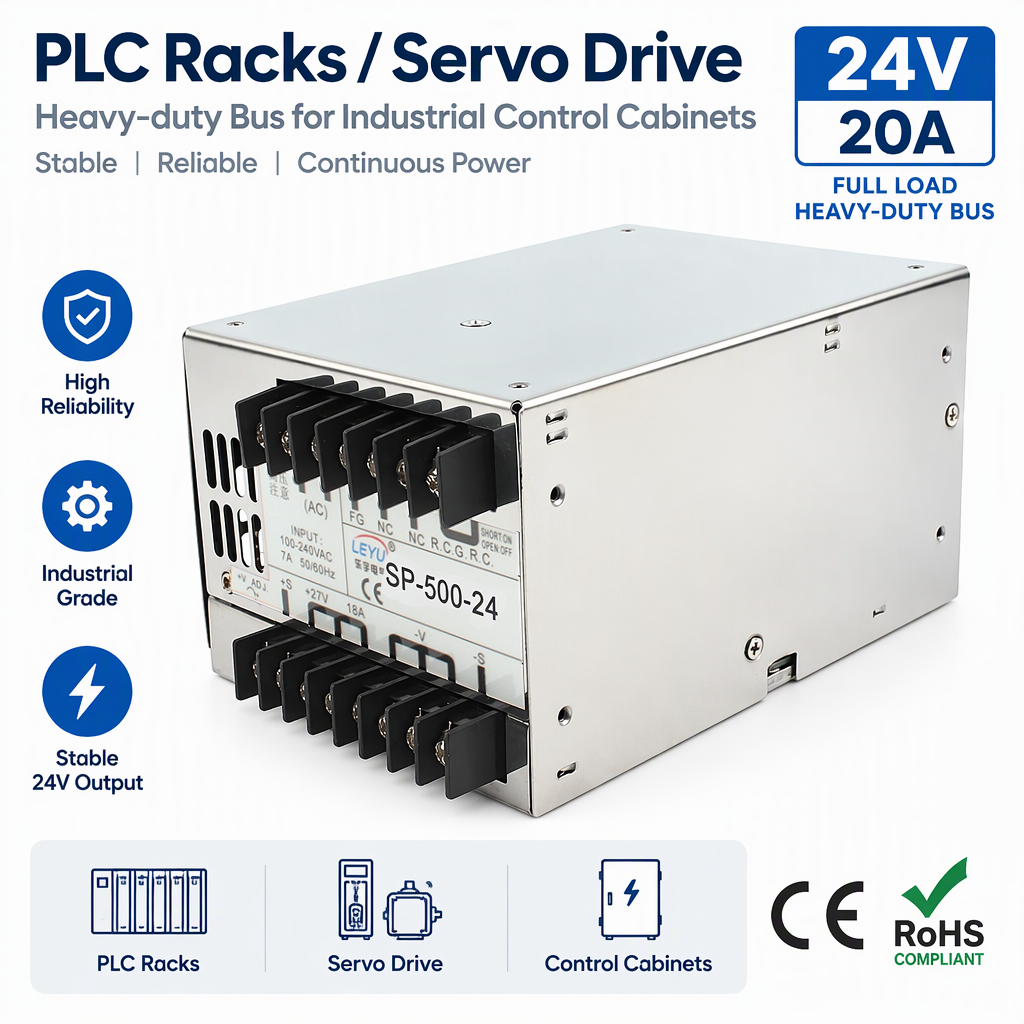
SP-500-12 12V 40A 500W Switching Power Supply with Active PFC
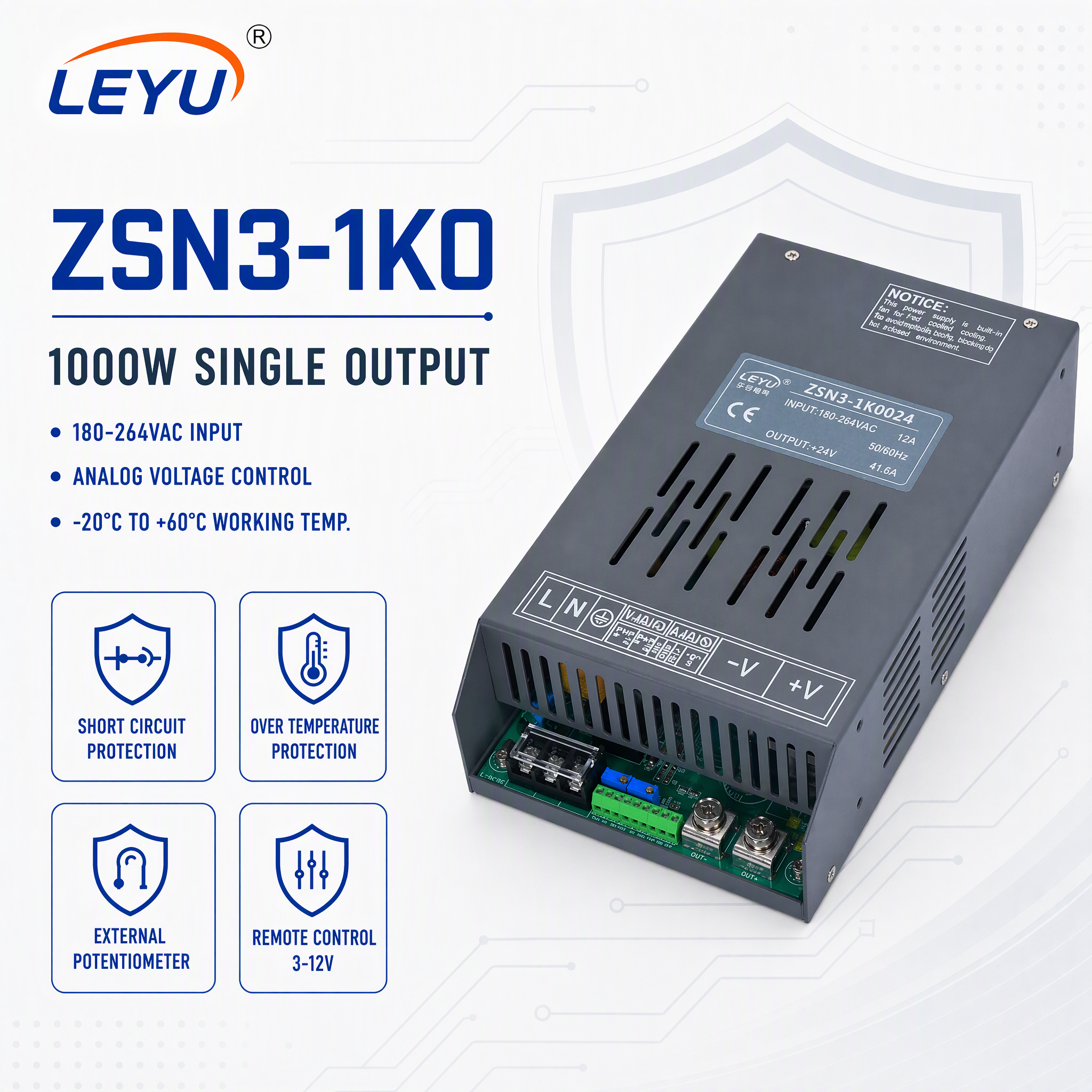
Fuente De Alimentacion Variable 1000W AC DC 24V 41.7A
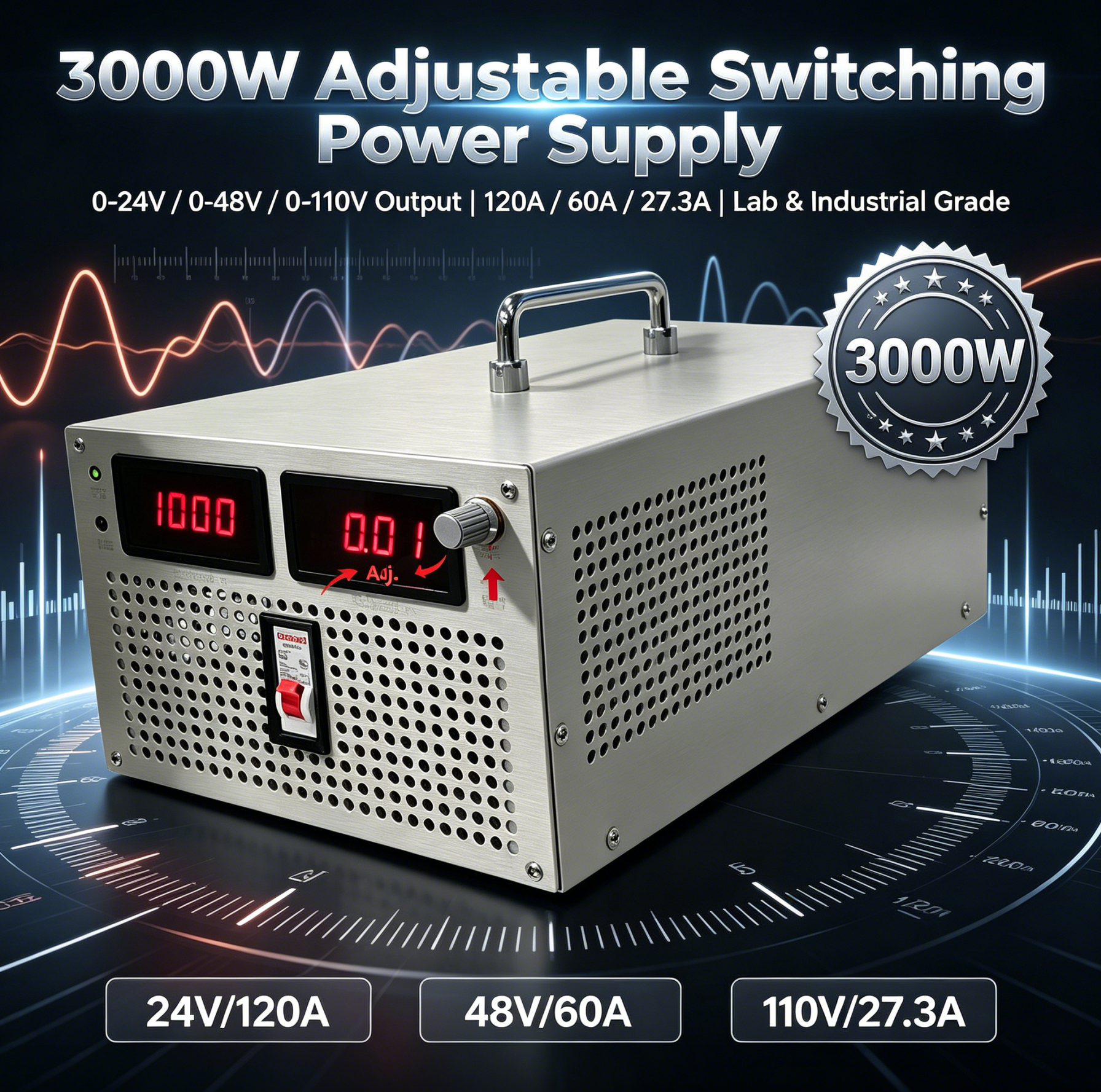
SV-3000 3KW Industrial Variable Power Supply 120A 60A
State of High Power DC-DC & Industrial Switched-Mode Power Systems in China
As global industrial systems migrate toward higher operating DC voltages—driven by the rapid expansion of megawatt-scale battery energy storage systems (BESS), electric mobility charging corridors, continuous-process chemical electrolysis, and advanced robotics—the demand for ultra-reliable, high power DC-DC converters and high-capacity AC-DC switching power supplies has experienced exponential growth. Sourcing these complex conversion platforms requires deep technical scrutiny that extends far beyond nominal unit pricing.
China, and particularly the industrial electrical cluster centered in Yueqing, Wenzhou, represents the global epicenter of specialized power supply fabrication. This region combines an integrated supply chain—spanning localized magnetic core sintering, semiconductor packaging, precision metal stamping, automated surface-mount technology (SMT), and high-voltage dielectric testing—with seasoned engineering expertise. Yueqing Keldan Technology Co., Ltd. has spent over 18 years operating at the leading edge of this industrial hub, bridging the gap between high-volume manufacturing economies and rigorous Western engineering performance standards.
Circuit Topologies in High-Power DC-DC & AC-DC Engineering
Achieving electrical conversion efficiencies exceeding 94% to 96% in multi-kilowatt power supplies demands modern topologies that minimize both capacitive turn-on losses and inductive turn-off switching stress. Keldan engineers leverage distinct soft-switching architectures tailored to application envelopes:
- Phase-Shifted Full-Bridge (PSFB) with Zero Voltage Switching (ZVS): Deployed heavily in our high-current 1000W to 3000W adjustable DC power systems (such as the SV-3000 series). PSFB utilizes the transformer's leakage inductance and parasitic MOSFET output capacitances ($C_{oss}$) to achieve resonance, allowing primary switches to turn on at zero voltage, drastically lowering high-frequency switching losses in high-duty environments.
- LLC Resonant Half/Full Bridge Converters: Chosen for slimline DIN rail models (EDR-240 series) and low-profile enclosed supplies (LRS series). The triple reactive tank ($L_r$, $C_r$, $L_m$) permits narrow frequency modulation across universal wide input voltages while securing ZVS for MOSFETs and Zero Current Switching (ZCS) for secondary rectifiers. This minimizes switching noise and ripple below 50mVp-p.
- Interleaved Multi-Phase Synchronous Buck/Boost Converters: Ideal for non-isolated bidirectional DC-DC stepping in battery backup and DC microgrids. Distributing high current loads across multiple 180° out-of-phase interleaved phases cancels input and output ripple currents, shrinking physical inductor size while increasing thermal dissipation surface area.
High Power Conversion Architectures: Engineering Reference
A side-by-side technical evaluation of core topologies manufactured by Yueqing Keldan Technology Co., Ltd. for industrial automation, lab instrumentation, and process energy.
| Topology Architecture | Power Range | Typical Efficiency | Switching Freq. | Primary Advantage | Target Industrial Use Case |
|---|---|---|---|---|---|
| Phase-Shifted Full-Bridge (PSFB) | 1,000W – 10,000W | 93.5% – 96.0% | 50kHz – 120kHz | Extreme current handling & wide output regulation | Electroplating, laser cutting sources, electrolysis |
| LLC Resonant Half-Bridge | 120W – 600W | 92.0% – 95.5% | 80kHz – 250kHz | Ultra-low EMI, zero switching losses, slim profile | TS-35 DIN rail cabinets, PLC panels, robotics |
| Active PFC + Single-End Forward | 75W – 350W | 88.0% – 92.5% | 65kHz – 100kHz | Cost-to-density ratio, high power factor (PF > 0.98) | CCTV arrays, continuous LED signage, CNC controllers |
| Dual Active Bridge (DAB) Bidirectional | 1,500W – 6,000W | 94.5% – 97.2% | 100kHz – 300kHz | Galvanic isolation with seamless reverse power flow | EV fast charging, battery energy storage (BESS) |
| Push-Pull / Half-Bridge Inverters | 300W – 5,000W | 89.0% – 94.0% | 20kHz – 50kHz | Rugged inductive surge capability (>200% peak) | Pure sine wave inverters, off-grid backup systems |
Future Procurement Trends in High Power DC-DC & Industrial Converters
Global procurement teams in North America, the European Union, Australia, and ASEAN are restructuring their supply chain strategies. As corporate ESG mandates tighten and industrial plants implement Industry 4.0 automation, purchasing criteria for switched-mode systems have transformed. Leading original equipment manufacturers (OEMs) and system integrators now evaluate long-term Total Cost of Ownership (TCO) based on the following dominant procurement trajectories:
1. Wide Bandgap (SiC & GaN) Integration
Silicon Carbide (SiC) MOSFETs and Gallium Nitride (GaN) HEMTs are replacing traditional Silicon Superjunction transistors in multi-kilowatt power modules. Buyers prioritize vendors offering SiC-based topologies due to their superior thermal conductivity, breakdown field strength, and dramatic reduction in reverse recovery charge ($Q_{rr}$). This yields conversion units operating above 97% efficiency with a 40% reduction in volumetric footprint.
2. Digital Telemetry & Software Control
Analog-only feedback loops are giving way to digital signal processors (DSPs) with integrated PMBus, CANopen, and Modbus-RTU interfaces. Modern plant engineers demand real-time diagnostics—such as continuous telemetry of junction temperatures, cumulative run-time hours, dynamic ripple amplitude, and instantaneous current share ratios across parallel modules—to enable predictive maintenance protocols.
3. Bidirectional Power Flow for Microgrids
The convergence of renewable distributed generation and automated guided vehicles (AGVs) requires power converters capable of dynamically reversing current flow. Converters must effortlessly shift from battery-charging mode (buck) to bus-supporting boost mode within microseconds to absorb regenerative braking energy or balance sub-millisecond line voltage sags.
4. N+1 Redundancy & Active Current Sharing
Critical infrastructure—such as semiconductor cleanrooms, hospital automation, and fiber communication nodes—cannot tolerate single-point power failures. Sourcing teams insist on native active current sharing (droop share or dedicated single-wire analog bus) enabling seamless parallel operation and hot-swappable N+1 redundancy without requiring external diode OR-ing blocks.
5. Extreme Operating Temperature Envelopes
Standard commercial ratings (0°C to 40°C) are obsolete for modern heavy-industry equipment. Modern specifications require baseplate-cooled or fan-optimized units that sustain 100% rated power at 50°C ambient without derating, and operate safely down to -30°C or up to +70°C with defined, gradual thermal derating slopes (≤2.5%/°C above 50°C).
6. Traceable Onsite Manufacturer Qualification
Global disruption has made sourcing through unverified domestic trading intermediaries unviable. B2B buyers now mandate comprehensive onsite verification from recognized auditing bodies such as TÜV Rheinland. Qualification covers original component sourcing (preventing counterfeit passives), SMT optical inspection lines, and verifiable continuous aging racks.
Manufacturing Rigor at Yueqing Keldan Technology Co., Ltd.
Headquartered in Malujiao Village, Beibaixiang Town, Yueqing, Zhejiang, China, Yueqing Keldan Technology Co., Ltd. operates as a custom manufacturing and direct export enterprise. Verified directly on-premises by TÜV Rheinland, our modern facility encompasses end-to-end electronic fabrication, proprietary tooling, automated wave soldering, surface-mount placement, and dedicated environmental testing facilities.
Rather than functioning merely as an assembly plant, Keldan maintains an active engineering team of 5+ dedicated power electronics engineers, each possessing over 5 to 10 years of hands-on switched-mode engineering experience. This in-house competence enables full-spectrum sample-based and schematic-based custom design services: from customized voltage/current rails and custom extruded enclosures, to specialized conformal coatings (silicone and polyurethane) for corrosive or high-humidity tropical deployments.
8-Stage Quality Assurance Protocol for Defect-Free Deployment
To assure a field failure rate of less than 0.15% across our exported product lines, every industrial SMPS, DIN rail unit, and high-power converter navigates an eight-gate inspection regimen:
IQC Component Screening
Verification of electrolytic capacitor ESR (105°C rated Japanese/Taiwanese brands), MOSFET $R_{DS(on)}$, and magnetic core loss parameters.
High-Speed SMT Placement
Automated surface mounting with precise solder paste volume control, preventing component misalignments or solder balling defects.
Nitrogen Reflow Soldering
Controlled multi-zone thermal ramp profiles guarantee void-free solder joint wetting across high-mass thermal power pads.
Automated Optical Inspection
High-resolution AOI scanners detect solder bridging, insufficient fillets, tombstoning, and component polarity orientation.
Through-Hole & Mechanical
Robotic and skilled manual soldering for heavy chokes, busbars, and terminal blocks with strict lead-trimming tolerances.
Electronic Calibration
Initial power-up, closed-loop PWM tuning, regulation trimming, and verification of over-voltage (OVP) and over-current (OCP) thresholds.
100% Full-Load Burn-In Aging
Every unit operates under 100% dynamic rated load in elevated-temperature burn-in chambers (45°C–50°C) for 4 to 8 hours to eliminate infant mortality.
Dielectric Hipot & OQC
Final high-voltage isolation flash testing (up to 3,000VAC primary-to-secondary) followed by automated functional data recording.
Frequently Asked Questions: B2B High Power Converter Procurement
Addressing core technical questions submitted by international electrical engineers, panel builders, and procurement officers prior to contract award.
How do you calculate thermal derating and forced-air CFM requirements for high-power enclosed converters?
Thermal calculation begins by determining internal power dissipation ($P_{diss}$): $P_{diss} = P_{out} \times (1 - \eta) / \eta$, where $\eta$ is conversion efficiency. For a 3000W converter operating at 94% efficiency, $P_{diss} \approx 191.5\text{ W}$ of heat must be continuously expelled. The required volumetric airflow in cubic feet per minute (CFM) is determined via the standard thermal formula: $\text{CFM} = \frac{1.76 \times P_{diss}}{\Delta T(^{\circ}\text{C})}$. If the allowable internal temperature rise ($\Delta T$) is capped at 15°C above ambient, the system requires a minimum internal airflow of approximately 22.5 CFM against chassis backpressure. Keldan's high-wattage power supplies (such as the SV-3000 and SP-500 series) incorporate thermostatically regulated, dual-ball-bearing brushless DC fans that automatically scale RPM based on internal NTC thermistor telemetry, preventing premature bearing failure while guaranteeing continuous full-load output up to 50°C ambient.
What methods are utilized to suppress high-frequency switching ripple and common-mode EMI?
Suppression of electromagnetic interference (EMI) involves multi-stage passive filtering combined with low-coupling PCB layout topologies. On the input side, Keldan integrates two-stage or three-stage common-mode chokes wound with high-permeability nanocrystalline or toroidal ferrite cores, combined with Class X2 safety capacitors across lines and Class Y1/Y2 capacitors to chassis ground, ensuring compliance with EN 55032 / CISPR 32 Class B limits. To attenuate secondary switching spikes (typically generated by diode reverse recovery and parasitic transformer ringings), we employ RC or RCD snubber networks directly across rectifiers, use split-winding (interleaved) transformer construction to minimize leakage inductance, and integrate post-LC Pi filters utilizing ultra-low ESR solid polymer electrolytic capacitors. Output ripple is consistently verified under a 20MHz bandwidth limit using coaxial probes terminated with 0.1μF ceramic and 10μF electrolytic decoupling capacitors.
What galvanic isolation ratings are standard, and how are clearance and creepage managed?
Industrial and medical applications dictate reinforced or double insulation barriers. Keldan's standard industrial AC-DC and high-power DC-DC converters provide a minimum isolation of 3,000VAC (or 4,242VDC) between primary input and secondary output for 60 seconds, with an insulation resistance exceeding 100MΩ at 500VDC. Between primary and protective earth (PE) ground, isolation is tested at 1,500VAC to 2,000VAC. To maintain these safety margins in industrial pollution degree 2 and overvoltage category III (OVC III) environments, PCB layout adheres to minimum clearance (through-air distance) of ≥5.0mm and creepage (along surface distance) of ≥8.0mm, complemented by routed physical isolation slots beneath optocouplers and magnetic isolators to prevent surface tracking under elevated atmospheric moisture.
How does Keldan substantiate MTBF figures, and what is the design life of core capacitors?
Mean Time Between Failures (MTBF) is calculated in accordance with Telcordia SR-332 (Bellcore Issue 4) or MIL-HDBK-217F standards under ground-benign (GB) environments at 25°C and 40°C ambient operating temperatures. Our standard DIN rail and LRS platforms reliably exhibit MTBF values between 350,000 and 650,000 hours. Because the physical longevity of any SMPS is ultimately governed by the thermal wear of its aluminum electrolytic capacitors, Keldan uses exclusively 105°C-rated high-ripple capacitors with guaranteed lifespans of 5,000 to 10,000 hours at maximum rated core temperature. Applying the Arrhenius 10°C rule (where every 10°C decrease in capacitor operating temperature doubles operational lifespan), a capacitor operating at an internal case temperature of 65°C achieves an expected operational service life exceeding 80,000 hours (over 9 years of continuous 24/7 duty).
Can Keldan support custom OEM/ODM modifications, and what are the sample lead times?
Yes. Yueqing Keldan Technology Co., Ltd. is verified by TÜV Rheinland as a custom manufacturer. OEM/ODM customization capabilities encompass custom output voltage and current ranges (e.g., non-standard 36V, 60V, or 180V DC rails), specialized current-limiting profiles (constant-current limiting vs. hiccup mode restart vs. latch-off shutdown), conformal coating for harsh environments, specialized terminal interfaces (Molex, Phoenix pluggable connectors, or heavy stud terminals), and customer-branded silkscreen labeling. Functional prototypes for standard modification requests are typically dispatched within 7 to 14 days, while full ground-up PCB and chassis engineering projects require 4 to 6 weeks for tooling, pre-compliance testing, and pilot-sample submission.
What is the operational distinction between Constant Current (CC) limiting and Hiccup Protection?
Understanding the distinction between overload protection modes is vital for inductive, capacitive, and motor loads. In Hiccup Mode, once an output overload or dead-short condition is detected, the PWM controller shuts down switching immediately, waits for a designated cooling period (typically 500ms to 2s), and attempts a soft-start restart. While this minimizes thermal buildup during continuous short circuits, it cannot charge high capacitive loads or start DC motors that draw huge startup currents. Conversely, Constant Current (CC) Limiting holds the output current fixed at a safe maximum (e.g., 105% to 110% of rated capacity) while dynamically collapsing output voltage. This allows the converter to continuously deliver full current into capacitive banks or highly inductive laser/electrolysis loads until normal operating voltage stabilizes. Keldan offers programmable and selectable protection modes depending on the intended load profile.
Accelerate Your Industrial Power Engineering Project
Whether you require standard CE-compliant DIN rail supplies for immediate delivery or a custom multi-kilowatt isolated DC-DC conversion platform engineered to exact specifications, our Yueqing technical team provides rapid design proposals, comprehensive datasheets, and factory audit documentation.
