18+
Years SMPS & DC Design
TÜV
Rheinland Onsite Verified
44+
Verified Workshop Staff
100%
Full Burn-in QC Screen
Direct OEM Inventory
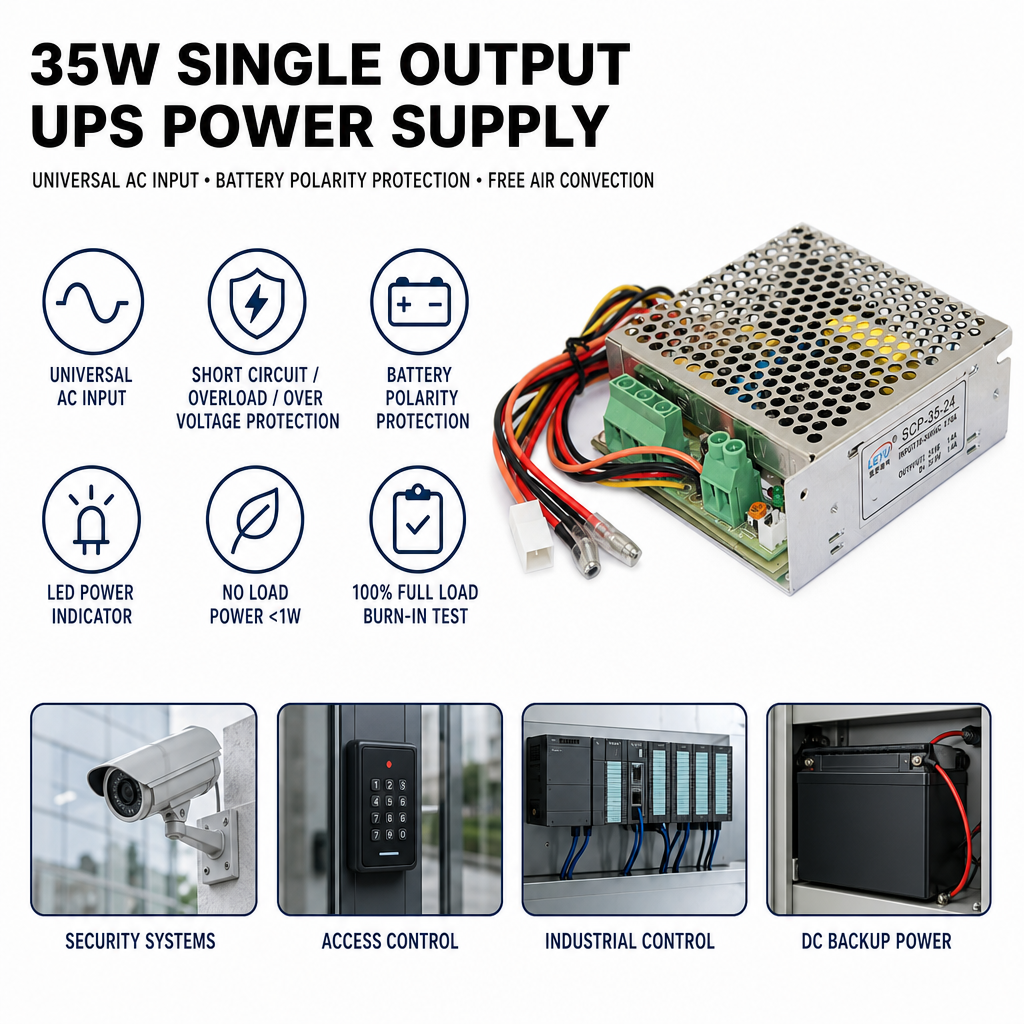
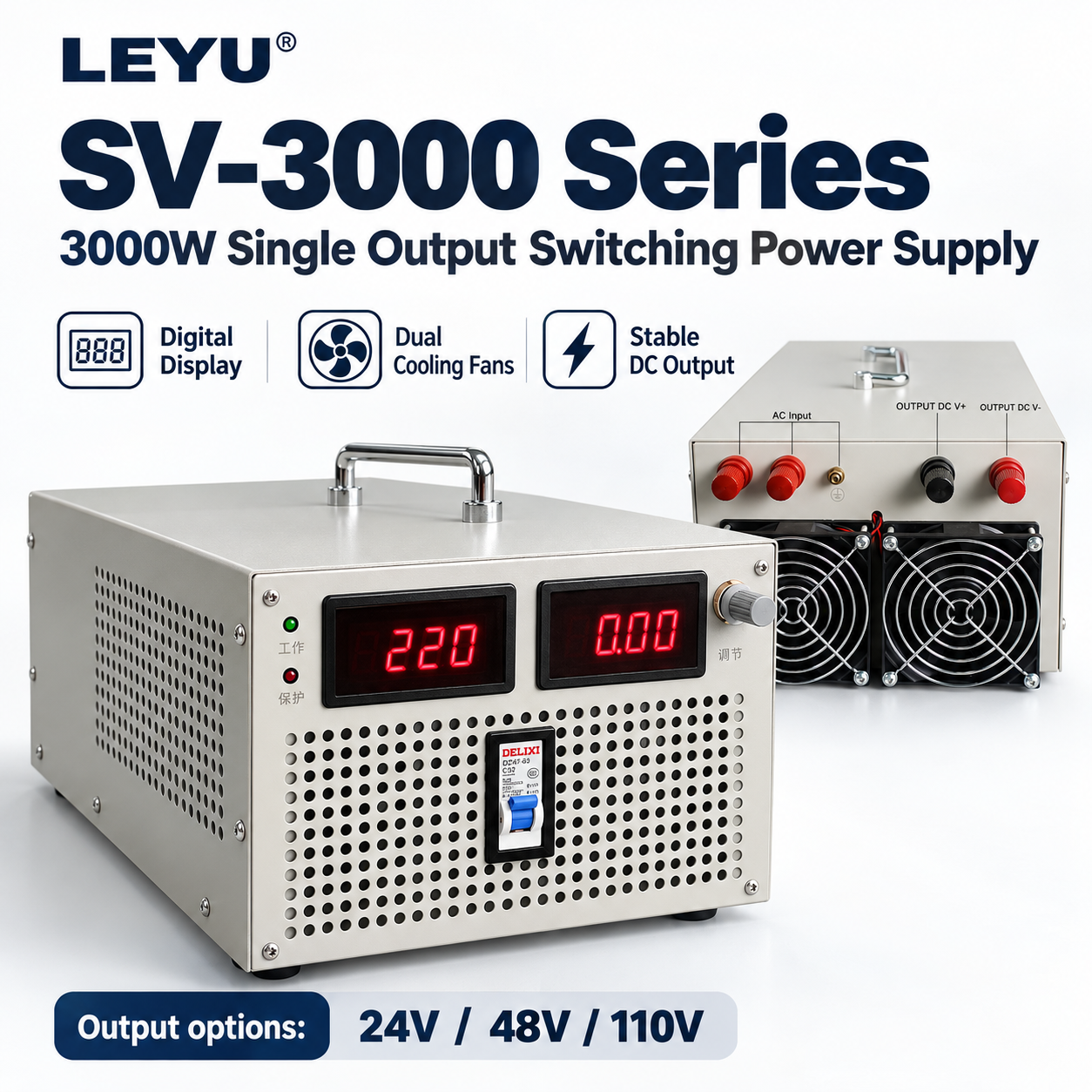
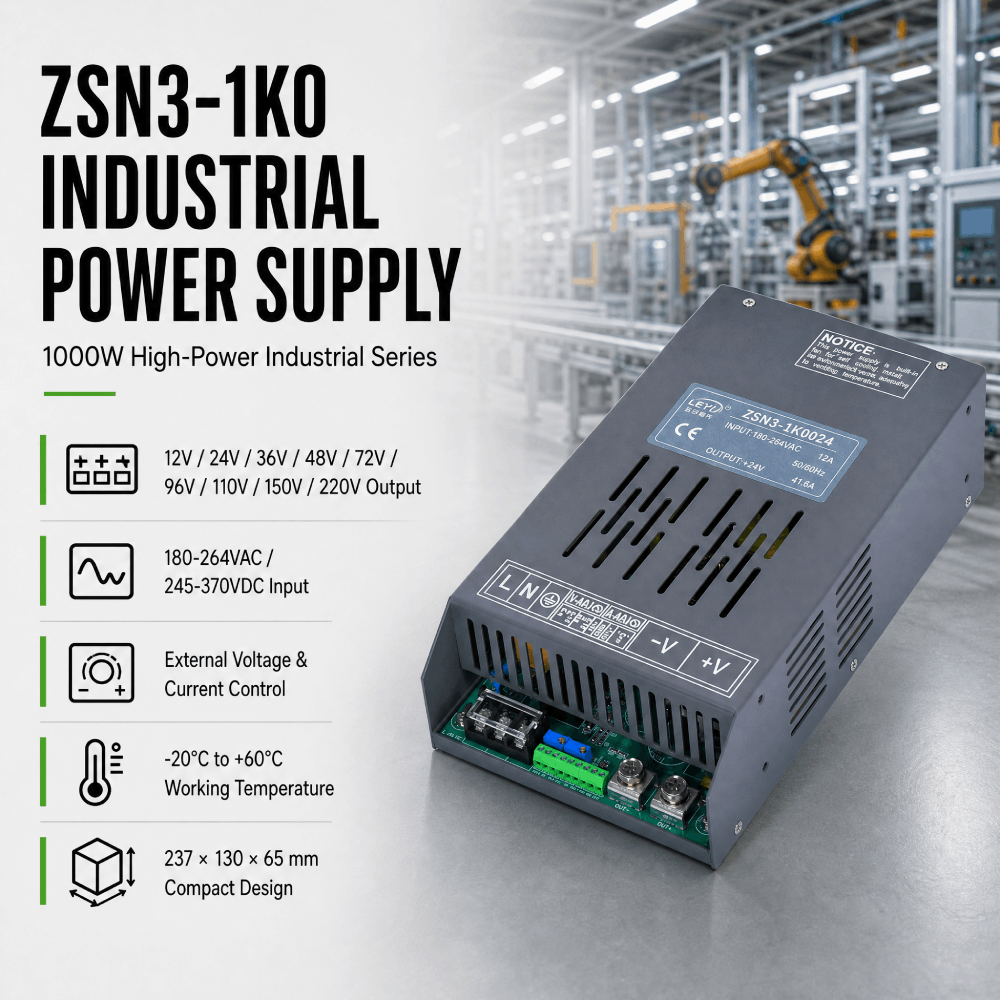
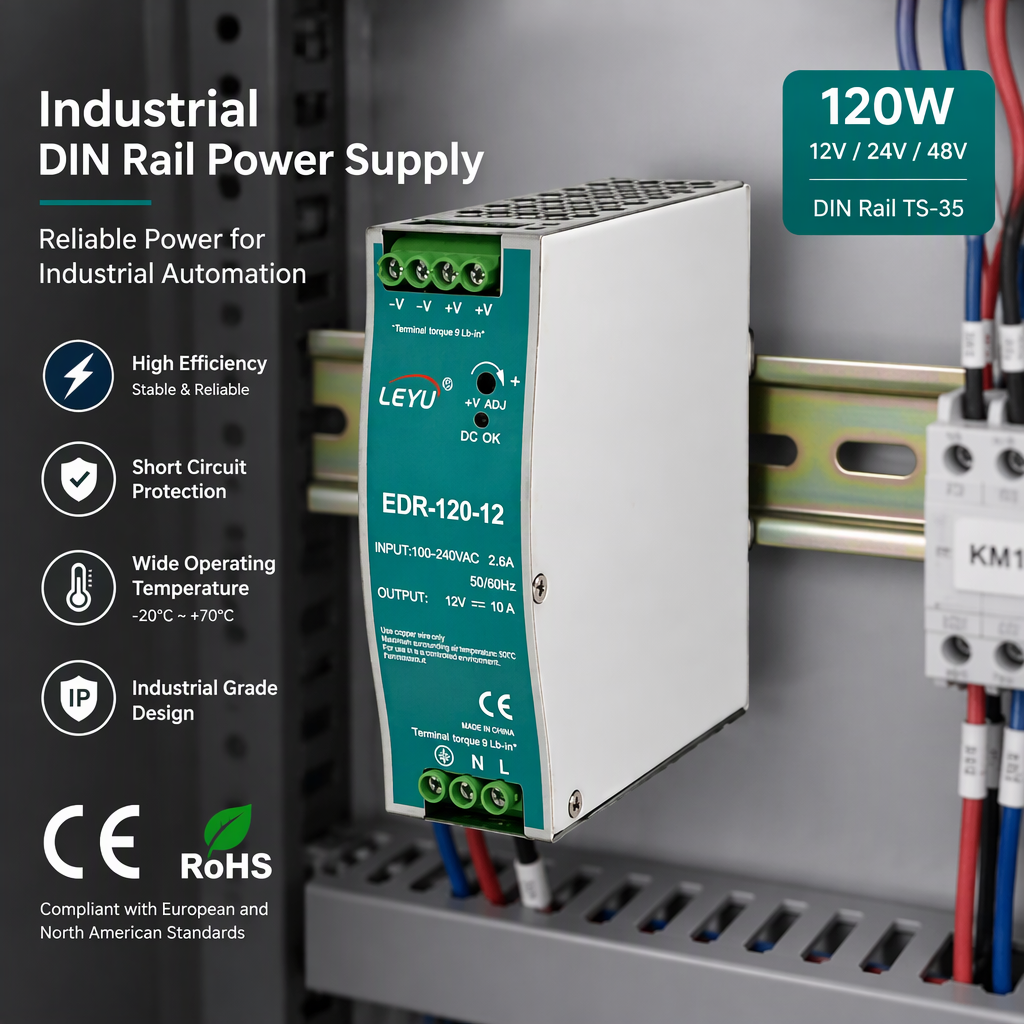
Precision High-Efficiency DC-DC & Industrial Conversion Series
Shortlist proven industrial-grade conversion architectures. Designed with over-temperature protection, galvanic safety isolation, wide input tolerance, and optimized thermal management.
Strategic Procurement Analysis
Emerging Procurement Trends in China’s DC Power Conversion Sector
Global procurement teams are moving beyond low initial unit costs toward total lifecycle value, supply-chain transparency, and advanced thermal topologies.
Wide-Bandgap (GaN & SiC) Transition
Next-generation DC DC converter architectures increasingly leverage Silicon Carbide (SiC) and Gallium Nitride (GaN) switching stages. Procurement heads report up to a 40% reduction in cabinet heat dissipation and a 35% footprint shrinkage, allowing higher power densities in cramped DIN rail and embedded control boxes without auxiliary cooling fans.
Digital PMBus & Programmable Telemetry
Modern plant managers require real-time electrical status monitoring. Industrial buyers now specify DC DC converters and high-power bench units featuring Modbus-RTU, CANopen, or PMBus digital communication to stream voltage drops, operating temperatures, and transient current spikes directly into predictive maintenance SCADA dashboards.
Tier-1 Component Traceability (BOM Auditing)
Due to high field failure costs in remote renewable energy installations and robotic automation cells, international procurement contracts prioritize manufacturers who enforce 100% traceable, Tier-1 electrolytic capacitors (rated for 105°C and >10,000h service life), premium ferrite magnetic cores, and documented incoming QC processes.
| Evaluation Parameter | Legacy Switching Converters | Next-Gen Industrial DC-DC Architecture | Procurement Advantage |
|---|---|---|---|
| Conversion Efficiency | 82% – 88% | 94% – 97.5% (Synchronous Rectification) | Substantial thermal drop, higher MTBF |
| Input Voltage Tolerance | Narrow ±10% to 2:1 range | Ultra-wide 4:1 to 8:1 dynamic inputs | Handles voltage dips, drops, and battery drains |
| Galvanic Isolation | 1.5kV AC basic barrier | 3.0kV – 4.2kV AC reinforced optical isolation | Superior protection for PLCs, microcontrollers & DSPs |
| Form Factor & Density | Standard bulk casing | Ultra-slim TS35 DIN rail & low-profile planar modules | Up to 50% cabinet space savings for automation racks |
Engineering Insights
Future Development Trends in Power Conversion Systems
Explore the fundamental shifts transforming DC-DC topologies, resonant tank circuits, and high-voltage DC microgrids across the next manufacturing cycle.
Planar Transformer Magnetic Integration
Traditional wire-wound transformers are being superseded by multi-layer PCB planar magnetics. This topology delivers exceptional thermal dissipation, ultra-low leakage inductance, and superior EMI performance, vital for sensitive laser labs, medical electronics, and precision instrumentation applications.
LLC Resonant Soft-Switching Topologies
By implementing Zero Voltage Switching (ZVS) and Zero Current Switching (ZCS) through advanced LLC half-bridge resonant designs, switching losses are virtually eliminated. This enables higher operating frequencies (>250kHz), drastically shrinking filter inductor footprints without harmonic noise penalties.
Direct 380V/750V DC Microgrid Step-Down
With data centers, PV battery storage, and EV infrastructure shifting to direct 380V/750V DC distribution, converter factories are pivoting toward direct high-voltage buck stages. This eliminates redundant AC-DC rectification losses and improves end-to-end electrical efficiency by 8–12%.
Our Manufacturing Authority
Yueqing Keldan Technology — 18+ Years of Power Conversion Reliability
Headquartered in Yueqing, Wenzhou—China’s premier hub for electrical apparatus—our production facilities combine automated assembly with strict quality control audited onsite by TÜV Rheinland.
Step 01
Incoming Material Verification (IQC)
100% parameter checking on power MOSFETs, high-frequency transformers, diodes, and capacitors before mounting on surface lines.
Step 02
SMT Placement & Nitrogen Reflow
High-speed automated surface mount machinery ensuring exact solder volume and eliminating tombstoning or cold solder defects.
Step 03
Automated Optical Inspection (AOI)
High-resolution dual-camera optical inspection screening every solder joint, component polarity, and trace spacing before encapsulation.
Step 04
Full-Load Burn-In Chamber Testing
Every industrial unit undergoes 4 to 24 hours of 100% full-load dynamic thermal stress testing at 45°C–50°C to eliminate early failures.
Our 5+ senior application engineers and 12 multilingual trade specialists provide seamless OEM/ODM integration. Whether you need custom multi-tap secondary windings, specialized PCB conformally coated for high-humidity marine environments, or custom-branded sheet-metal housings, our lines are fully equipped.
Knowledge Center
Frequently Asked Questions by Industrial B2B Buyers
Clear, direct answers regarding certifications, thermal sizing, harmonic immunity, and minimum order requirements.
How does an isolated DC-DC converter differ from a non-isolated buck/boost converter?
An isolated DC-DC converter incorporates a high-frequency transformer barrier separating input and output grounds (galvanic isolation typically rated between 1500V and 3000V AC). This prevents ground loops, protects sensitive digital controllers from hazardous line surges, and enables positive-to-negative rail inversion. Non-isolated converters share a common return path, offering higher operational efficiency and lower bill-of-materials cost, but should only be deployed where ground commonality is strictly safe.
What safety margin should engineering teams specify when sizing industrial power supplies?
We recommend specifying continuous load at no more than 70% to 80% of the unit’s rated capacity. Inductive elements such as DC servo motors, solenoid valves, contactors, and cooling fans exhibit inrush currents 2x to 5x higher than steady-state ratings upon startup. Selecting a power unit with a 25% overhead and peak-load handling ensures reliable start-up, suppresses thermal throttling, and significantly extends the lifespan of electrolytic filter capacitors.
Is Yueqing Keldan Technology an authorized factory or an intermediary export agent?
We are a true custom manufacturer with on-site factory verification conducted by TÜV Rheinland. Our facility in Beibaixiang Town, Yueqing, houses automated SMT lines, wave soldering machines, testing rigs, full-load burn-in aging rooms, and an in-house engineering team. Overseas clients are invited to perform scheduled on-site audits, third-party inspections (SGS, Intertek, TÜV), or live video audits before shipping.
What testing and quality protocols protect against premature field failures?
Every unit passes through an 8-stage quality protocol: Incoming inspection (IQC), automated pick-and-place precision, reflow soldering profile control, AOI optical defect recognition, manual sub-assembly, high-pot isolation withstand (dielectric testing up to 3000VAC), dynamic burn-in testing under full load, and final finished goods electrical and cosmetic QA release.
What are the minimum order quantities (MOQ) and lead times for OEM/ODM projects?
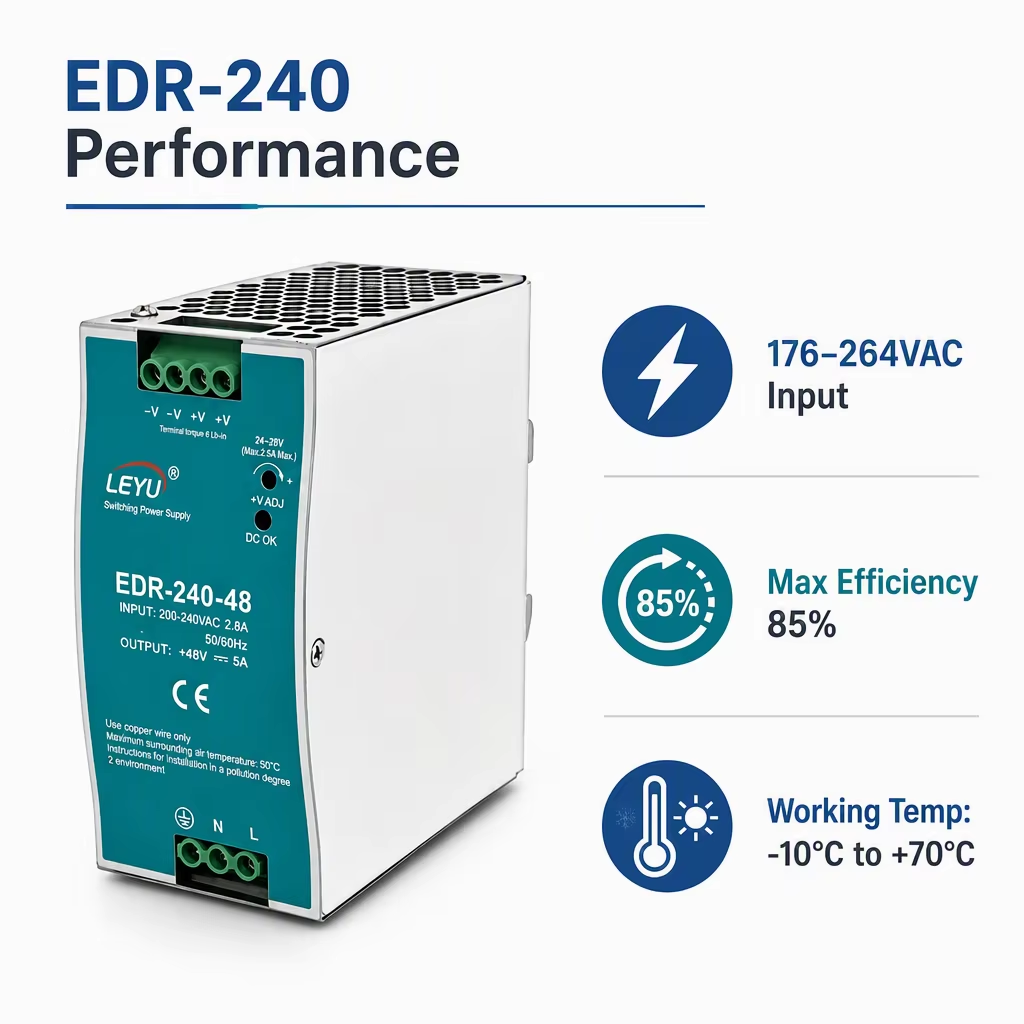
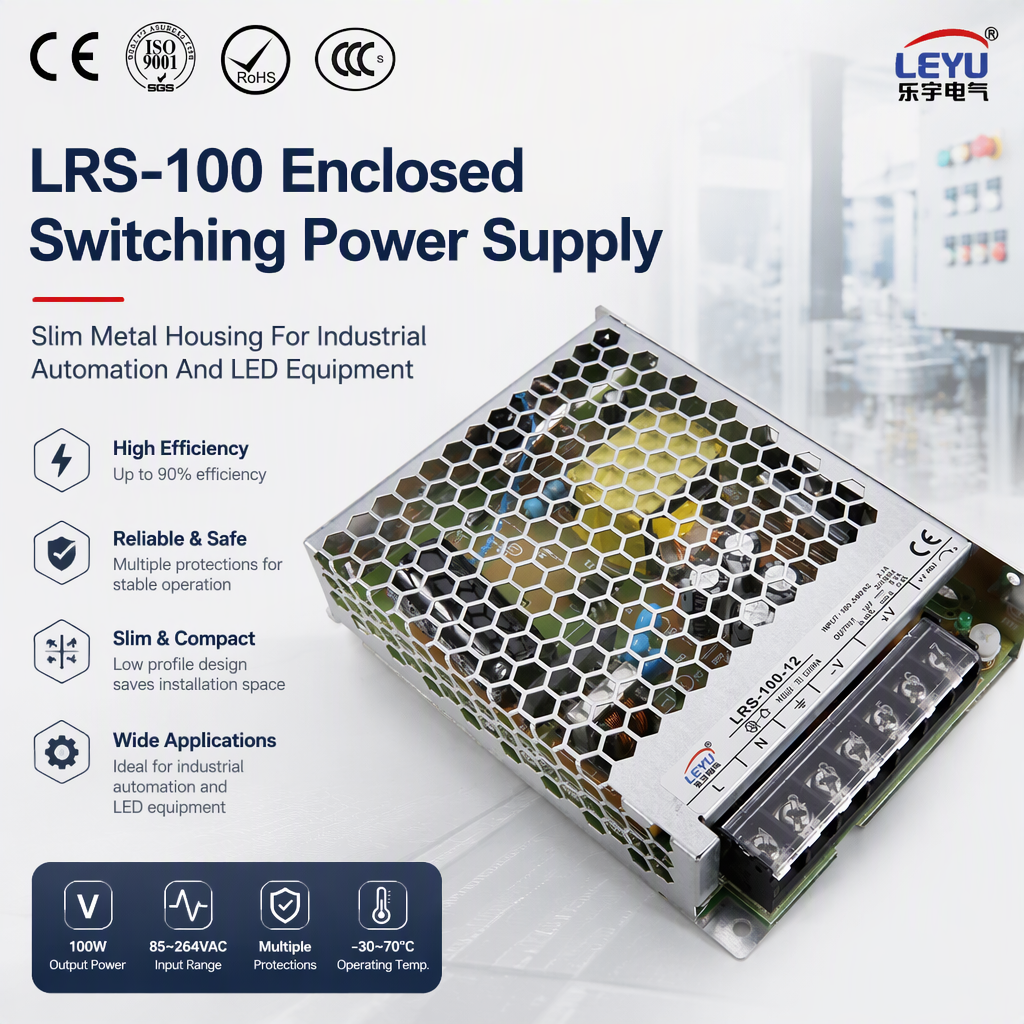
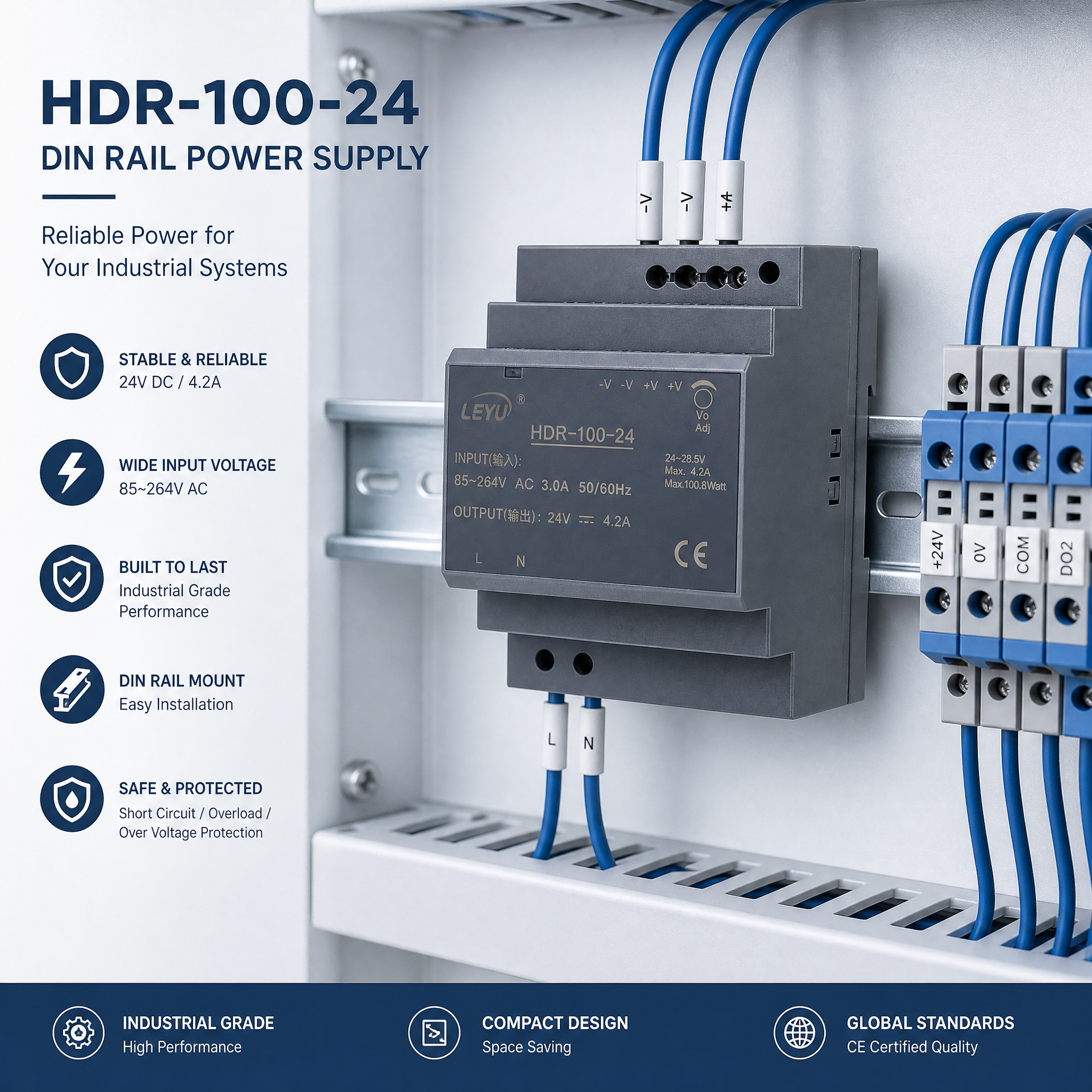
Standard models from our NDR, EDR, HDR, and LRS series maintain a sample MOQ of just 1 piece for evaluation, with standard box quantities starting from 10 to 15 pieces. For deep OEM/ODM customizations—such as unique voltage rails, custom cable harnesses, tropicalized conformal coatings, or custom laser engraving—MOQ typically starts between 200 and 500 units depending on chassis tooling requirements, with pilot samples delivered within 10 to 15 working days.
Which global electromagnetic and safety compliance standards are supported?
Our standard catalog lines carry CE certification, RoHS environmental compliance, and meet low voltage directive (LVD) EN 62368-1 / EN 61558-1 safety frameworks. Electromagnetic compatibility complies with EN 55032 Class B for emissions and EN 61000-4 series for industrial ESD, EFT, surge, and RF immunity. Certified third-party test reports can be furnished during prototype qualification.
Need Custom Voltage Topologies or High-Volume Factory Quotes?
Send your electrical specifications, input voltage tolerances, mechanical form factor constraints, or sample requirements directly to our application engineering team.
