Active PFC
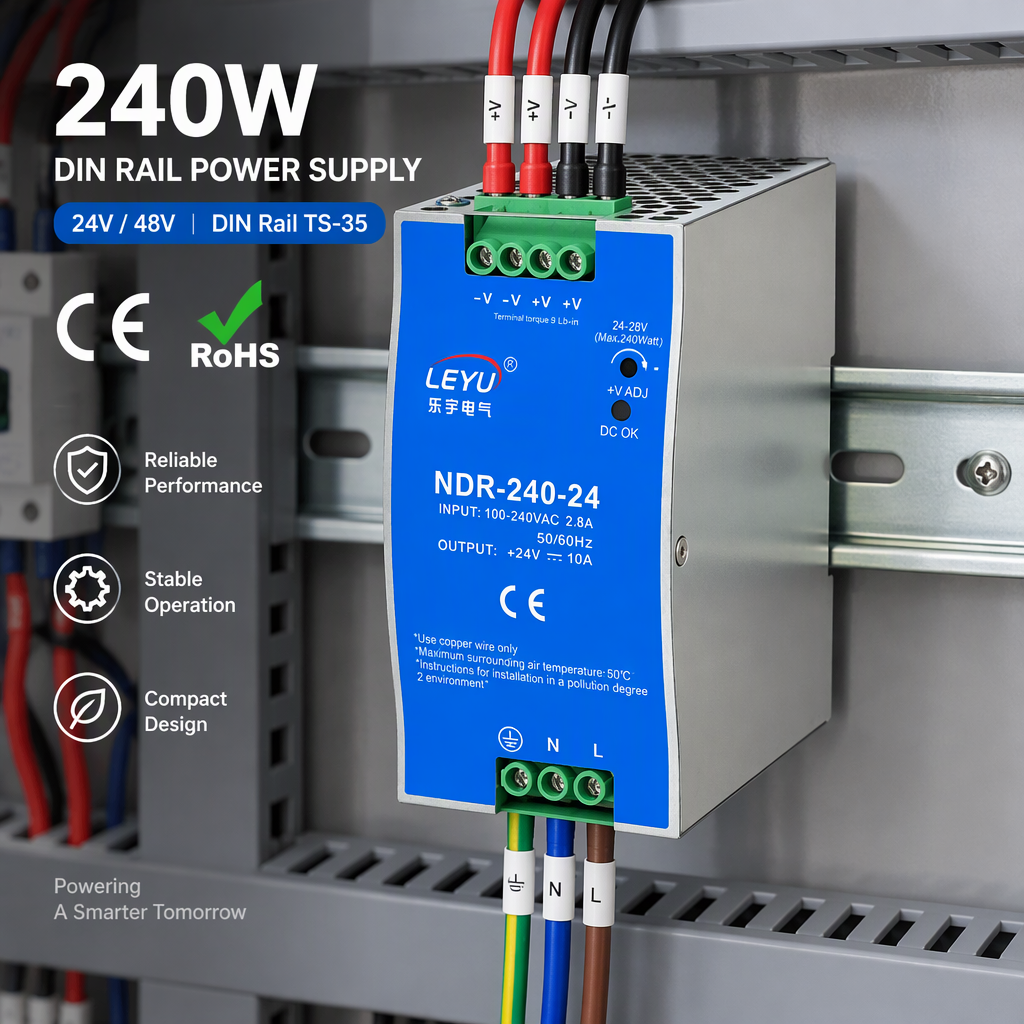
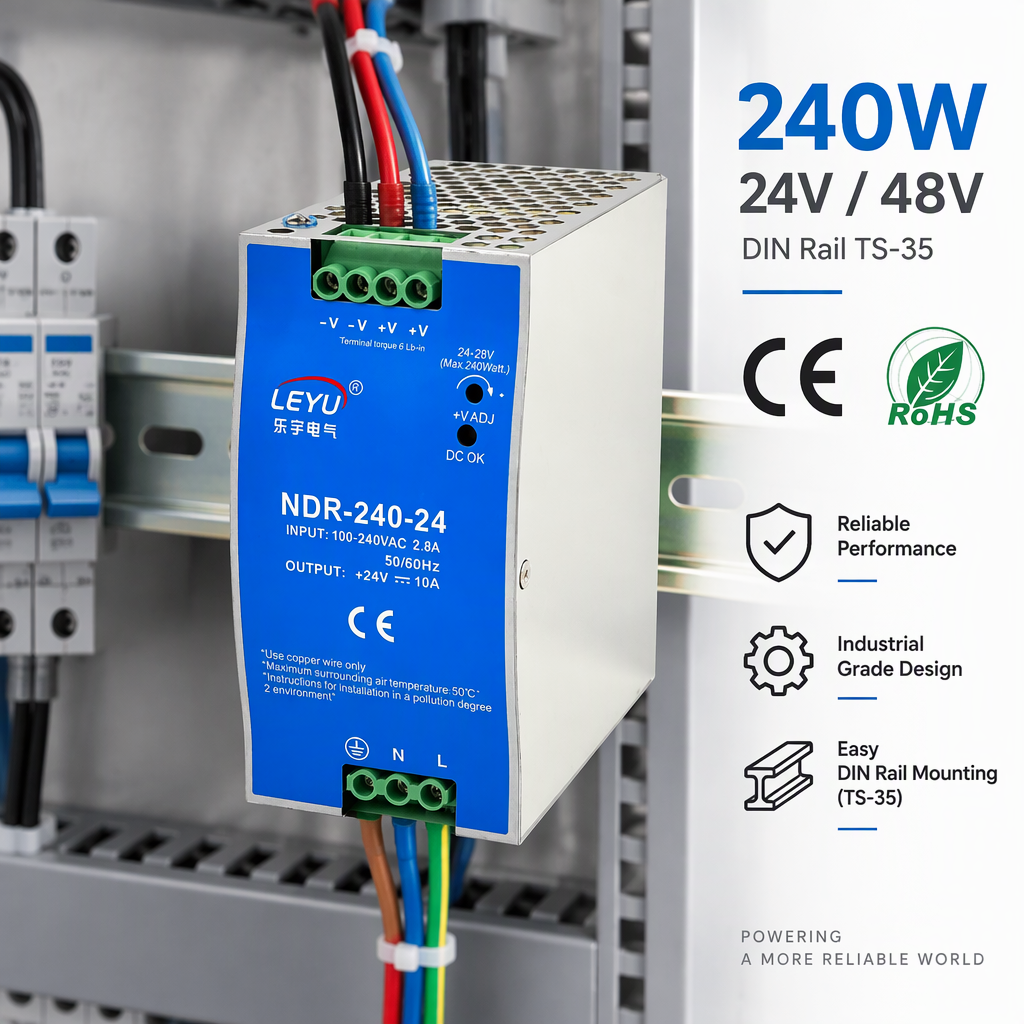
240W Industrial DIN Rail Power Supply with Active PFC 24V 10A 48V 5A AC DC Converter for PLC Control Cabinet
24V 10A / 48V 5A
PF > 0.98
TS35 DIN
Direct from our Yueqing manufacturing base: TS35 DIN rail units with Active PFC, ultra-slim control panel supplies, IP67 LED drivers, and heavy-duty adjustable DC power supplies.
Navigating global supply chain volatility with factory-direct electrical engineering, verified production capacity, and strict international compliance standards.
In modern industrial automation, process telemetry, robotics, and energy infrastructure, the power supply unit (PSU) represents the foundational heartbeat of system reliability. A failure within an automated PLC control cabinet or edge telecommunication node rarely results in isolated equipment downtime; it halts entire manufacturing cells, risks irreparable damage to sensitive microcontrollers, and introduces catastrophic supply chain latency. Yueqing Keldan Technology Co., Ltd. has spent over 18 years engineering and refining high-performance DIN rail power supplies, enclosed switched-mode power supplies (SMPS), and high-output DC-DC converters in Yueqing, Wenzhou—China's universally recognized epicenter for high-precision low-voltage electrical engineering.
As a verified custom manufacturer audited on-site by TÜV Rheinland, Keldan bridges the critical gap between cost-optimized Chinese electronics supply chains and the demanding compliance requirements of North American and European industrial standards. Rather than relying on contract manufacturing brokers or superficial assembly points, our production site operates integrated SMT lines, advanced nitrogen-assisted reflow soldering tunnels, Automated Optical Inspection (AOI), and computer-monitored 100% full-load thermal burn-in racks. This end-to-end oversight ensures our partners receive predictable, auditable quality across every production run.
Automated high-speed surface-mount placement combined with dual-camera AOI ensures sub-millimeter component alignment, eliminating micro-bridging and cold-joint defects on multilayer PCBs.
Our workshop, corporate structure, QA/QC documentation, and international export capabilities have been verified in-person by TÜV Rheinland engineers, providing certified supply chain transparency.
Every industrial power supply undergoes an intensive elevated-temperature aging cycle under 100% electrical load. This process forces infant mortality failures inside the factory, safeguarding field MTBF.
Our engineering department features power supply specialists with over 5 years of SMPS topology development each, allowing custom output profiling, tailored enclosures, and private labeling.
How supply chain executives, system integrators, and engineering procurement teams are reshaping power component specifications for next-generation automated plants.
Modern factory floors demand higher I/O density within standard electrical cabinets, making footprint conservation essential for panel builders and system designers.
International regulatory frameworks such as EN 61000-3-2 mandate low harmonic distortion to avoid harmonic feedback into local sub-stations and industrial grids.
Procurement directors are shifting focus from initial purchase price to lifetime reliability, weighing downtime costs against component quality.
| Series Archetype | Typical Voltage / Output | Cooling Topology | PFC Stage | Target Industrial Environment | Compliance Ready |
|---|---|---|---|---|---|
| NDR / DRP 240W Series | 24VDC (10A) / 48VDC (5A) | Free-air convection | Active PFC (>0.98) | Heavy automation, PLC cabinets, robotics | CE / EN 62368 / EN 55032 |
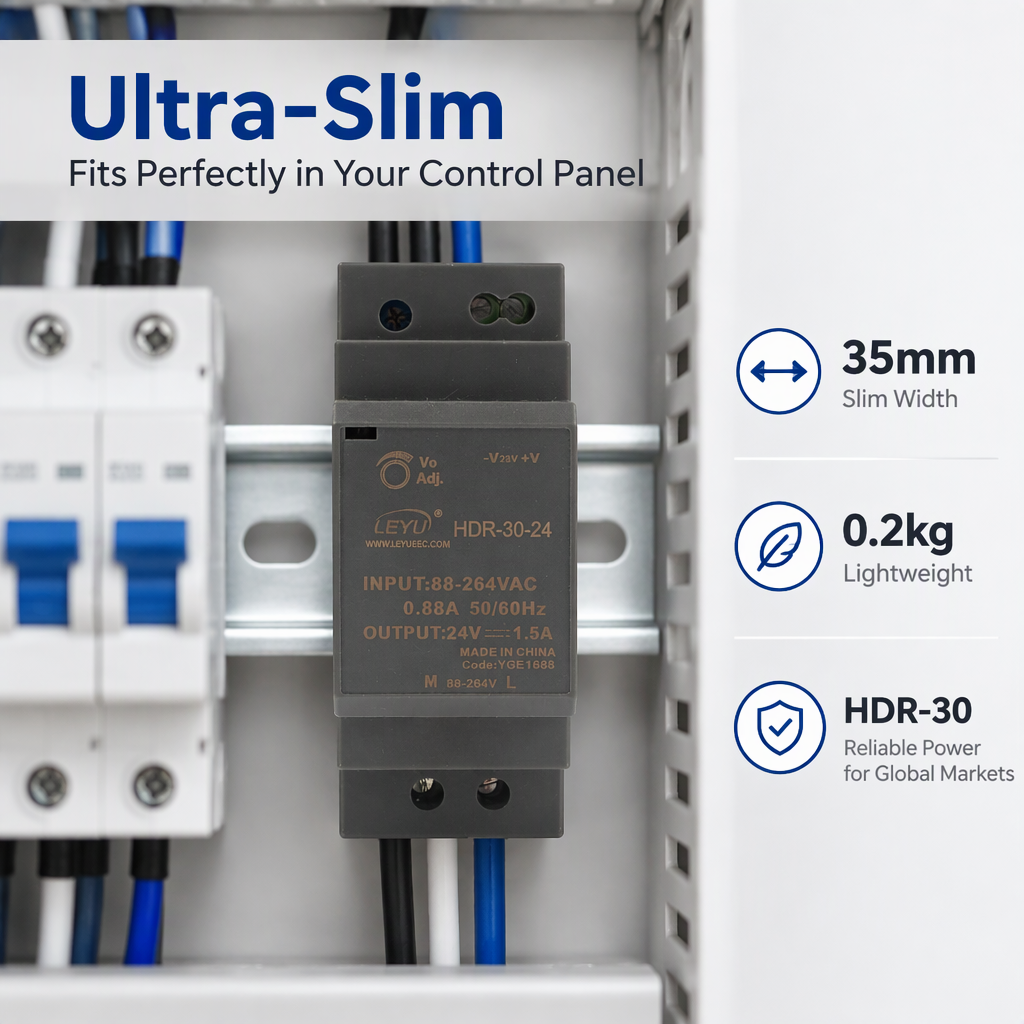
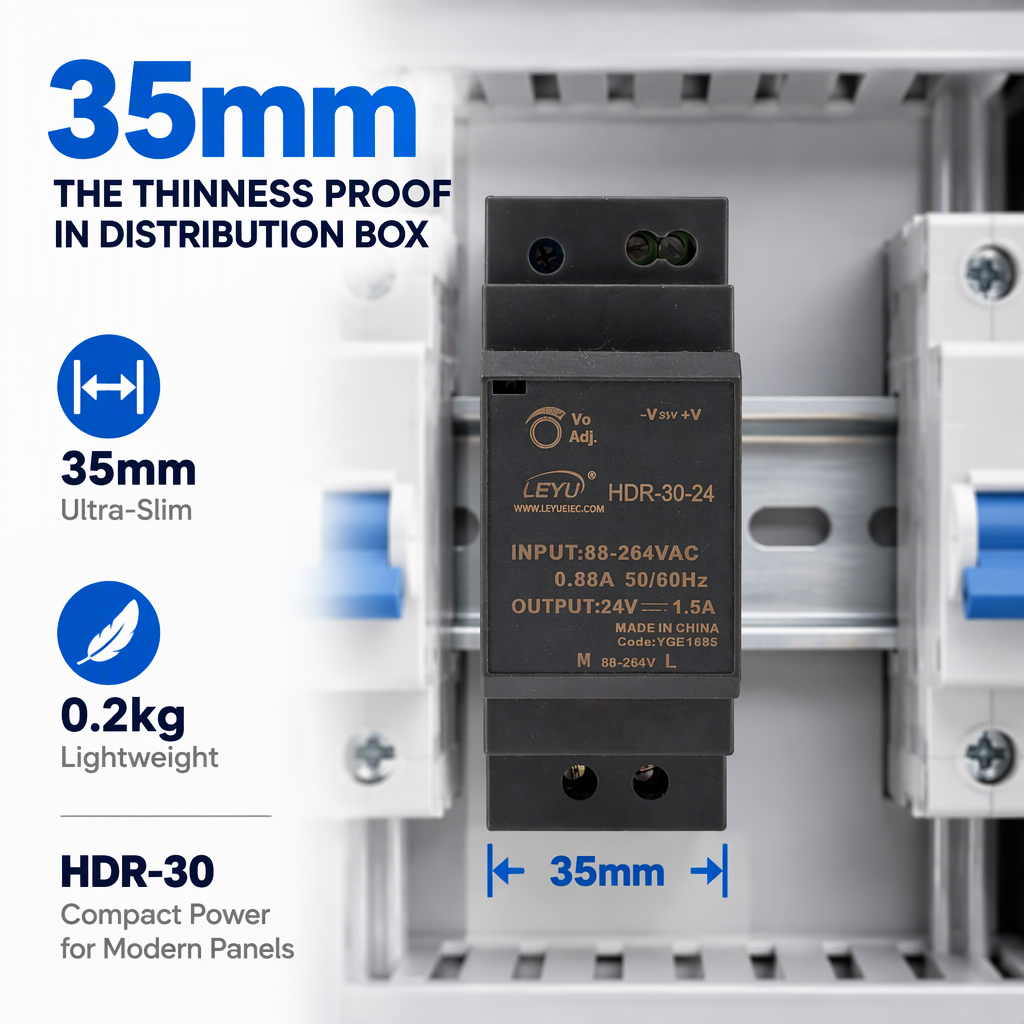
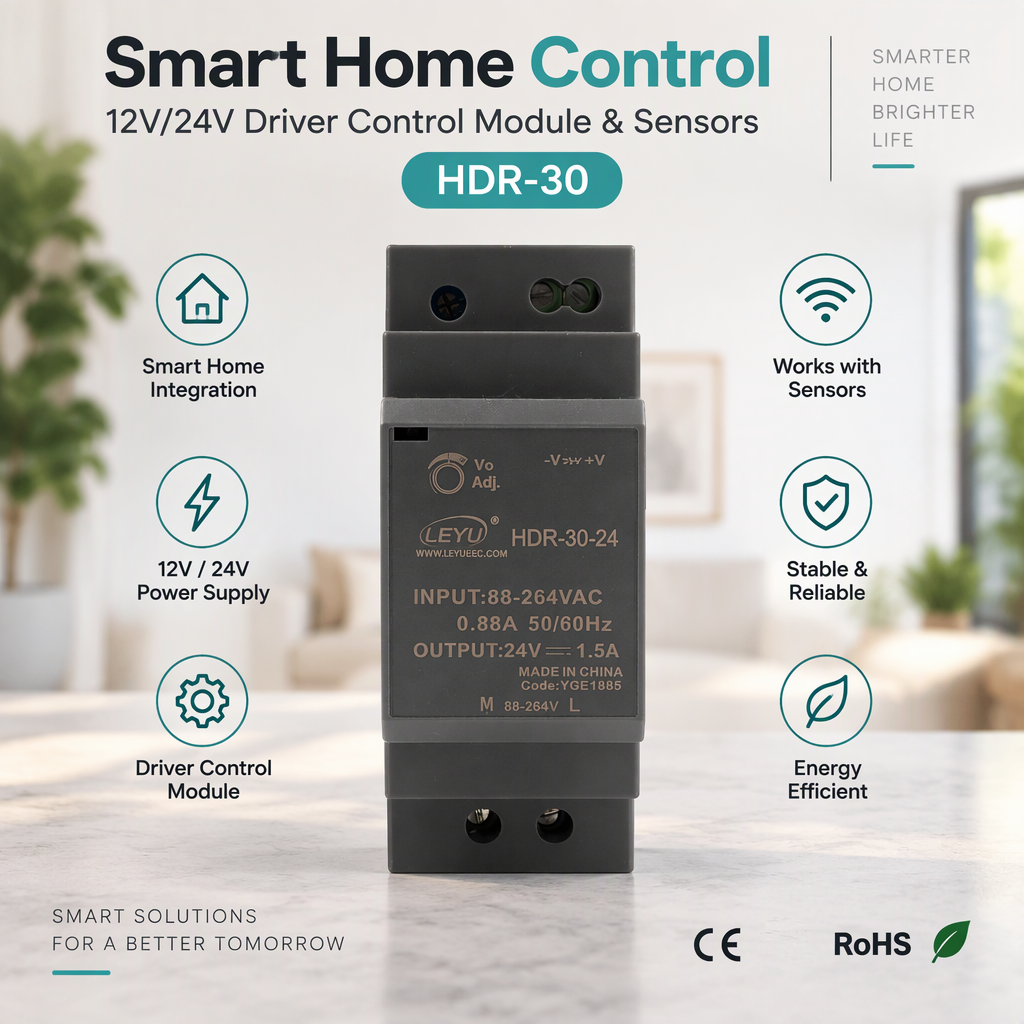
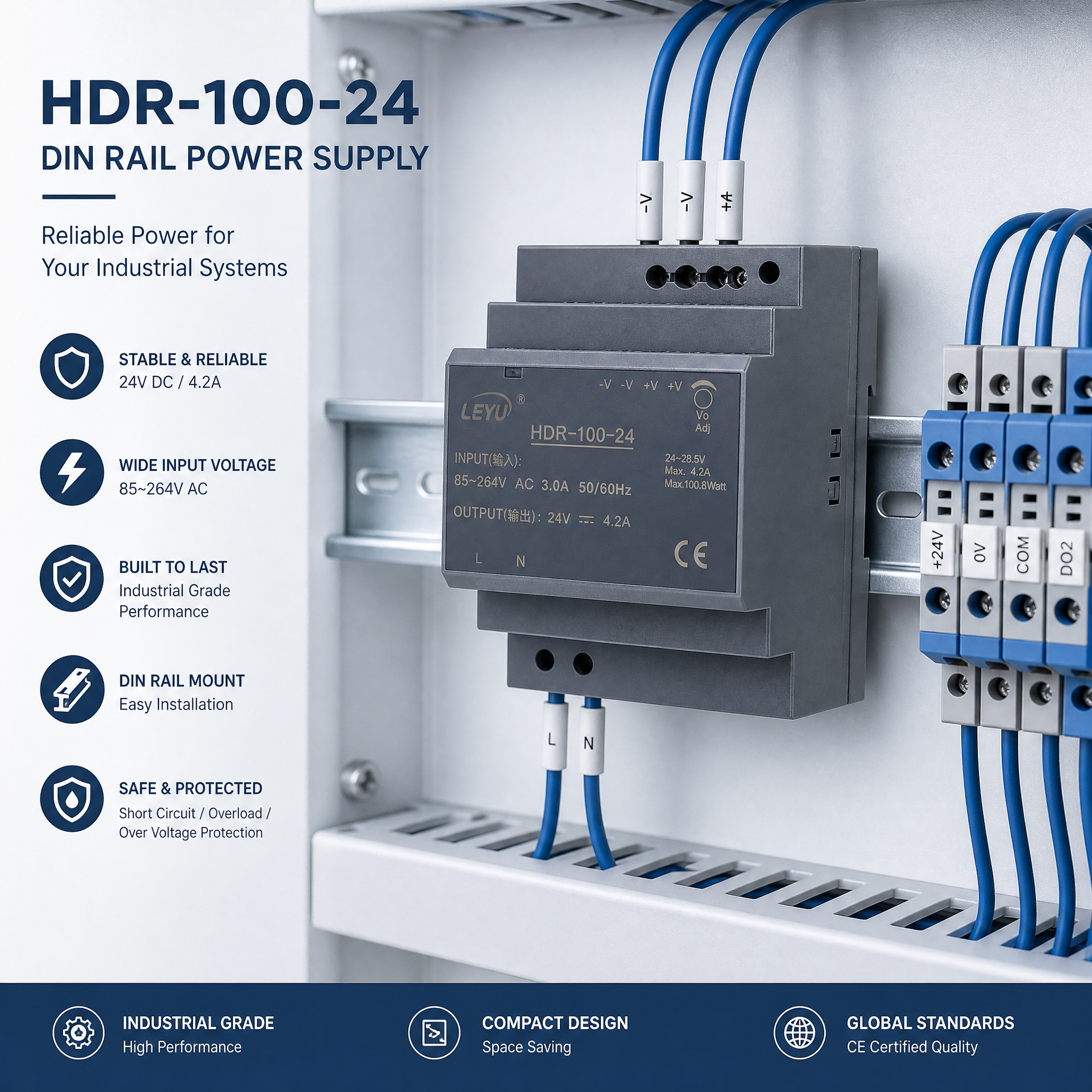
| HDR Slim Series (30W-100W) | 5V, 12V, 24V, 48V | Convection, step-profile | Passive / Eco Class II | Building automation, compact distributed I/O | CE / Class II Isolation |
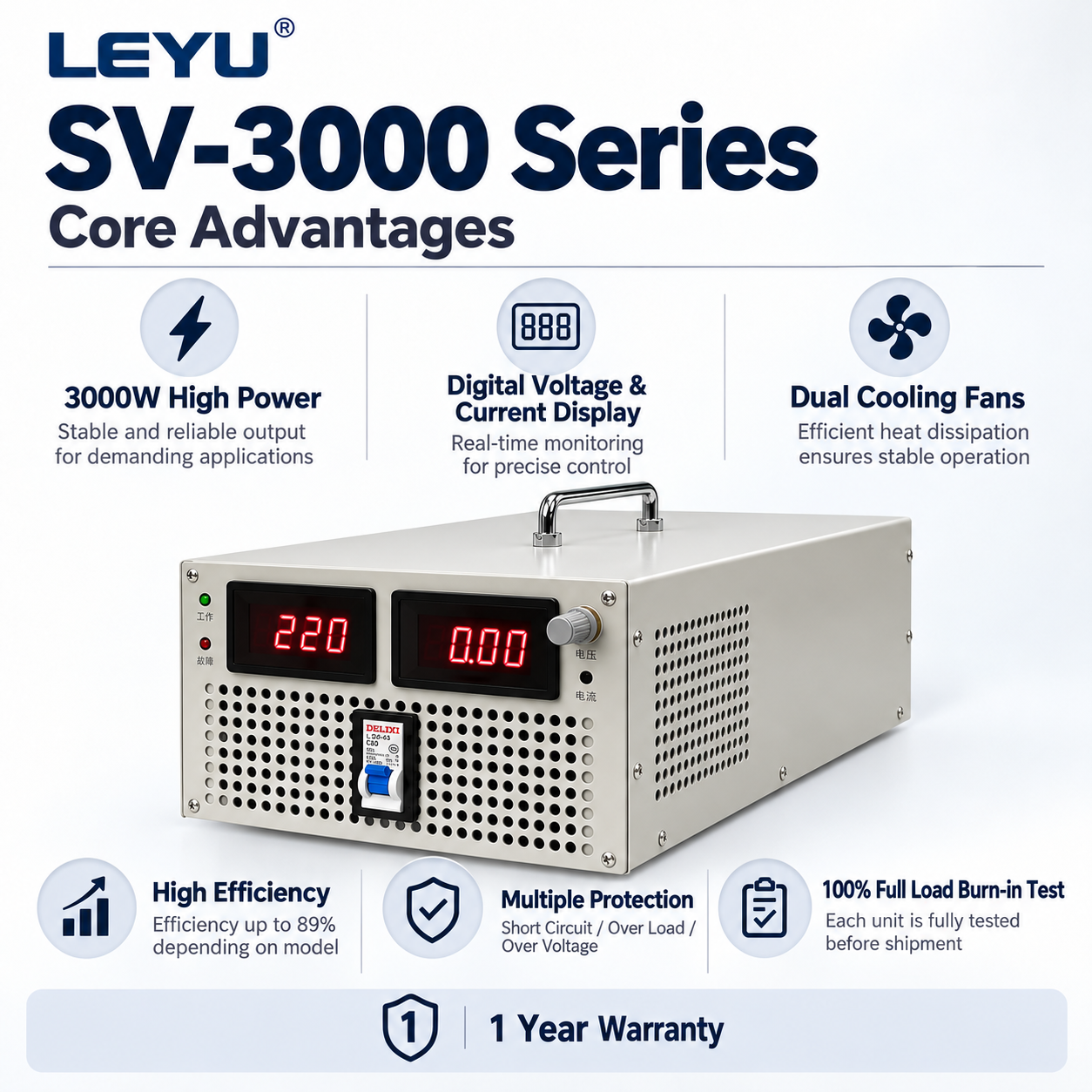
| Adjustable High-Power (3000W) | 0-48VDC (Up to 60A) | Intelligent dynamic fan | Active Multi-Phase | Battery charging banks, plating, burn-in rigs | CE / Short-Circuit Protected |
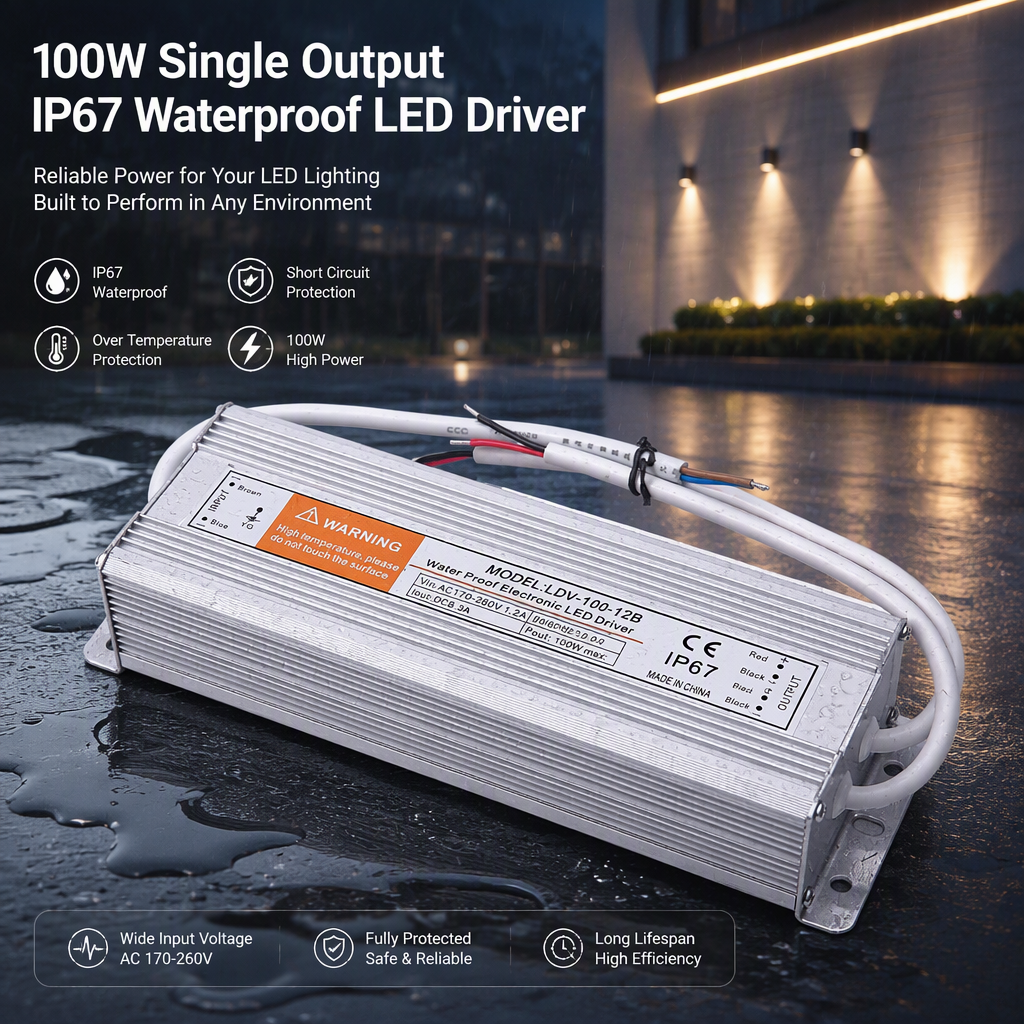
| LDV IP67 Waterproof Series | 12VDC / 24VDC Constant | Full aluminum potting | Integrated High PF | Outdoor industrial signage, architectural LED | IP67 / 4kV Surge Immunity |
From Wide Bandgap (WBG) semiconductors to active synchronous rectification, industrial power design is experiencing a generational technological leap.
Historically, the conventional switched-mode power supply relied upon silicon MOSFETs switched at moderate frequencies (50kHz to 100kHz), requiring bulky magnetic core transformers, large copper windings, and expansive aluminum extrusion heat sinks. Today, the industrial market is aggressively demanding higher power densities (W/in³), driven by the constraints of standardized DIN rail footprints and densely packed edge-computing enclosures. At Keldan, our engineering teams are tracking and deploying several key architectural transitions:
1. Wide Bandgap (GaN and SiC) Adoption: Gallium Nitride (GaN) and Silicon Carbide (SiC) power switching devices exhibit significantly lower on-state resistance (Rds(on)) and reduced parasitic capacitances compared to standard silicon equivalents. This allows switching frequencies to extend safely beyond 200kHz to 500kHz without proportional thermal losses. Elevated switching frequencies directly reduce the required inductance and capacitance values, shrinking ferrite core dimensions by 30% to 50% while improving dynamic step-load recovery times under sudden PLC motor actuations.
2. Synchronous Rectification (SR) over Schottky Diodes: On the secondary low-voltage output stage (typically 12V or 24V), forward voltage drops across conventional Schottky diodes represent the single largest contributor to heat generation. By replacing passive output diodes with actively controlled secondary MOSFETs operating in synchronous rectification mode, the forward conduction loss is reduced from roughly 0.5V to a fraction of a millivolt (I² × Rds(on)). This topological upgrade pushes overall electrical efficiency from legacy 85% thresholds to sustained industrial peak efficiencies exceeding 93% to 94%.
3. Comprehensive Self-Diagnostic Protections: Modern edge equipment requires immediate isolation during unexpected fault scenarios. Keldan's SMPS series are built with redundant protective layers: Hiccup-mode and constant-current over-current protection (OCP), crowbar zener over-voltage protection (OVP), over-temperature shutdown (OTP) with hysteresis auto-recovery, and galvanically isolated DC-OK relay contact outputs that signal master control software before an output brownout occurs.
Incoming raw transformers, capacitors, and ICs undergo incoming quality control testing against verified datasheet thresholds before release to production lines.
High-speed surface-mount machines place precision passive components and microcontrollers onto double-sided lead-free FR-4 copper circuit boards.
Multi-zone reflow ovens maintain carefully calibrated thermal curves, ensuring clean solder wetting and preventing thermal stress on sensitive semiconductors.
High-resolution AOI scanners immediately flag solder bridges, missing elements, skewed placements, or reverse-polarity components with zero human fatigue.
Large magnetic components, high-voltage electrolytic filters, and heavy-gauge terminal blocks are inserted and processed through automated wave soldering systems.
Certified electrical technicians calibrate voltage potentiometers, test short-circuit cutoffs, and record ripple and noise harmonics using digital oscilloscopes.
Completed power supply modules are mounted in automated burn-in chambers under continuous full electrical load at 45°C to 50°C ambient for 2 to 4 hours.
A concluding round of dielectric withstand (Hi-Pot) testing (3000VAC I/P-O/P), grounding continuity, cosmetic inspection, and barcoded traceability packaging.
Addressing the technical, regulatory, and logistics questions most frequently submitted by enterprise procurement officers and automation engineering teams.
Active Power Factor Correction actively shapes the incoming input current waveform to match the phase of the AC mains voltage, elevating the power factor from a typical 0.55-0.65 (standard rectifier) to above 0.98. In multi-cabinet industrial environments, this eliminates unwanted harmonic currents, lowers peak breaker tripping risks, avoids utility harmonic penalties, and minimizes heat dissipation within closed distribution enclosures.
Standard industrial DIN rail units (such as the NDR or DRP series) utilize Class I protection, meaning the unit relies on basic internal insulation coupled with an essential protective earth ground (PE) terminal. Class II step-shape units (such as the HDR-30 or HDR-100) feature reinforced double insulation without requiring a ground terminal, making them compliant for building automation, medical control, and residential distribution boards.
Yes. For mission-critical infrastructure where supply failure cannot be tolerated, two identical voltage-rated supplies can be wired in an N+1 redundant configuration. To ensure reverse-feeding protection during a shorted internal diode scenario, our modules can be paired with dedicated external DIN rail redundancy modules or specified with integrated active O-ring diodes that automatically balance current sharing.
For sealed IP65/NEMA 4X enclosures without active forced air, our engineering recommendation is to apply a 20% to 30% power de-rating headroom. If your continuous PLC and valve load totals 180W at an ambient 50°C, selecting a 240W supply (such as the NDR-240 or DRP-240) ensures the internal electrolytic capacitors remain comfortably within their specified life curve, extending field life significantly.
Standard catalog DIN rail and enclosed models can be sampled from 1 unit for testing and pilot qualification, with standard carton quantities starting around 10 to 20 units. For full OEM/ODM projects (custom output voltages, private silk-screened metal housings, specialized harness terminations), production MOQs generally start at 200 to 500 units with prototype turnaround in 10 to 14 working days.
All standard switching and DIN rail power supplies carry the CE mark with comprehensive EMC reports (EN 55032 Class B radiated and conducted emission, EN 61000-4-2/3/4/5/6 immunity) and Low Voltage Directive compliance (EN 62368-1). Test certificates, RoHS declarations, and factory audit records verified by TÜV Rheinland are available directly to engineering evaluation teams.
