Featured High-Reliability Power Supplies for Complex Cabinets
Precision-engineered multi-rail, DIN rail, and variable DC conversion systems designed for stringent cross-regulation control, active power factor correction, and continuous operation in demanding automation environments.
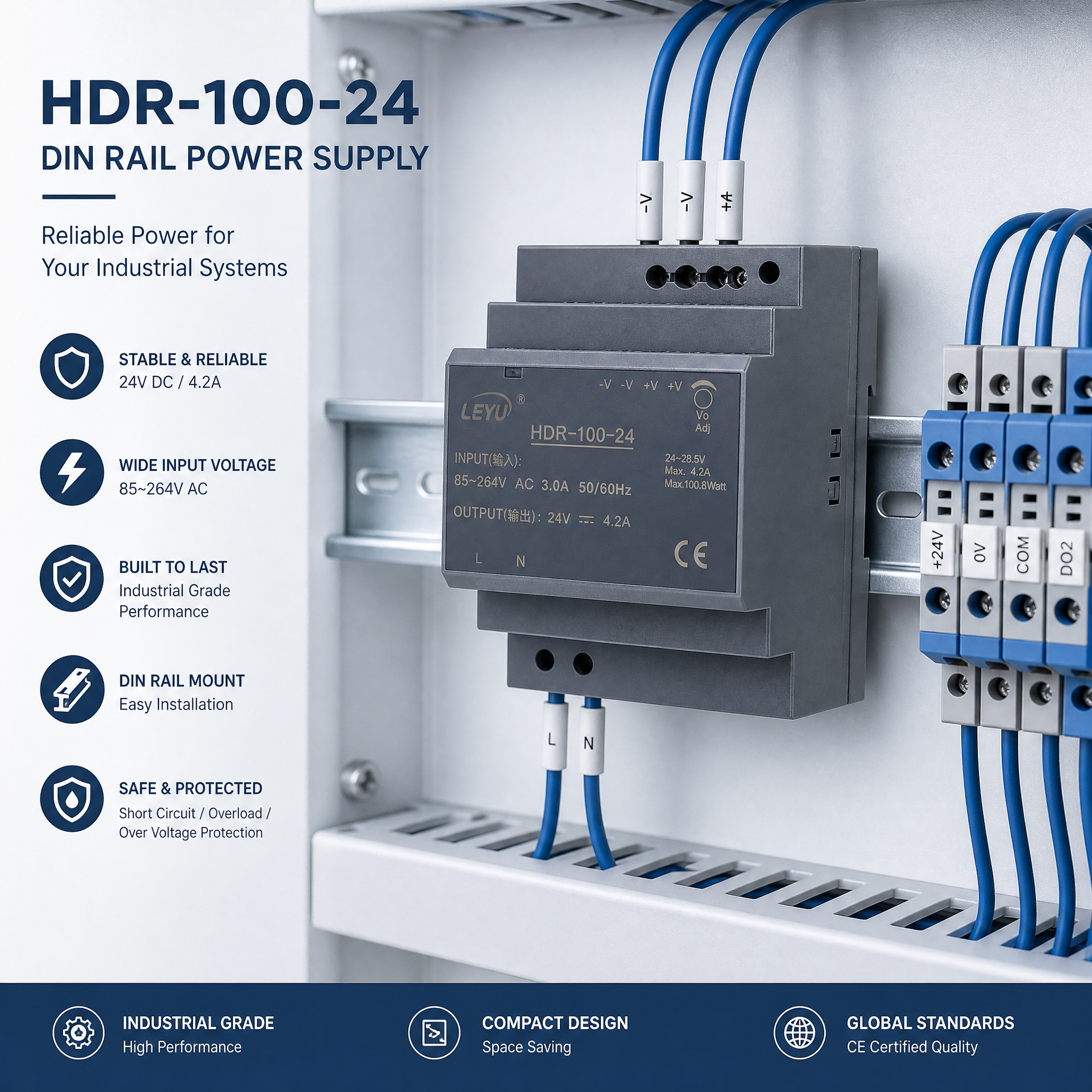
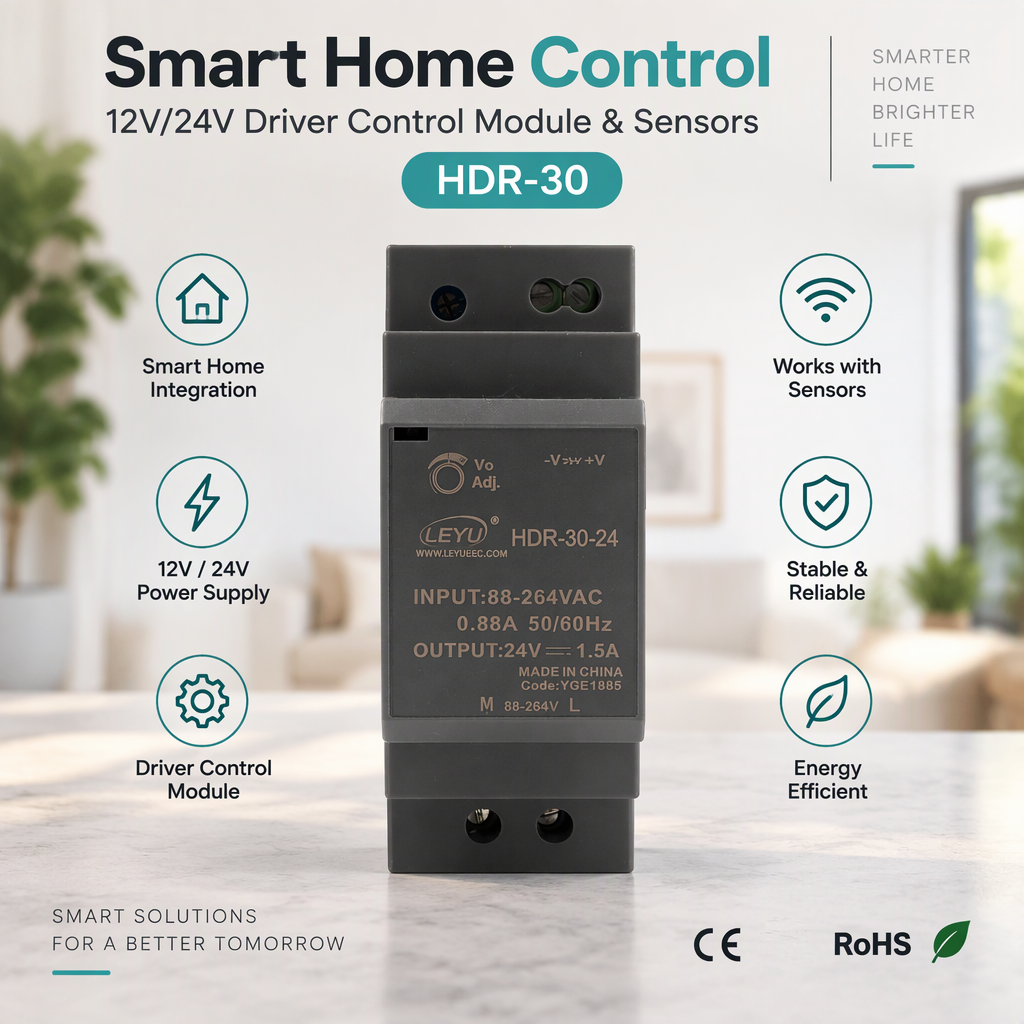
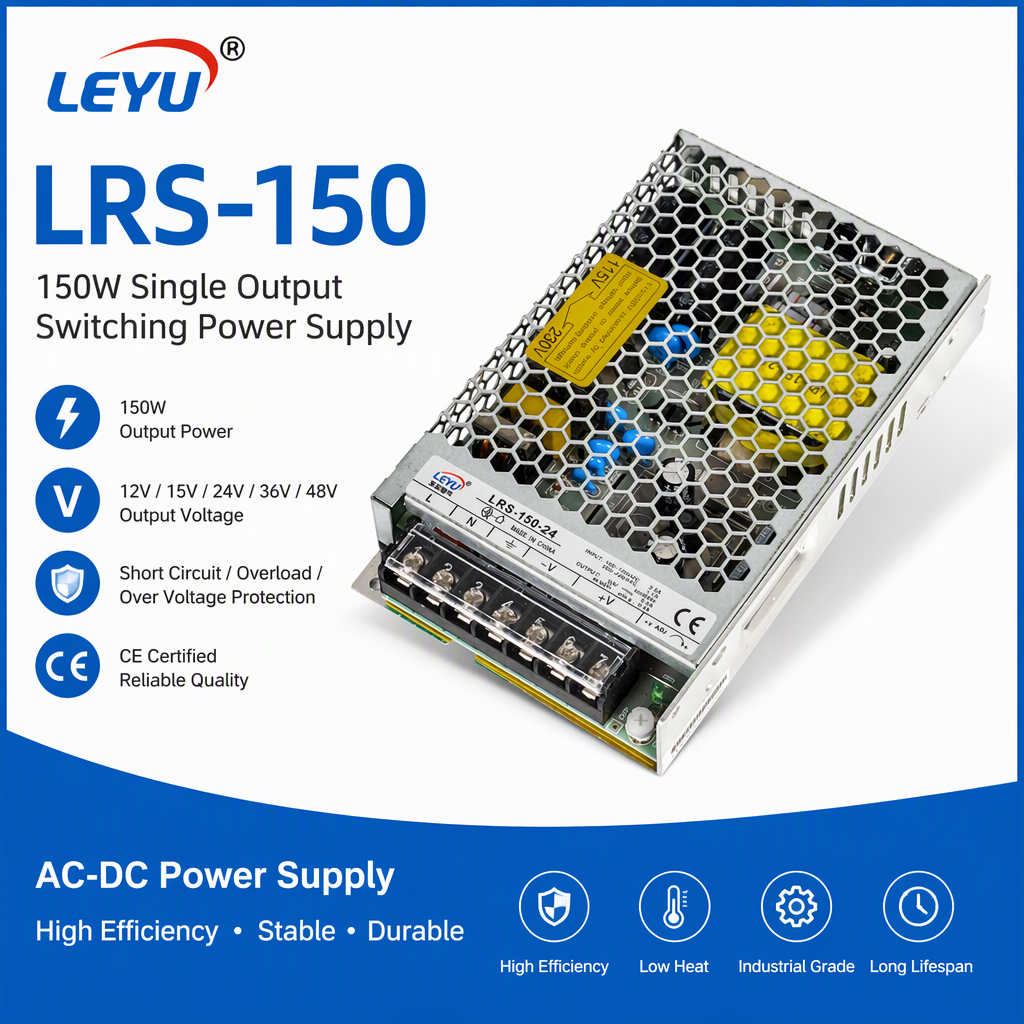
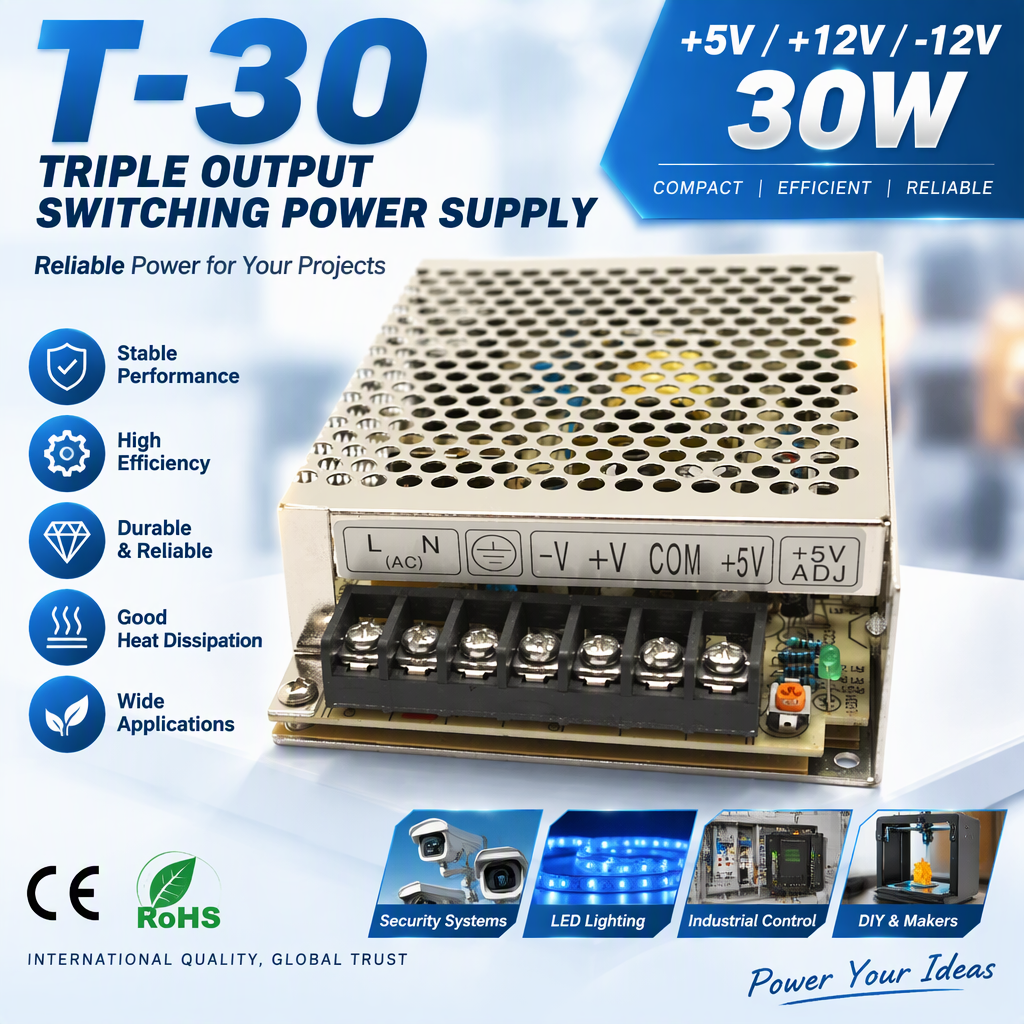
The Architecture of Multiple Output Power Supplies in Modern Industry
Decoupling dynamic loads, balancing magnetic cross-regulation, and delivering multi-rail power stability for automation systems, CNC controllers, and sensitive test instruments.
In advanced industrial control panels, robotics workcells, medical instrumentation, and embedded automation, multiple output power supplies (MOPS) serve as the indispensable electrical backbone. Unlike simple single-rail AC/DC power supplies, a true multiple output converter provides two, three, or four separate regulated DC output voltages—such as +5V for digital TTL logic/microprocessors, +12V or +24V for relays, solenoid valves, and contactors, and -12V or -15V for operational amplifiers and analog sensor front-ends—all derived from a single integrated chassis.
Historically, control engineers met complex multi-voltage requirements by daisy-chaining several discrete power supplies along a DIN rail or within an electrical enclosure. While functionally operable, this fragmented topology introduces severe compounding liabilities: excessive thermal footprints, disorganized wiring looms, disparate ground-loop potentials, higher cumulative leakage currents, and elevated bill-of-materials (BOM) procurement costs. Sourcing an integrated multi-output power supply from an established Chinese manufacturer eliminates cabinet clutter, consolidates MTBF calculations, and ensures compliant electromagnetic compatibility (EMC) through unified input filtering.
Cross-Regulation Optimization
Multi-channel transformer secondary windings suffer from parasitic leakage inductance. Our topologies leverage weighted feedback loops, coupled inductors, and downstream linear or synchronous buck post-regulators to keep secondary rail variance below ±3% under 10% to 100% asymmetric load swings.
Galvanic Channel Isolation
Sensitive analog channels must remain strictly decoupled from inductive actuator noise. We design fully isolated dual- and triple-output stages capable of withstanding 1.5kV to 3kV AC inter-channel dielectric withstand voltages, preventing motor switching transients from compromising digital processors.
Active Power Factor Correction
Operating under European EN 61000-3-2 and international harmonic mitigation standards, our multi-output series above 75W incorporate Active PFC front-ends achieving power factors exceeding 0.95, significantly suppressing reactive harmonic distortion across plant grid infrastructure.
Engineering Note on Dynamic Load Penalties & Minimum Load Thresholds
A common engineering error when selecting multi-output switch-mode supplies (such as the T-30, T-60, or customized quad-rail open-frame converters) is neglecting the minimum load threshold on the primary sensing channel (CH1). In traditional multiple-output flyback or forward topologies, the PWM controller samples feedback exclusively from the primary 5V rail. If the primary rail experiences near-zero current draw while secondary rails (+12V or -12V) draw heavy dynamic loads, the secondary rails may collapse or drift significantly out of specification. Keldan's advanced engineering team mitigates this by integrating internal smart active bleeder networks or dedicated secondary magnetic amplifiers (mag-amps), enabling zero-minimum-load compliance across all secondary branches without thermal throttling.
Engineering Evaluation: Multi-Output SMPS vs. Multi-Unit Discrete Arrays
A rigorous side-by-side technical trade-off matrix assessing electrical efficiency, mechanical integration, thermal stress, and total lifecycle costs.
| Evaluation Parameter | Consolidated Multi-Output SMPS | Discrete Single-Rail Arrays | Engineering Impact / Sourcing Advantage |
|---|---|---|---|
| Cabinet Footprint (Volumetric Density) | Ultra-compact enclosure; saves up to 55% horizontal DIN rail or chassis plate area. | Multiple discrete housings consume excessive rail width and mandate thermal air gaps. | Allows machine builders to reduce overall control cabinet sizing, lowering enclosure and freight costs. |
| Mains Input Wiring & Fusing | Single AC terminal block (L, N, PE); singular input fuse, varistor, and line filter network. | Requires complex AC bus jumpers, multiple input circuit breakers, and redundant terminals. | Cuts wiring labor time by 60%, decreases assembly error rates, and simplifies UL 508A panel certification. |
| Cross-Regulation Behavior | Regulated via magnetic coupling and internal synchronous post-regulation (±3% to ±5%). | Each channel features independent regulation loops (±1% load regulation per channel). | Discrete units win on ultra-tight static precision; modern consolidated supplies win on overall system efficiency and cost. |
| Common-Mode Noise & EMI | Unified internal EMI filter optimized for overall power stage; single earth leakage path. | Additive leakage currents from multiple filter capacitors; risk of tripping sensitive RCDs/GFCIs. | Consolidated multi-rail architectures guarantee compliance with EN 55032 Class B without auxiliary line chokes. |
| BOM Procurement & Sourcing Overhead | Single SKU, single vendor qualification, synchronized factory lead time, unified warranty. | Multiple SKUs from disparate production batches; mismatched failure curves and inventory bloat. | Direct procurement from Yueqing Keldan simplifies vendor management, consolidates MOQs, and slashes landed unit costs. |
Future Procurement Trends in Industrial Multiple Output Power Supplies
How shifting geopolitical logistics, automated manufacturing, and next-generation power semiconductor adoption are reshaping global procurement decisions.
The global procurement landscape for switch-mode power conversion equipment is undergoing significant structural shifts. Procurement directors, original equipment manufacturers (OEMs), and contract electronics manufacturers (CEMs) are adapting their supplier qualification frameworks to address emerging supply chain realities, stricter energy efficiency mandates, and rapid technological breakthroughs.
1. Migration to Concentrated Industrial Clusters
Global procurement teams are moving away from middleman trading agencies and re-centering their supply chains directly in specialized manufacturing hubs like Yueqing, Wenzhou. Yueqing's low-voltage electrical cluster provides immediate supply velocity for magnetic cores, copper enameled wire, aluminum stamping chassis, and SMT PCB fab services. Sourcing from an onsite-verified manufacturer located at the core of this ecosystem reduces production lead times by 30% compared to fragmented assemblers.
2. Total Cost of Ownership (TCO) vs. Raw Unit Purchase Price
Leading buyers are replacing short-sighted unit-price bidding with holistic TCO models. In multiple output systems, a field failure in one channel disables the entire automation line. Calculating continuous conversion efficiency (reducing heat buildup inside sealed IP66/NEMA 4X enclosures), verified MTBF exceeding 100,000 hours, and robust protection circuitry against over-voltage, short-circuit, and over-temperature provides far higher ROI over a machine's 10-year operating life.
3. Factory-Floor Audit Transparency & Third-Party Verification
In accordance with Google's Search Quality Rater Guidelines and rigorous international procurement audits, reliability must be verified rather than simply claimed. Enterprise procurement requires third-party proof: ISO 9001 quality management workflows, CE compliance documentation, full RoHS/REACH compliance files, and verified onsite facility checks by trusted organizations such as TÜV Rheinland. Verification of dedicated SMT pick-and-place lines, Automated Optical Inspection (AOI), and burn-in aging chambers is non-negotiable.
4. Flexible Engineering Customization (Agile OEM/ODM)
Off-the-shelf catalog models often fall short when specific output voltage combinations (e.g., non-standard +5V / +28V / -15V), specialized physical mounting brackets, conformal coating for harsh chemical plants, or proprietary connector wire harnesses are required. The procurement trend strongly favors agile Chinese manufacturers equipped with in-house custom magnetic winding, rapid PCB layout prototyping, and dedicated engineering consultation.
Emerging Technological Trends in Multi-Output Power Conversion (2025–2030)
From Gallium Nitride (GaN) switching bridges to bidirectional telemetry, explore the cutting-edge innovations transforming industrial power electronics.
The demands of modern Industry 4.0, smart manufacturing, Edge-AI processing, and compact servo drives are pushing switch-mode power supplies beyond historical operating thresholds. Power designers must deliver greater current density, near-zero standby dissipation, and intelligent digital feedback loops—all within shrinking physical profiles.
Wide-Bandgap (GaN & SiC) Integration
Replacing legacy silicon MOSFETs with Gallium Nitride (GaN) and Silicon Carbide (SiC) semiconductors allows switching frequencies to climb from 65kHz up to 250kHz–500kHz. This frequency multiplication shrinks the physical volume of planar transformers, coupled chokes, and output electrolytic capacitors, yielding ultra-compact multi-rail DIN rail units with system efficiencies surpassing 94%.
Digital PMBus & Predictive Maintenance
Next-generation multi-output systems are transitioning from purely analog compensation networks to micro-controller-based digital control loops with PMBus, CANopen, or Modbus-RTU interfaces. Industrial panels can continuously monitor real-time channel currents, junction temperatures, remaining capacitor ripple life, and line transients, enabling predictive maintenance before costly line shutdowns occur.
Independent Point-of-Load (PoL) Hybrids
To completely resolve cross-regulation issues, modern multi-rail architectures increasingly adopt an isolated resonant primary stage (LLC converter) producing a single stable 24V or 48V internal DC intermediate bus, followed by integrated high-density synchronous buck Point-of-Load (PoL) regulators. This combines the high isolation and high efficiency of a primary converter with the perfect ±1% channel regulation of dedicated buck stages.
Why Yueqing Keldan Technology Co., Ltd. Stands at the Forefront
Proven production infrastructure, certified engineering rigor, and deep regional integration in Yueqing, Zhejiang, China.
Founded in the epicenter of China's electrical apparatus industry, Yueqing Keldan Technology Co., Ltd. (operating globally alongside renowned brand partner lines like LEYU) has spent more than 18 years perfecting the design, thermal modeling, and mass manufacturing of industrial power supplies, DIN rail systems, and power conversion electronics.
TÜV Rheinland Onsite-Verified Facility
Our complete manufacturing footprint in Beibaixiang Town, Yueqing, has undergone thorough onsite physical verification by TÜV Rheinland. This independent assessment verifies our technical production lines, quality inspection testing apparatus, certified warehouse storage, and end-to-end export execution capabilities, offering overseas buyers complete assurance.
End-to-End Quality Gates & 100% Full-Load Burn-In
Reliability is built directly into our assembly lines. Every manufactured unit passes through an 8-stage verification pipeline: rigorous incoming material IQC, high-speed automated SMT placement, controlled multi-zone reflow soldering, Automated Optical Inspection (AOI), manual structural welding, precision debugging/calibration, 100% full-load thermal aging under elevated ambient chamber conditions, and final electrical safety hi-pot testing.
Dedicated Engineering & Global Trade Support
Our team of 44 verified onsite professionals includes over 5 senior power supply development engineers—each possessing 5+ years of hands-on SMPS topology expertise—alongside a 12-person international trade department. We provide comprehensive technical consultation, custom schematic reviews, 3D CAD modeling, and sample prototyping with responsive communication across global time zones.
Proven Buyer Satisfaction & Flexible Logistics
With an average verified customer feedback rating of 4.8 / 5.0 and more than a decade of direct export experience spanning Europe, North America, South America, Southeast Asia, and the Middle East, we support versatile order structures: from single-piece sample evaluation for standard catalog items to multi-container OEM private labeling programs.
Engineering & B2B Procurement FAQ
Direct answers to technical integration, customization parameters, quality validation, and supply chain logistics.
