Precision-Engineered Power Solutions for Global OEM/ODM Deployment
Explore our flagship series of standard, DIN Rail-mountable, programmable, and high-power bench supplies. Each unit undergoes strict multi-stage optical AOI inspection, in-circuit validation, and thermal chamber burn-in before release.
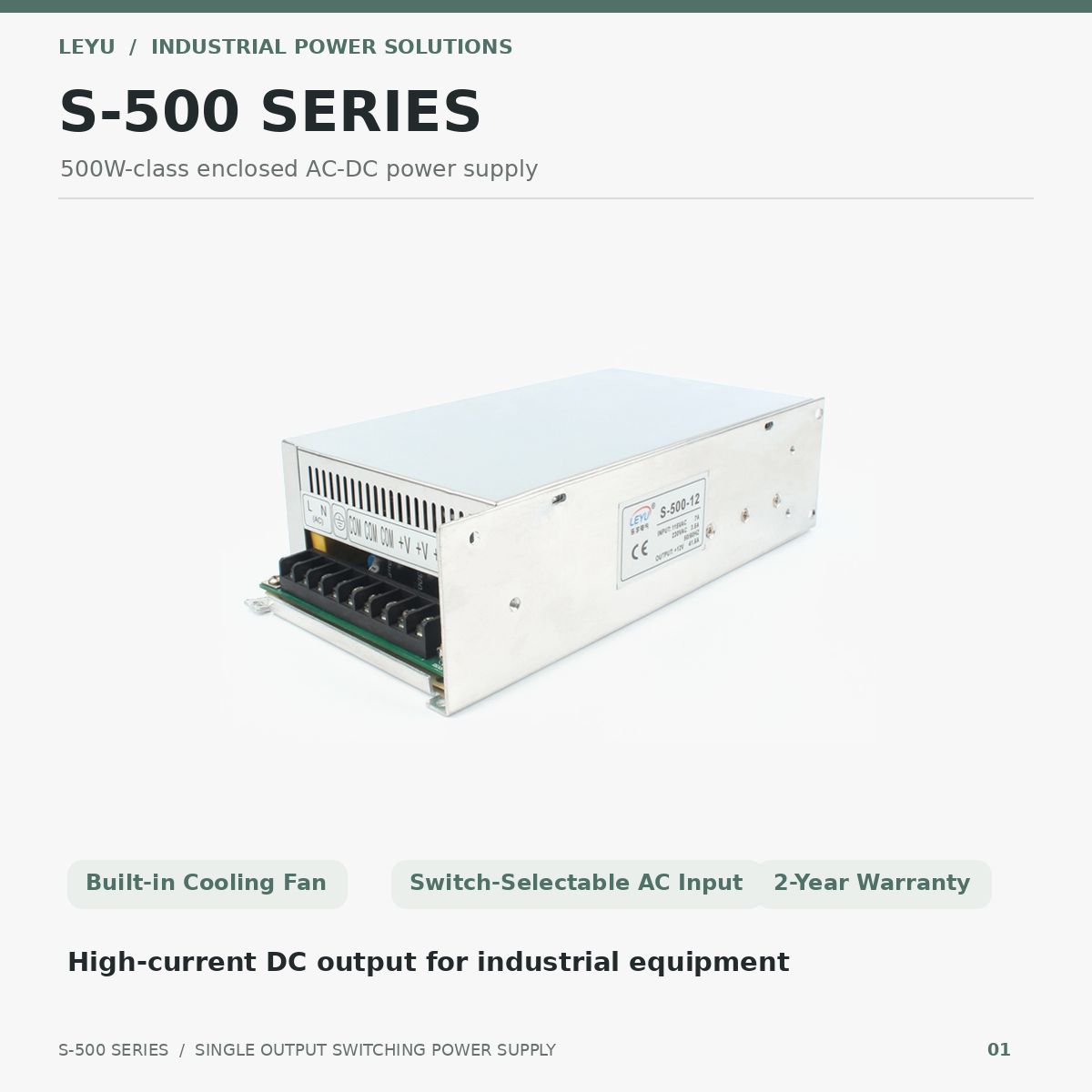
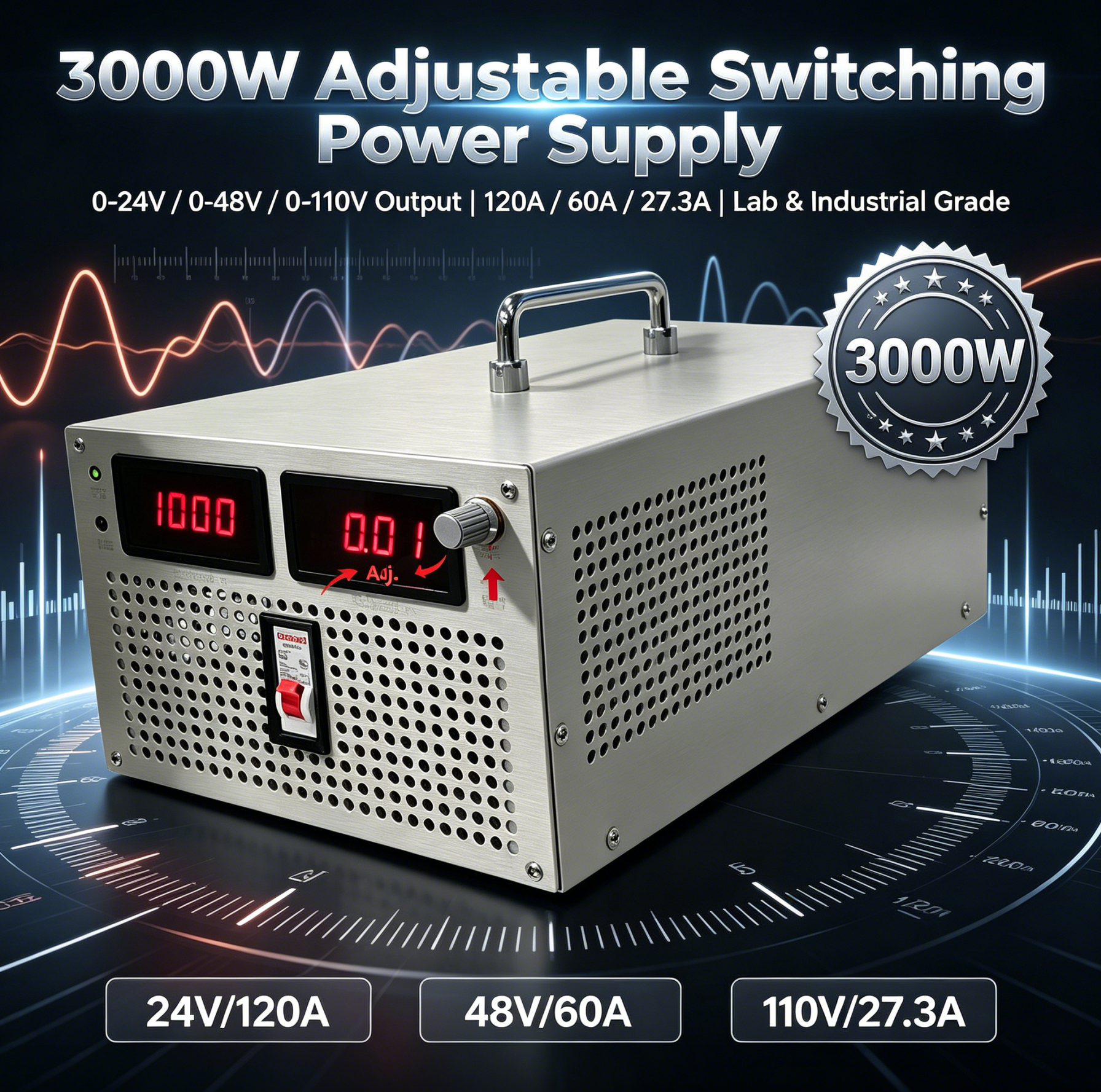
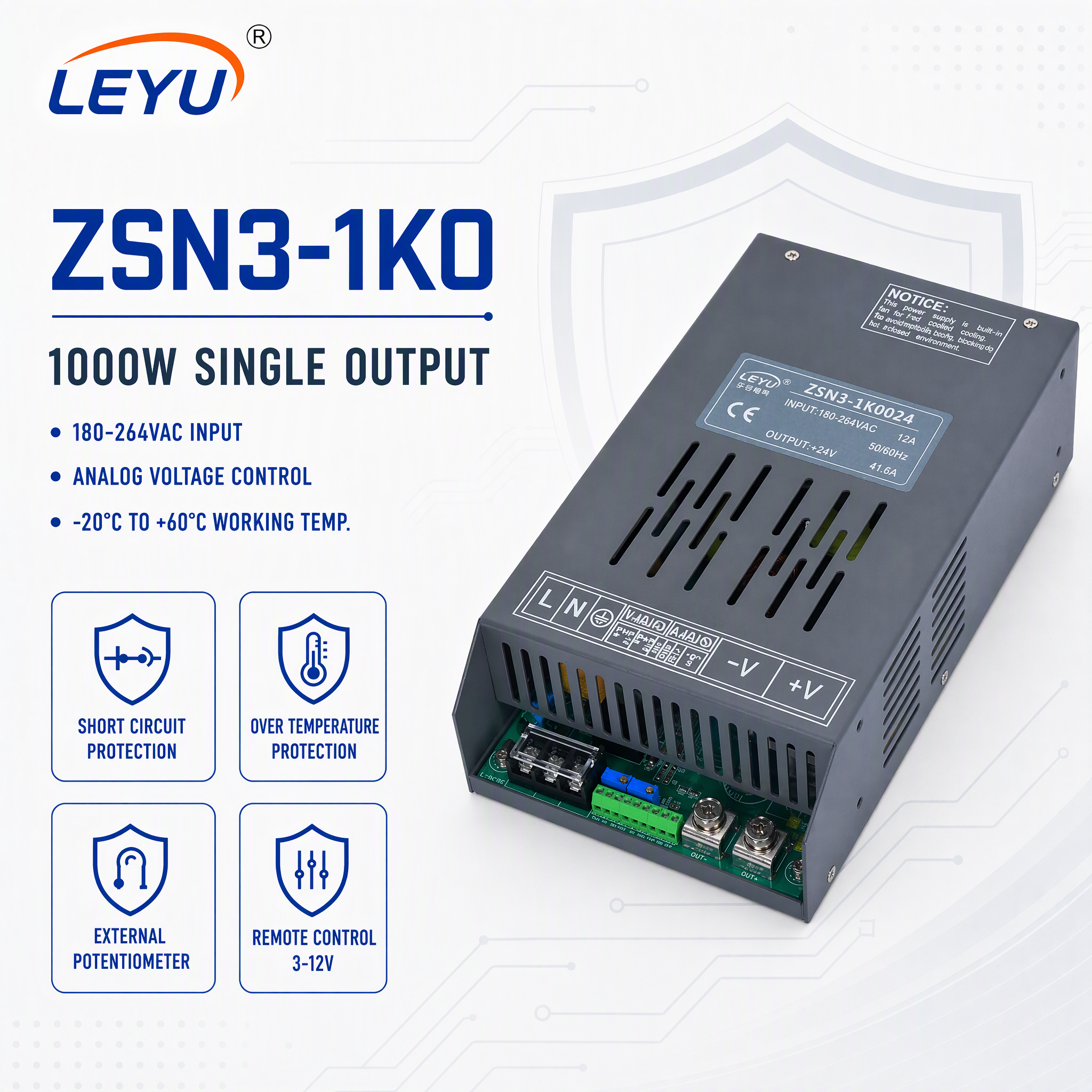
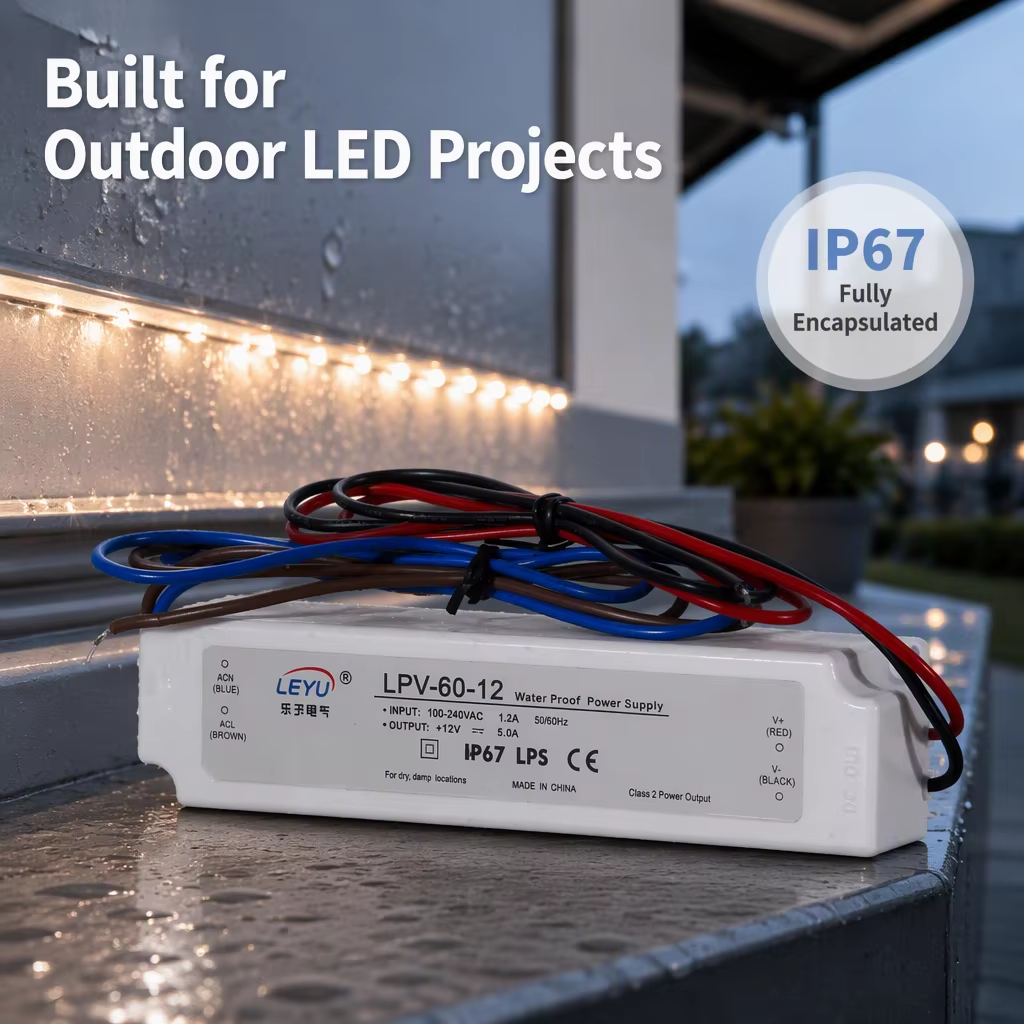
DIN Rail Topology Architecture: Thermal Dynamics, Harmonics, and Isolation Reliability
In modern mission-critical automation cabinets, the switch-mode DIN rail power supply is the operational backbone. Selecting and manufacturing an industrial-grade DIN rail SMPS requires rigorous analysis of power topologies, transient immunity, and active thermal management.
Resonant LLC vs. Two-Switch Forward Topology
For high-density DIN rail solutions (240W to 960W), Yueqing Keldan Technology deploys resonant half-bridge and full-bridge LLC converters instead of conventional flyback architectures. LLC topology facilitates Zero Voltage Switching (ZVS) across the entire load spectrum, virtually eliminating turn-on switching losses in primary MOSFETs. This reduces heat generation by up to 38%, achieving power conversion efficiencies exceeding 94.5% to 95.8%. In sub-120W slim modules, optimized asymmetrical forward topologies deliver dependable transient response during inductive switching without excessive component count.
Active Power Factor Correction (PFC) & Harmonics
Compliance with international standards such as IEC/EN 61000-3-2 Class A and D mandates rigorous suppression of total harmonic distortion (THD). Our active PFC stages employ continuous conduction mode (CCM) boost controllers yielding power factors above 0.98 at rated line inputs (115V/230VAC). By minimizing reactive power circulation within crowded factory substations, Keldan DIN rail units suppress harmonic heating in neutral distribution conductors, attenuate inrush current spikes, and protect delicate PLC I/O cards from line sag.
Thermal Dissipation & De-rating Dynamics on TS35 Rails
Industrial control enclosures often suffer from stagnant convection currents and localized internal hotspots reaching +60°C to +70°C. Standard commercial supplies fail prematurely due to thermal degradation of primary electrolytic capacitors. Keldan engineers utilize premium long-life 105°C Japanese/solid polymer capacitors alongside extruded aerospace-grade aluminum finned housings. This enables full-load operation up to +50°C without forced-air fans, maintaining safe operation up to +70°C with linear 2.5%/°C de-rating curves.
Peak Load Capability for Inductive & Capacitive Inrush
Real-world automation machinery routinely features electromechanical contactors, DC brake coils, servo drives, and heavy capacitive bus lines. A standard power supply tripping into overcurrent foldback during load start causes expensive line shutdowns. Our custom OEM DIN rail units are engineered with a 150% to 200% dynamic peak current reserve for 3 to 5 seconds. Power transformers are engineered with non-saturating gapped magnetic ferrite cores, ensuring instantaneous magnetic flux balance under heavy startup demands.
Robust Multi-Tier Galvanic Isolation & Transient Protection
Electromagnetic harshness in CNC, electroplating, and heavy foundry environments introduces severe voltage transients. Keldan DIN rail power systems integrate multi-stage input surge filtering, deploying gas discharge tubes (GDTs) and heavy-duty metal oxide varistors (MOVs) rated for 4kV line-to-earth and 2kV line-to-line surges (IEC 61000-4-5). Primary-to-secondary galvanic isolation is rated at 3000VAC to 4000VAC, preventing damaging ground loops between industrial three-phase main distribution lines and sensitive 24VDC automation field buses.
Redundancy Modules & Active ORing MOSFET Architecture
Critical 24/7 industrial infrastructure (petrochemical refineries, semiconductor fabrication, and cleanroom HVAC) requires N+1 or 1+1 redundant wiring. Rather than relying on lossy Schottky diodes that generate excessive waste heat, Keldan OEM redundancy modules deploy smart active ORing controllers paired with low RDS(on) MOSFETs. This eliminates up to 80% of heat dissipation across the isolation barrier, keeping DIN rail enclosures cool while providing dry contact DC-OK relay alarms.
Engineering Specification & Selection Matrix
Compare technical parameters across our primary industrial DIN rail and enclosed power supply platforms to streamline procurement specifications.
| Series Category | Input Voltage Window | Nominal Output / Current | Topology & Efficiency | Power Factor (PFC) | MTBF (MIL-HDBK-217F) | Primary Industrial Use Cases |
|---|---|---|---|---|---|---|
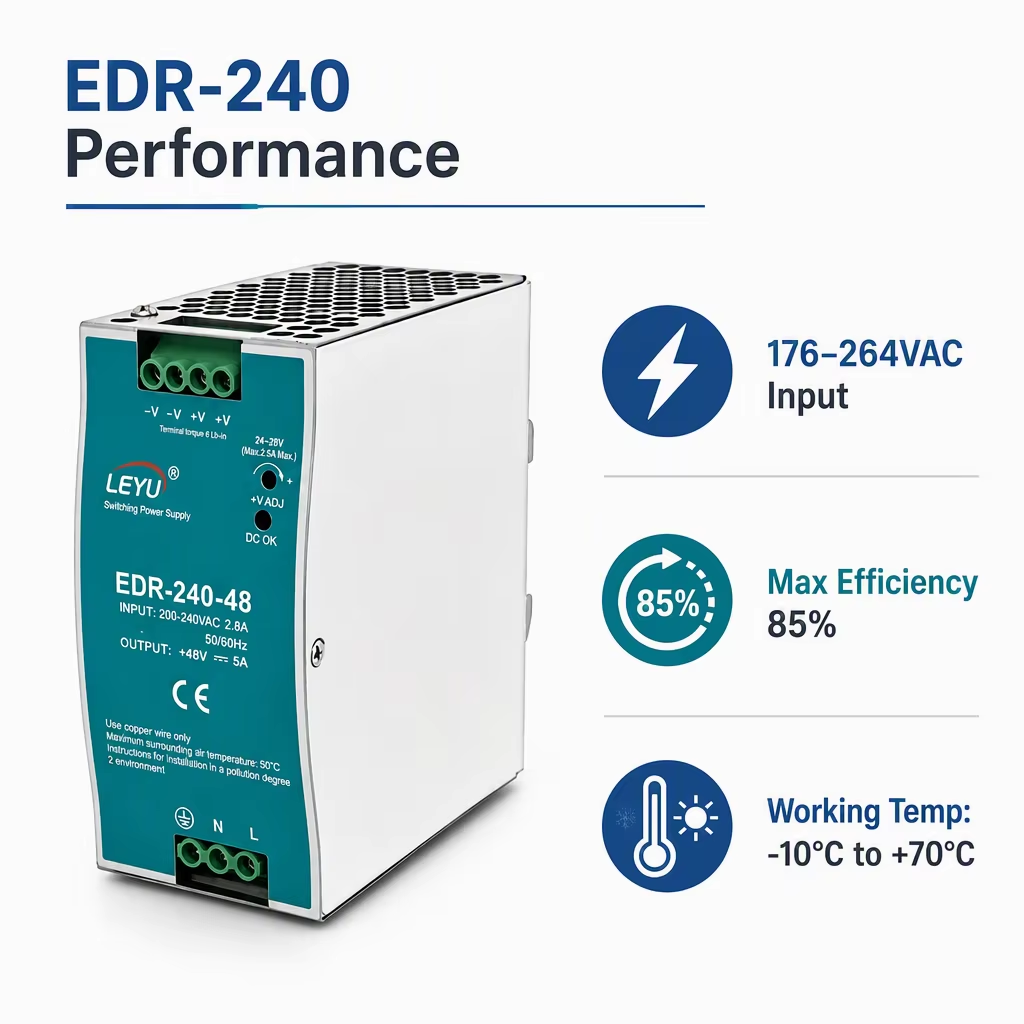
| EDR-Slim Series | 90–264VAC Universal / 127–370VDC | 12V (10A), 24V (5A/10A), 48V (2.5A) | Flyback / Forward (Up to 88.5%) | Standard Passive Filter | > 420,000 Hours @ 25°C | Building automation, compact PLC panels, smart metering |
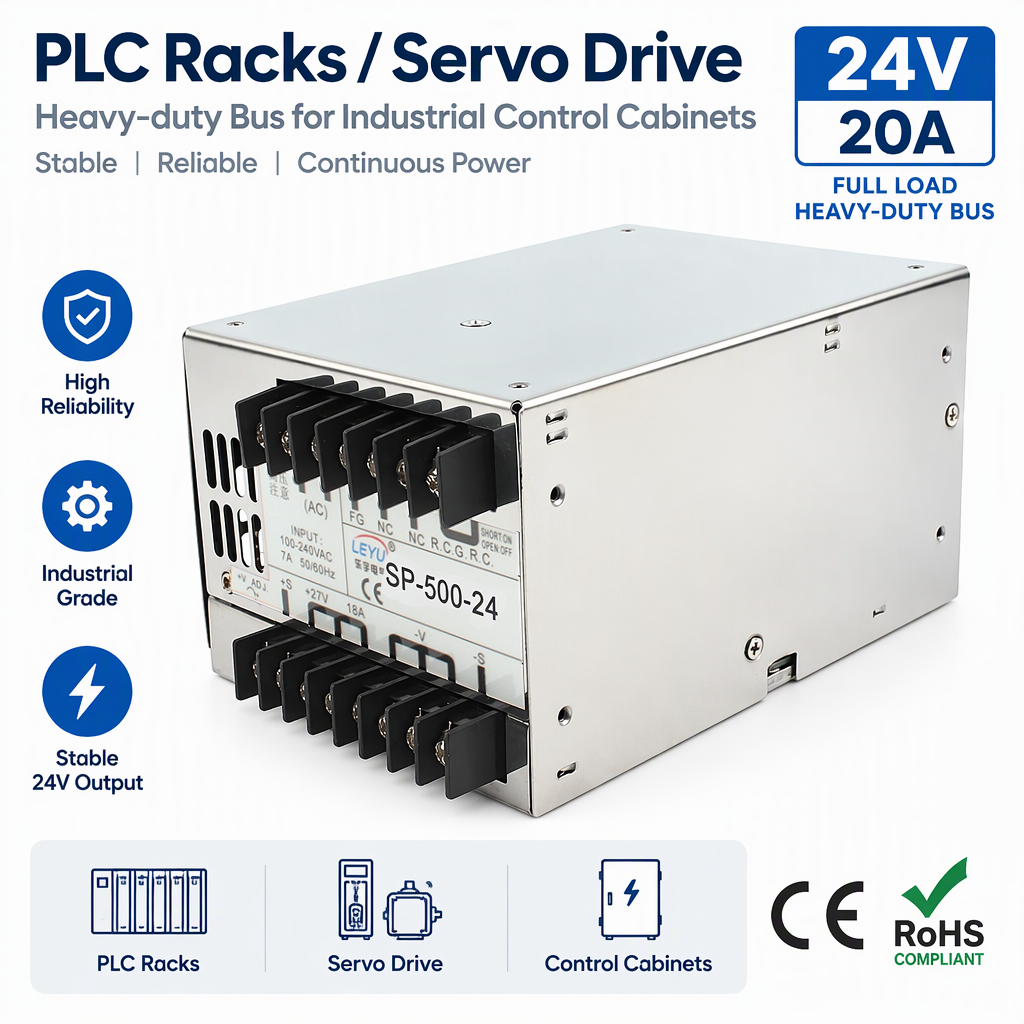
| NDR-Industrial | 90–264VAC Wide Range | 12V (10A), 24V (10A/20A), 48V (5A) | Two-Switch Forward (Up to 92.5%) | Active PFC > 0.95 | > 510,000 Hours @ 25°C | CNC controllers, material handling lines, robotic cells |
| DRP-High Power | 180–264VAC / 3-Phase 340–550VAC | 24V (20A/40A), 48V (10A/20A) | Resonant LLC ZVS (Up to 95.5%) | Active PFC > 0.98 | > 650,000 Hours @ 25°C | Automotive paint shops, chemical processing, packaging lines |
| LRS Enclosed SMPS | 85–264VAC or Switch Selectable | 5V, 12V, 24V, 36V, 48V (35W–350W) | Optimized Forward (Up to 91.5%) | Model Specific (> 0.93) | > 480,000 Hours @ 25°C | CCTV security matrices, 3D printers, laser engravers |
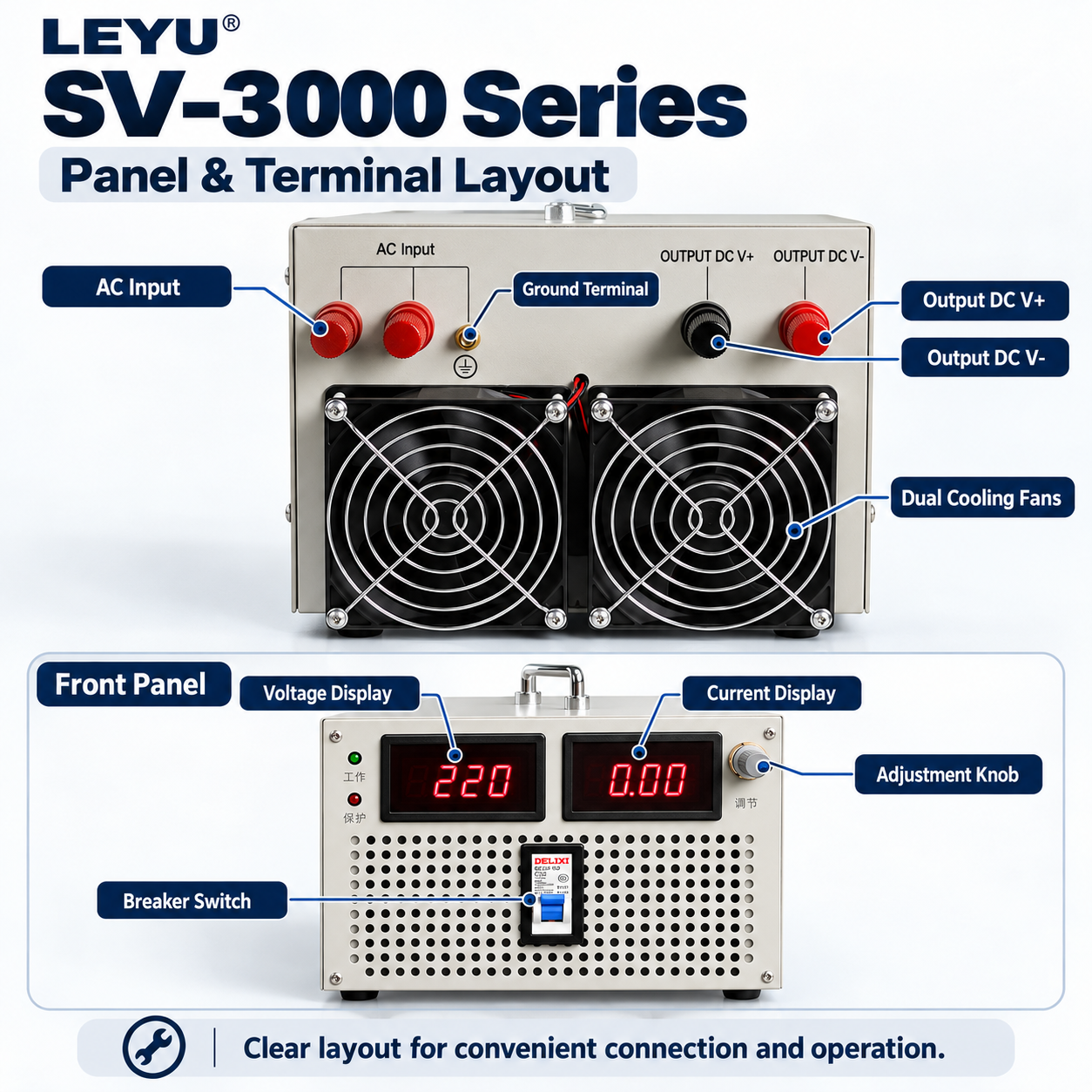
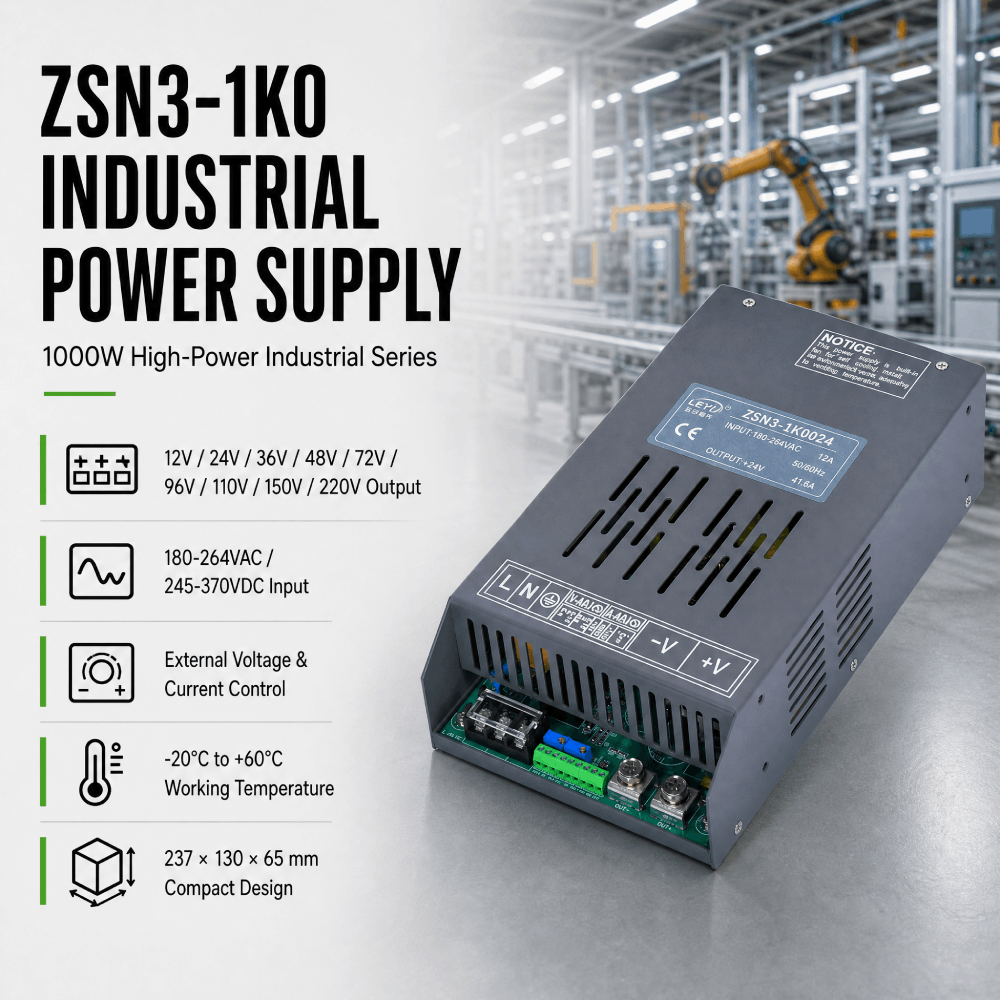
| SV/ZSN Variable SMPS | Single-Phase 220VAC / 3-Phase 380V | 0–110VDC, 0–220VDC (1000W–3000W) | IGBT / MOSFET Half-Bridge (93%) | Integrated Front-End Filter | > 350,000 Hours @ 25°C | Electroplating, anodizing bath electrolysis, laser laboratories |
Emerging Trends Reshaping Industrial Power Supply Procurement
Procurement directors and system architects are adjusting technical requirements to align with digital telemetry, energy conservation mandates, and ultra-compact cabinet architectures.
1. Intelligent Digital Telemetry (PMBus & IO-Link)
Traditional passive power supplies operate as unmonitored blind spots. Modern industrial procurement mandates digital power converters equipped with PMBus, CANopen, or IO-Link communications. Real-time telemetry monitoring operating temperature, instantaneous current consumption, ripple anomalies, and accumulated thermal hours enables automated predictive maintenance before physical component breakdown stops production.
2. High-Density Form Factors Driven by GaN & SiC
Control cabinet real estate comes at an absolute premium. Factory buyers are phasing out legacy, wide-chassis 240W power supplies in favor of ultra-slim modules under 35mm to 40mm in front width. Leveraging Gallium Nitride (GaN) and Silicon Carbide (SiC) semiconductors allows operating switching frequencies to scale from 65kHz to over 250kHz, reducing transformer volume by 40% while preserving thermal margins.
3. Total Cost of Ownership (TCO) vs. Initial Unit Price
Global electrical tariff hikes and corporate carbon-reduction mandates have transformed procurement evaluation criteria. A 1% improvement in conversion efficiency over a 480W DIN rail power supply running 24/7/365 saves thousands of kilowatt-hours over a typical 10-year lifespan. Procurement teams prioritize units featuring certified 94%+ peak efficiency, ultra-low no-load standby dissipation (<0.5W), and extended electrolytic life.
Future Technological Trajectories in Modular Power Electronics
Keldan Technology invests continuously in next-generation topologies, ensuring OEM clients remain compliant with evolving ecological standards and grid modernizations.
Wide-Bandgap (WBG) Semiconductor Commercialization
The transition from silicon SJ-MOSFETs to wide-bandgap GaN-on-Si and SiC power switches represents a major technical shift in DIN rail power supply engineering. Wide-bandgap devices offer electron mobility and breakdown field strengths an order of magnitude higher than conventional silicon. This allows near-instantaneous switching transitions with zero reverse recovery charge (Qrr), unlocking ultra-high power densities over 30W/in³ and enabling fanless sealed IP67 DIN rail variants.
Direct DC Microgrid Integration & Bidirectional Flow
With industrial plants adopting rooftop commercial photovoltaic arrays, battery energy storage systems (BESS), and regenerative braking servo drives, central 380VDC to 700VDC microgrids are becoming standard. Future-ready DIN rail platforms must accept both AC mains and direct high-voltage DC bus inputs (120–370VDC or 400–800VDC). Keldan's R&D roadmap includes bidirectional DC-DC modules capable of returning regenerative mechanical braking energy into central storage batteries.
Functional Safety (SIL3 / ISO 13849-1) Integration
As human-robot collaborative cells proliferate across smart factories, secondary 24VDC circuits require functional safety integration. Future DIN rail power architectures combine galvanic isolation with embedded hardware safety switches, dual-channel overvoltage trip circuitry, and hardware-monitored self-testing circuits. This achieves SIL2/SIL3 and PL e safety level compatibility directly from the auxiliary power terminal, removing the need for external safety trip contactors.
Why Global Tier-1 Brands Trust Yueqing Keldan Technology
Located in China's low-voltage electrical capital (Yueqing, Zhejiang), Keldan operates an audited manufacturing hub verified by TÜV Rheinland, combining end-to-end production with engineering-level OEM support.
Frequently Asked Questions for Technical Sourcing & Auditing
Detailed technical answers addressing common questions raised by electrical systems engineers, supplier quality managers, and international supply chain teams.
The three primary failure modes in industrial switch-mode power supplies are electrolytic capacitor dry-out due to elevated thermal stress, primary switching MOSFET punch-through triggered by line-side transient voltage spikes, and solder joint cracking under high vibration environments. Keldan addresses these issues by using 105°C long-life capacitors with low ESR, oversized 650V/800V avalanche-rated MOSFETs paired with primary MOV/GDT transient suppression networks, and automated SMT reflow soldering with precision solder paste inspection (SPI).
Constant Current Limiting maintains the output current at a clamped maximum while reducing voltage when an overload occurs, which is ideal for charging battery banks or powering motors with high starting current. Hiccup Mode periodically shuts down the PWM controller and attempts to restart every few seconds until the short circuit is cleared, significantly reducing overall thermal stress. Foldback current limiting reduces both the output voltage and current simultaneously, protecting delicate load-side wiring.
Our MTBF data is calculated according to MIL-HDBK-217F Notice 2 and Telcordia SR-332 standards using component part-count and part-stress methodologies, evaluated at nominal 230VAC input, 75% steady-state load, and ambient temperatures of +25°C and +40°C. Furthermore, we run ongoing reliability testing (ORT) in environmental stress screening (ESS) chambers at elevated temperatures (+60°C) and 90% relative humidity to validate statistical failure rates against empirical test data.
Every standard Keldan DIN rail model comes with CE Declarations of Conformity covering the Low Voltage Directive (LVD 2014/35/EU via EN 62368-1) and the Electromagnetic Compatibility Directive (EMC 2014/30/EU via EN 55032 and EN 55035). We also supply test reports for RoHS 2.0 (2011/65/EU and 2015/863), REACH declarations, and ISO 9001 factory documentation. UL-standard construction compliance reports can also be prepared for custom OEM projects.
Yes. We specialize in design-based and sample-based customization. Our engineering team can adjust transformer winding turns, feedback resistor networks, and reference diodes to deliver non-standard output voltages (such as 15V, 30V, 36V, 60V, or bipolar ±15V rails). We also re-engineer mechanical chassis dimensions, offer step-shaped enclosures for low-profile distribution boxes, and provide alternate terminal block configurations such as screw, pluggable, or spring-cage push-in terminals.
We implement a strict Approved Vendor List (AVL) protocol. Core semiconductor components (MOSFETs, IC controllers, Schottky diodes) and electrolytic capacitors are purchased through authorized factory direct channels or vetted franchised distributors. Every incoming material batch undergoes lot-traceability logging, packaging inspection, X-ray inspection of internal dies where applicable, and bench parameter spot-testing before components are released to the SMT production floor.
Under international regulations including EN 61000-3-2, electrical equipment drawing more than 75W from public AC mains must meet specific harmonic limits. Beyond regulatory compliance, Active PFC raises the power factor from ~0.6 (typical for uncorrected diode bridges) to >0.98. This cuts line RMS input current by approximately 35%, lowers total current draw on branch circuit breakers, prevents neutral line overheating in three-phase control cabinets, and improves immunity to incoming voltage sags.
Standard catalog models (such as EDR, NDR, HDR, and LRS series) can be sampled with an MOQ of 1 piece for evaluation, while typical production MOQs for standard units start at 10 to 50 pieces. For custom OEM/ODM projects (custom circuit modifications, specialized chassis extrusions, private labeling), project-specific MOQs typically range from 100 to 500 units depending on component lead times and enclosure tooling requirements. Production lead time for standard catalogue runs is 2 to 3 weeks, and 4 to 6 weeks for custom OEM builds.
Yes. To achieve higher voltage (series connection), units of identical current ratings can have their outputs connected in series with external reverse-bias clamp diodes across each output to prevent reverse voltage breakdown during startup. For parallel operation to increase capacity or establish N+1 redundancy, we strongly recommend units equipped with built-in current-sharing circuitry or pairing standard units with an external active ORing redundancy module to prevent circulating currents and uneven thermal stress.
Our burn-in protocol is applied to 100% of finished production units. Power supplies are mounted onto custom burn-in racks inside an elevated ambient aging room (+45°C to +50°C), where they are subjected to continuous 100% resistive or electronic full-load conditions for 4 to 8 hours. During this run, power input is periodically cycled (mains on/off toggling) to induce maximum thermal and inrush stress across transformers, semiconductor junctions, and capacitor seals, reliably weeding out early infant mortality failures.
Connect Directly with Our Power Supply Engineering Team
Need a custom voltage modification, a TS35 slim-profile custom prototype, or a competitive quote on container-load production? Yueqing Keldan Technology provides full engineering reviews within 24 hours.
Send an Inquiry