Laboratory Grade
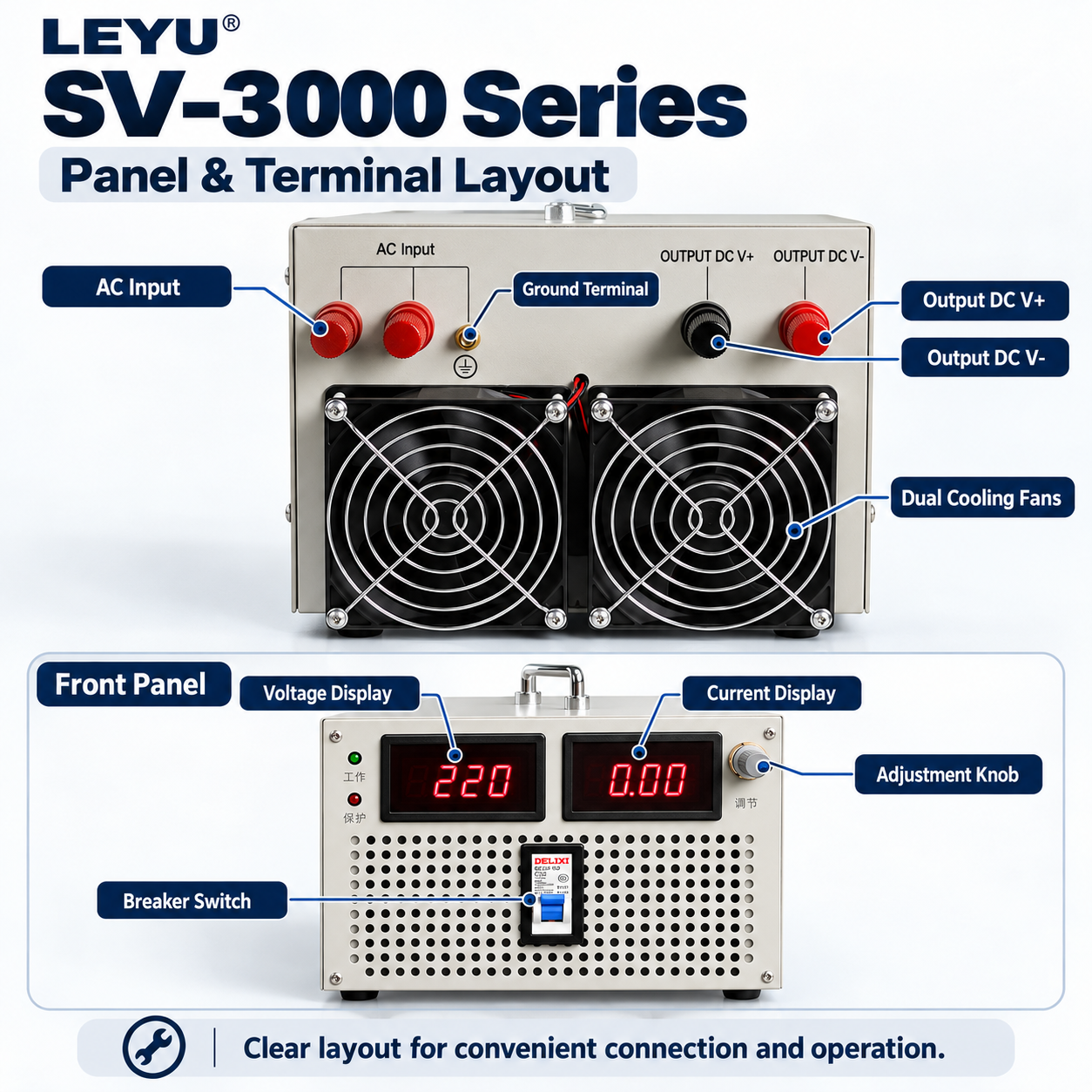
3000W High Power Lab Bench Power Supply 0-24V 0-48V 0-110V Variable AC DC Converter
High Power Aging
View Specs
High-performance DIN rail modules, variable DC testing units, and high-efficiency enclosed drivers. Every unit is subjected to rigorous 100% full-load burn-in aging and automated optical inspection prior to export clearance.
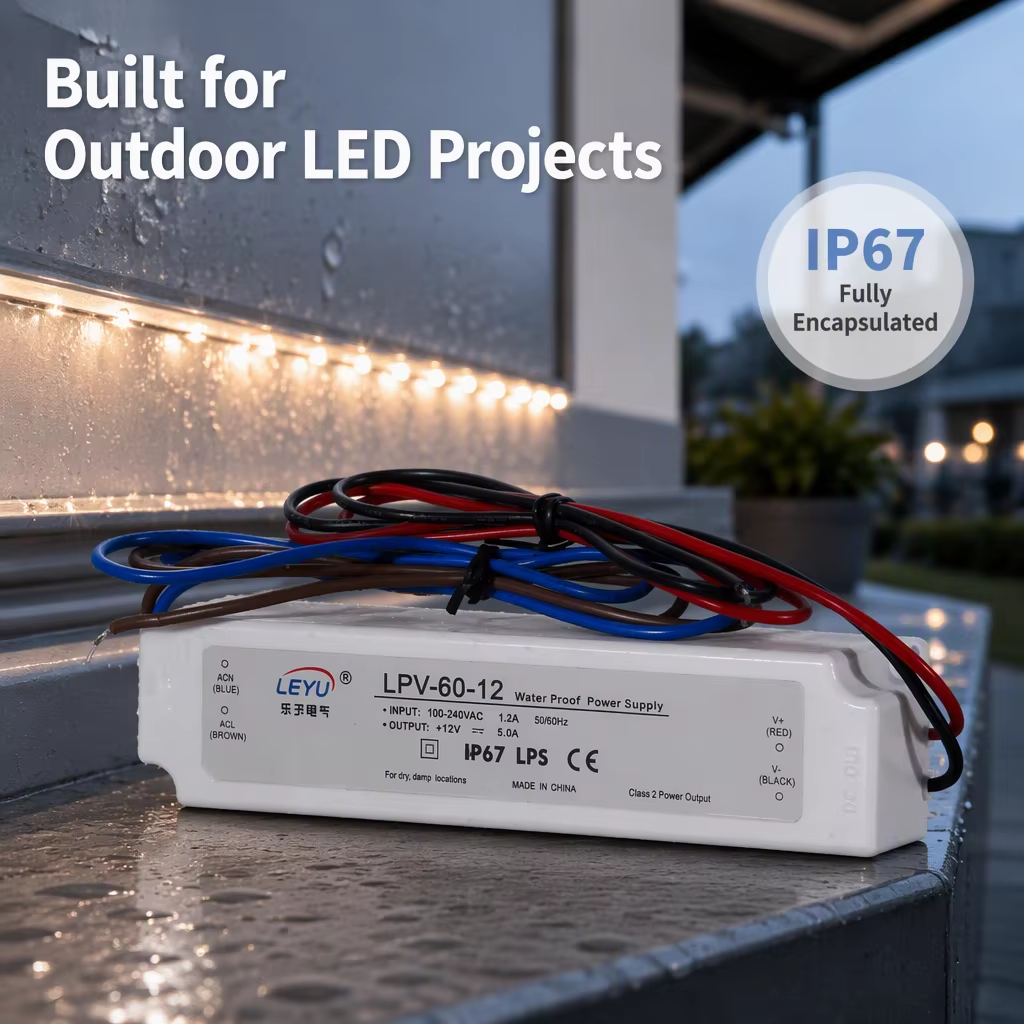
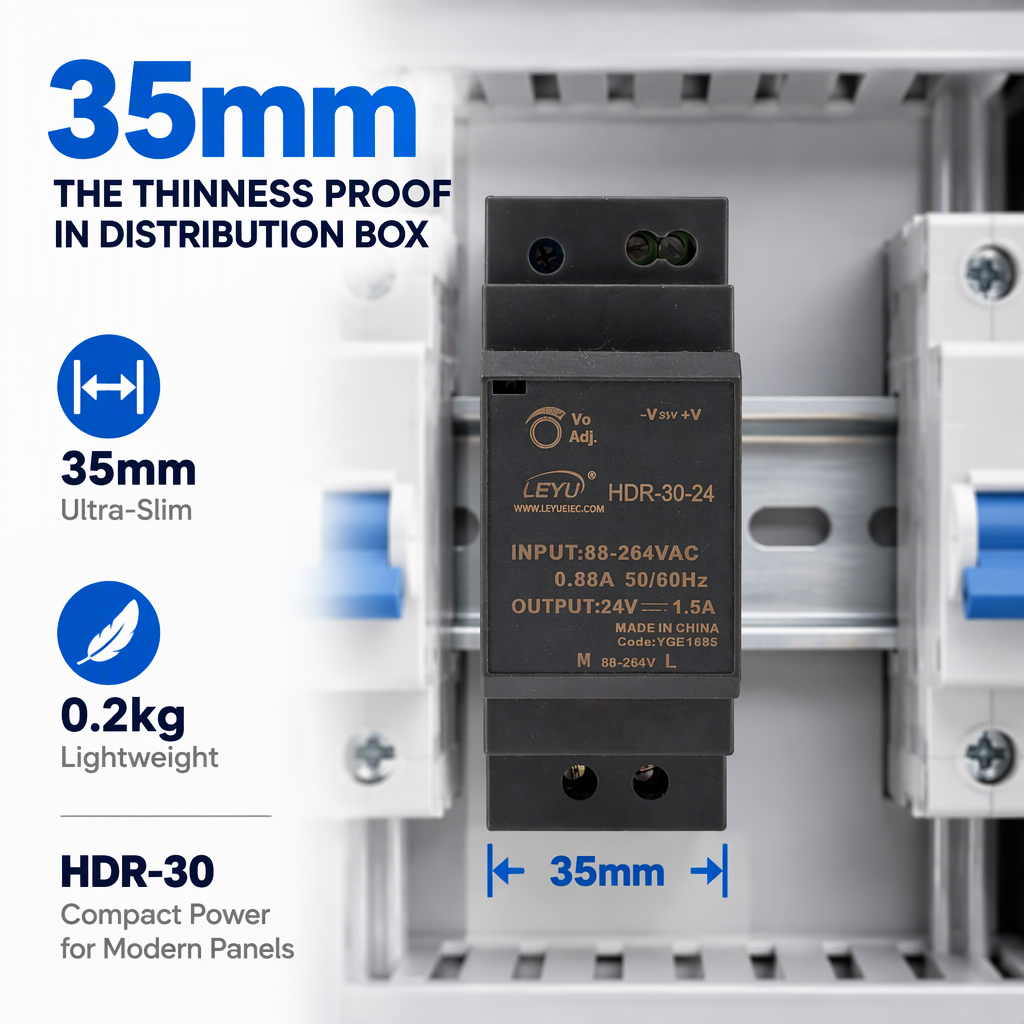
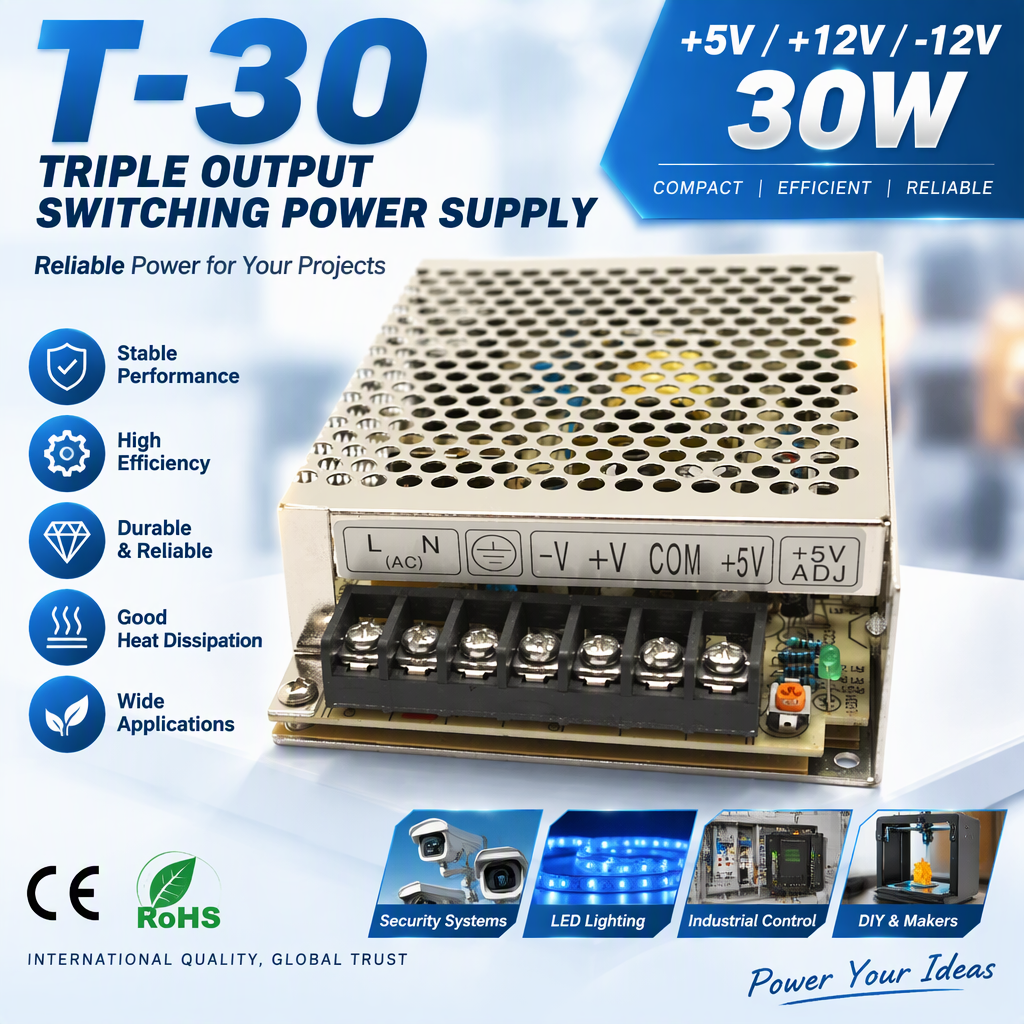
Situated at the epicenter of China’s electrical apparatus epicenter, Yueqing Keldan Technology Co., Ltd. combines low-latency component supply chains with rigorous international manufacturing protocols. We do not operate as an intermediary broker; we are an established engineering factory.
Surface Mount Technology (SMT) pick-and-place lines minimize parasitic lead inductances and human soldering variability. In-line Automated Optical Inspection (AOI) screens for solder bridging, part shifting, and micro-voiding across critical switching nodes.
Early component mortality is systematically eliminated through automated burn-in testing chambers. Every production batch of industrial DIN rail units runs under 100% continuous electrical and elevated ambient thermal stress to ensure baseline MTBF reliability.
Supported by veteran power electronics engineers with 5+ years of dedicated SMPS experience, we re-engineer primary-side switching topographies, secondary-side synchronous rectifiers, winding turns ratios, conformal coatings, and terminal layouts to buyer specifications.
Standard and bespoke units are engineered against harmonized safety directives: EN 62368-1, IEC 61010-1, and electromagnetic compatibility frameworks EN 55032 Class B and EN 61000-3-2. Full lab verification reports provided for turnkey import certification.
Selecting a rail-mount switching power supply requires evaluating magnetic design tradeoffs, thermal dissipation schemes, galvanic isolation boundaries, and harmonic mitigation stages. Here is how modern DIN rail power architectures differ across output classes.
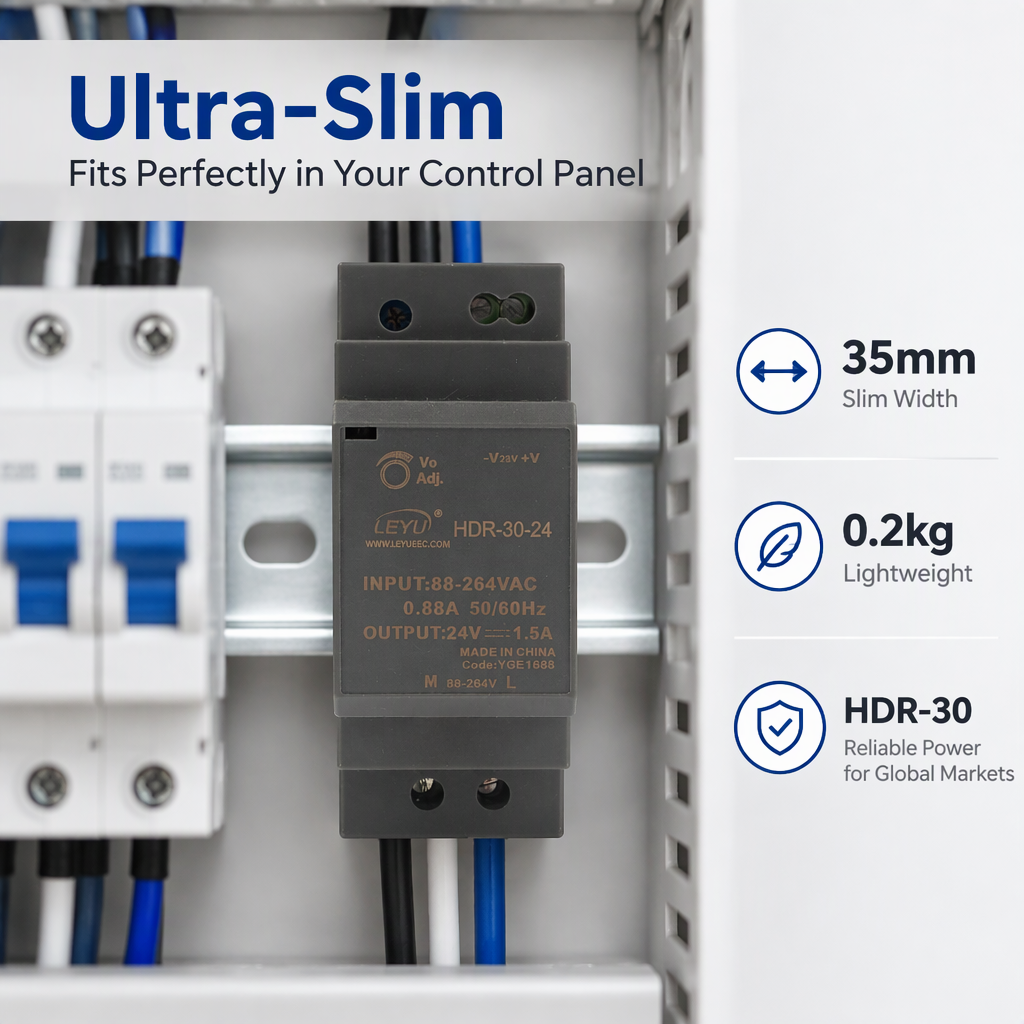
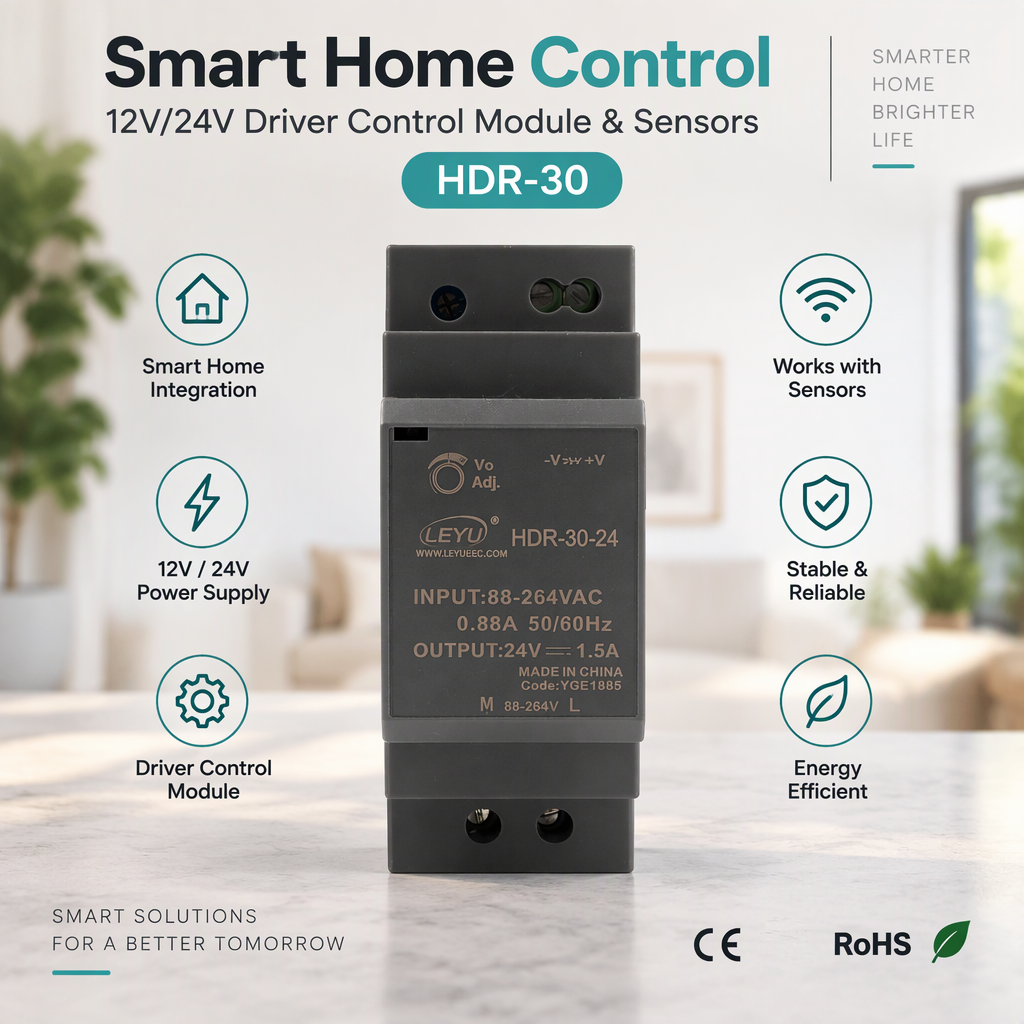
Utilized primarily in compact modular form factors such as our HDR-30 and ultra-slim 35mm series. By employing valley-switching quasi-resonant operation, capacitive turn-on losses in the primary MOSFET are drastically minimized.
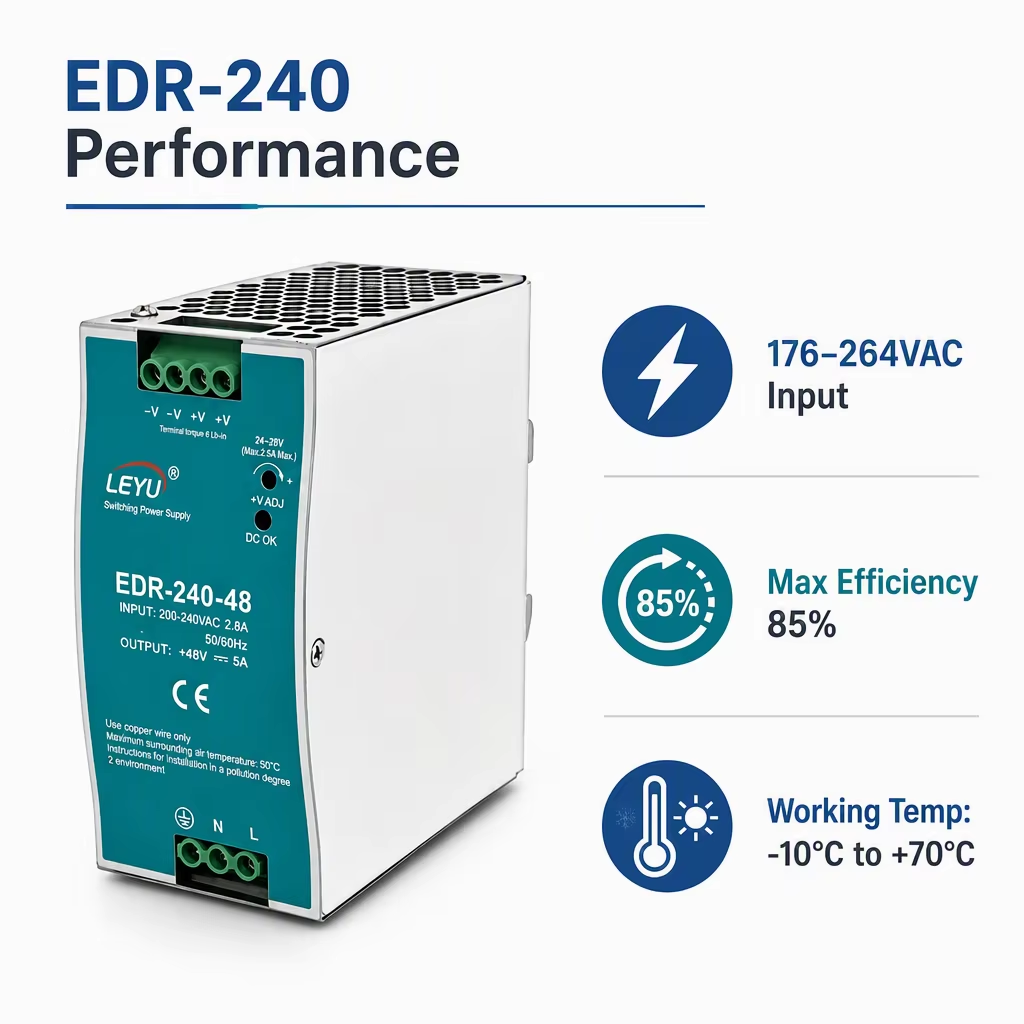
Ideal for medium-power automation nodes represented by the EDR-240 and NDR lineups. Two primary MOSFETs clamp transformer voltage reset spikes to the DC link rail, eliminating dissipative snubber loss.
Engineered for high-density heavy machinery loads. Soft-switching Zero Voltage Switching (ZVS) on the primary bridge and Zero Current Switching (ZCS) on secondary synchronous MOSFETs maximize power conversion efficiency.
| Series Archetype | Topological Stage | PFC Stage | Efficiency | Inrush Protection | Target Cabinet Environment |
|---|---|---|---|---|---|
| HDR-30 / Ultra-Slim | Quasi-Resonant Flyback | Passive / Filter Array | 88% - 90% | NTC Thermistor (30A cold) | Distributed Automation, Building Management, HVAC |
| EDR-120 / EDR-240 | Single-Ended Two-Switch | Active (PF > 0.95) | 91% - 93% | NTC + Bypass Relay Circuit | CNC Machine Tools, Robotic Cells, Assembly Conveyors |
| DRP-240 / DRP-480 | Interleaved LLC Resonant | Continuous Conduction PFC | 93% - 95.5% | Active Inrush Limiting Relay | Heavy Process Control, Marine Switchboards, Sub-stations |
| Custom OEM Multi-Rail | Isolated Forward + Buck DC-DC | Tailored Active / Passive | Application-Tuned | Solid-State Current Limiter | Specialized Instrumentation, Telecom Base Shelters |
Procurement teams navigating volatile raw material supply chains, decarbonization mandates, and dense cabinet miniaturization face shifting engineering requirements. These four macro trends define the next generation of rail-mount power sourcing.
Gallium Nitride (GaN) and Silicon Carbide (SiC) power FETs are transitioning from niche aerospace applications to cost-effective industrial DIN rail platforms. Their dramatically lower gate charges (Qg) and zero reverse recovery charges (Qrr) allow switching frequencies above 250kHz, enabling a 40% reduction in inductive component volume.
Predictive maintenance algorithms require granular electrical diagnostics. Modern industrial deployments demand integrated digital communication interfaces transmitting real-time operational metrics: secondary-side output currents, primary rail input voltages, total operating hours, and internal heatsink temperatures for fault prevention.
Factory automated equipment operating in high-humidity chemical environments or outdoor telecom switch-boxes require Class I, Div 2 hazardous location compliance. B2B buyers now mandate automated selective conformal polyurethane or silicone coating as a standard production step to prevent electrolytic dendrite migration.
Procurement teams are shifting evaluations from purchase invoice unit costs to system-level lifetime energy metrics. A 4% efficiency variance across a 240W supply operating continuously (24/7/365) accounts for more than double the initial product purchase cost in thermal cooling requirements and parasitic power waste over a five-year lifecycle.
Direct technical clarifications addressing common installation obstacles, thermal deratings, harmonic distortions, and validation procedures required by international sourcing teams.
Industrial SMPS units rely primarily on natural convection cooling within sealed enclosures. Above 50°C (122°F), internal electrolytic capacitors and magnetic winding temperatures escalate rapidly. Our industrial DIN rail series operate at 100% rated output up to 50°C, then linearly derate by 2.5% per degree Celsius up to +70°C. For unventilated control boxes, buyers should scale the baseline continuous load to 70-80% of nominal unit capacity.
Industrial standards EN 62368-1 and UL 508 mandate reinforced or double isolation between primary (AC high voltage) and secondary (SELV DC output) stages. Standard Keldan supplies provide 3000 VAC withstand test isolation from Primary to Secondary, 1500 VAC Primary to Chassis Ground (PE), and 500 VAC Secondary to Chassis Ground, preventing lethal common-mode ground transients from propagating to delicate PLC logic boards.
Direct parallel wiring of standard power supply outputs can cause reverse current loops if output voltages differ by even 10 millivolts. To build true fault-tolerant N+1 redundant architectures, external or integrated low-loss Active ORing FET modules or decoupling Schottky diodes are required. When specified, our custom OEM manufacturing integrates internal ORing MOSFET stages, saving DIN rail space and lowering heat dissipation by 80% compared to legacy diodes.
Every custom production run is paired with an exhaustive Technical Documentation File (TDF). This includes Certificate of Conformity (CE-LVD/EMC), RoHS/REACH SVHC declarations, full bill-of-materials traceability, in-circuit test (ICT) logs, AOI automated inspection verification, and serialized 100% full-load burn-in aging reports detailing dynamic ripple, hold-up times, and overvoltage trip limits.
Hiccup mode shuts down the switching controller momentarily when output current exceeds 110-150% of nominal capacity, pulsing repeatedly until the short circuit is cleared; it is optimal for delicate sensor wiring susceptible to heat damage. Constant Current mode holds the current at its upper safety threshold while dropping output voltage proportionally, ensuring inductive motors and high-capacitance DC bus banks successfully clear high inrush spikes without stalling the automation line.
Standard production line models have flexible sample availability starting at 1 unit. For tailored OEM modifications (custom DC output trims such as 15V, 36V, or 60V, private label silk-screening, custom terminal configurations, and tailored thermal enclosures), rapid tooling and prototyping samples are dispatched within 12 to 18 business days, with production batch MOQs structured flexibly according to program milestones.
How we take your application’s mechanical constraints, input volatility challenges, and thermal load requirements from initial schematic simulation to containerized global logistics.
Our Yueqing engineering team reviews your design specifications: AC input envelopes (single-phase 85-264V or 3-phase 340-550V), dynamic transient hold-up requirements, and physical dimensional envelopes.
Working prototypes undergo rigorous environmental testing inside our dedicated laboratory facilities prior to plastic injection or metal chassis tooling sign-off.
Upon golden sample sign-off, pilot and scaled batch orders enter our automated surface mount and selective soldering assembly line pipelines.
Submit your specific rail-mount power supply requirements, bespoke voltage specifications, or factory audit requests. Our dedicated multilingual technical engineering team responds with complete datasheets, compliance files, and transparent factory-direct pricing.
