High-Efficiency AC to DC Converters & Industrial Switched-Mode Units
Engineered for PLC automation racks, heavy industrial electrolysis, lab bench verification, and outdoor IP67 systems. Fully tested through automated optical inspection (AOI) and 100% full-load burn-in cycles.
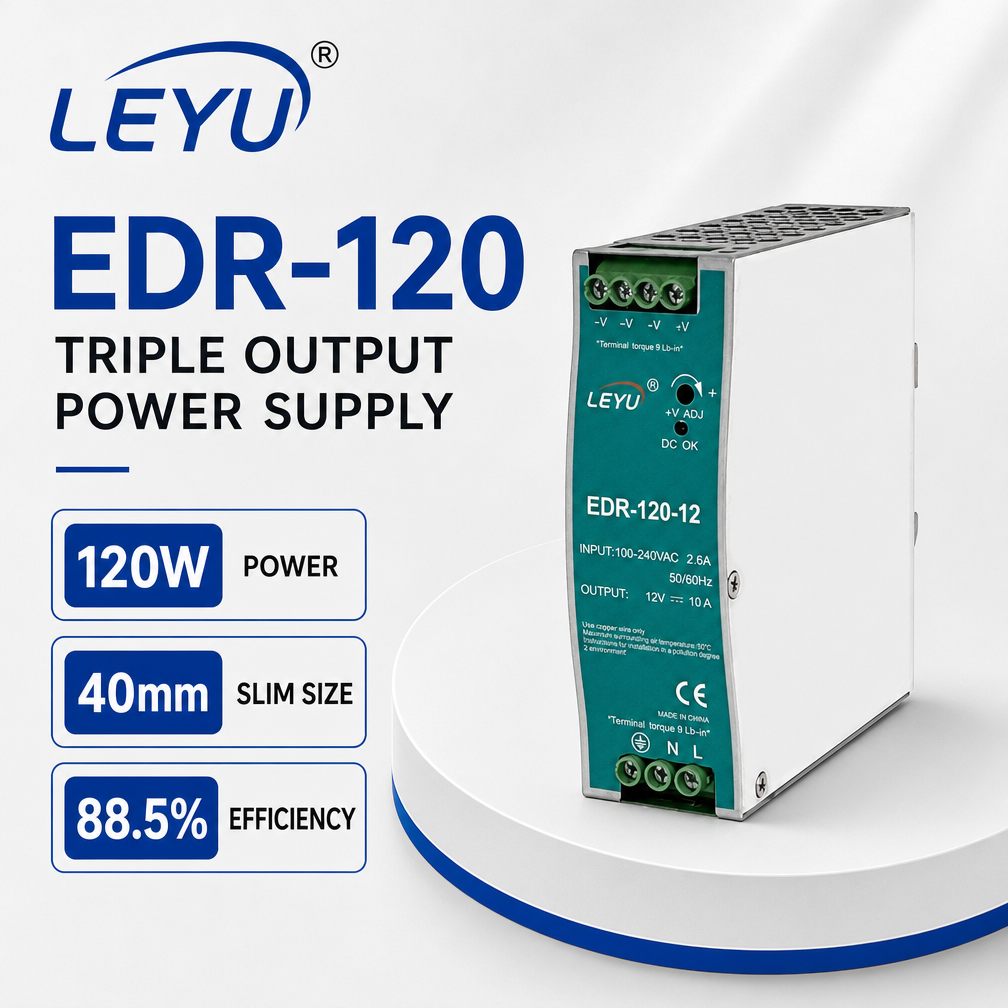
EDR-120 120W Industrial DIN Rail Power Supply 12V 10A 24V 5A 48V 2.5A AC DC Switching Power Supply for PLC Control Cabinet
- Universal AC input: 90~264VAC
- TS-35/7.5 or TS-35/15 mountable
- Short circuit / Overload / OVP
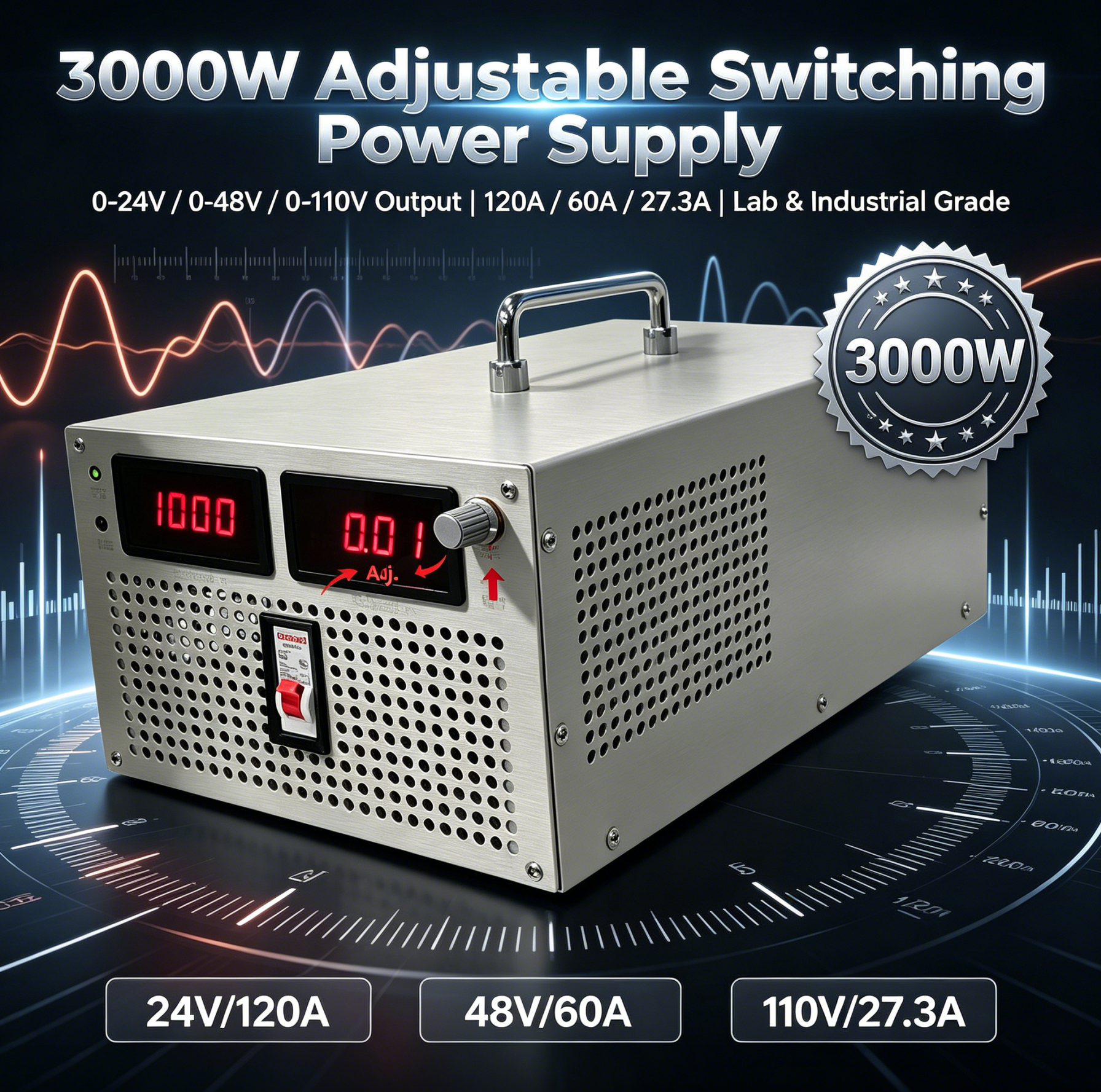
SV-3000 3KW Industrial Variable Power Supply 120A 60A for Electroplating Electrolysis & Laser Equipment AC 220V Input
- Continuous adjustable voltage/current
- High current 60A / 120A delivery
- Thermal intelligent fan cooling
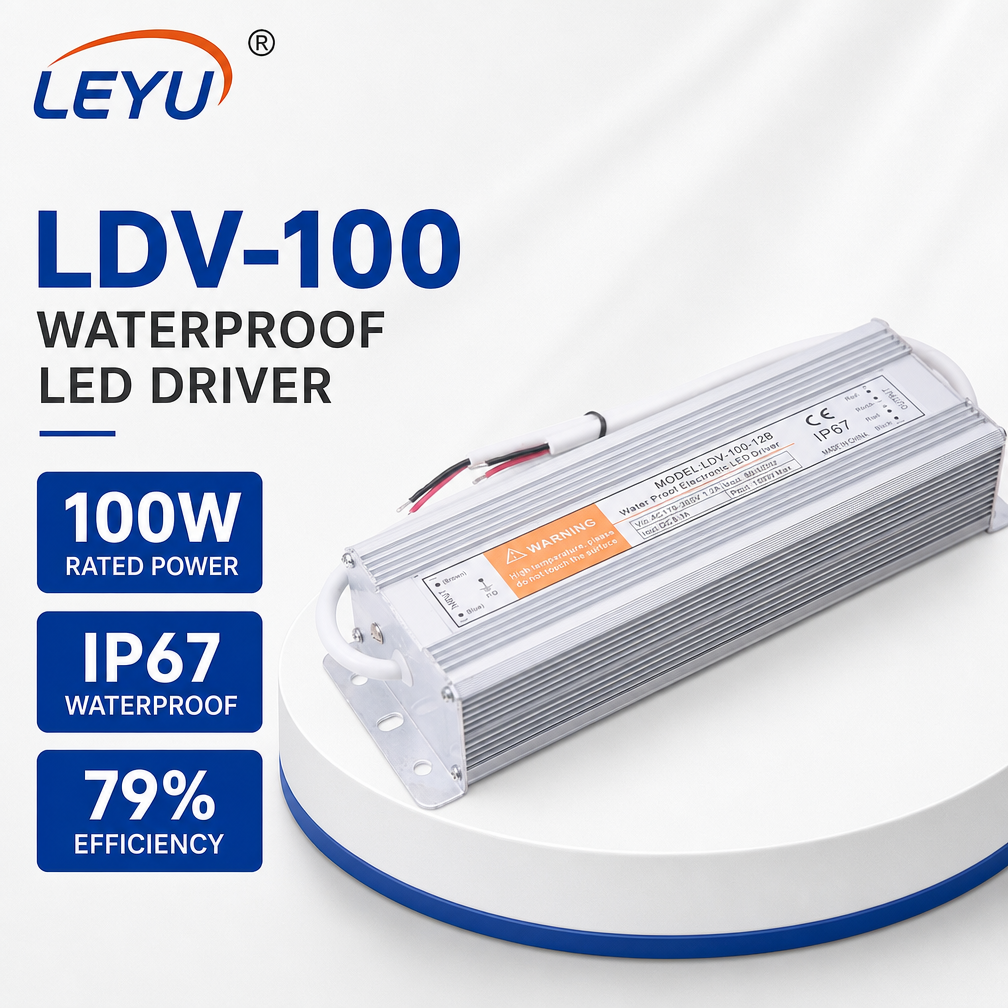
LDV-100 100W IP67 Waterproof LED Power Supply 12V 8.3A 24V 4.2A AC DC Switching Adapter for Outdoor Lighting
- Hermetic aluminum potted housing
- Lightning surge rating up to 4kV
- Ultra-low ripple, steady constant V
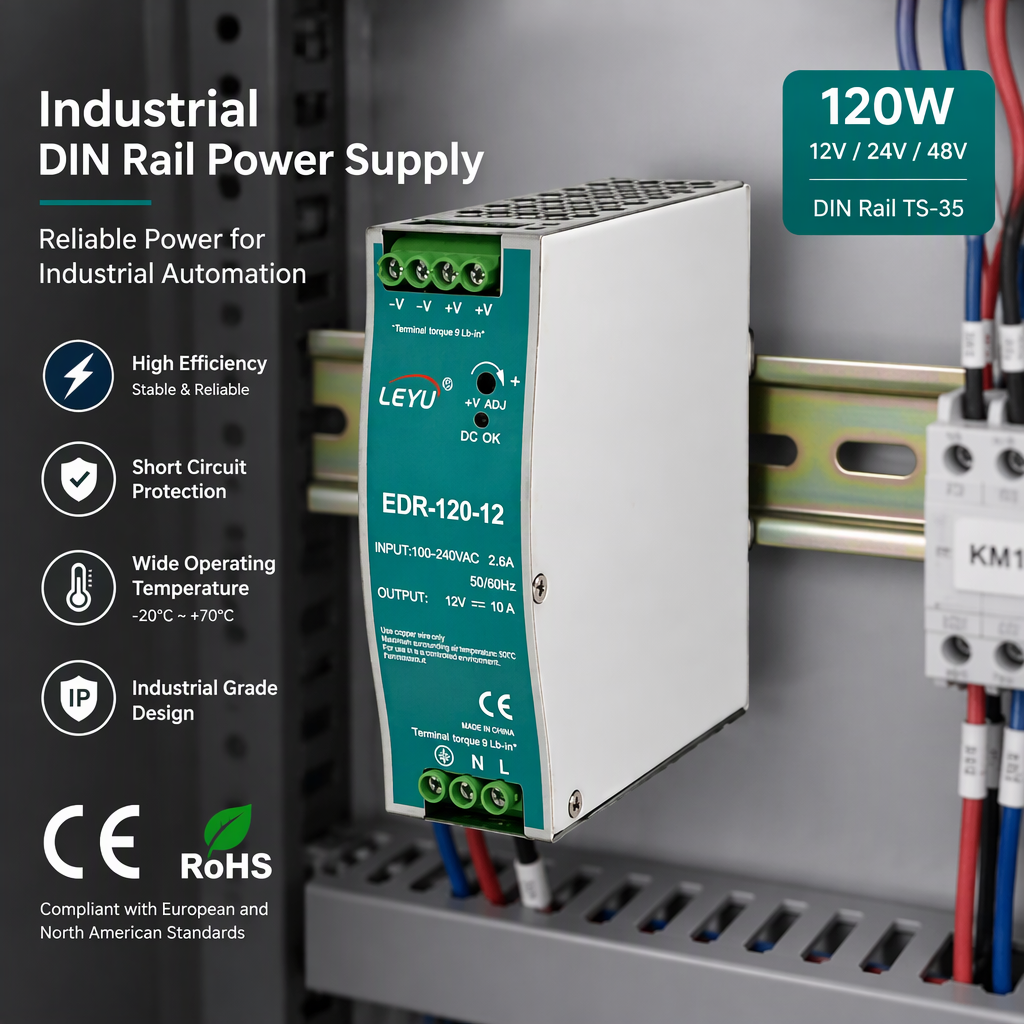
120W Industrial DIN Rail Power Supply 24V 5A AC DC Converter for PLC Control Cabinet Automation Equipment
- Active DC-OK relay output signal
- High electrical isolation 3000VAC
- Heavy industry grade immunity
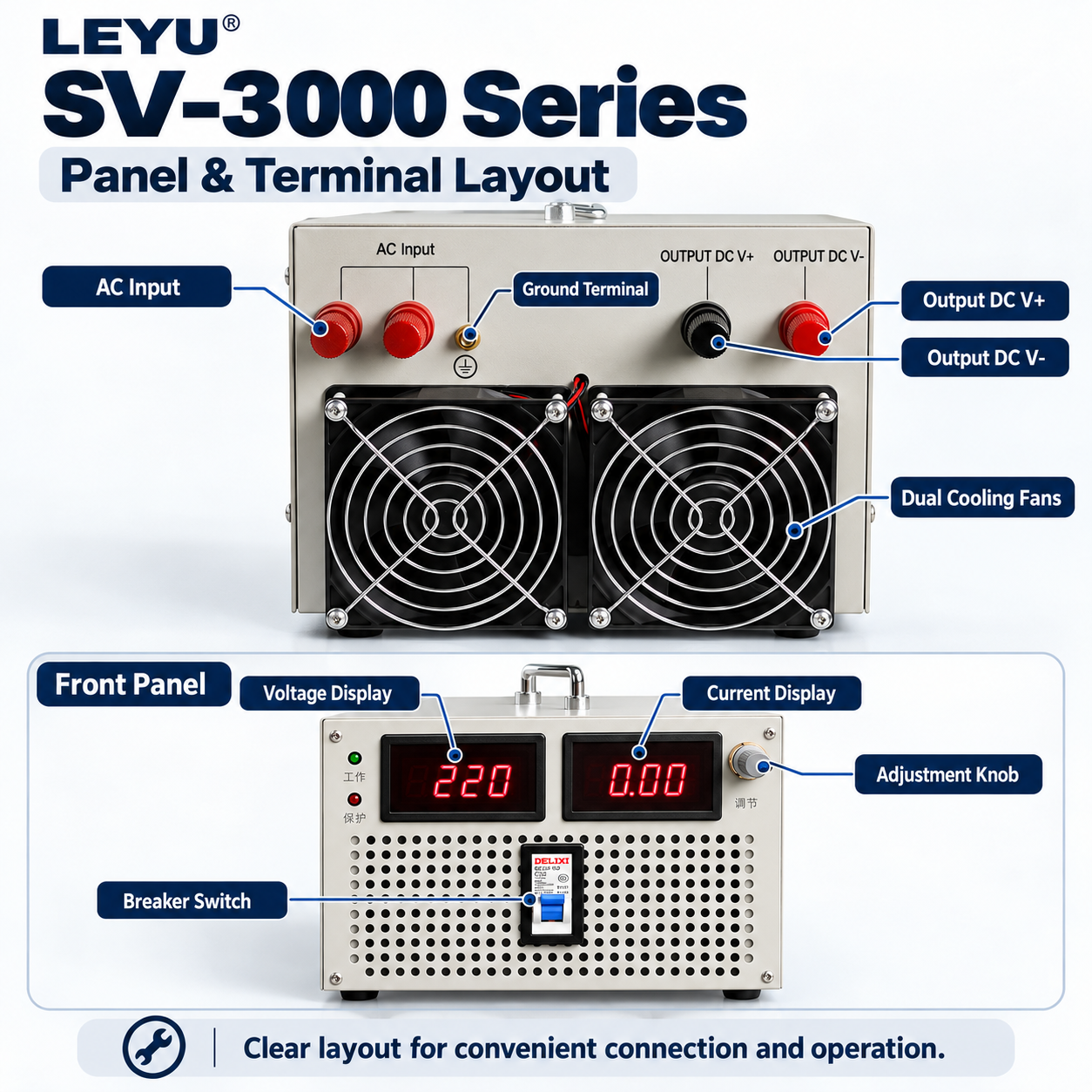
3000W High Power Lab Bench Power Supply 0-24V 0-48V 0-110V Variable AC DC Converter for Industrial Testing Aging
- Precision LED digital telemetry
- CV / CC automatic cross-over
- Remote sensing & control options
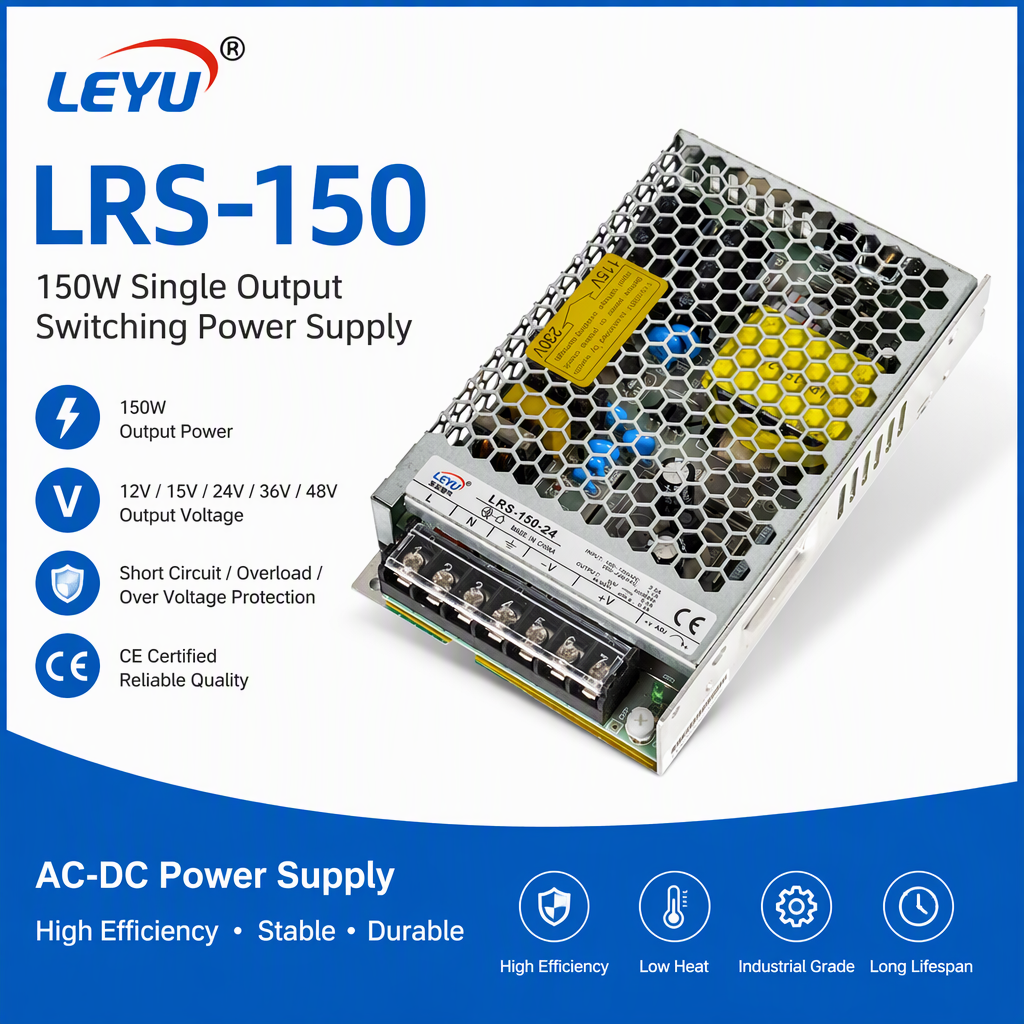
LEYU LRS-150-24 150W 24V 6.5A AC DC Switching Power Supply Single Output Low Profile for Industrial Control
- 1U ultra-thin 30mm profile
- Withstand 300VAC surge 5 sec
- No-load power < 0.5W eco-standby
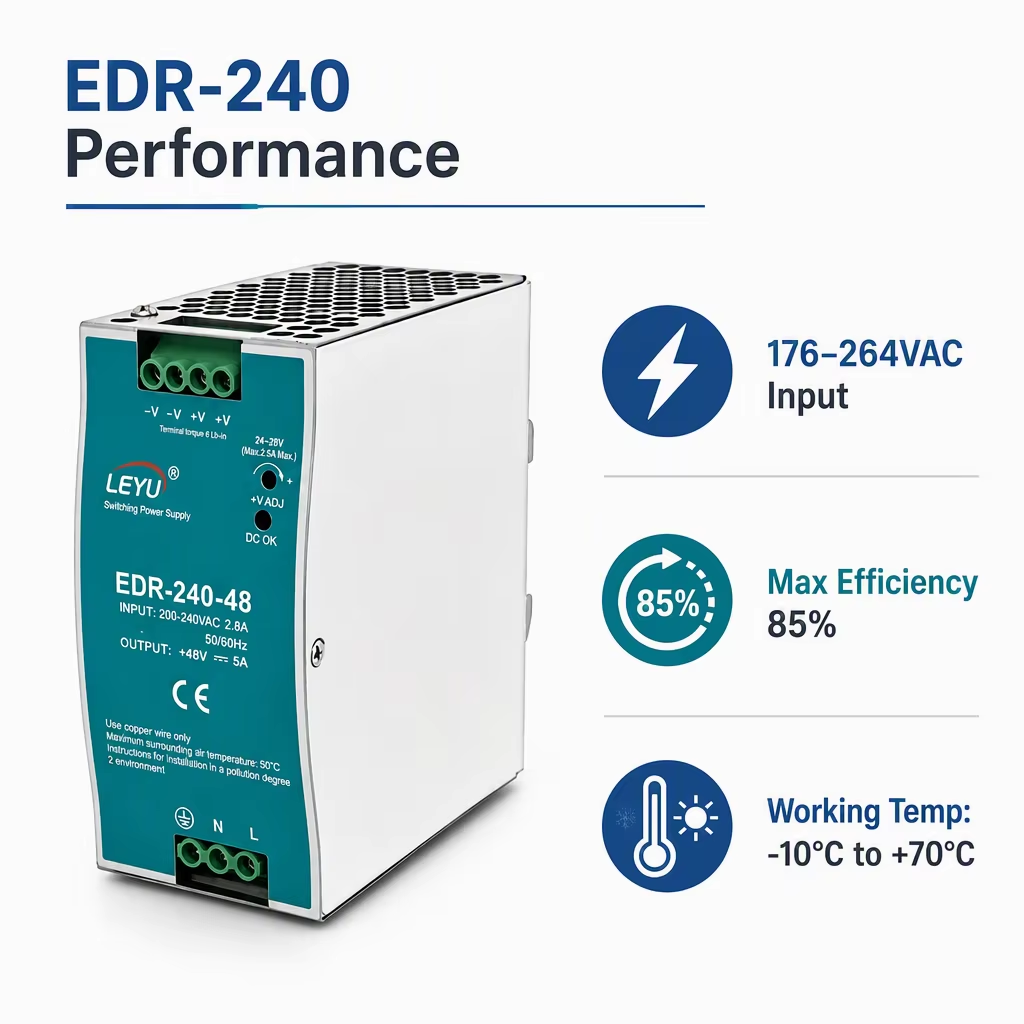
EDR-240-24 Industrial DIN Rail Power Supply 24V 10A 240W Single Output AC-DC Switching Converter Slim Design 95% Efficiency
- Slim 63mm cabinet footprint
- Peak efficiency rating up to 95%
- Passive convection thermal cooling
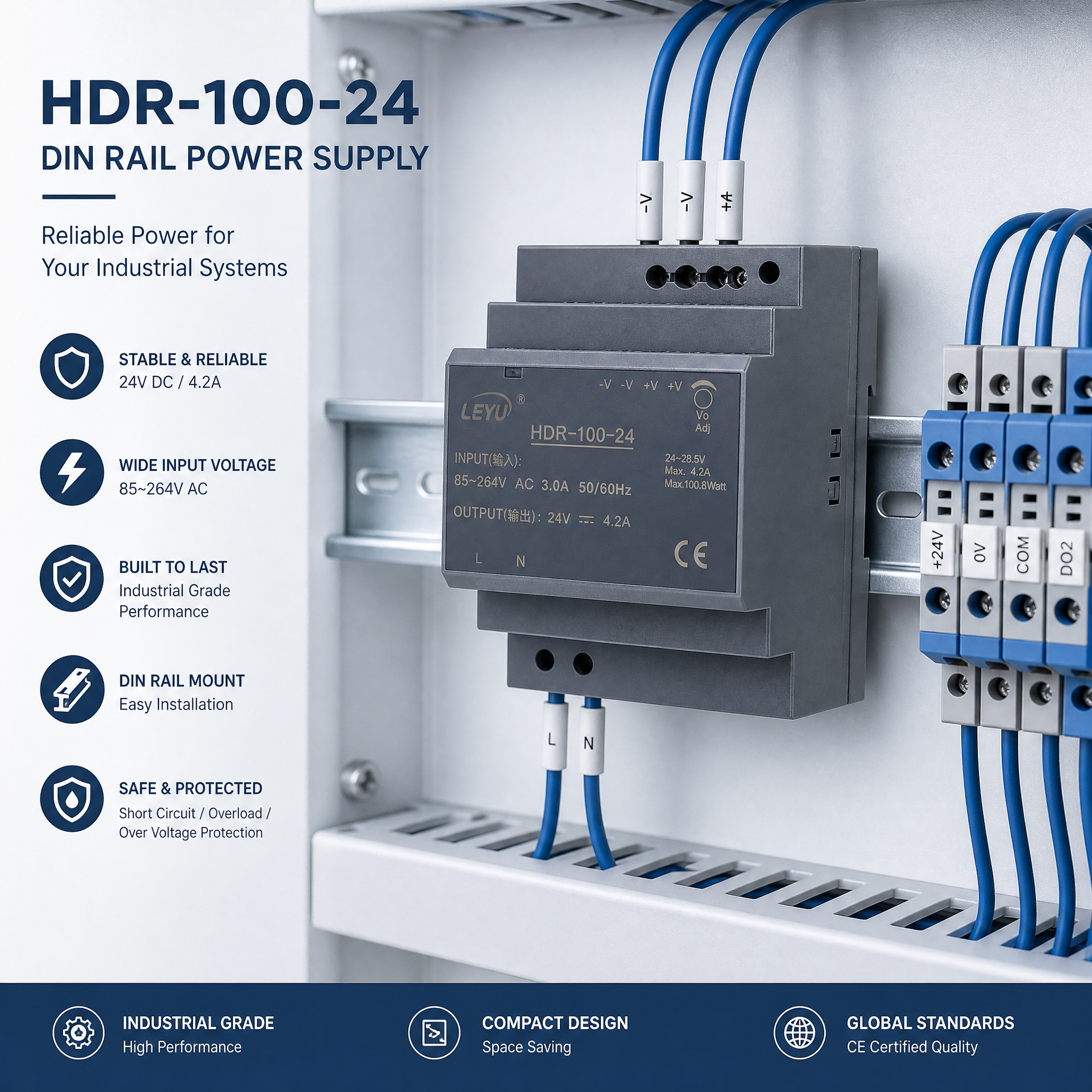
HDR-100 100W DIN Rail Power Supply 85-264VAC Universal Input 12V 24V 48V Industrial Switching Power Supply
- Step-shape plastic isolation case
- Class II double insulation design
- Building & home automation compliance
Industrial Engineering Whitepaper: Sourcing OEM/ODM AC to DC Power Supplies
In modern industrial automation, telecommunication networks, railway signaling, and medical engineering, the AC to DC power converter represents far more than a basic commodity component. It is the core electrical foundation that directly governs Mean Time Between Failures (MTBF), electromagnetic compatibility (EMC), thermal efficiency budgets, and system-wide functional safety. Global procurement directors, lead electrical engineers, and original equipment manufacturers (OEMs) face compounding challenges: tightening international eco-design directives (such as EU ErP Lot 7 and US DoE Level VI standards), harsh transient voltage environments in factory switchboards, and the demand for ever-smaller form factors requiring ultra-high power densities.
Selecting an OEM/ODM manufacturing partner demands an exhaustive verification of production line integrity, topological expertise, component traceability, and stringent testing regimens. Located in Beibaixiang, Yueqing—widely recognized as China's premier low-voltage electrical capital—Yueqing Keldan Technology Co., Ltd. has established an 18-year industrial manufacturing benchmark. Verified on-site by TÜV Rheinland, Keldan combines proprietary topological R&D with automated surface-mount technology (SMT), reflow ovens, AOI optical inspection, and automated burn-in screening. This structural competence ensures that every AC-DC DIN rail module, enclosed low-profile switching power supply (SMPS), and high-power benchtop converter performs reliably under severe thermal, mechanical, and electrical stresses.
AC-DC Switching Topologies: Engineering Selection Guide
A primary failure mode in B2B power converter procurement is topological mismatch—deploying a flyback topology where high continuous load steps induce thermal runaway, or selecting an uncorrected forward topology in an electrical distribution grid prone to stringent harmonic regulations. OEMs must match circuit topology directly to system dynamics.
| Converter Topology | Typical Power Range | Efficiency Rating | Primary Industrial Applications | Key Engineering Advantages |
|---|---|---|---|---|
| Quasi-Resonant Flyback | 15W – 150W | 86% – 90% | HDR Step-Shape PSUs, Auxiliary I/O, IoT Sensors | Low BOM count, valley-switching eliminates capacitive turn-on losses. |
| Two-Switch Forward | 100W – 350W | 88% – 93% | EDR DIN Rail, LRS Low-Profile Automation Chassis | Voltage stress clamped to DC rail; highly robust against line surges. |
| LLC Half-Bridge Resonant | 200W – 1000W | 92% – 96% | EDR-240 Slim Modules, Medical Instrumentation | Zero Voltage Switching (ZVS), near-zero EMI switching harmonics. |
| Phase-Shifted Full Bridge | 1000W – 10kW+ | 94% – 97.5% | SV-3000 Lab Bench, Electroplating, Laser Equipment | Exceptional thermal distribution, full continuous current controllability. |
Future Procurement Trends for AC DC Power Conversion (2025–2030)
The global industrial power supply market is undergoing a structural transition driven by decarbonization, smart manufacturing, and microgrid deployments. Strategic procurement professionals are adjusting their vendor evaluation scorecards to incorporate five pivotal sourcing vectors:
Wide Bandgap (GaN & SiC) Adoption
Gallium Nitride (GaN) and Silicon Carbide (SiC) semiconductors replace legacy Silicon MOSFETs, yielding switching frequencies above 200kHz, shrinking magnetics by 40%, and elevating efficiency beyond 95% in DIN rail units.
Digitally Controlled Power Loops
Transition from analog PWM controllers to Digital Signal Processors (DSP). Enables real-time parameter tuning, adaptive dead-time control, and integrated PMBus/IO-Link communications for predictive failure diagnostics.
Planar Transformers & Modular Enclosures
Multi-layer printed circuit board (PCB) planar magnetics replace hand-wound copper transformers, eliminating inter-winding capacitance variance, enhancing heat extraction, and lowering unit thickness to 1U standards.
Extreme Wide-Input & Surge Immunity
Demand for universal 85–264VAC inputs capable of handling 300VAC surges for 5 seconds without tripping, combined with Class I and Class II double-insulation compliance for global field deployment.
Carbon-Conscious Cradle-to-Grave Supply Chains
Procurement teams require verifiable declarations of RoHS, REACH, and Conflict Minerals compliance, alongside factory ISO 14001 environmental benchmarks and reduced standby no-load losses below 0.3W.
Deep OEM Customization Capabilities
Buyers require rapid-turnaround custom voltage adjustments (e.g., non-standard 36V, 72V rails), conformal coating for salt-spray resistance, and customized mechanical enclosures without multi-thousand-piece MOQs.
Technological Innovations: Advanced Thermal and Electrical Topologies
The operational lifespan of an AC DC power converter diminishes by approximately 50% for every 10°C increase in internal operating temperature above its design boundary (Arrhenius Rate Rule). In high-density cabinet environments containing multiple PLC racks, servo drives, and HMI units, passive convection cooling is paramount to prevent fan motor failure from becoming a single point of failure.
Thermal Dissipation Architectures
Keldan engineers utilize thermal modeling simulation prior to PCB trace layout. By strategically orienting high-dissipation power semiconductor components—such as bridge rectifiers, active PFC switches, and synchronous rectification FETs—directly against thick extruded aluminum chassis walls with high-conductivity thermal gap pads (>3.0 W/m·K), our designs achieve homogeneous thermal spreading. As demonstrated in our EDR-240-24 and NDR series, full-load operation up to 50°C ambient is sustained with zero forced-air airflow, preserving silent operation and eliminating air intake dust contamination.
Active Power Factor Correction & Harmonic Compliance
Uncorrected power supplies introduce severe non-linear currents into the supply grid, provoking harmonic distortions that overheat neutral conductors and degrade power quality. Keldan's active PFC stages utilize continuous conduction mode (CCM) boost converter circuitry. By shaping the input current waveform to mirror the sinusoidal AC mains voltage, our power supplies achieve a power factor greater than 0.98 at rated load, fully conforming to EN 61000-3-2 Class A and Class D harmonic emissions limits.
Factory Audits & Manufacturing Excellence: Yueqing Keldan Technology
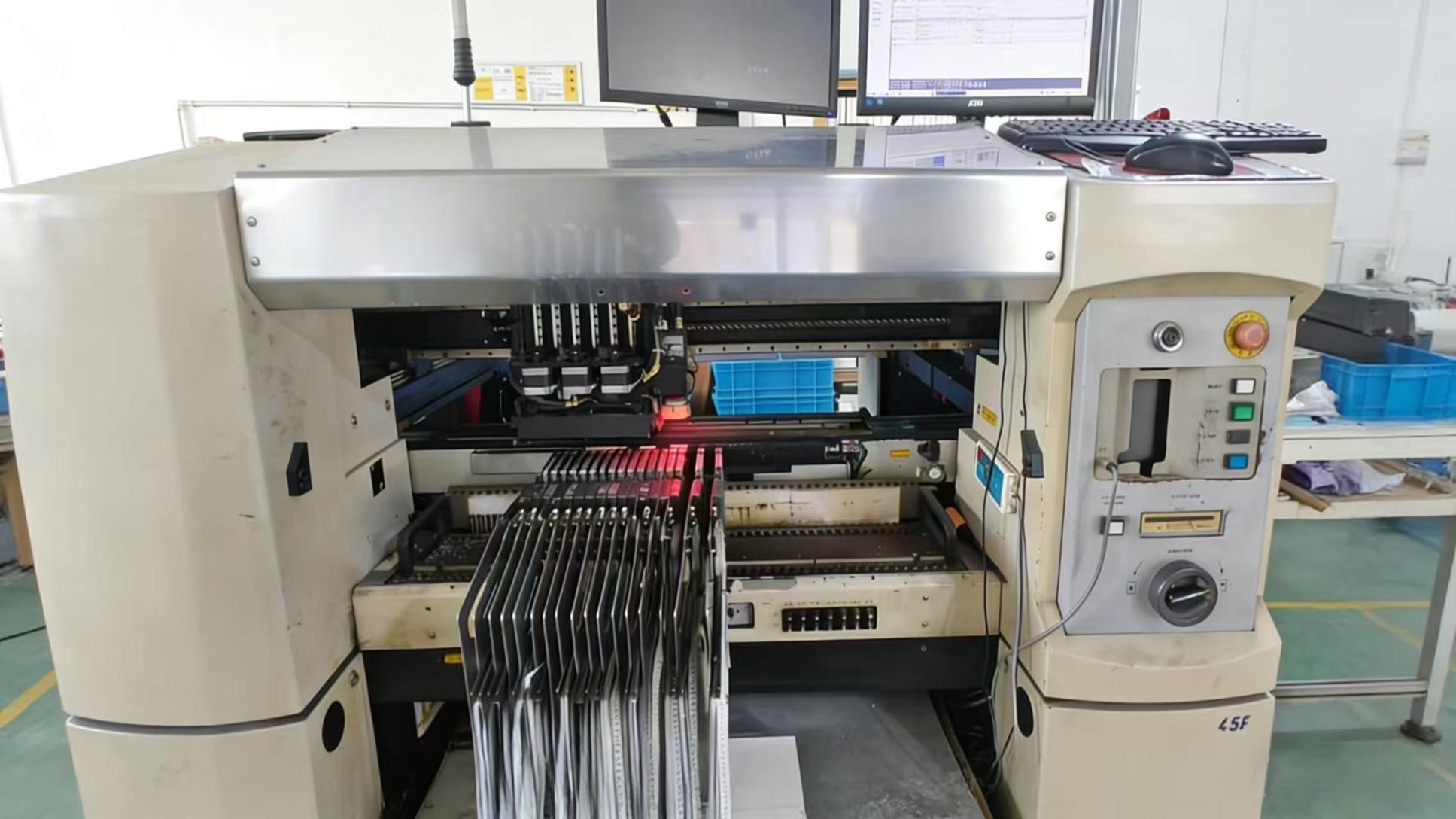
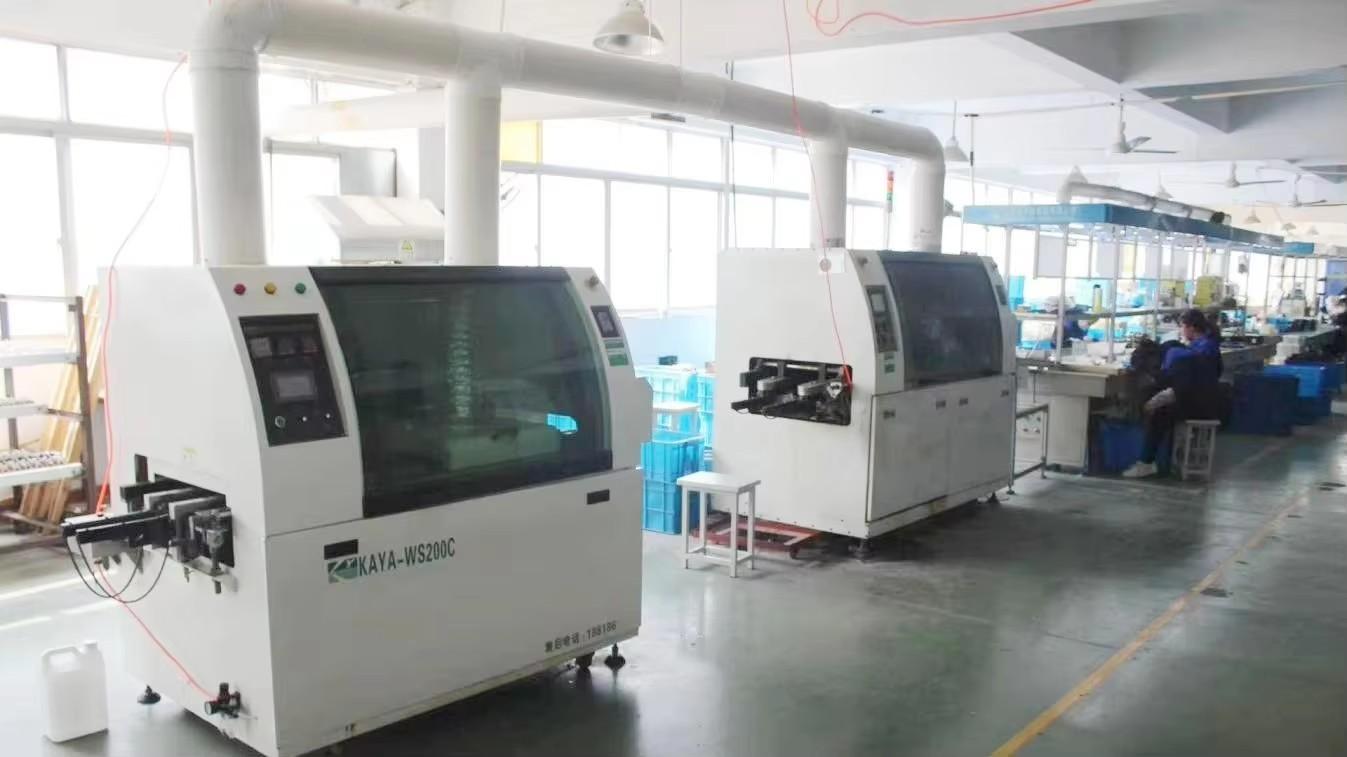
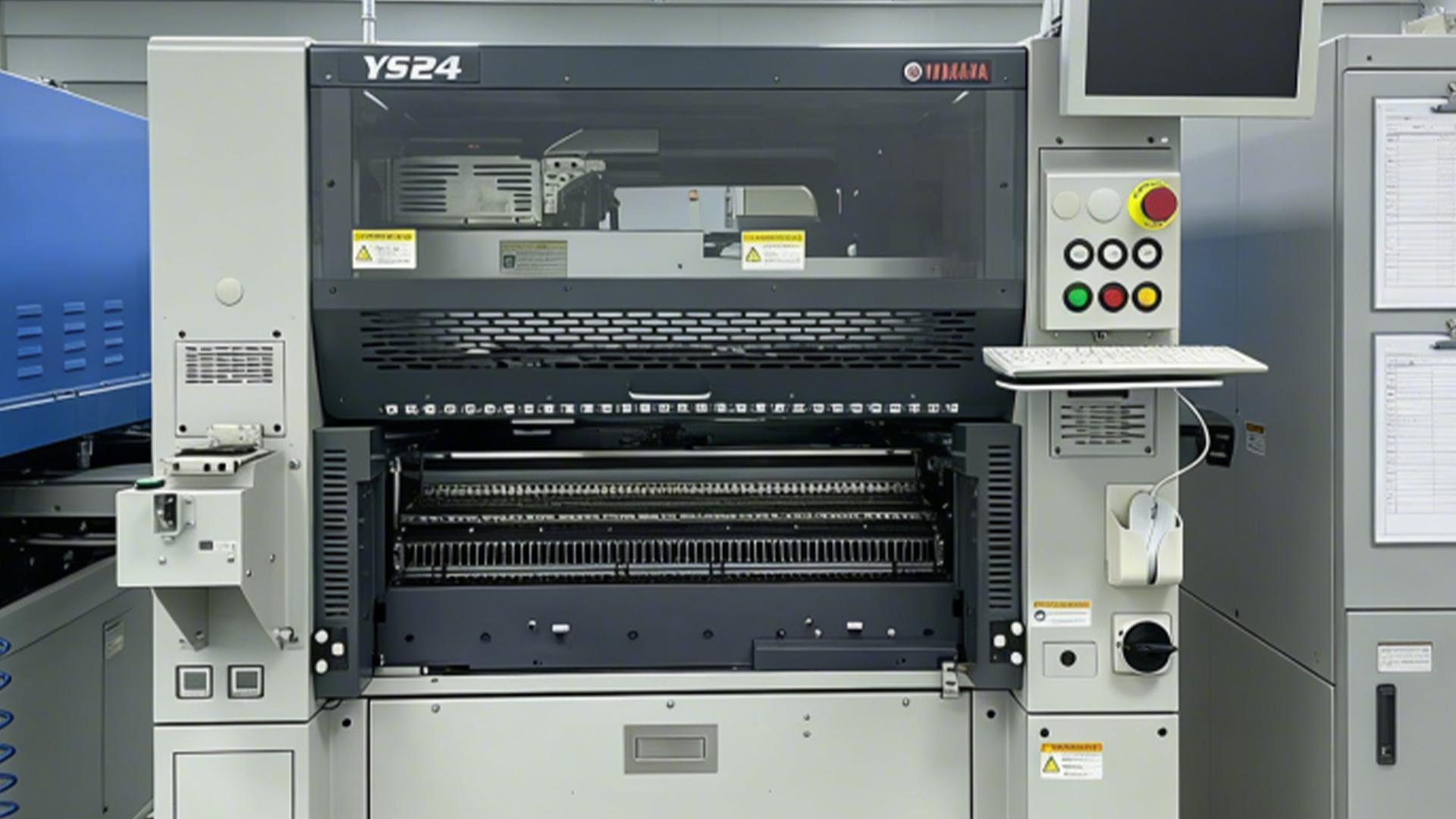
As a verified custom manufacturer certified on-site by TÜV Rheinland, Yueqing Keldan Technology Co., Ltd. operates a comprehensive quality control framework spanning from silicon wafer verification to end-of-line functional stress validation. Located in Malujiao Village, Beibaixiang Town, Yueqing, Wenzhou, our manufacturing floor integrates proprietary machinery and verified operating personnel across an 8-stage manufacturing process.
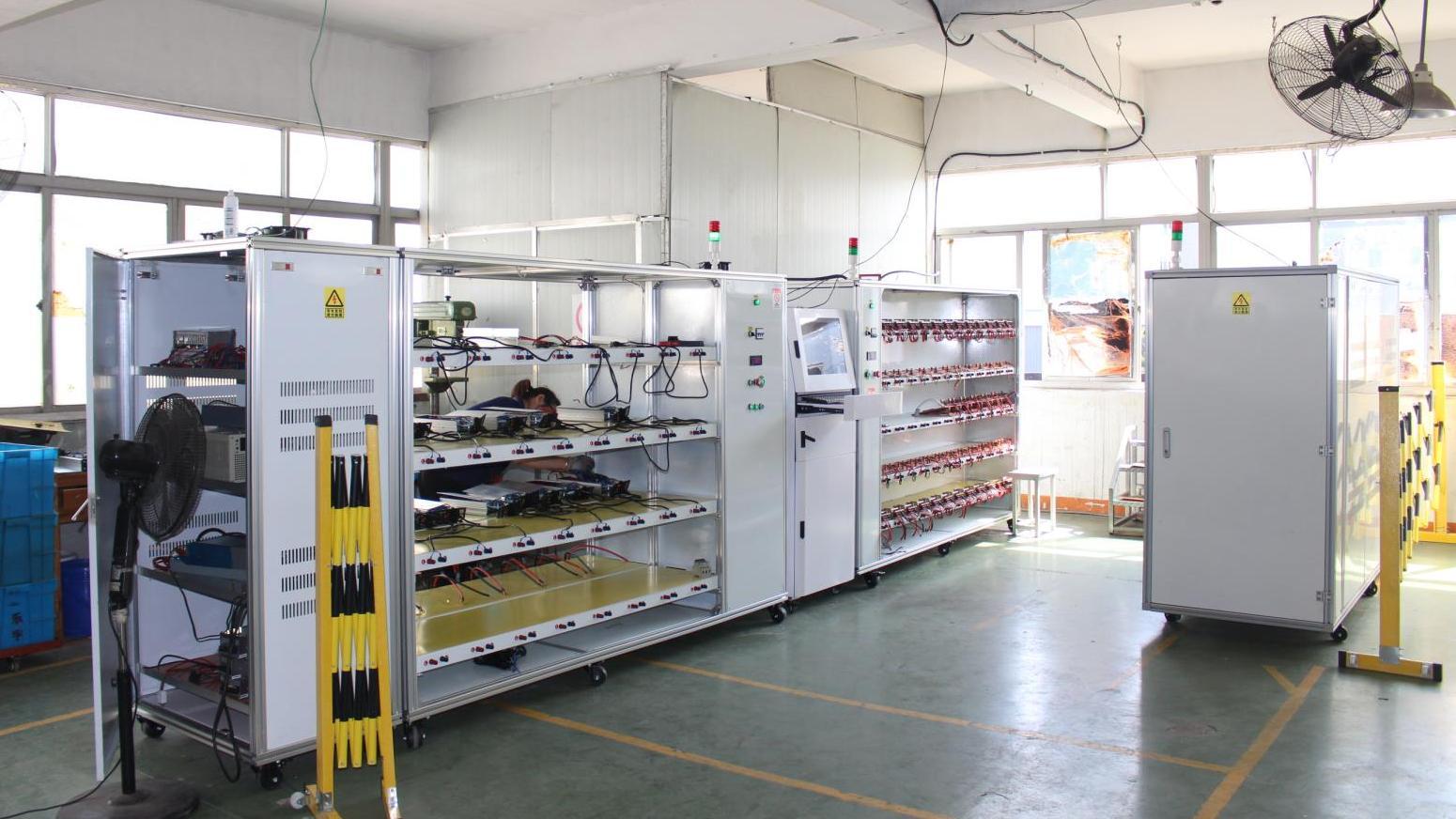
100% Full-Load Burn-In
Every single manufactured power supply unit undergoes 4 to 12 hours of uninterrupted full-load burn-in at elevated ambient temperatures to identify and eliminate infant mortality failures before shipment packaging.
High-Pot Electrical Isolation
Standardized isolation testing: 3,000VAC Input-to-Output, 1,500VAC Input-to-Ground, and 500VAC Output-to-Ground, ensuring strict user safety and protecting downstream automation equipment from line-side transients.
Full Traceability & CE Marking
Batch tracking from raw magnetics and semiconductors down to final assembly. All standard units conform to CE directives (LVD 2014/35/EU, EMC 2014/30/EU), with full laboratory test reports available for customer compliance files.
Frequently Asked Questions for Sourcing & Engineering Teams
Direct technical and commercial answers addressing factory qualifications, customization parameters, compliance, and international logistics.
Is Yueqing Keldan Technology a certified direct manufacturer or a trading agent?
We are a bona fide custom manufacturer with complete in-house production lines located in Beibaixiang Town, Yueqing, Zhejiang. Our facility has undergone rigorous on-site audit and verification by TÜV Rheinland. This covers our surface-mount lines, automated wave and reflow soldering stations, manual assembly teams, QA inspection laboratories, and an in-house international trade team of 12 specialists. Clients are welcome to schedule on-site factory audits or live video verification sessions.
What specific OEM/ODM customization capabilities does Keldan offer?
Our engineering team (5+ senior engineers, each with 5+ years of dedicated SMPS experience) provides complete design-based and sample-based customization. This includes custom output rails (e.g., 36V, 48V, 72V, 110V), dual or triple isolated outputs, tailored sheet-metal or DIN rail housings, conformal PCB coating (anti-humidity, anti-fungus), modified terminal blocks (spring-clamp vs. screw barrier), customized firmware profiles for digital benchtop units, and comprehensive private-label branding and barcode packaging.
How does thermal derating impact continuous load sizing in control cabinets?
In enclosed industrial control panels, internal temperatures frequently exceed 40°C. Standard power supplies begin thermal derating between 45°C and 50°C, typically shedding 2.5% rated power per °C rise up to 70°C. Keldan's engineering guideline mandates sizing your power supply with a 20% to 30% power headroom above continuous steady-state loads. This headroom also accommodates inductive inrush currents from relays, solenoids, DC motors, and capacitive bus capacitors without tripping overcurrent protection.
What testing procedures are applied to ensure batch-to-batch quality?
Our QA/QC workflow enforces an 8-stage gatekeeper architecture: (1) IQC material verification of semiconductor lots and capacitors; (2) SMT high-speed placement; (3) Multi-zone reflow profiling; (4) Automated Optical Inspection (AOI) to detect bridging or solder voiding; (5) Through-hole component insertion and manual wave soldering; (6) Initial calibration and debugging; (7) 100% full-load aging testing in dedicated thermal racks; and (8) Final OQC hi-pot electrical isolation, earth continuity, and dynamic load testing.
What are the minimum order quantities (MOQs) and lead times?
For standard catalog items—including EDR, NDR, LRS, and HDR models—our MOQ begins from just 1 unit for prototype testing and evaluation, with sample orders shipping in 3 to 5 business days. Standard production batch orders typically start at 10 to 50 pieces, with production cycle times between 15 and 25 days depending on transformer and component lead times. Fully custom OEM/ODM development projects involve tailored milestone-based schedules with dedicated tooling and NRE arrangements.
Which international safety and environmental certifications are provided?
All standard AC DC converter units carry CE conformity markings, verifying compliance with the Low Voltage Directive (LVD 2014/35/EU, EN 62368-1 standard for audio/video, information and communication technology equipment) and the Electromagnetic Compatibility Directive (EMC 2014/30/EU, EN 55032 Class B, EN 61000-4 series). Products strictly comply with RoHS 2.0 and REACH environmental guidelines. Complete technical construction files (TCF) and official test reports are provided upon request.
Ready to Engineer Your Custom AC DC Power Architecture?
Consult directly with Keldan's application engineering team. Share your target voltage, continuous/peak current requirements, thermal envelope, mounting specs, and international compliance targets to receive an engineering feasibility assessment, 3D CAD models, and a formal volume quotation within 24 hours.
