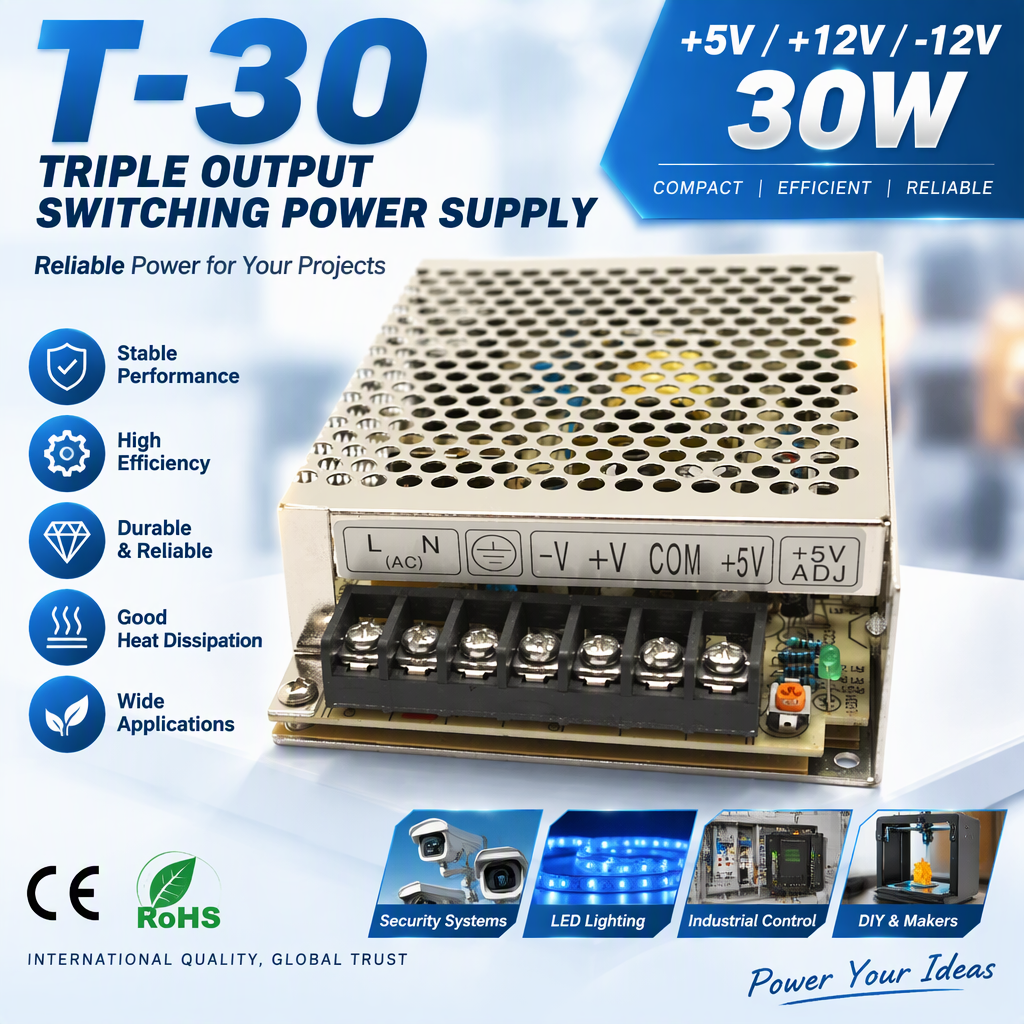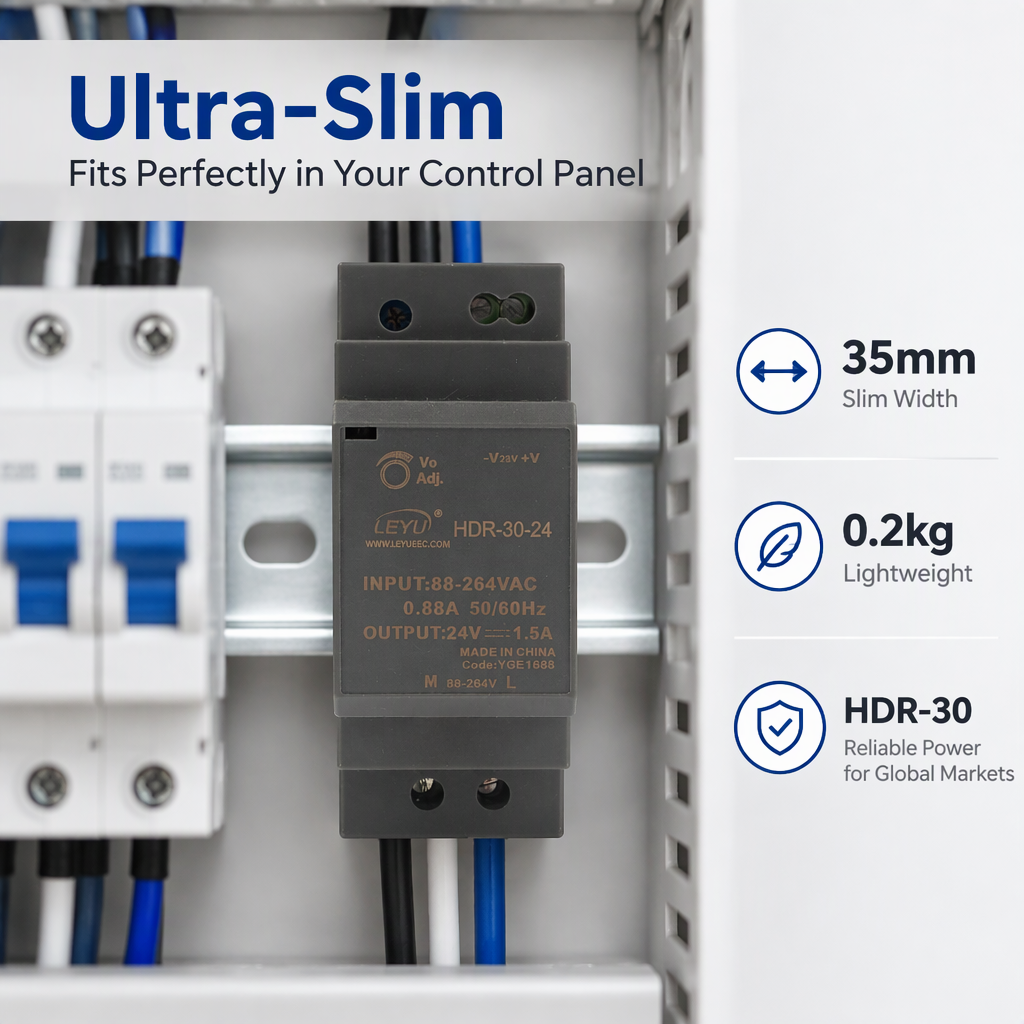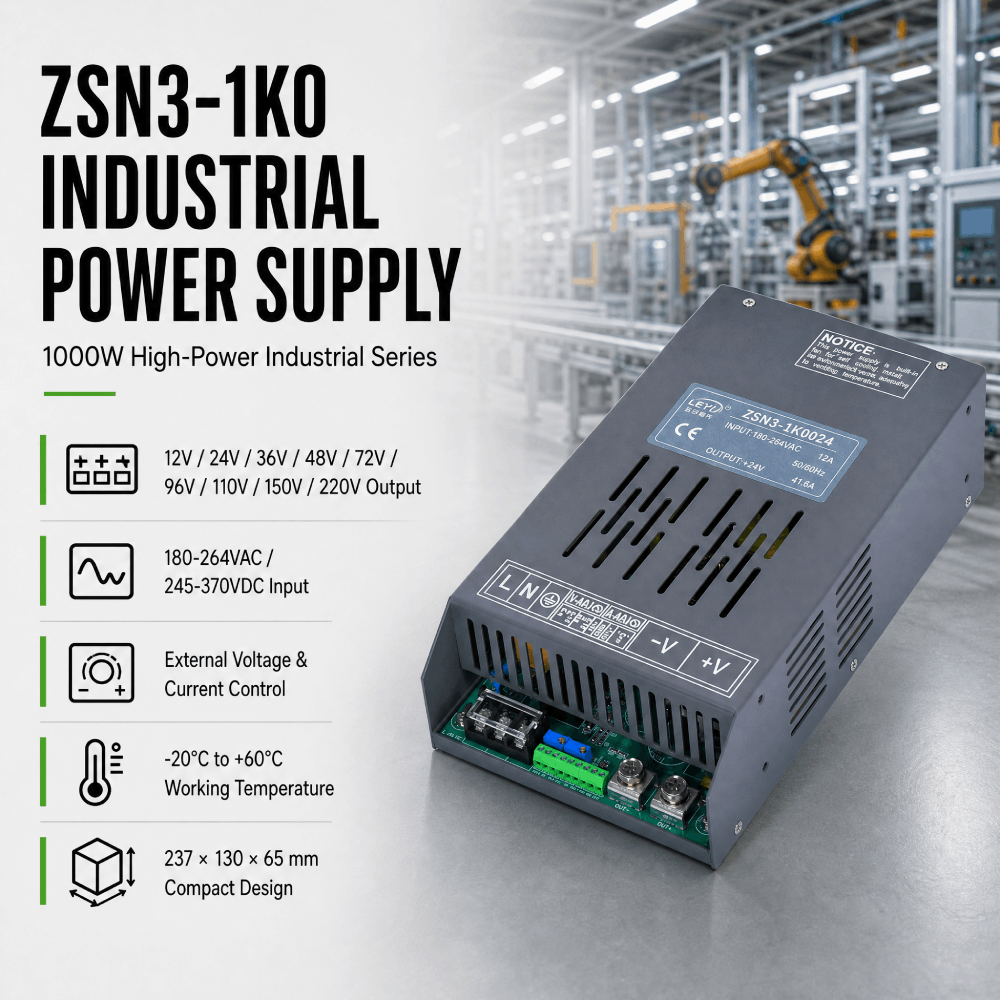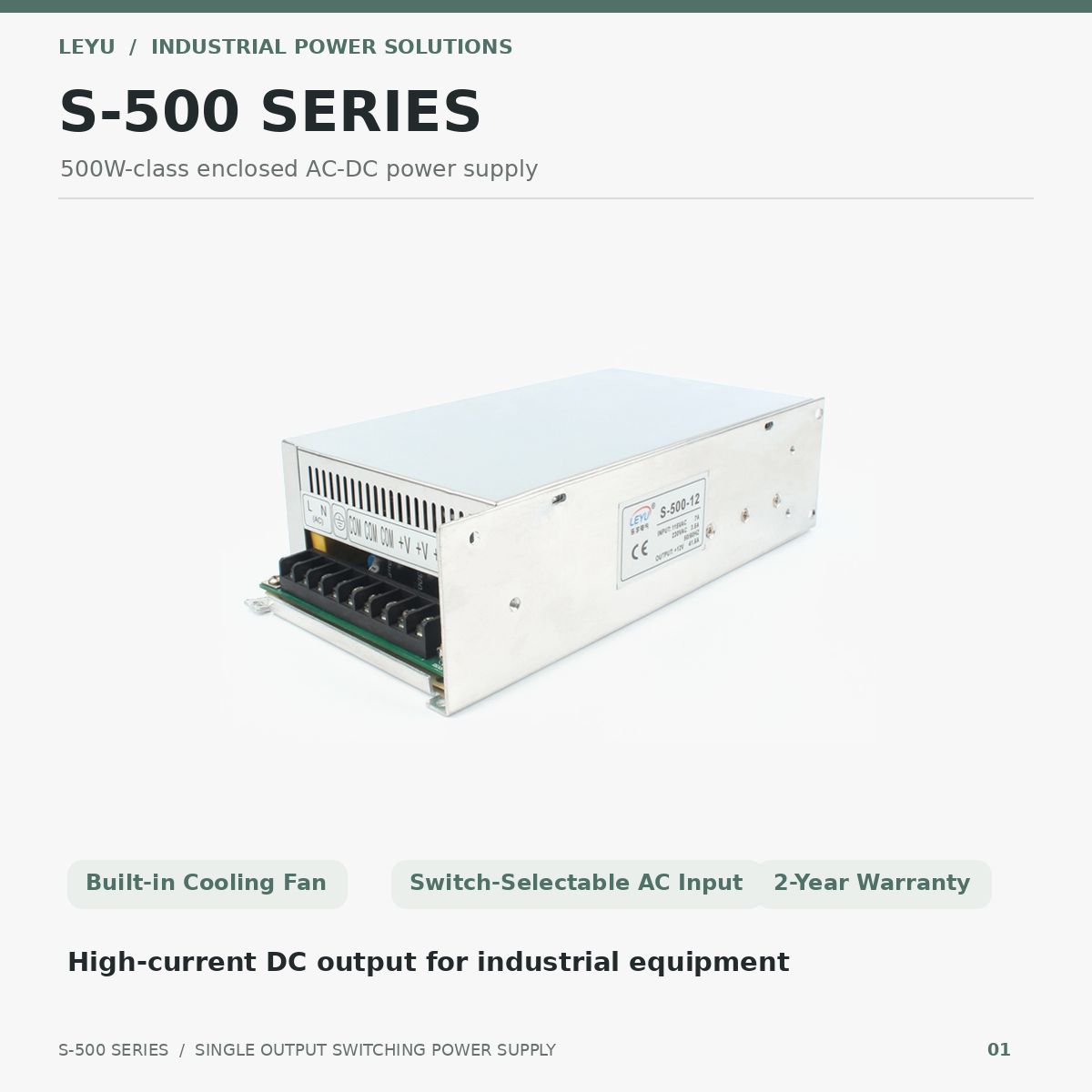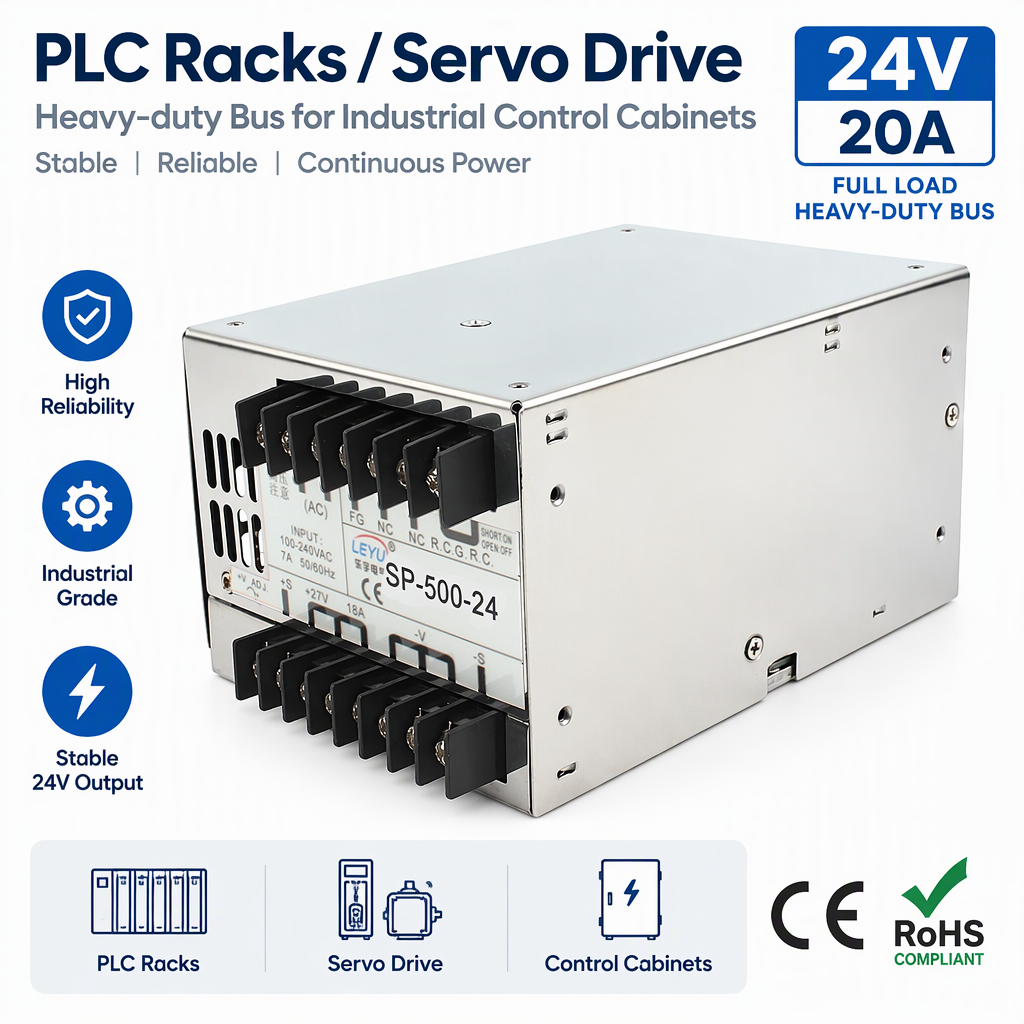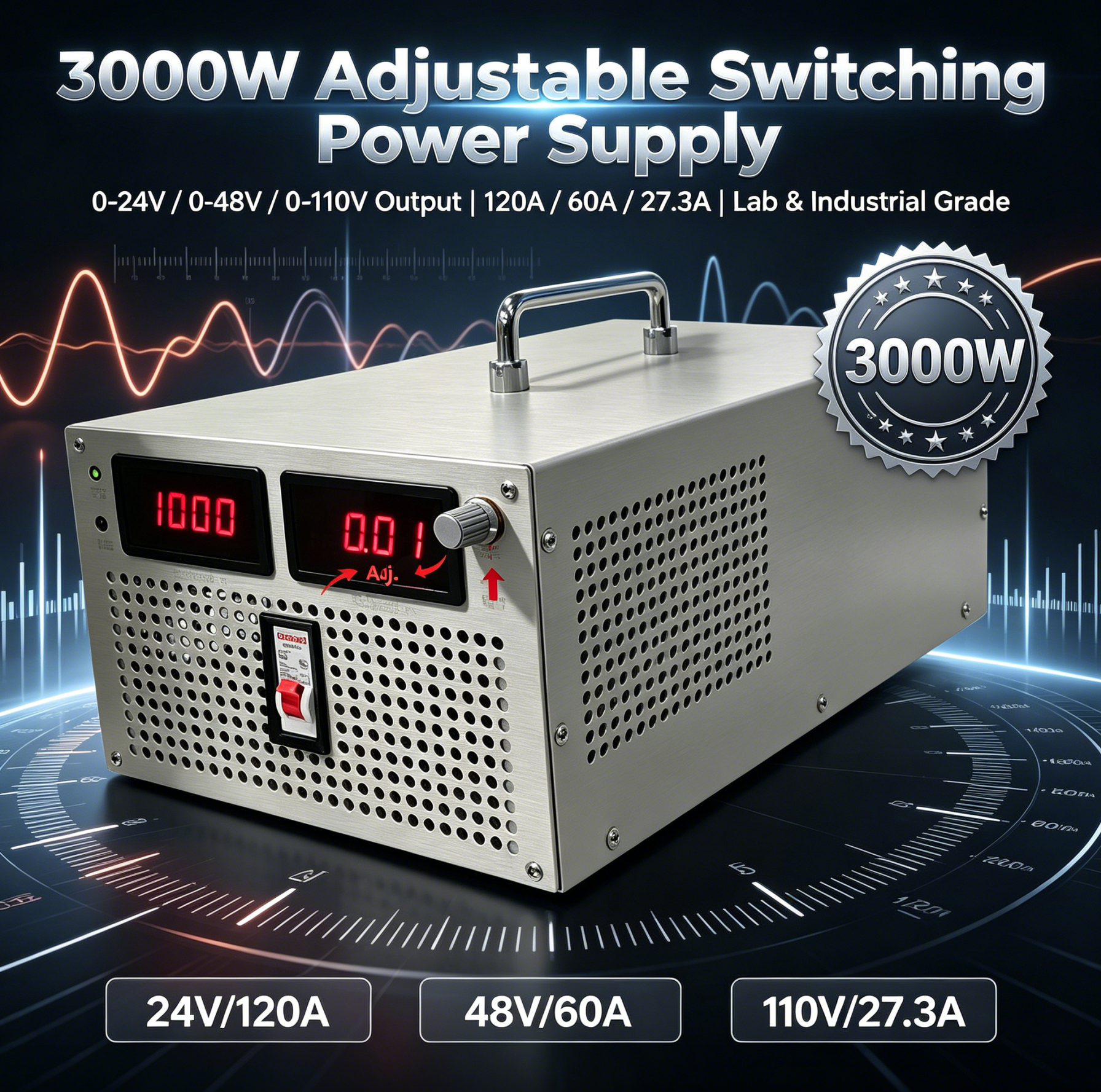
SV-3000 3KW Industrial Variable Power Supply 120A 60A for Electroplating Electrolysis & Laser Equipment AC 220V Input
- 3000W Output
- 120A / 60A Configurable
- Variable Regulation
Explore our flagship switching power solutions and programmable DC converter platforms. Built in our Yueqing manufacturing base under stringent quality gates, 100% full-load burn-in tested, and fully customizable for OEM/ODM integration.
Modern electronic architectures are abandoning rigid central power distribution in favor of Distributed Power Architecture (DPA) and Intermediate Bus Architecture (IBA). As an established OEM/ODM DC DC converter module manufacturer, Yueqing Keldan Technology applies cutting-edge semiconductor topologies and advanced planar magnetic packaging to address the critical friction points of power conversion: thermal derating, electromagnetic interference (EMI), and dynamic load response.
In non-isolated point-of-load (POL) converters, conventional diode rectification incurs prohibitive $V_f \times I_o$ conduction losses. Keldan's ODM modules employ high-frequency synchronous rectification with ultra-low $R_{DS(on)}$ gallium nitride (GaN) and silicon MOSFETs, boosting non-isolated step-down efficiency beyond 96%. For isolated brick converters (1/16th to full brick), our R&D team utilizes Phase-Shifted Full-Bridge (PSFB) and zero-voltage-switching (ZVS) LLC resonant topologies. By circulating energy through parasitic reactances to discharge switch capacitances before turn-on, switching losses are virtually eliminated at frequencies up to 500 kHz, allowing massive downsizing of inductors and planar transformers.
Ground loops, common-mode transients ($dV/dt$), and high-voltage differentials pose severe threats to sensitive control circuitry in industrial automation and EV battery management systems (BMS). Our isolated DC-DC modules deliver galvanic isolation barriers rated from 1,500V DC to 4,242V DC (reinforced insulation meeting IEC/EN 62368-1 standards). Utilizing optocoupler-free digital isolators and custom-wound planar transformers with high dielectric-breakdown polyimide insulation tape, our modules maintain internal coupling capacitance below 10pF, preventing high-frequency common-mode noise from bypassing the isolation barrier.
Power density gains are meaningless if excessive heat forces steep current derating. Keldan engineers integrate direct-bonded copper (DBC) substrates and Insulated Metal Substrates (IMS) directly with aluminum baseplates. Thermally conductive silicone vacuum potting (thermal conductivity $k > 2.0\text{ W/m}\cdot\text{K}$) eliminates internal air voids, equalizing component temperatures across active switching stages and copper planar transformer windings. This thermo-mechanical design allows our standard industrial converters to operate at full rated power in ambient temperatures spanning $-40^\circ\text{C}$ to $+85^\circ\text{C}$ without forced air cooling.
| Module Class | Topology Architecture | Input Voltage Ranges | Isolation Rating | Typical Efficiency | Key Compliance / Application |
|---|---|---|---|---|---|
| Wide-Input Regulated Brick | ZVS Push-Pull / Interleaved Flyback | 9–36V DC / 18–75V DC (4:1) | 1,500V – 3,000V DC | 89% – 93% | Railway (EN 50155), Telecom Distributed Architecture |
| High-Current POL (Non-Isolated) | Multi-Phase Synchronous Buck (GaN) | 4.5–14V DC / 18–36V DC | None (Common GND) | 94% – 96.5% | FPGA, DSP, High-Speed AI Processing Boards |
| High-Voltage Industrial Step-Down | LLC Resonant Half-Bridge | 180–400V DC / 200–800V DC | 4,000V AC (Reinforced) | 92% – 95% | Photovoltaic Arrays, Energy Storage ESS, EV DC Bus |
| Precision Bipolar Multi-Rail | Current-Mode Forward with Linear Post-Reg | 9–18V DC / 18–36V DC | 1,500V DC | 84% – 88% | Analog Instrumentation, Data Acquisition, Medical DAQ |
Procurement directors and hardware engineering leads face rapid disruption driven by renewable electrification, silicon-to-GaN transitions, and supply chain sovereignty. Here is what leading original equipment manufacturers must anticipate over the next five years.
Traditional Silicon (Si) superjunction MOSFETs have approached their theoretical figure-of-merit ($R_{DS(on)} \times Q_g$). The transition to Gallium Nitride (GaN) on silicon and Silicon Carbide (SiC) enables switching speeds up to 10× faster with negligible reverse recovery charge ($Q_{rr}$). In forthcoming procurement cycles, GaN-based converters will dominate sub-100W micro-modules, drastically compressing PCB footprints, while SiC modules will claim intermediate bus applications from 400V up to 800V DC inputs.
Analog feedback loops with fixed compensation networks are yielding to Digital Signal Processors (DSPs) and ARM Cortex microcontrollers embedded within converter bricks. Procurement specifications increasingly mandate PMBus, I2C, or CANopen telemetry. Engineers require real-time reporting of junction temperature, input ripple, output current, and predictive fault logs to enable condition-based maintenance and remote firmware-controlled dynamic voltage scaling (DVS).
Memory of the recent global component crunch has altered procurement policies permanently. Tier-1 buyers no longer accept single-sourced, proprietary pinouts. The future lies in DOSA (Distributed-power Open Standards Alliance) and POLA compliant brick dimensions (1/16th, 1/8th, 1/4th, 1/2 brick). As an OEM/ODM partner, Keldan provides drop-in, pin-compatible alternatives to tier-1 global brands, safeguarding clients against catastrophic allocation lead times.
Stringent environmental mandates—such as EU RoHS 3 (Directive 2015/863) and REACH—are now standard criteria in industrial RFQs. Modern procurement requires supply-chain auditing down to the smelter level (CMRT reporting). Furthermore, low standby no-load power consumption (<100mW) and full recyclability of aluminum housings and potted resins will soon define customs clearance eligibility across European and North American borders.
Headquartered in Beibaixiang, Yueqing, Wenzhou—China’s epicenter for electrical component excellence—Keldan Technology combines 18+ years of switching power engineering with the rigorous auditing of international certification agencies.
Our facility, workshop capacity, testing benches, and quality control personnel have undergone full on-site physical auditing by TÜV Rheinland. We maintain a verified team of 44 specialized production and QA staff operating cleanroom SMT and automated inspection lines.
Backed by an internal R&D engineering team where each lead engineer boasts over 5 years of dedicated SMPS design expertise. We offer design-based (schematic to production) and sample-based reverse engineering, custom multi-pin footprints, conformal coating, and customized metal enclosures.
From incoming component inspection (MOSFETs, low-ESR capacitors), precision SMT placement, reflow soldering, automated optical inspection (AOI), manual lead debugging, through to 100% full-load elevated temperature burn-in testing, no unit leaves without documented test logs.
With over a decade of direct global exporting, our 12-person multilingual trade department handles compliance documentation, customs HS classification, private labeling, CE/RoHS declarations, and rapid DDP/FOB logistics for clients spanning Europe, North America, and Southeast Asia.
Avoid costly field warranty claims and project revisions by cross-checking your application parameters against our five golden engineering selection rules.
Inductive loads (relays, motors, solenoids) and high capacitive input banks require starting surges 200% to 400% above steady-state ratings. Specifying a converter right at its nominal limits triggers continuous hiccup-mode over-current protection (OCP). Always calculate a minimum safety overhead of 25% to 30%, or specify modules featuring constant-current limiting rather than instant latch-off shutdown.
Bare DC-DC switching cells generate significant differential-mode (DM) and common-mode (CM) conducted emissions. Evaluate whether your selected module includes integrated $\pi$-filtering or if an external LC filter is mandatory. Keldan's engineering datasheets clearly delineate external capacitor/choke values required to achieve Class A (industrial) or Class B (commercial/residential) EMC compliance.
A converter rated for 100W at $25^\circ\text{C}$ may only safely yield 50W at $70^\circ\text{C}$ in an enclosed IP65 junction box. Always inspect the manufacturer’s derating curve under convection cooling versus forced-air conditions (e.g., 200 LFM or 400 LFM). In unventilated control boxes, select aluminum encapsulated or baseplate-cooled modules capable of conducting heat directly into the system chassis.
Direct answers to technical, commercial, and manufacturing questions asked by engineering leads, purchasing managers, and supply chain analysts.
A 2:1 input range implies the maximum voltage is twice the minimum (e.g., 18–36V DC, typical for standard 24V battery systems). A 4:1 ultra-wide range accommodates four times the minimum voltage (e.g., 9–36V DC or 18–75V DC). You should specify a 4:1 input converter when your equipment must bridge multiple power standards (e.g., operating across both 24V and 48V telecom/industrial rails) or when compensating for severe voltage dips caused by heavy motor cranking in vehicle systems.
Yes. As a custom manufacturer with in-house R&D and SMT facilities in Yueqing, we specialize in OEM/ODM customization. We can engineer custom output rails (e.g., non-standard 7.5V, 36V, or dual asymmetric rails such as +15V/-9V for SiC gate driver modules), custom current limits, thermal trip points, specific PCB footprints, and bespoke potting formulations. Custom sampling typically takes 10 to 18 business days following engineering specification sign-off.
We calculate Mean Time Between Failures (MTBF) utilizing MIL-HDBK-217F or Telcordia SR-332 standards, targeting >500,000 hours at $25^\circ\text{C}$ full load. Reliability is guaranteed at the hardware level through branded tier-1 internal silicon and passive components (e.g., high-temperature $105^\circ\text{C}$ Japanese/Taiwanese electrolytic capacitors, high-dielectric MLCCs). Every manufactured batch undergoes automated AOI inspection and a mandatory 100% full-load burn-in aging process in our environmental testing chambers prior to packaging.
Standard modular units and evaluation samples can be ordered starting from 1 piece for qualification. For customized OEM production runs (custom pinouts, branding, or specialized circuit tuning), our standard MOQ is generally 50 to 100 units depending on the module wattage. Standard production lead time is 2 to 4 weeks. We also offer buffer inventory agreements for recurring contract manufacturing clients to ensure rapid 48-hour dispatch.
Yes. Our products carry CE marks conforming to Low Voltage Directive (LVD 2014/35/EU) and Electromagnetic Compatibility Directive (EMC 2014/30/EU). In addition, full compliance with RoHS 2011/65/EU and REACH is guaranteed. Our factory has been verified on-site by TÜV Rheinland. Comprehensive test reports, factory audit documents, and material certificates are readily supplied to purchasing and quality assurance teams during vendor qualification.
Whether you require a standard isolated DC-DC brick, an ultra-slim DIN rail unit, or an entirely custom power topology engineered to your exact voltage, thermal, and dimensional constraints, our Yueqing technical team is ready to assist.
Get a Quote