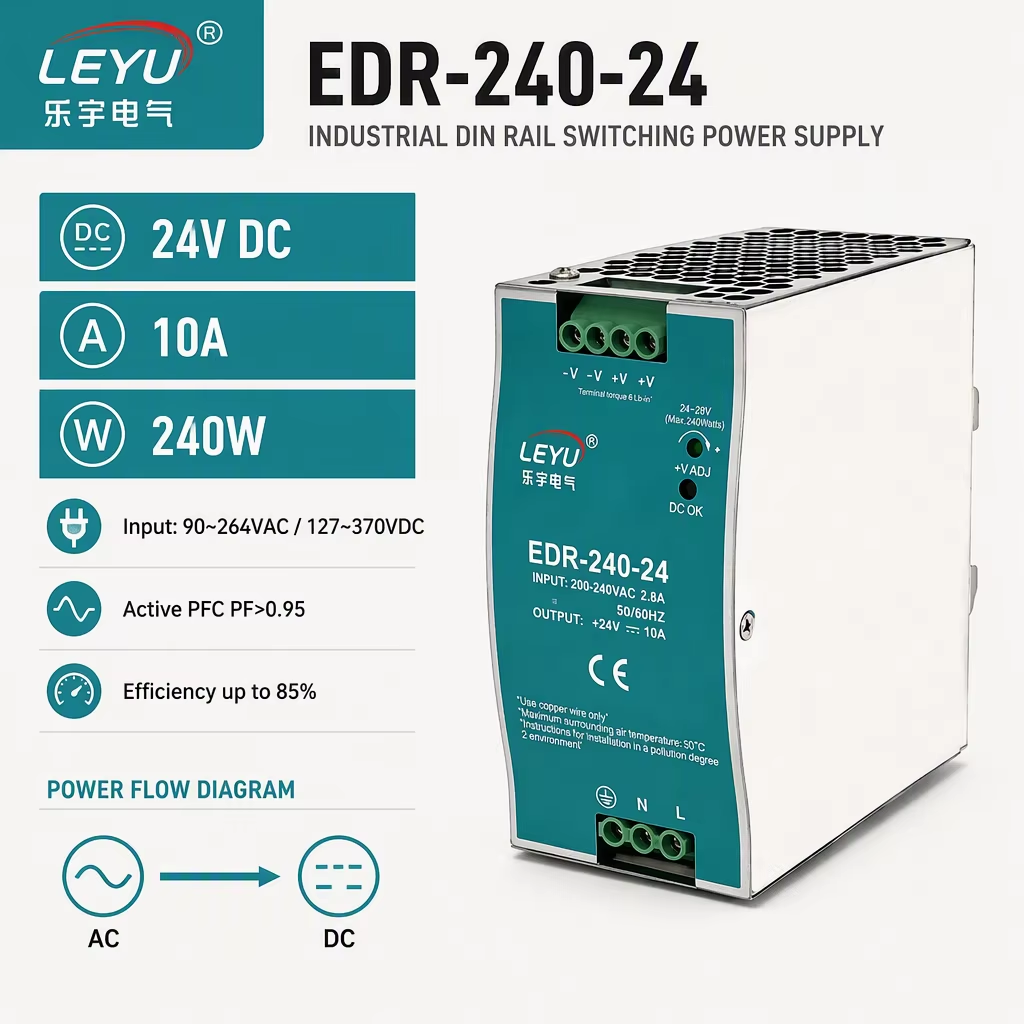
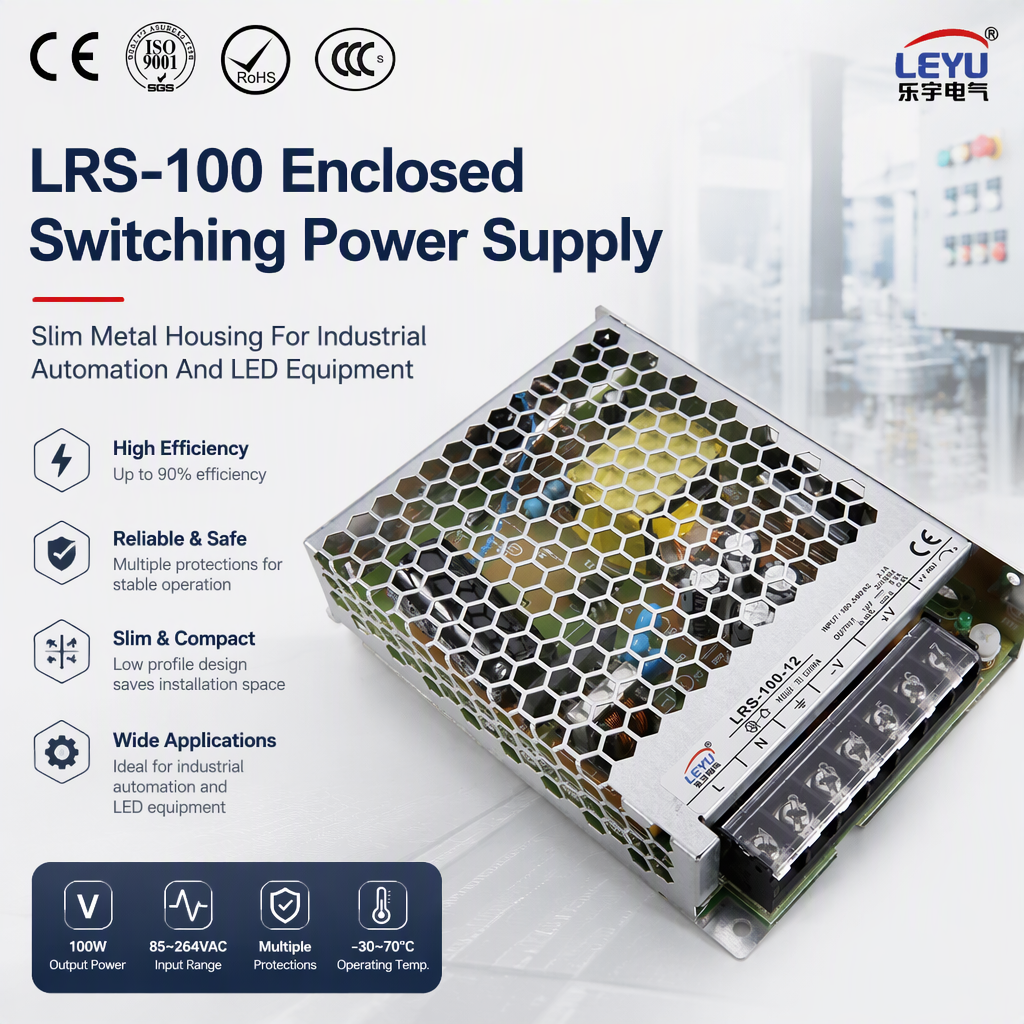
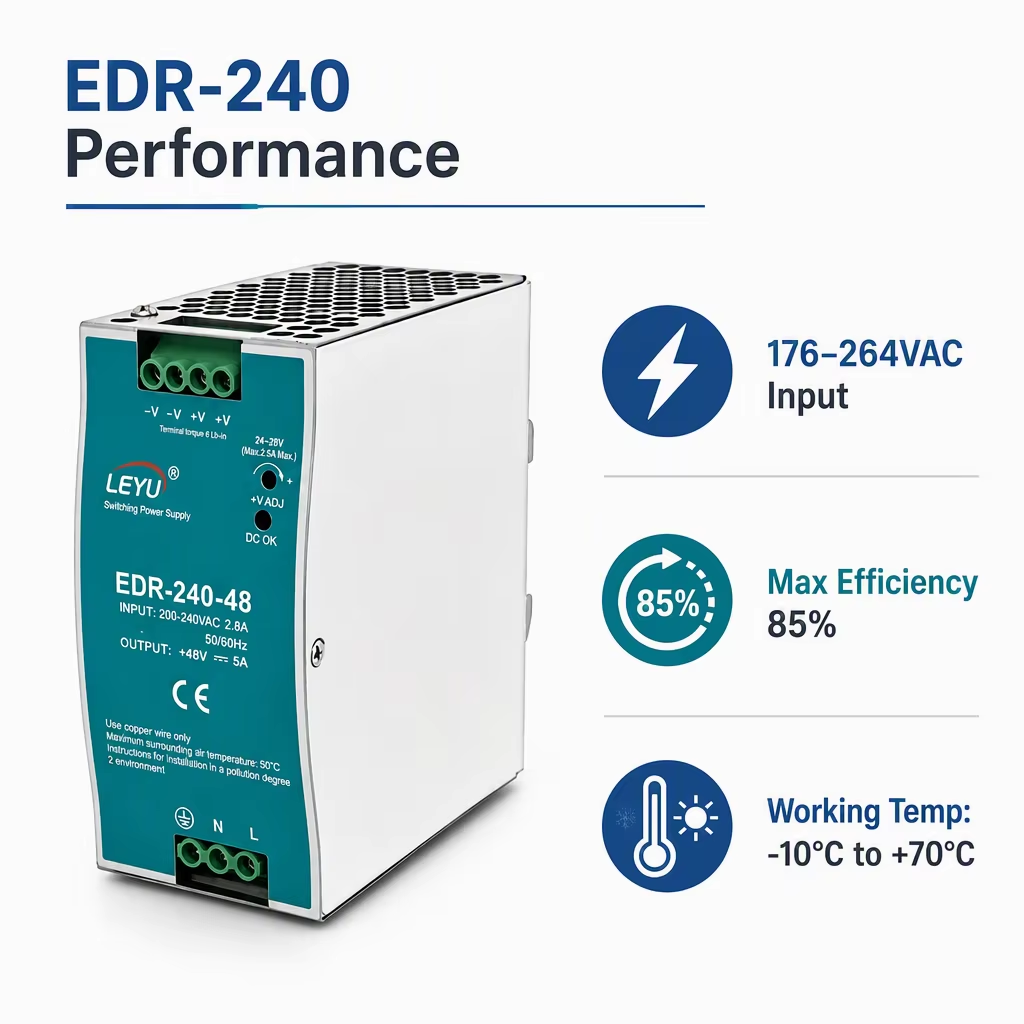
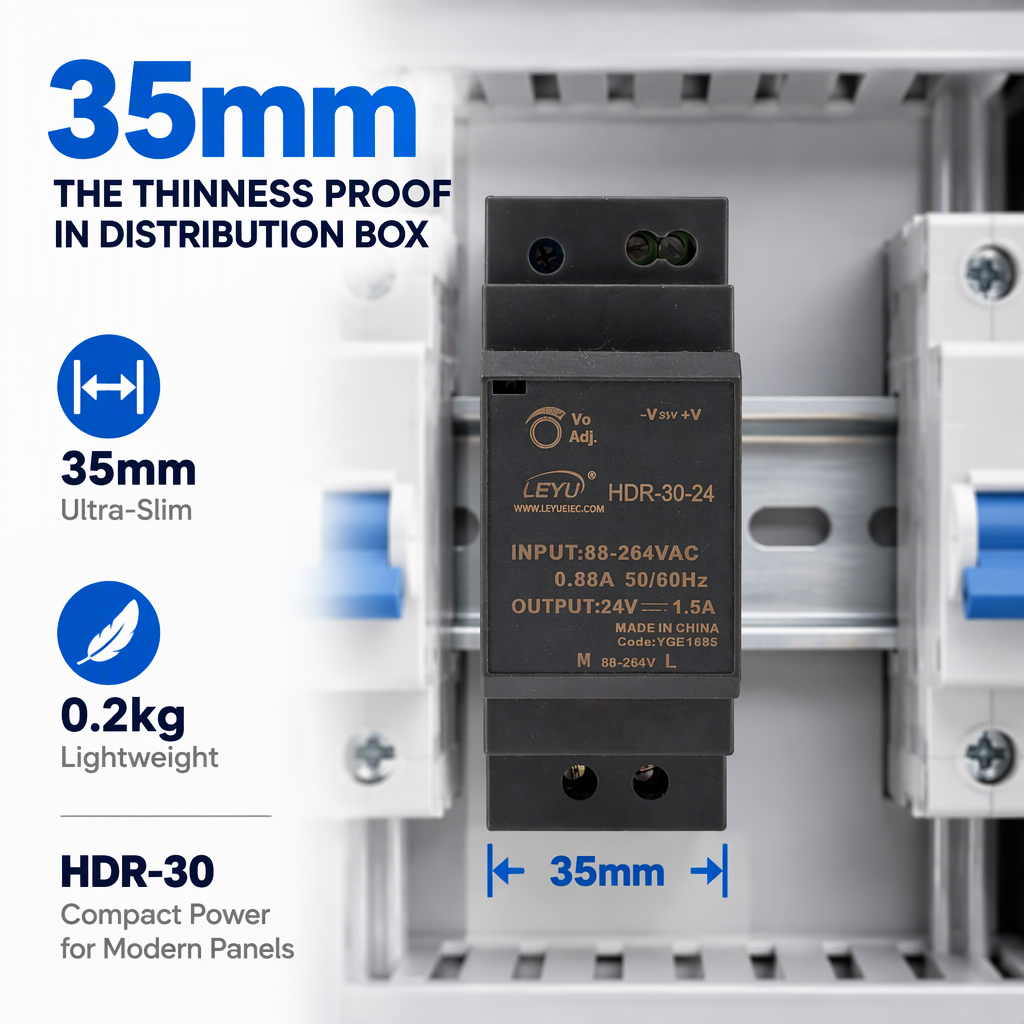
DIN Rail PSU
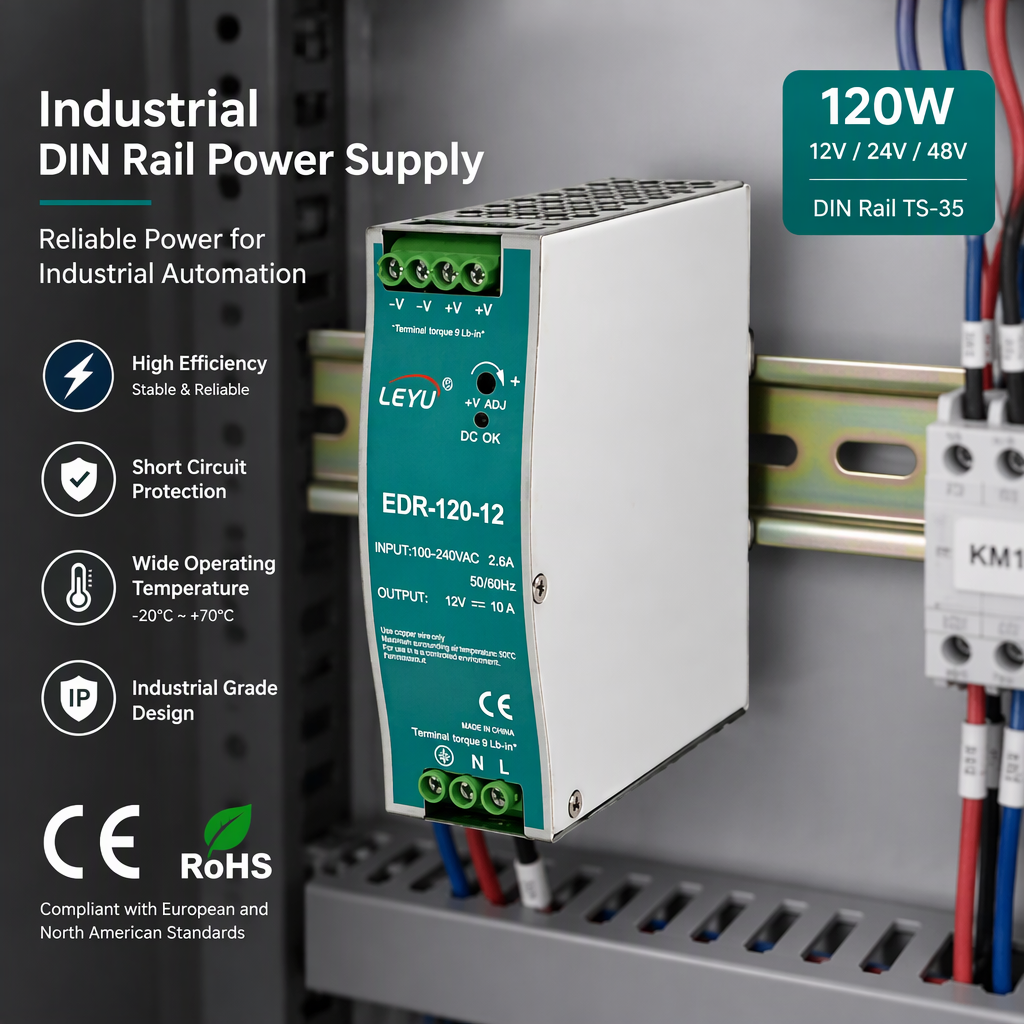
120W / 24V 5A
TS35 Mount
PLC Cabinet
Explore field-proven switching platforms, DIN rail power supplies, and high-voltage DC converters manufactured in our Yueqing production facility. Custom OEM/ODM multi-channel and quad-output configurations are engineered to client exact specifications.
Comprehensive engineering analysis of multi-rail switching topologies, galvanic boundary management, cross-regulation compensation, and post-regulation topologies for modern electronic systems.
In modern industrial automation, robotics, telecommunications, and diagnostic medical instruments, electronic systems rarely function on a single voltage bus. A contemporary automated testing cabinet or robotic controller typically necessitates +24V DC for high-torque servo drives and electromechanical actuators, +12V DC for peripheral interface logic and cooling fans, +5V DC for central microcontroller logic, and -12V or +3.3V DC for low-noise analog measurement circuitry, operational amplifiers, and precision digital signal processors (DSPs). Historically, system integrators utilized multiple independent single-output power supplies connected in parallel on a DIN rail or rack chassis. However, this discrete approach inevitably introduces high overall bill-of-materials (BOM) overhead, voluminous footprint penalties, unpredictable ground-loop interference, and severe thermal dissipation hotspots.
The transition toward an integrated Quad Output Power Supply—engineered via dedicated OEM/ODM manufacturing partnerships—solves these physical and electrical bottlenecks by combining four synchronized rails into a singular, highly efficient AC-DC converter enclosure. Nevertheless, implementing multiple independent or common-ground outputs from a unified primary switching stage presents stringent magnetic and feedback complexities, predominantly centering around cross-regulation drift, inter-channel leakage inductance, and differential loop stability.
Traditional multi-winding flyback converters suffer from cross-regulation errors exceeding ±12% when secondary rails experience wide load step variations. Our custom engineering incorporates tightly coupled planar magnetic cores and bifilar windings to minimize parasitic leakage inductance between V1, V2, V3, and V4.
For applications demanding independent tight regulation (≤ ±1.0%) across all 4 rails regardless of cross-loading imbalances, our OEM architectures deploy an isolated high-efficiency primary stage (LLC resonant or active clamp forward) followed by dedicated synchronous buck/boost POL regulators.
Meeting medical (IEC 60601-1 2xMOPP) and industrial (IEC 62368-1) reinforced isolation standards necessitates rigorous physical trace separation. We engineer multi-output transformers with triple-insulated winding wire (TIW) and optical feedback isolation ratings exceeding 4000VAC.
| Architecture Typology | Primary Topology | V1 (Main) Regulation | V2/V3/V4 Cross Regulation | Minimum Load Requirement | Recommended OEM System Application |
|---|---|---|---|---|---|
| Multi-Winding Flyback (Cost Optimized) | Quasi-Resonant Flyback | ± 1.0% (Opto Closed-Loop) | ± 5.0% to ± 10.0% | Yes (10% on V1 required) | Low-power consumer appliances, basic security systems, auxiliary supplies |
| Coupled-Inductor Forward Converter | Two-Switch Forward | ± 1.0% | ± 3.0% to ± 4.5% | Yes (5% dummy or preload) | Industrial machinery, motor control, legacy telecom line cards |
| Hybrid LLC + Synchronous DC-DC POL | Half-Bridge LLC Resonant | ± 0.5% (Digital Loop) | ± 1.0% (Independent POL) | Zero Load (0W minimum) | Medical diagnostics, high-end test instrumentation, 5G base stations, robotics |
| Active Clamp Forward with MagAmp | Active Clamp Forward | ± 1.0% | ± 1.5% to ± 2.5% | Minimal (< 2%) | Severe EMI environments, defense communication, airborne telemetry |
In conventional multi-output SMPS platforms, when the master rail (typically V1, +5V or +24V) is lightly loaded while an auxiliary rail (such as V2 or V3 powering an analog sensor or cooling fan) encounters sudden peak demand, the duty cycle driven by the primary PWM controller narrows drastically. This consequence leads to an abrupt voltage collapse or severe under-voltage lockout on the loaded secondary rail. Our custom OEM engineering circumvents this systemic limitation through Weighted Secondary Feedback Networks, Dynamic Bleeder Switching Circuits, or Independent Secondary Post-Regulators, guaranteeing unconditional stability even under 0% to 100% cross-load imbalances.
Actionable intelligence for technical purchasing agents, OEM engineering heads, and supply chain managers navigating changing efficiency standards, component shortages, and technological disruptions.
Procurement teams are shifting away from legacy Silicon MOSFET designs toward Gallium Nitride (GaN) and Silicon Carbide (SiC) topologies. High switching frequencies (300kHz–1MHz) drastically shrink the physical volumetric size of planar transformers and output choke filter capacitors.
Hardware procurement is converging with Industrial IoT. Modern tenders require quad-output power supplies equipped with PMBus™, I2C, or CANopen interfaces. Systems require real-time reporting of per-rail voltage, temperature, load current, and predicted operational lifespan.
To mitigate the traditional 6 to 12-month development cycle and substantial Non-Recurring Engineering (NRE) fees of ground-up custom designs, tier-1 procurement managers are selecting Configurable Multi-Rail Modular Platforms that allow rapid swapping of pre-certified output modules.
Geopolitical Supply Chain Diversification & Onsite Auditing: As supply chain vulnerabilities continue to challenge international original equipment manufacturers, procurement protocols have permanently changed. Enterprise buyers now mandate proof of factory-direct ownership, vertically integrated manufacturing capabilities (such as in-house SMT, automatic optical inspection, and automated burn-in screening), and verifiable third-party certification checks. Sourcing directly from verified Chinese manufacturers located within high-density electrical manufacturing ecosystems (such as Yueqing, Zhejiang) provides multinational enterprises with significant cost efficiencies, direct access to senior design engineering teams, and resilient production bandwidth.
Backed by over 18 years of specialized power electronics engineering, our Yueqing manufacturing campus combines cutting-edge production lines, rigorous QA/QC inspection regimes, and complete OEM/ODM customization services.
Our production facilities, testing capabilities, and trade compliance have undergone rigorous onsite inspection by TÜV Rheinland. Full inspection reports and credit ratings are transparently open for buyer verification.
Operating from Beibaixiang, Yueqing—the epicentre of China's electrical equipment industry—gives us direct access to world-class supply chains for magnetic cores, power semiconductors, and precision metal tooling.
Our workshop houses high-speed automated SMT mounters, computerized reflow soldering tunnels, Automated Optical Inspection (AOI) stations, and component lead trimming equipment to prevent manufacturing anomalies.
Zero-defect deployment is guaranteed via 100% high-temperature full-load aging racks. Every single power supply undergoes dynamic thermal stress and functional calibration before packaging and pallet release.
Supported by senior SMPS engineers with over 5 years of individual field expertise. We specialize in custom multi-channel voltage combinations (e.g., +24V/+12V/+5V/-12V), specialized chassis forms, custom DIN rail brackets, and private labeling.
Our 12-person international trade department provides responsive, technically literate support across multiple time zones. We manage seamless customs clearance, complete DDP/FOB documentation, and comprehensive packaging compliance.
We empower rapid industrial prototyping and small-batch equipment deployments by offering low prototype MOQs starting from 1 unit for standard catalog platforms, coupled with rapid engineering turnaround for custom sample builds.
Detailed technical, regulatory, and commercial answers addressing common inquiries from system architects, electrical engineers, and international procurement managers.
