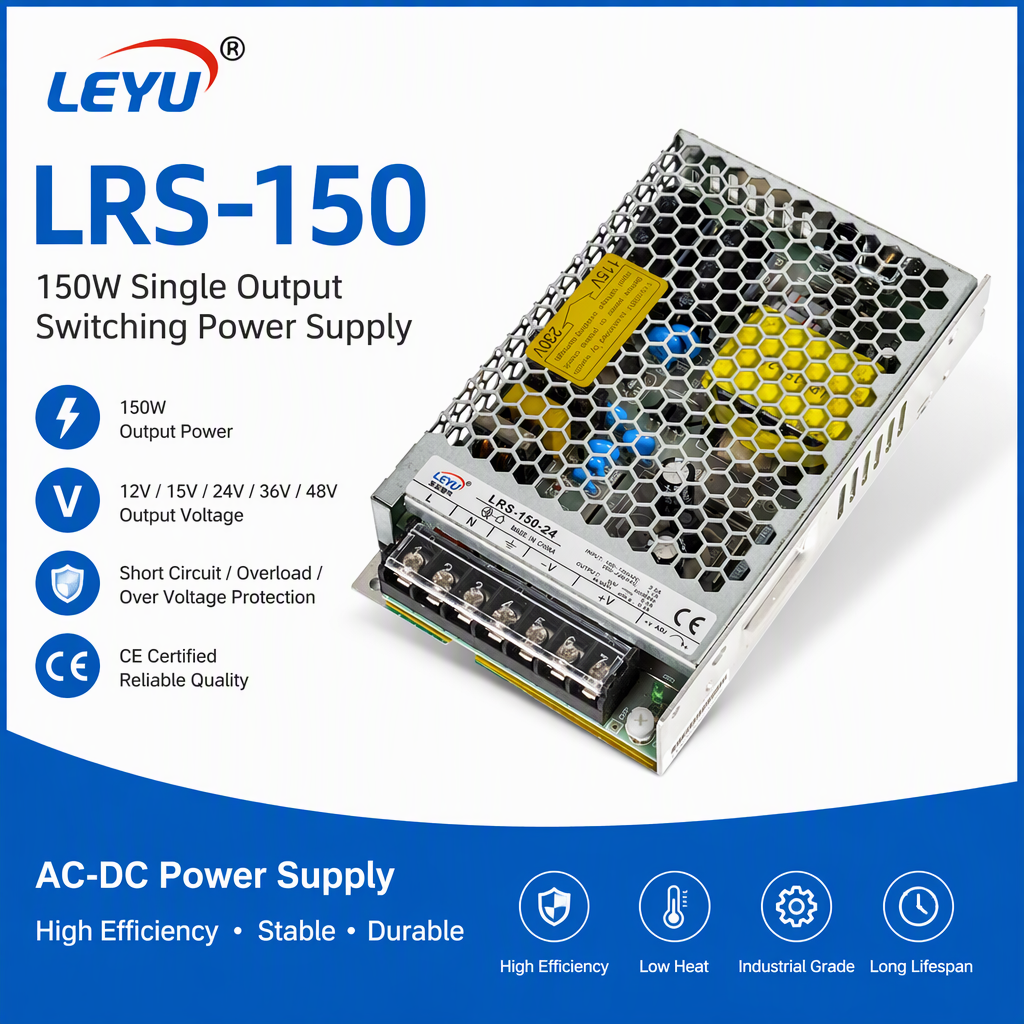
LEYU LRS-150-24 150W 24V 6.5A AC DC Switching Power Supply Low Profile
Input: 85-264VAC
Efficiency: >89%
Cooling: Convection
Profile: 30mm Enclosed
Below are eight core power supply configurations engineered by leading Zhejiang industrial facilities. These models support mission-critical telemetry, industrial automation, and custom OEM secondary auxiliary loops with certified MTBF metrics.
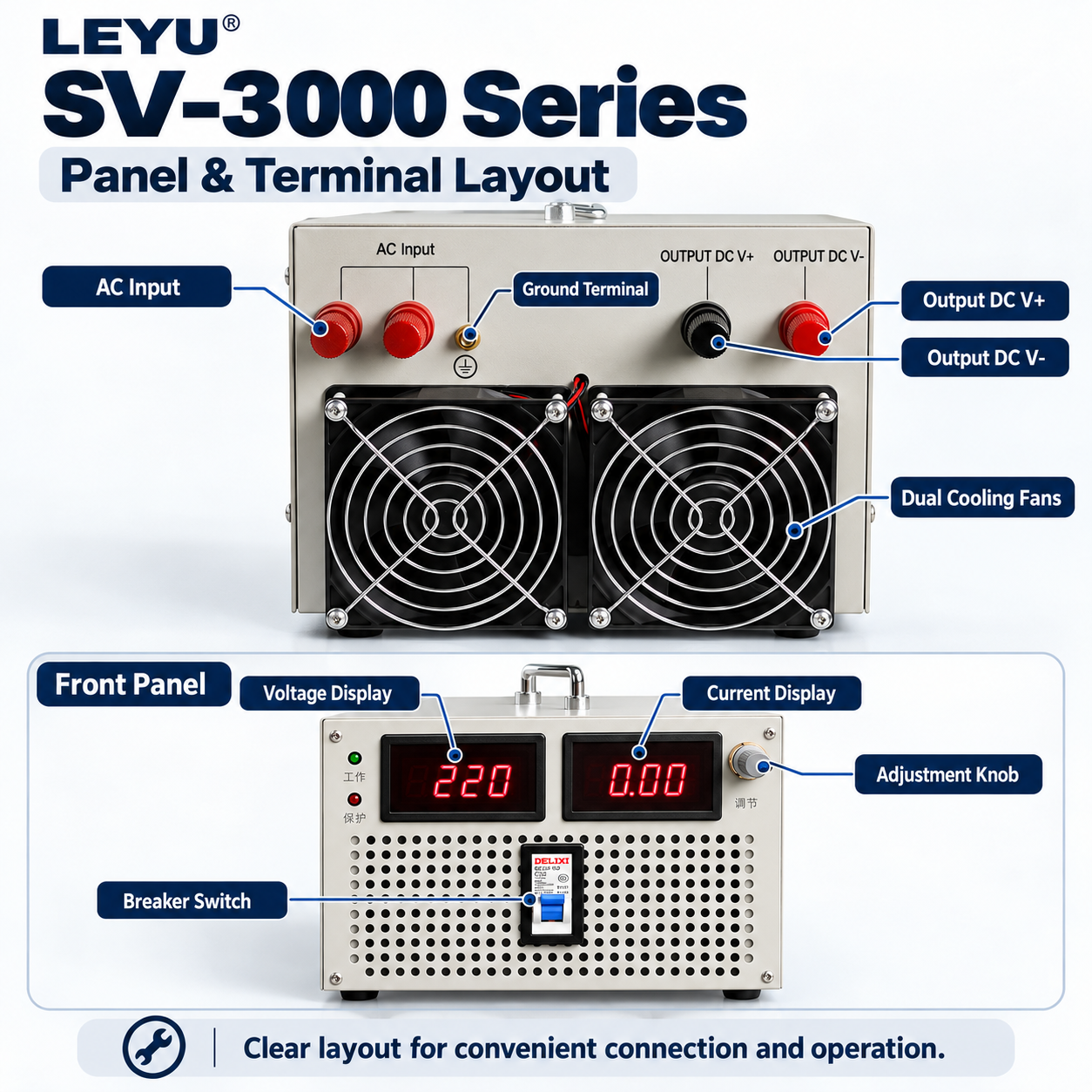
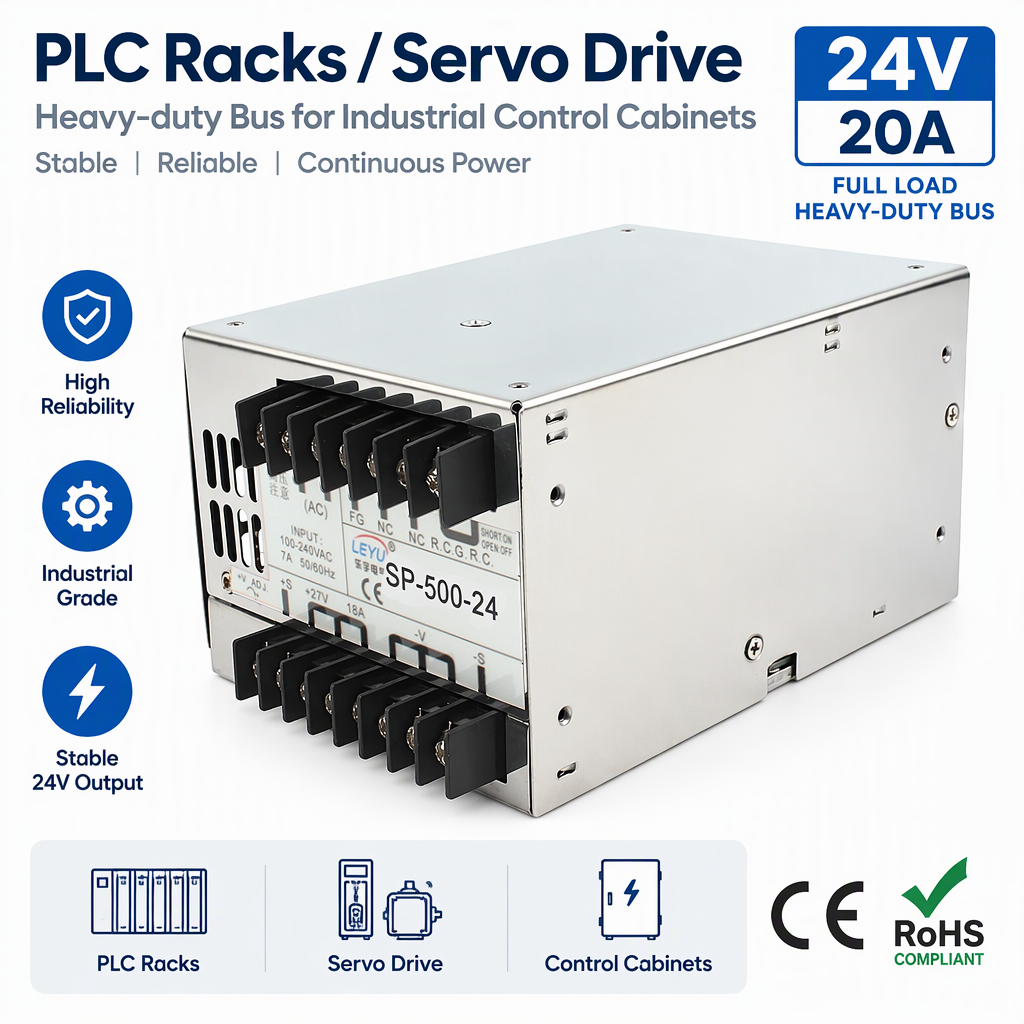
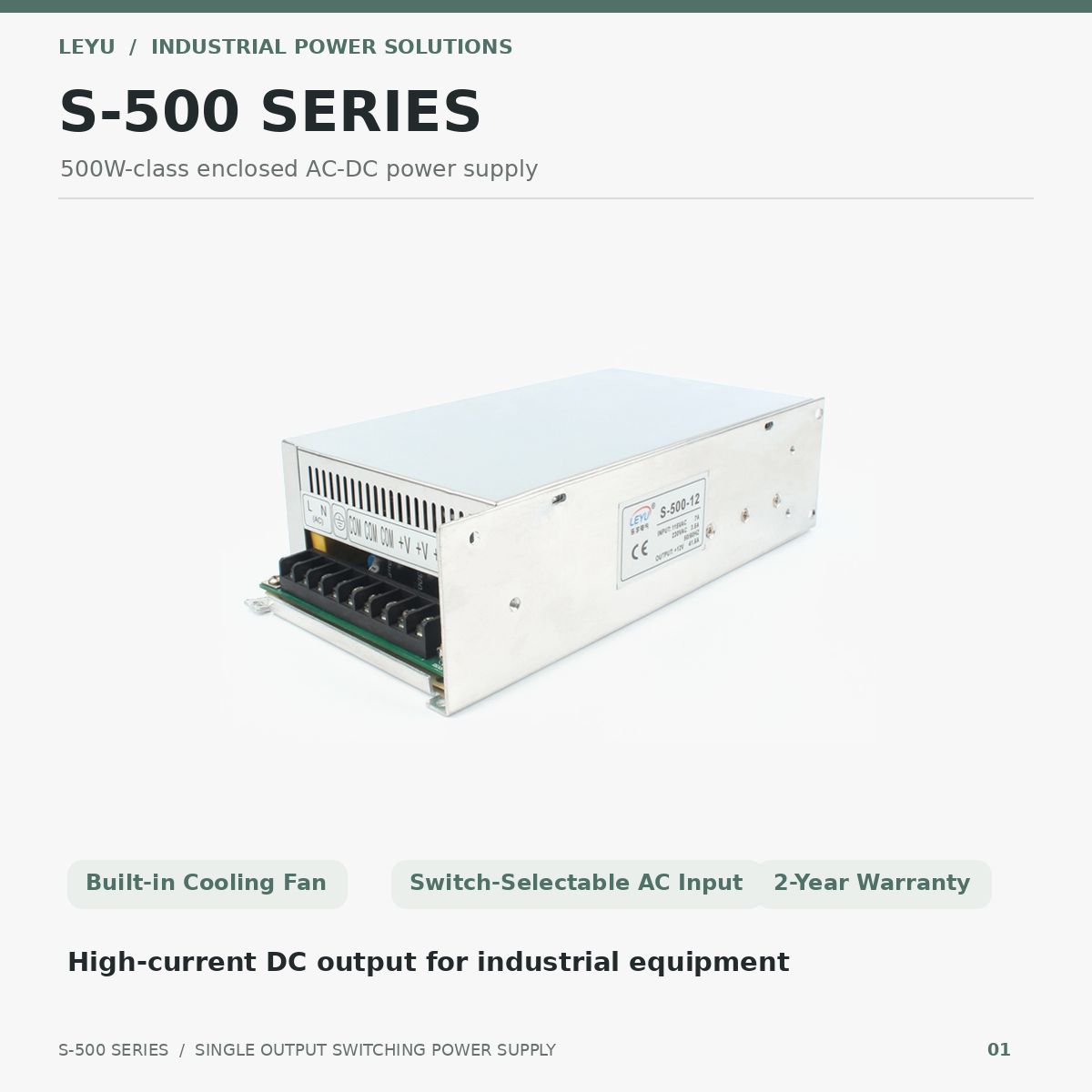
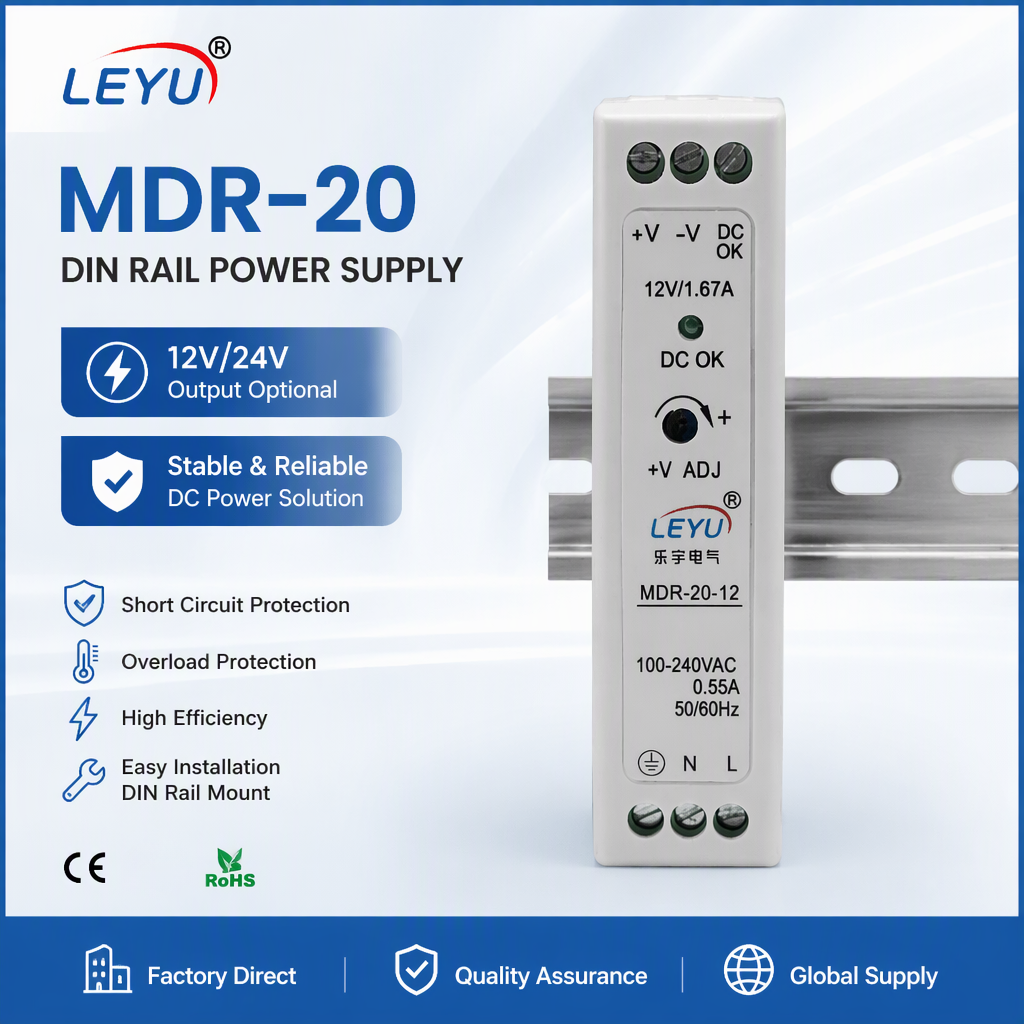
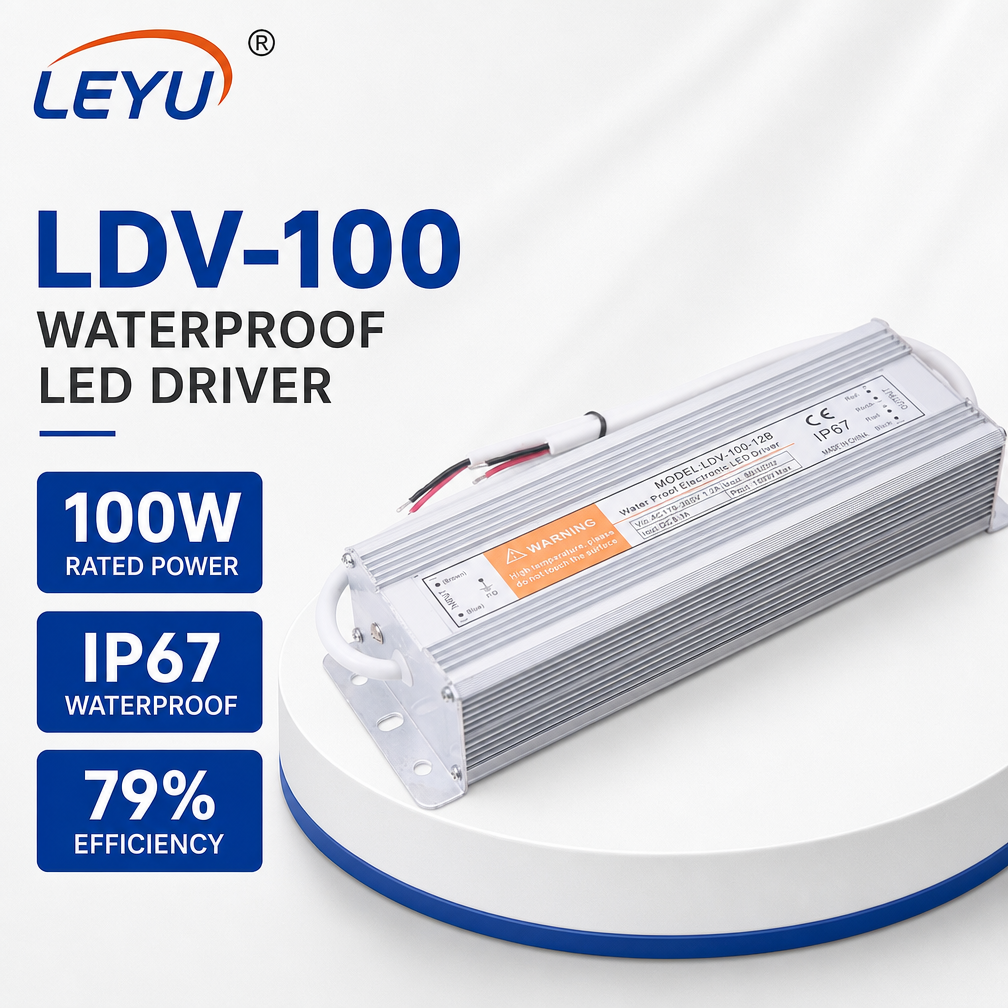
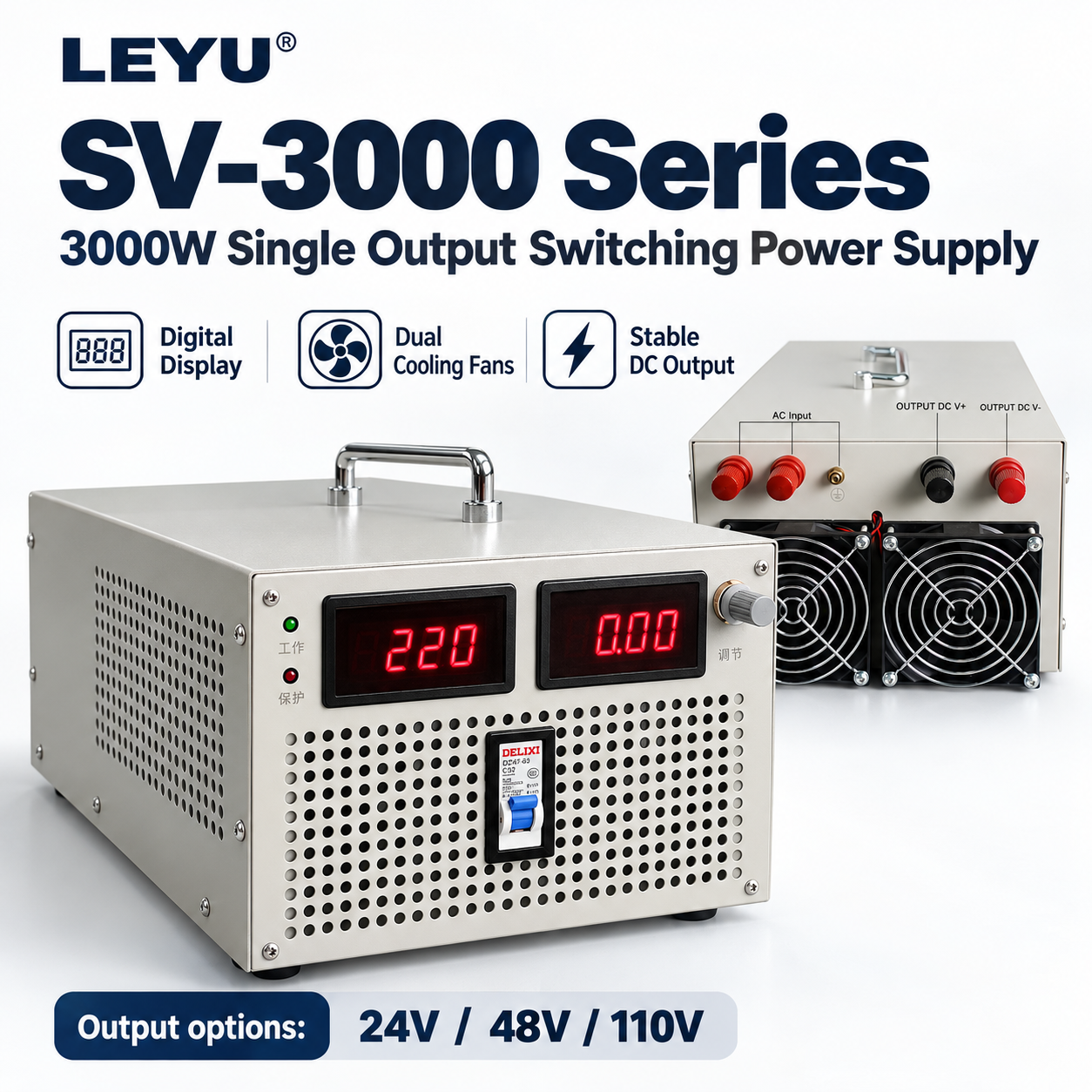
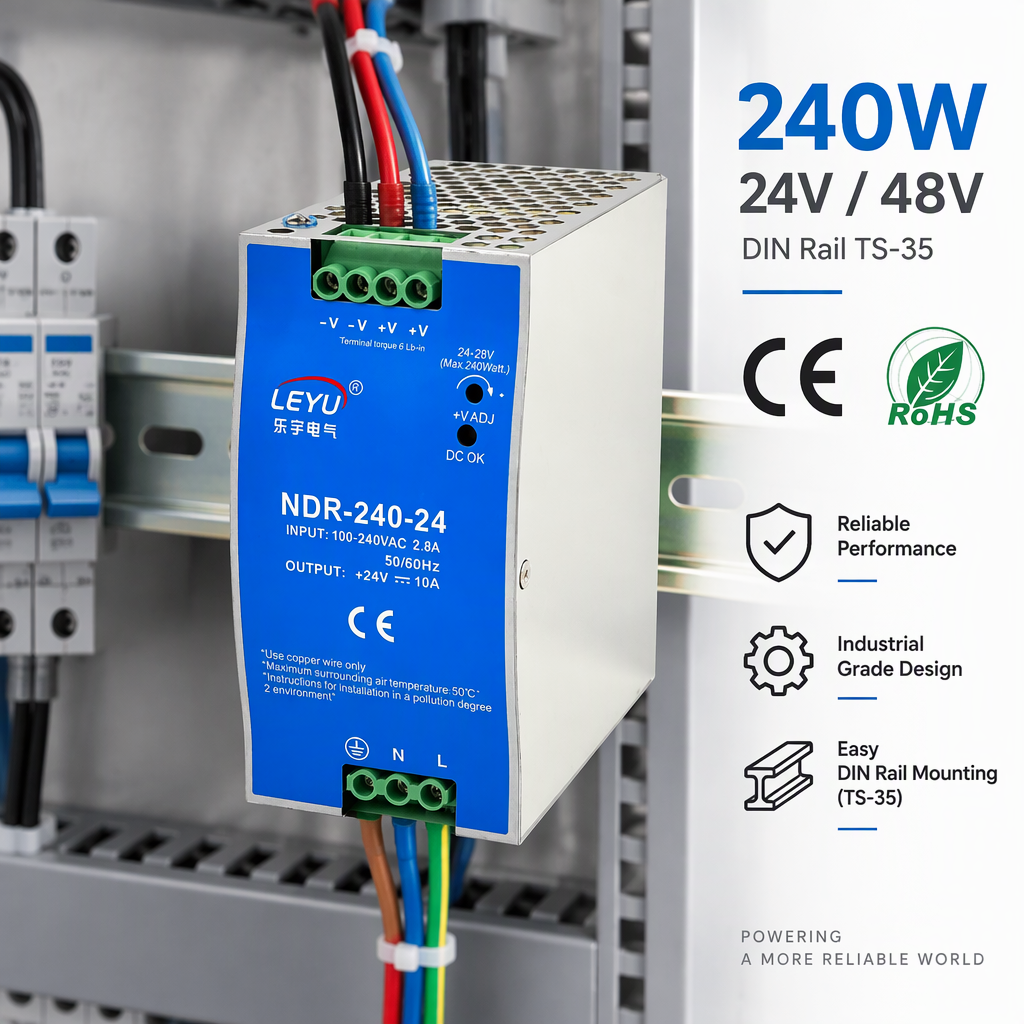
In industrial control panels, robotics, telecommunications, and Medical/Laboratory equipment, a dual output power supply converts AC mains voltage into two independent or semi-independent DC voltage rails (e.g., +5V/+12V, +12V/+24V, +5V/+24V, or symmetric ±12V/±15V). Achieving tight voltage stability across varying load dynamics requires advanced power electronics design.
Unlike single-output switch-mode power supplies (SMPS) where a single closed-loop optocoupler monitors and regulates the output rail via Pulse Width Modulation (PWM), dual output converters face cross-regulation asymmetry. When Rail 1 (typically the main feedback rail, e.g., 5V logic) is heavily loaded while Rail 2 (e.g., 24V motor/relay drive) is lightly loaded or idling, the duty cycle expands to maintain Rail 1 voltage. Without dedicated secondary regulation, this creates energy spillover across the secondary windings, driving Rail 2 voltage out of specification.
Top tier Chinese manufacturers solve this problem using three primary topological methodologies:
Selecting the appropriate circuit configuration impacts Bill of Materials (BOM) cost, operational lifespan, and electromagnetic interference (EMI) compliance. Below is an engineering evaluation across widely manufactured Chinese topologies:
| Circuit Topology | Typical Power Range | Galvanic Isolation | Cross-Regulation Precision | Efficiency Benchmark | Ideal Application Profile |
|---|---|---|---|---|---|
| Multi-Winding Flyback | 15W – 120W | Isolated or Shared GND | ±6% to ±10% on Aux Rail | 82% – 87% | CCTV cameras, basic relays, edge IoT controllers |
| Two-Switch Forward Converter | 100W – 350W | Isolated Secondaries | ±3% to ±5% with coupled choke | 86% – 90% | Laser cutting heads, small industrial CNC drives |
| LLC Resonant Half-Bridge + DC-DC | 250W – 800W | Fully Isolated Rails | ±1% (Zero Interaction) | 92% – 95% | High-end test benches, medical analytics, robotics |
| Push-Pull / Full-Bridge Phase Shift | 800W – 3000W+ | Reinforced Isolation (3-4kVAC) | ±0.5% (Dual Closed Loops) | 90% – 94% | High power lab supplies, semiconductor burn-in racks |
B2B buyers, OEM system integrators, and electrical procurement directors face shifting requirements when sourcing power units from China. Supply chain decisions in 2025 and beyond are governed by four macro trends:
A. WBG Semiconductor Adoption (GaN & SiC): Gallium Nitride (GaN) high-electron-mobility transistors (HEMTs) and Silicon Carbide (SiC) Schottky diodes are transitioning from consumer chargers into industrial-grade dual-output power modules. WBG devices reduce switching losses by up to 50%, enabling switching frequencies above 150kHz. For OEM buyers, this translates to a 30% reduction in chassis dimensions (such as ultra-slim 1U or DIN rail widths) and significantly cooler operation in unventilated IP65/IP67 enclosures.
B. Zero Minimum Load Demand: Traditional multi-output switching supplies required a 10% minimum load on the primary output to prevent the auxiliary output from dropping out of regulation. Modern industrial control directives require power supplies to sustain tight tolerances even under zero-load standby states (standby consumption <0.3W per IEC 62301 standard), compelling manufacturers to integrate burst-mode controllers and active bleeding circuits that switch out during active run mode.
C. Unified Safety Harmonization (IEC/EN/UL 62368-1 Edition 3): Legacy standards like IEC 60950-1 (IT) and IEC 60065 (AV) have been completely deprecated. Global buyers must guarantee that Chinese vendor factories have updated component creepage and clearance distances, transformer reinforced barrier insulations, and flammability certifications (UL94 V-0 plastics) compliant with the Hazard-Based Safety Engineering (HBSE) framework of IEC 62368-1.
D. Digital Telemetry via PMBus & IO-Link: Industrial DIN rail dual supplies are increasingly expected to communicate rail voltages, temperature, load current, and fault codes to PLCs via I2C, PMBus, or Modbus interfaces, enabling predictive maintenance before catastrophic line shutdowns occur.
Located in Yueqing, Wenzhou—the globally recognized capital of low-voltage electrical apparatus in Zhejiang Province—Yueqing Keldan Technology Co., Ltd. brings over 18 years of specialized manufacturing experience, verified on-site by TÜV Rheinland.
Rather than functioning as an intermediary trading entity, Keldan operates dedicated surface mount technology (SMT) production lines, wave soldering ovens, automated optical inspection (AOI) chambers, and multi-tier burn-in aging racks.
Every batch of industrial switching supplies, DIN rail modules, and high-power DC converters is subjected to rigorous quality gates designed to screen infant mortality failures before international container dispatch.
Procurement errors account for up to 60% of field returns in automated systems. Follow these four engineering rules when preparing a Request for Quotation (RFQ) for Chinese factories.
Determine whether your application requires Common Ground (non-isolated) or Galvanically Isolated Secondaries. Non-isolated dual outputs (sharing a common 0V return) work for general logic + relay circuits. High-noise stepper motor drives or sensitive medical transducers require 500VDC or 1.5kVAC galvanic isolation between Rail 1 and Rail 2 to prevent ground loops.
Never specify only the nominal wattages. Provide your supplier with the minimum, typical, and maximum peak current for both rails (e.g., Rail 1: [email protected] min / 4A max; Rail 2: 24V@0A min / 6A peak). If Rail 2 drops to zero while Rail 1 stays active, the factory must integrate active pre-load circuitry or use secondary post-regulators to avoid voltage runaway.
When driving solenoids, contactors, or DC brushless fans on the secondary rail, starting currents can spike 300% to 500% above steady-state. Select models equipped with Constant Current Limiting protection rather than instant "Hiccup Mode" shutoff, ensuring your inductive actuators can energize without causing logic reboots on Rail 1.
Direct technical answers addressing the most common concerns of OEM engineers, distributors, and procurement directors sourcing power supplies from China.
Cross-regulation drift occurs because the main feedback optocoupler only monitors one primary output rail (typically the high-current or logic rail). When the secondary rail experiences large load swings while the primary rail load remains static, the transformer secondary windings experience unbalanced leakage inductance drops. To resolve this, Keldan employs coupled inductors where magnetic flux shares regulation energy between windings, or implements independent synchronous DC-DC step-down converters for secondary auxiliary voltages, holding both outputs within ±1.5% tolerance regardless of load distribution.
Yueqing Keldan Technology Co., Ltd. is an on-site verified custom manufacturing enterprise with its headquarters and manufacturing plants located in Malujiao Village, Beibaixiang Town, Yueqing, Wenzhou, Zhejiang, China. Our facilities, machinery (SMT mounters, wave soldering, AOI machines), QA/QC protocols, and trading licenses have been officially inspected and certified onsite by TÜV Rheinland. We handle design, tooling, SMD assembly, burn-in aging, and export documentation with our in-house engineering and trading departments.
Common-ground dual outputs share a single return terminal (COM or 0V) on the secondary side. This configuration is economical and well-suited for unified systems, such as a controller utilizing 5V for microprocessor logic and 12V for signaling relays. Galvanically isolated dual outputs provide two completely separate, insulated secondary circuits with high dielectric withstand capabilities (typically 500VDC to 1500VAC). Isolated outputs are critical when separating noisy electrical actuator circuits from sensitive analog acquisition channels, or when establishing positive and negative split rails (±12V or ±15V) by linking opposite polarity terminals.
For standard catalog products (such as our single-output LRS series, MDR DIN rail modules, and standard enclosed chassis), sample units are available from 1 piece, while standard volume cartons start from 10 to 15 pieces. For customized OEM/ODM projects involving custom output voltage combinations (e.g., custom 5V/48V or 15V/28V rails, specialized metal enclosures, conformal coating, or proprietary cable harnesses), initial project prototype runs typically require an MOQ of 100 to 500 units depending on transformer tooling requirements. Typical lead time is 7-10 working days for pilot samples and 18-25 days for containerized batch production.
Active PFC circuits (featured on units like the SP-500 and NDR-240 series) utilize a dedicated boost converter to shape the AC input current waveform, aligning it in phase with the AC mains voltage. This increases the Power Factor from ~0.6 (typical in low-cost passive supplies) to >0.95 or >0.98. For industrial facilities, Active PFC reduces RMS current draw through building cabling, suppresses harmonic distortion compliant with EN 61000-3-2 Class A/D standards, prevents neutral line overheating in three-phase power feeds, and protects power supplies from tripping sensitive circuit breakers during parallel operation.
MTBF metrics are calculated using Telcordia SR-332 (Bellcore) standards and verified empirically through accelerated life testing. During manufacturing, every finished assembly undergoes a 100% full-load burn-in process running for 2 to 4 hours in elevated temperature testing racks (up to 45°C ambient) with rapid on/off switching cycles. In addition, critical components are over-specified: primary electrolytic capacitors are rated for 105°C long-life operation, high-voltage switching MOSFETs utilize low-RDS(on) silicon with robust heat sinking, and all models undergo a 3000VAC Hi-Pot primary-to-secondary dielectric withstand test to guarantee long-term field reliability exceeding 200,000 to 300,000 hours of continuous operation.
Send us your required voltage rails, continuous current ratings, isolation parameters, and target certifications. Our Yueqing engineering team provides comprehensive datasheets, 3D CAD step files, and factory-direct volume pricing within 24 business hours.
