Featured Low Profile & Industrial Power Solutions
Compare our primary switching topologies engineered for slim chassis integration, control panel DIN rails, high-power electrolysis, and outdoor LED infrastructure.
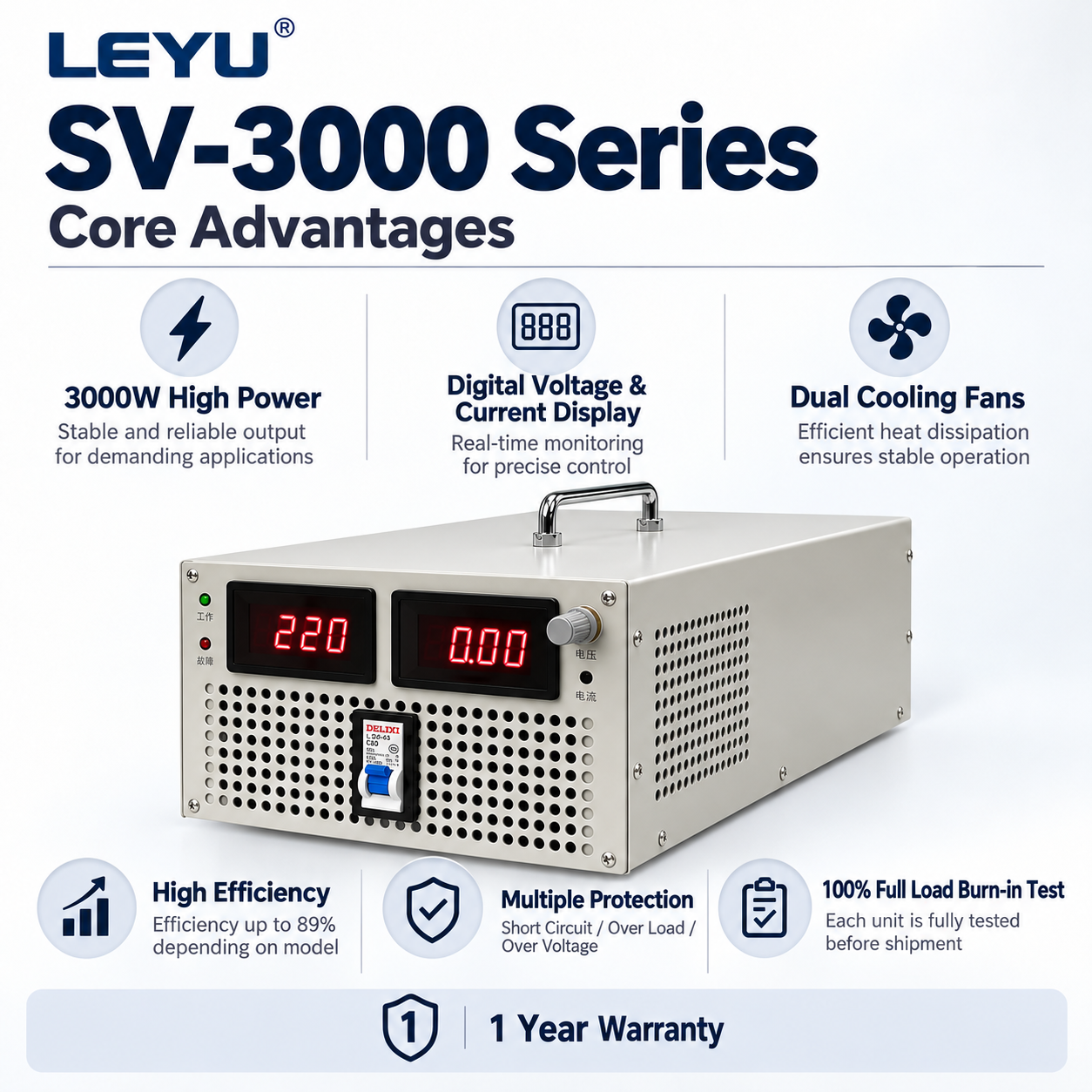
Industrial Adjustable DC Switching Power Supply 3000W Single Output 48V 60A
- Output Rating48V DC / 60A (3000W)
- Adjustment0-100% V/A Regulated
- Primary UseBattery Charging & Labs
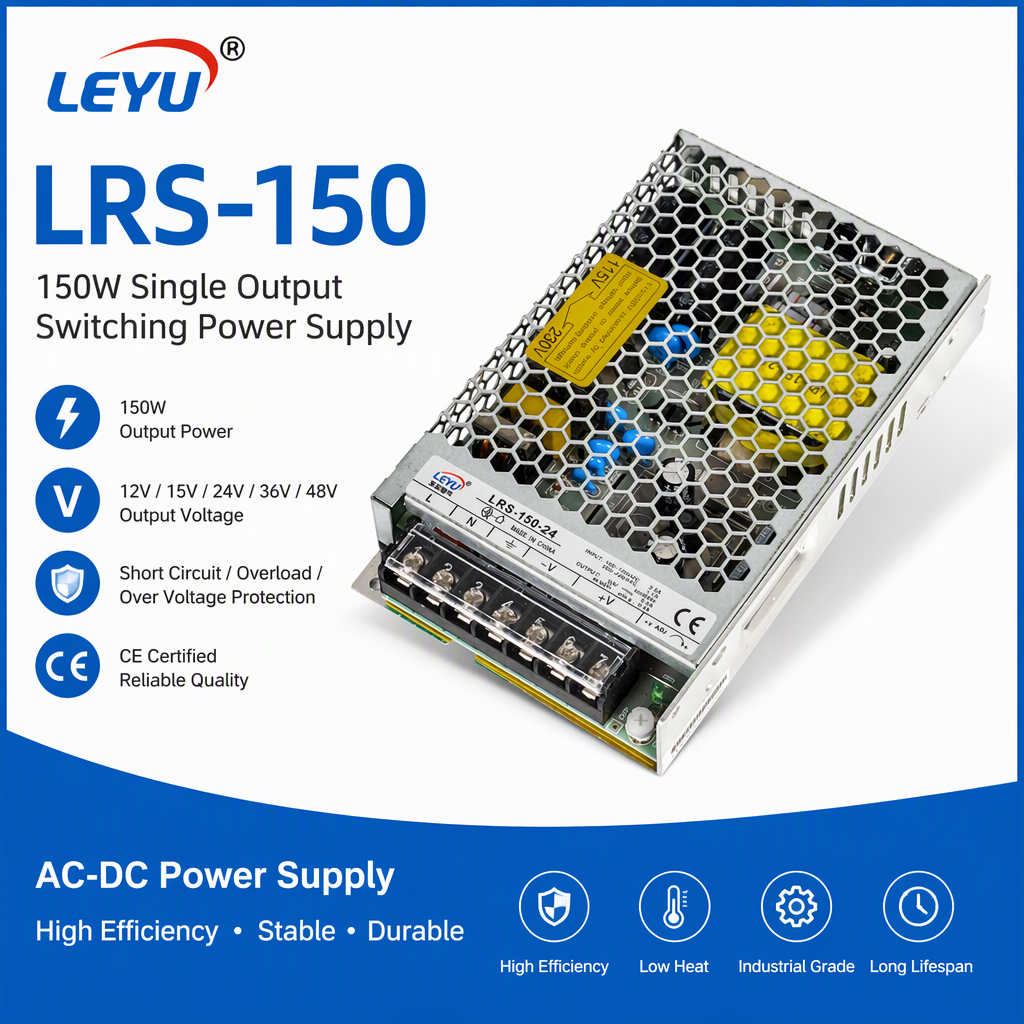
LEYU LRS-150-24 Low Profile SMPS 150W 24V 6.5A Single Output
- Chassis Height30mm (1U Space Saver)
- Efficiency> 89% Typical
- CoolingFree Air Convection
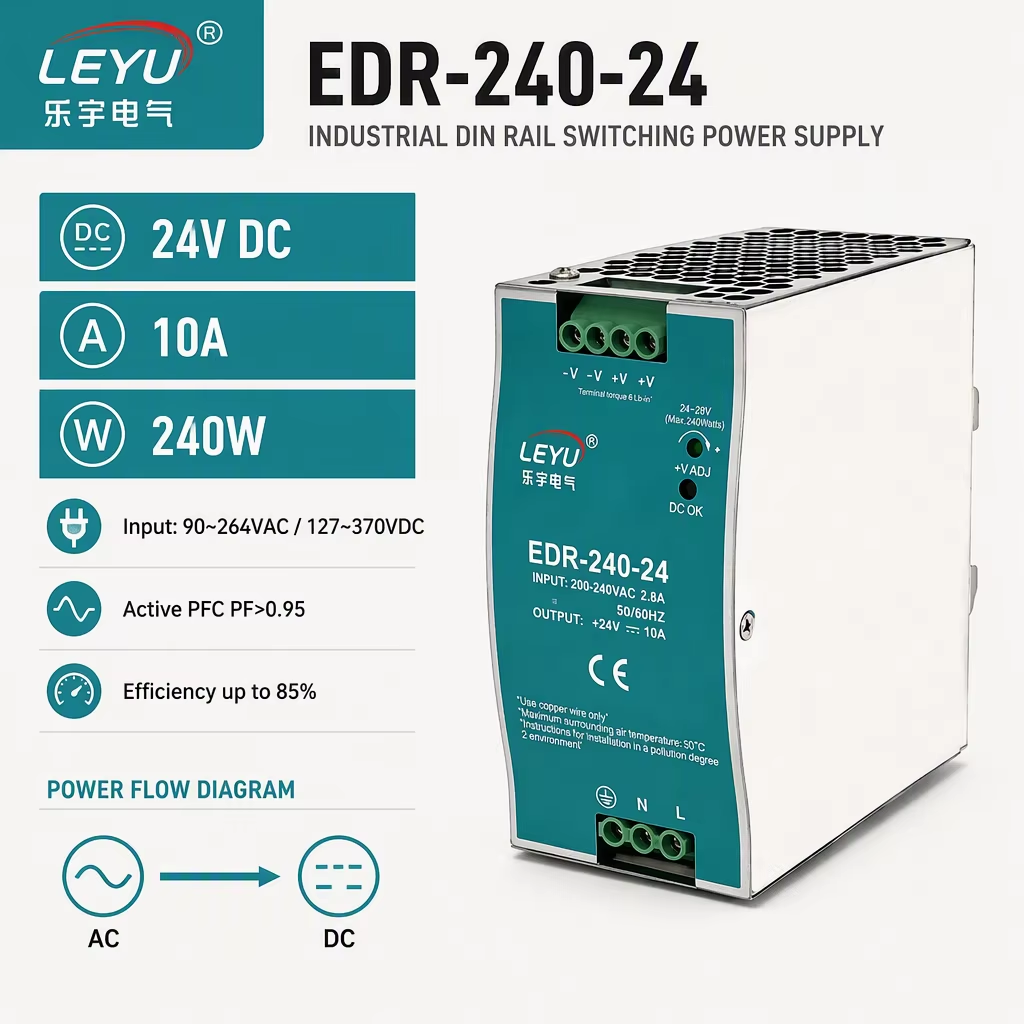
LEYU EDR-240-24 DIN Rail Power Supply 24V 10A 240W Active PFC
- MountingTS-35/7.5 or TS-35/15
- PFC FactorActive PFC (PF > 0.95)
- ProtectionShort / Overload / OVP
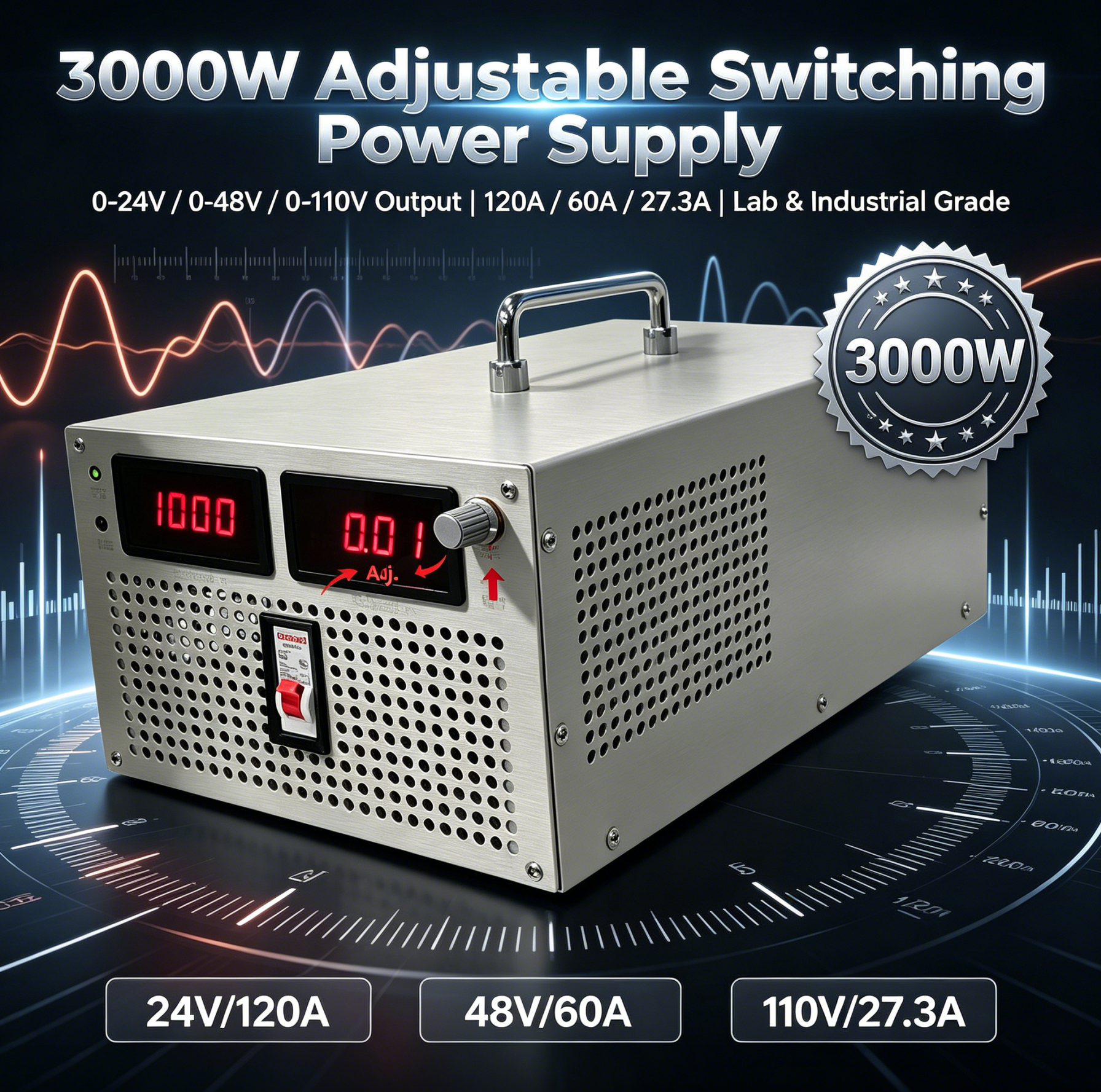
SV-3000 3KW Industrial Variable Power Supply 120A/60A AC 220V
- Maximum Output3000 Watts Continuous
- Output RangeCustom 0-25V/120A, etc.
- ApplicationsElectroplating & Laser
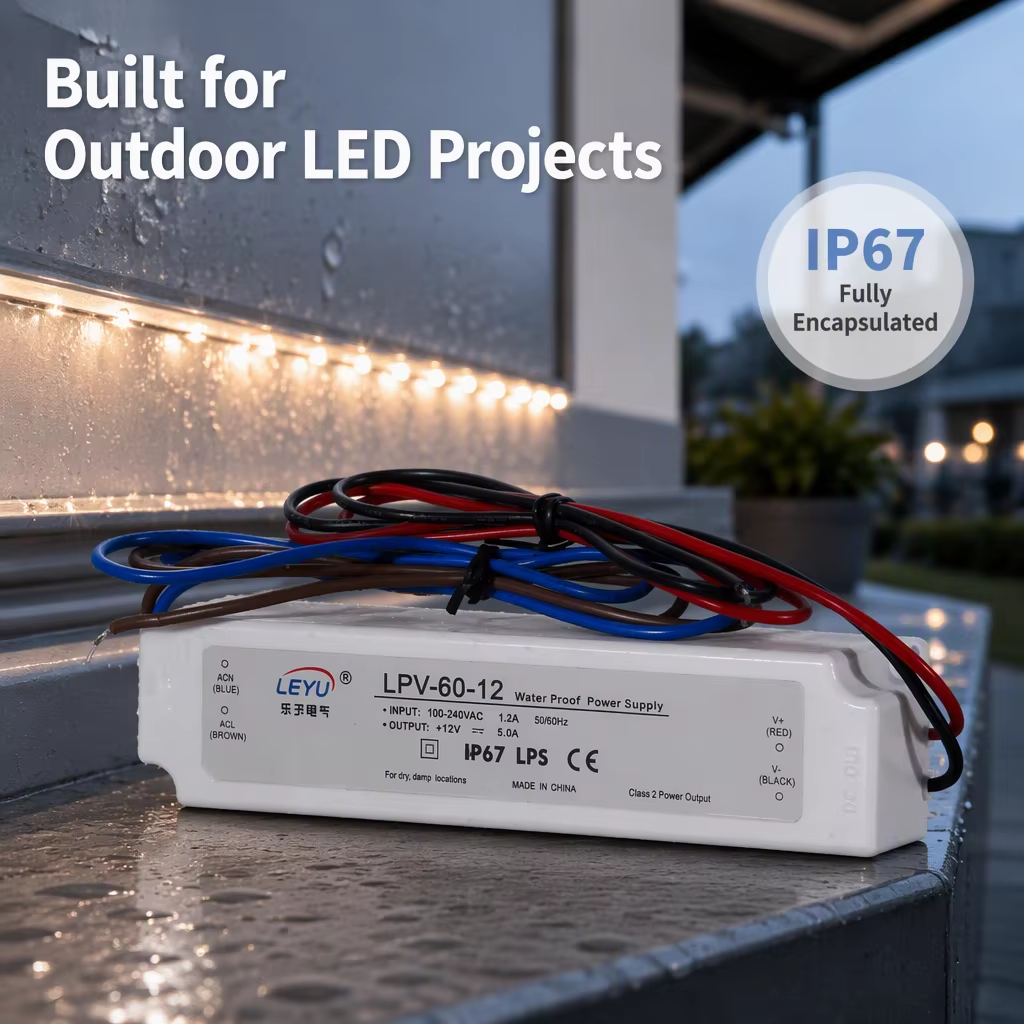
LPV-60-24 60W 24V 2.5A IP67 Sealed Low Profile LED Driver
- Ingress RatingIP67 Waterproof Sealed
- Input Range90–264VAC Universal
- IsolationClass II (No Earth req.)
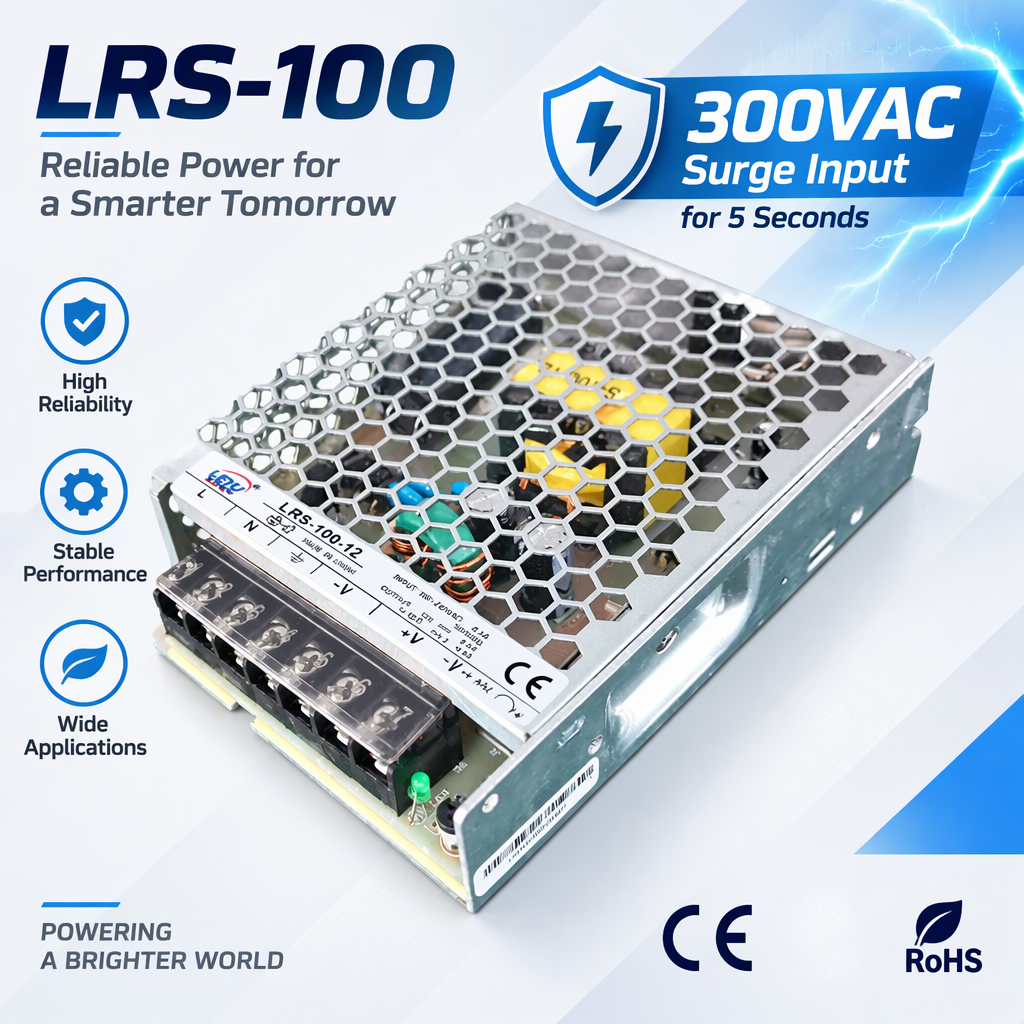
100W Industrial SMPS 300VAC Surge Input Withstand (12V/24V/48V)
- Surge Capacity300VAC Surge for 5s
- Operating Temp-30°C to +70°C
- Form FactorCompact Enclosed 1U
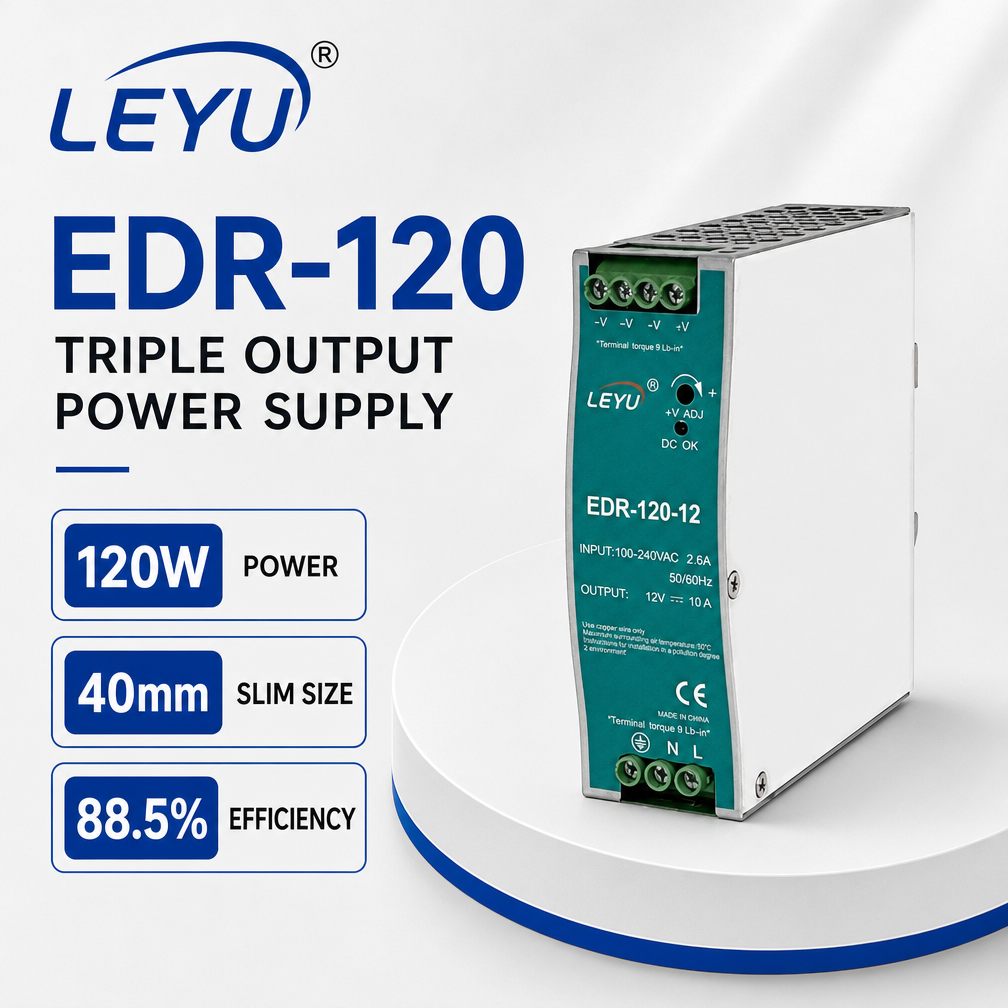
EDR-120 120W Industrial DIN Rail Power Supply (12V/24V/48V Output)
- Cabinet SpaceSlim 40mm Width
- EMC StandardEN55032 Class A
- Primary TargetPLC Cabinets & DCS
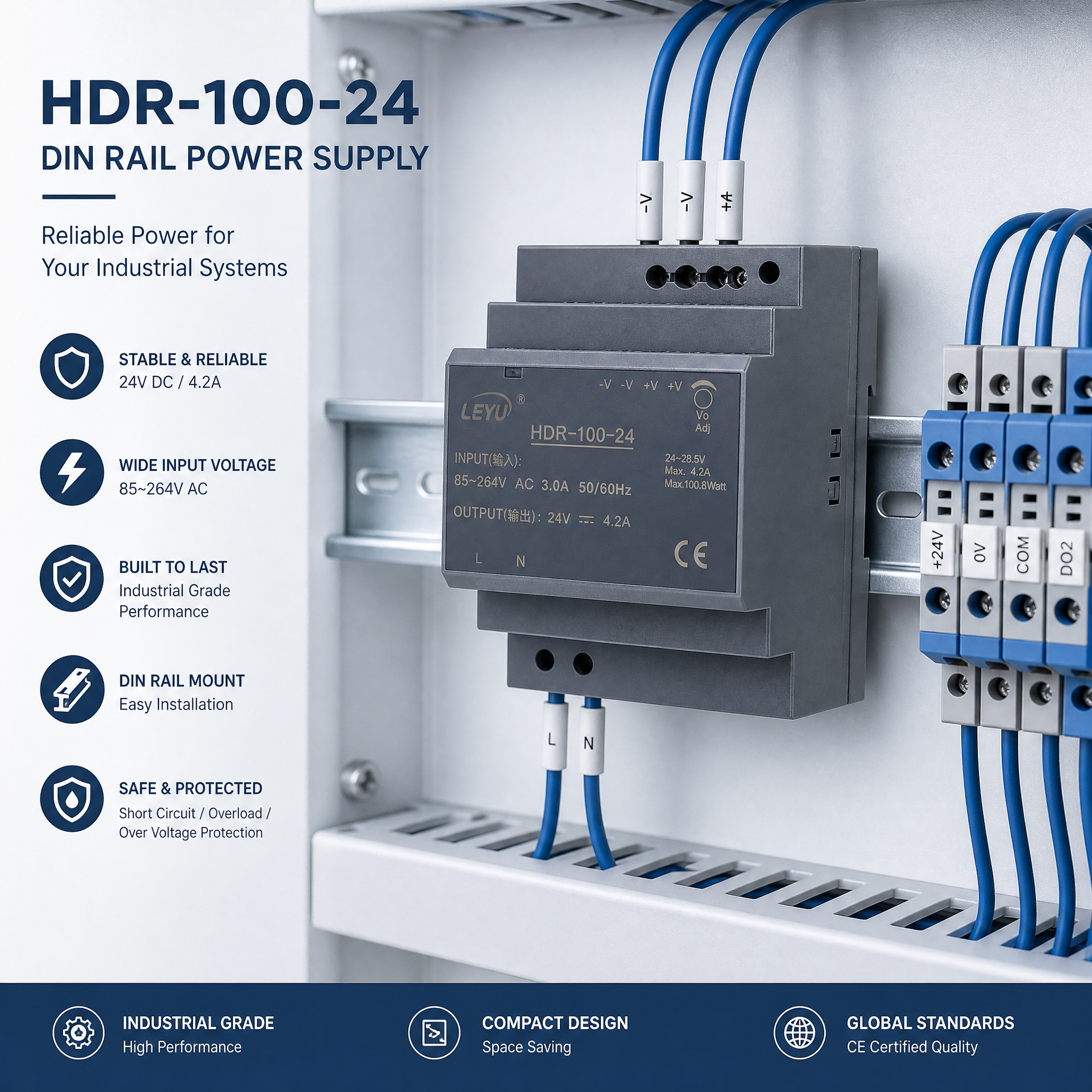
HDR-100 100W Ultra-Slim DIN Rail Power Supply 85-264VAC Input
- Housing StyleStep-shape Distribution
- Isolation ClassClass II (No PE Ground)
- No Load Loss< 0.3W Ultra-Green
Navigating Low Profile Power Supplies: Architecture, Thermal Dissipation, and Specification Standards
In contemporary electronic system design, mechanical volumetric efficiency is no longer an optional convenience—it is an imperative engineering constraint. A low profile power supply is an AC/DC or DC/DC conversion unit intentionally engineered with a constrained vertical envelope, commonly constrained to ≤30mm (1U rack-mount envelope) or engineered with ultra-narrow step-shape profiles for standard TS-35 DIN rail distribution boards. As embedded computing, edge telecommunications, and compact robotics push hardware density limits, power supplies must deliver superior volumetric power density (W/in³) while handling the severe thermal and electromagnetic interference (EMI) challenges that arise when condensing magnetics and power semiconductors.
1. Thermal Physics Under Low-Profile Geometric Constraints
When an enclosed power supply is compressed below 30mm height, convective airflow channels shrink exponentially. In natural convection environments (fanless operation, such as the LRS-150 or HDR-100 series), heat removal relies almost exclusively on conduction through the chassis baseplate and radiative dissipation through perforated covers.
To prevent catastrophic thermal runaway in primary electrolytic capacitors (typically rated for 105°C, 5,000 to 10,000 hours life), Chinese tier-one manufacturers utilize high-efficiency synchronous rectification topologies (SR) instead of standard Schottky diodes. By replacing diodes with power MOSFETs featuring ultra-low on-state resistance ($R_{DS(on)}$), conduction losses drop by over 60%, shifting full-load operating efficiencies beyond 90-93% and drastically diminishing waste heat generation inside the 1U enclosure.
| Topological Parameter | Standard Enclosed SMPS | Low Profile (1U Slim) SMPS | Ultra-Slim DIN Rail (HDR/EDR) |
|---|---|---|---|
| Chassis Height / Depth | 40mm – 65mm | ≤ 30mm (Exact 1U Rack) | Step-shape (TS-35 mounting) |
| Magnetics Architecture | Wire-wound bobbin transformers | Planar or low-profile custom cores | High-permeability compact cores |
| Cooling Mechanism | Large internal fan or bulky heatsink | Conduction to chassis + convection | Natural convection chimney layout |
| Active PFC (>75W) | Standard bulk inductors | Low-profile interleaved boost PFC | Single-stage or integrated PFC |
| Thermal Derating Threshold | Often starts at +45°C | Derates +50°C to +70°C | Industrial -30°C to +70°C operation |
2. Overcoming High Electromagnetic Coupling in Compact Geometries
As primary high-voltage circuits and secondary low-voltage outputs are forced into tighter physical proximity within a low-profile case, parasitic capacitive coupling between trace geometries and the grounded chassis escalates. This causes common-mode noise issues that frequently fail EN 55032 / CISPR 32 Class B radiated and conducted emission thresholds.
Leading Chinese manufacturers, including Yueqing Keldan Technology, address this via two-stage electromagnetic interference (EMI) filtering on the input stage, incorporating nano-crystalline common-mode chokes, safety X2 and Y1 capacitors, and dedicated copper shielding foil wrapped around high-frequency switching transformers. This ensures that even in harsh factory environments where 300VAC input surges occur, industrial PLC cabinets and precision sensing equipment receive smooth, low-ripple direct current without RF interference.
Future Procurement Trends for Industrial Low Profile Power Supplies
Global OEM procurement teams are transitioning from purely cost-per-watt purchasing to multi-variable total cost of ownership (TCO) assessments. Here are the core supply chain dynamics dominating 2025–2030 sourcing contracts.
Wider Adoption of GaN & SiC Topologies
Gallium Nitride (GaN) and Silicon Carbide (SiC) semiconductors are replacing silicon MOSFETs in premium 1U power units. Sourcing contracts now specify switching frequencies exceeding 200kHz, allowing passive magnetic volumes to diminish by 40% while raising efficiency beyond 94%, significantly lowering operating heat in confined enclosures.
Universal Universal-Voltage Sourcing
Enterprise buyers are aggressively eliminating regional SKU fragmentation. Sourcing requirements now mandate broad universal inputs (85–264VAC or 90–305VAC) with integrated active power factor correction (PF > 0.95), enabling a single low-profile bill-of-materials to serve European 230V, North American 120V/277V, and Asian grids seamlessly.
Telemetry & Digital Power Management
Predictive maintenance mandates in smart factories require low profile power supplies to incorporate bi-directional communication ports (PMBus, CANopen, or IO-Link). B2B procurement agreements now reward suppliers capable of reporting real-time component temperature, total operating hours, and ripple degradation to centralized SCADA systems.
Decoupling and Dual-Sourcing Strategies
Rather than relying on monopolistic global catalog brands, Western and European equipment builders increasingly partner directly with certified tier-one Chinese custom manufacturers. Verified factories in electrical manufacturing clusters like Yueqing offer 30-45% bill-of-materials cost reductions and tailor-made lead wire or connector configurations.
Zero-Carbon & ErP Eco-Design Directives
Tightening environmental mandates in the European Union (ErP Lot 6/Lot 7) demand standby, no-load consumption under 0.3W to 0.15W. Industrial contracts now evaluate full lifecycle power consumption metrics alongside upfront purchase pricing, making ultra-green standby circuits a mandatory qualification checkpoint.
Streamlined OEM Compliance Documentation
Buyers no longer accept generic factory declarations. Standard procurement protocol now requires verifiable, accredited lab test reports (EMC, LVD, RoHS, REACH) and CB scheme certificates upfront to fast-track whole-machine machinery CE and UL qualification without local recertification bottlenecks.
Technological Evolution: The Engineering Behind Next-Gen Low Profile SMPS
How modern power electronics architecture solves the triple dilemma of size, thermal impedance, and electromagnetic compatibility.
LLC Resonant Half-Bridge
Replacing standard hard-switching flyback and forward designs with LLC resonant zero-voltage switching (ZVS) topologies. This virtually eliminates turn-on switching losses in high-voltage FETs, enabling power density in excess of 15W/in³ in fanless 1U envelopes.
Planar Core Integration
Abandoning traditional wire-wound transformers for PCB planar transformers utilizing multi-layer FR4 boards. Planar copper tracks offer repeatable leakage inductance, superior heat transfer directly to the board, and a total component height under 12mm.
Active Synchronous FETs
Secondary output rectification using sub-5mΩ MOSFETs driven by intelligent controller ICs. Forward voltage drops tumble from the typical 0.5V of high-power Schottky diodes down to tens of millivolts, completely eliminating the need for bulky secondary aluminum heat sinks.
Direct Thermal Interfacing
Application of phase-change thermal interface materials (TIM) and thermally conductive silicone potting compounds. Heat generated by power semiconductors is routed through the lowest possible thermal resistance path ($R_{\theta JC}$) directly into the steel or aluminum chassis exterior.
Factory-Direct Advantage from China's Electrical Capital
Situated in Yueqing, Wenzhou—China's world-renowned manufacturing epicenter for electrical apparatus—Yueqing Keldan Technology Co., Ltd. combines 18+ years of switching power supply design with verified end-to-end quality control.
TÜV Rheinland Onsite Verified
Our manufacturing facility, engineering staff, automated SMT lines, and trading capabilities have been verified on-site by TÜV Rheinland. We operate with radical transparency, providing real factory audits and verified production metrics to global enterprise buyers.
Yueqing Component Ecosystem
Operating in the heart of Zhejiang's electrical hub grants us unrivaled supply-chain proximity to certified raw materials: high-grade copper wire, magnetic ferrite cores, stamped chassis stampings, and automotive-grade passive components at stabilized, factory-direct pricing.
Senior SMPS Engineering Team
Our in-house R&D department features dedicated power engineers, each possessing over 5 years of hands-on SMPS experience. We customize output voltage rails, current limits, enclosure geometries, cable harnesses, and terminal blocks directly to customer drawings.
CE Marked & Export Ready
With 10+ years of dedicated cross-border export experience, our dedicated 12-person international trade department provides complete technical documentation, customs compliance, and multilingual support for customers across Europe, North America, and Southeast Asia.
Rigorous 8-Stage Quality Assurance Architecture
Every low-profile and DIN Rail unit undergoes 100% full-load aging and multi-gate electrical validation before warehouse dispatch.
Incoming Material Check
100% sampling of power MOSFETs, primary capacitors, and magnetic cores against verified spec sheets.
High-Speed SMT Placement
Automated pick-and-place lines ensuring sub-millimeter component alignment and solder paste accuracy.
Reflow Soldering
Multi-zone nitrogen reflow oven with tightly monitored thermal profiles to eliminate solder bridging or voiding.
AOI Automated Inspection
High-resolution optical scanners automatically detect cold joints, tombstoning, and reversed polarity.
Through-Hole & Mechanical
Precision manual insertion of large transformers, chassis isolation films, and heavy-duty terminal blocks.
Electronic Calibration
Fine-tuning output voltage pots, over-current trip points, and short-circuit recovery parameters.
100% Full-Load Burn-In
Units run in specialized elevated-temperature aging racks under 100% rated load to screen early life component failure.
Final Outgoing QC
Dielectric withstand (Hi-Pot) insulation tests, ground continuity check, appearance verification, and export packing.
Frequently Asked Questions for Sourcing Low Profile Power Supplies
Direct engineering and commercial answers to resolve specification doubts, compliance hurdles, and factory qualification parameters.
