Verified Industrial Switching & PFC Power Supplies
Field-tested topologies matching universal AC input (85–264VAC), high harmonic suppression, and rugged industrial DIN Rail & Enclosed packaging.
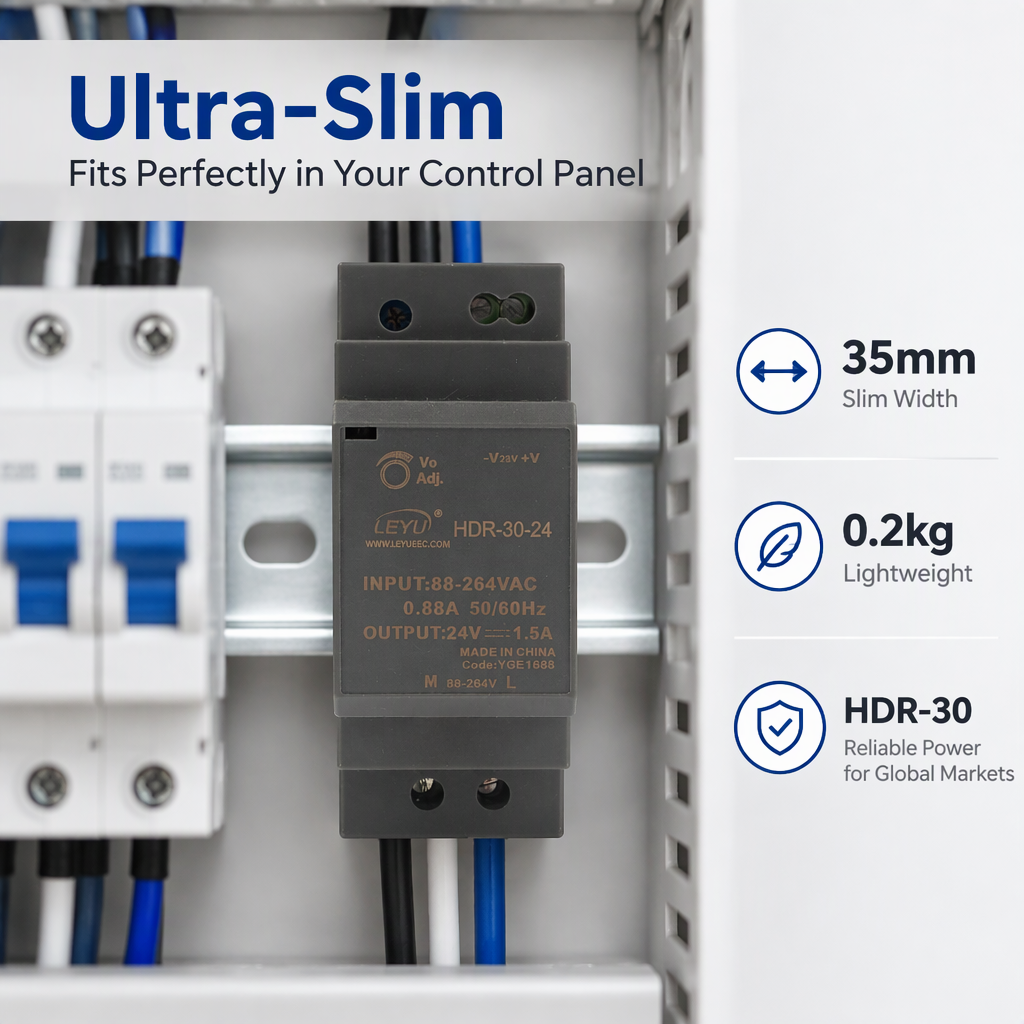
Ultra Slim 30W DIN Rail Switching Power Supply 12V 2A 24V 1.5A 35mm Width
- Mounting: TS-35 / 7.5 or 15
- Output Voltage: 12VDC / 24VDC
- Form Factor: 35mm Ultra-Slim
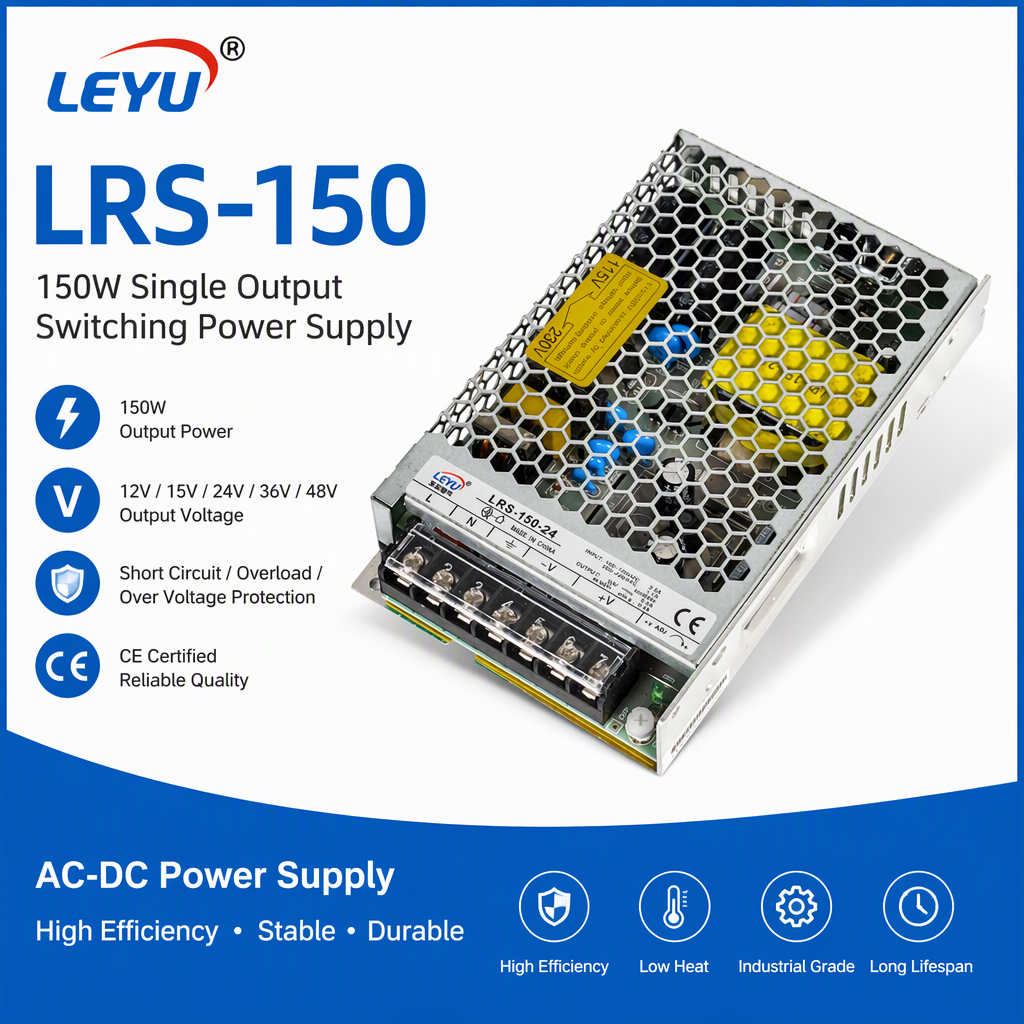
LEYU LRS-150-24 AC DC Switching Power Supply 150W 24V 6.5A SMPS
- Rated Power: 150W Continuous
- Output: 24V DC @ 6.5A
- Height: 30mm 1U Enclosure
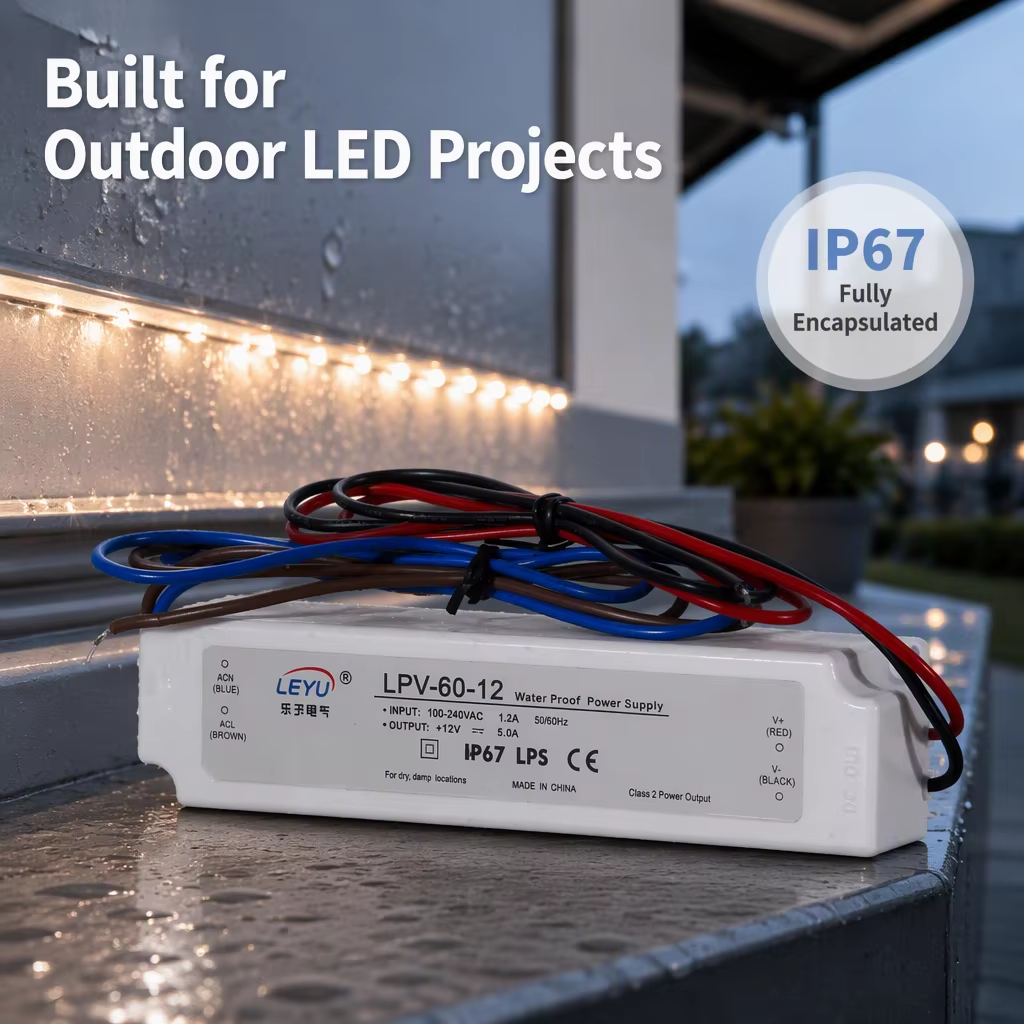
LPV-60-24 60W 24V 2.5A IP67 Constant Voltage AC DC Power Supply
- Ingress Rating: IP67 Fully Sealed
- Output: 24VDC @ 2.5A
- Surge Resist: 300VAC Surge 5s
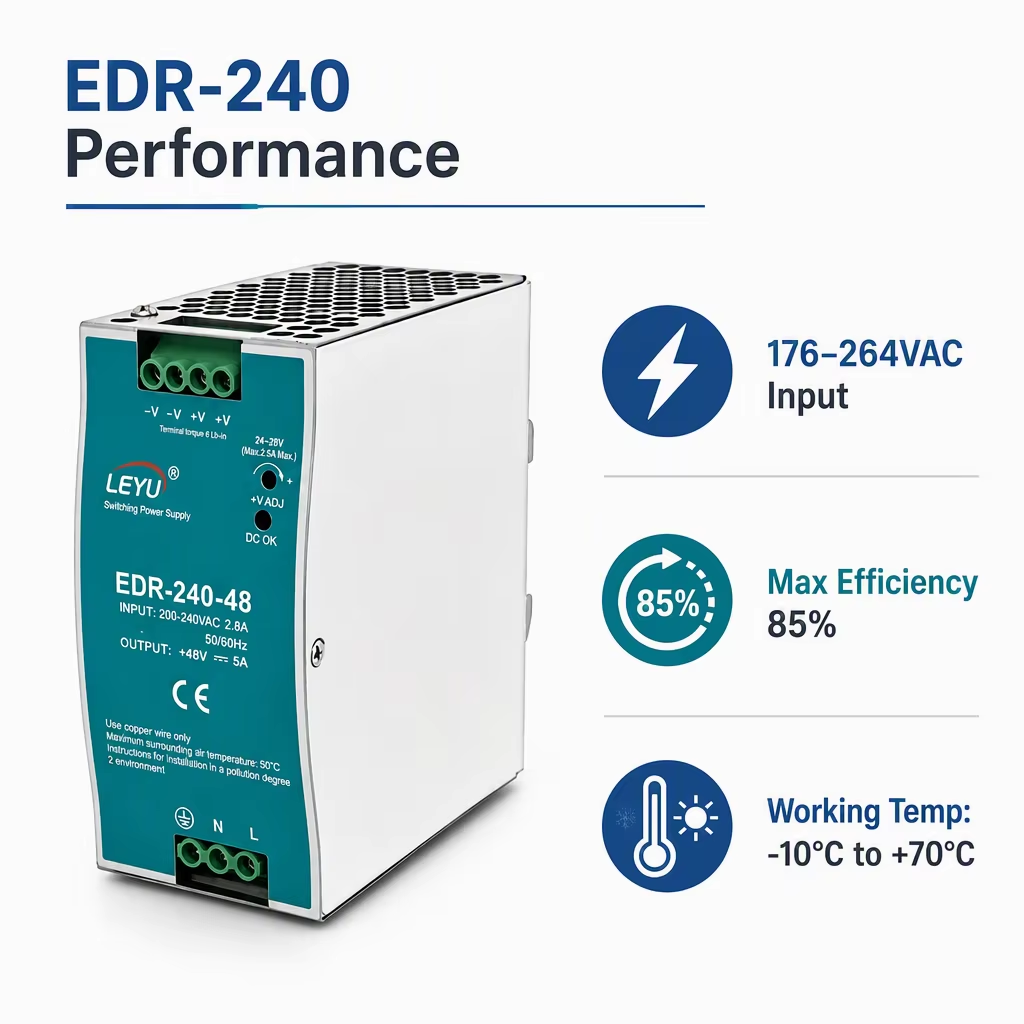
EDR-240-24 Industrial DIN Rail Power Supply 24V 10A 240W 95% Efficiency
- Efficiency: Up to 95% Peak
- Current: 10A Continuous
- Protection: OVP, OLP, OTP, SCP
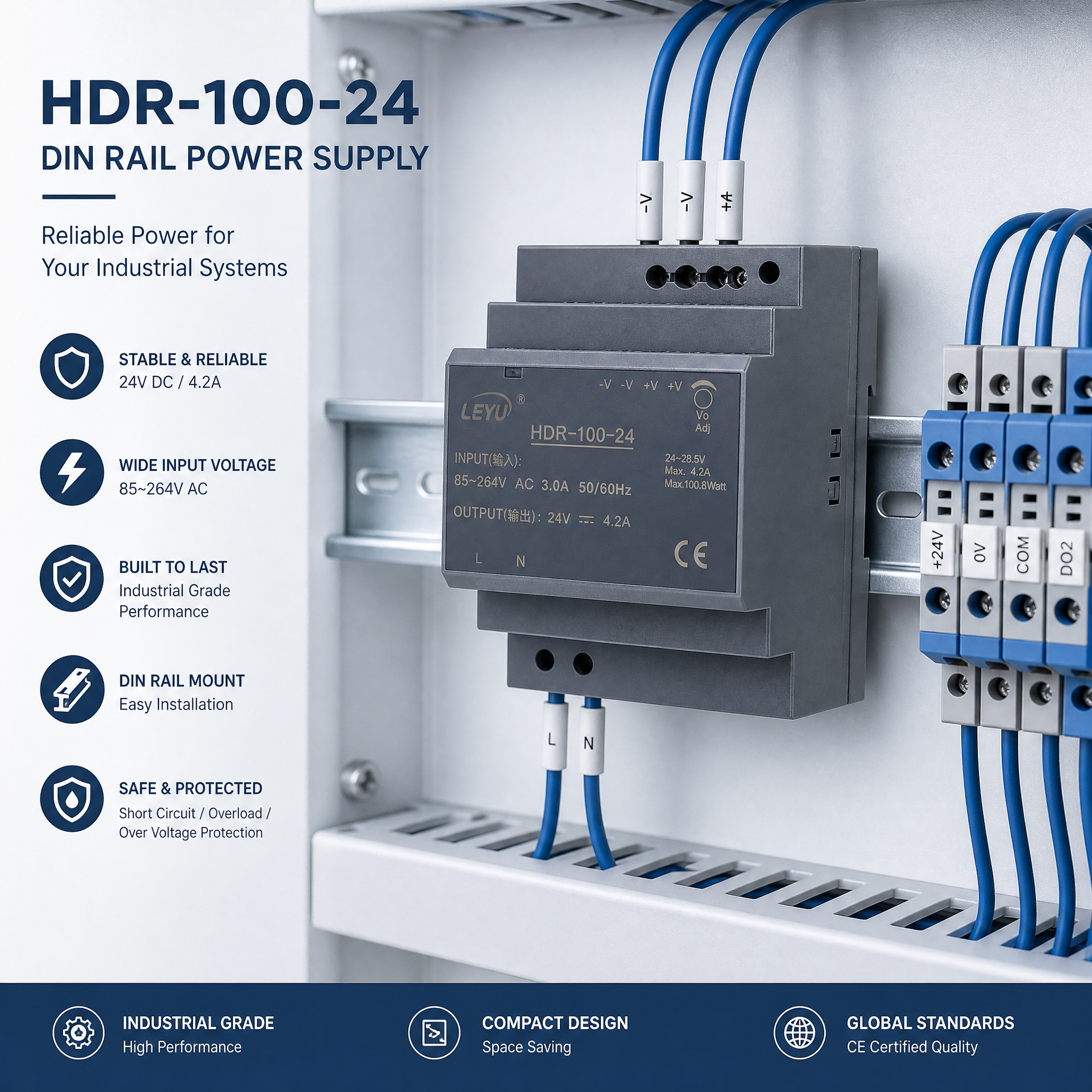
HDR-100 100W DIN Rail Power Supply 85-264VAC Universal Input 12V 24V 48V
- Input Range: 85–264VAC Wide
- Class: Class II Isolation
- Profile: Step-shape Housing
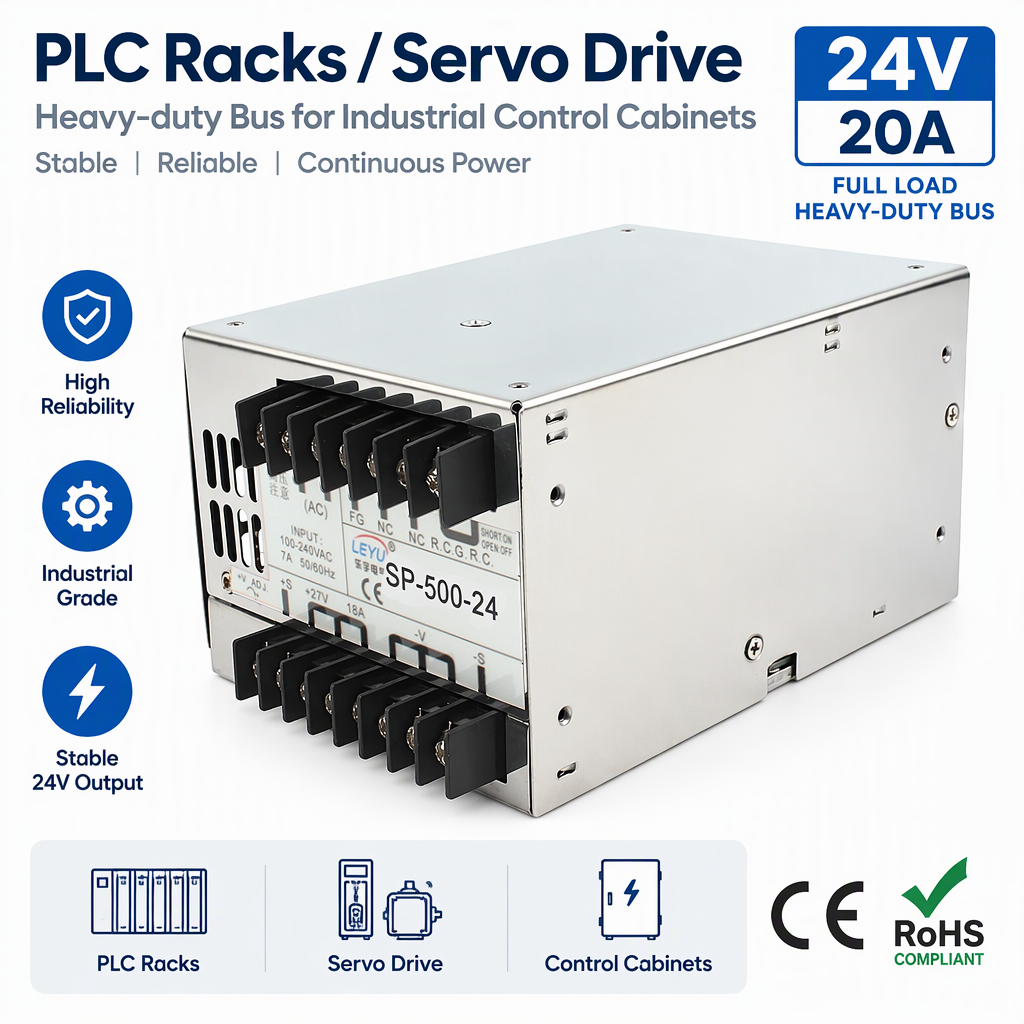
SP-500-12 12V 40A 500W Switching Power Supply with Active PFC & Cooling Fan
- Power Factor: PF > 0.98 Built-in
- Output: 12VDC @ 40A
- Cooling: Auto Fan Speed Control
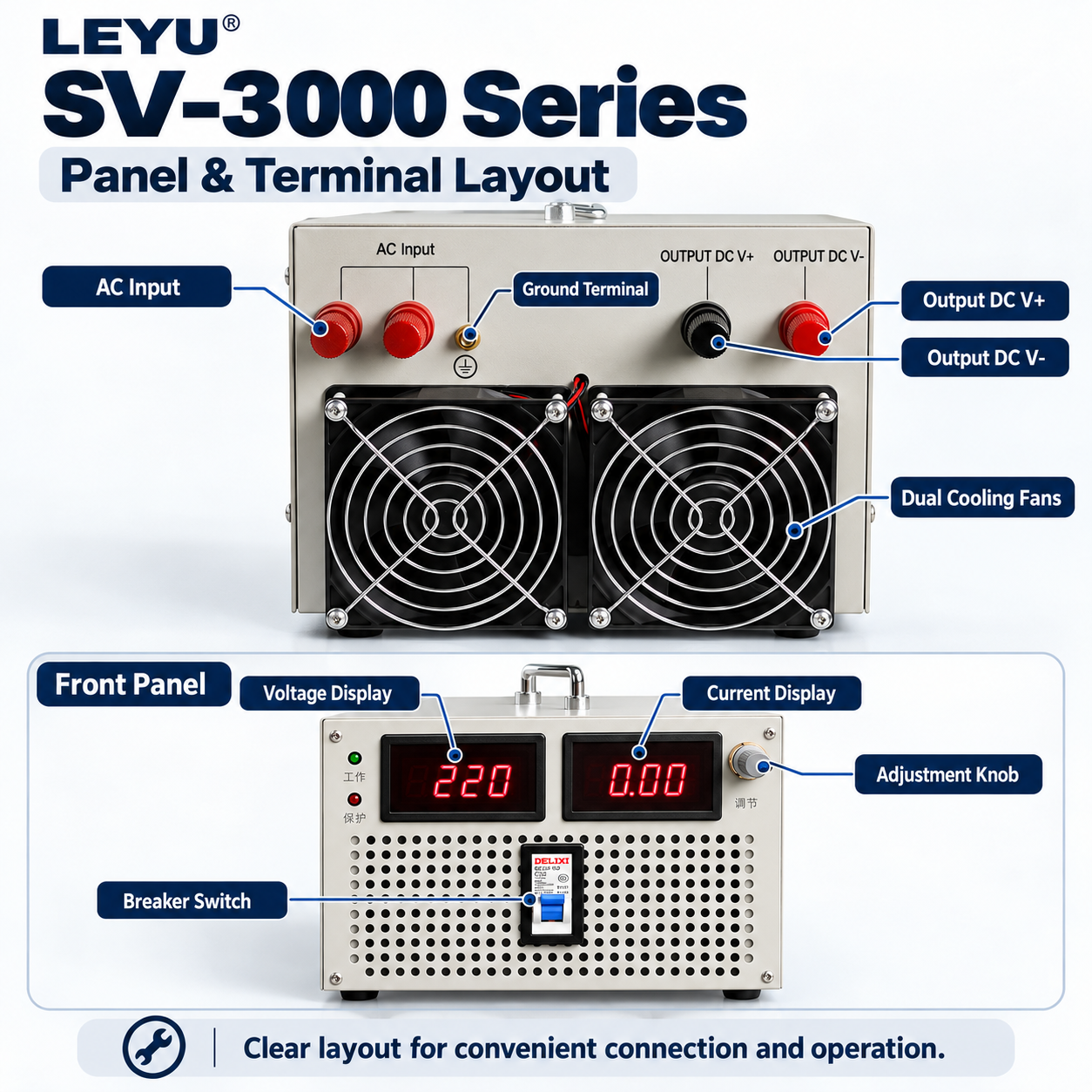
3000W High Power Lab Bench Power Supply 0-24V 0-48V 0-110V Variable Converter
- Capacity: 3000W Heavy Duty
- Output Range: 0–110V Adjustable
- Application: Industrial Testing Aging
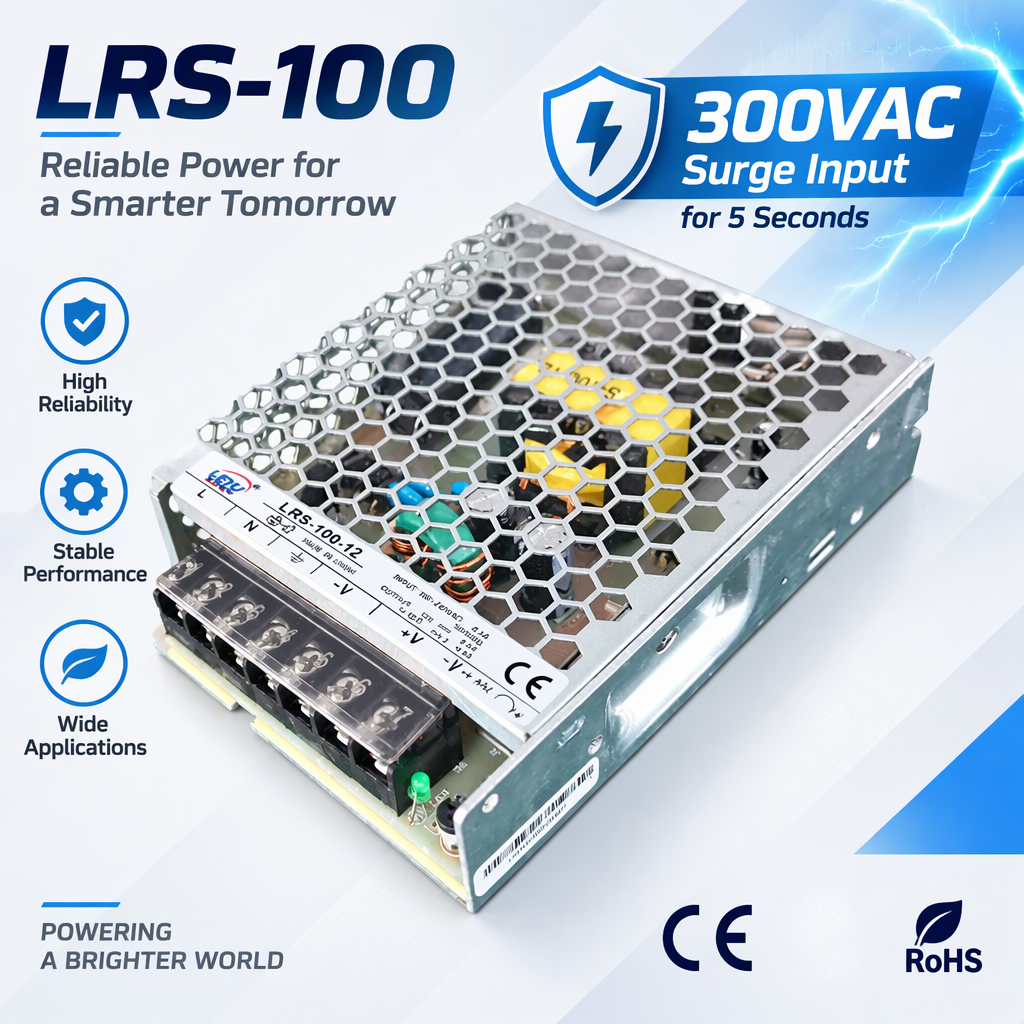
100W Industrial Switching Power Supply 300VAC Surge Input 5s 12V 24V 48V
- Surge Withstand: 300VAC for 5 sec
- Outputs: 12V / 24V / 48VDC
- Vibration: 5G Anti-Vibration
1. Engineering White Paper: Physics, Compliance, and Active PFC Architecture
In modern industrial electronics, non-linear loads created by conventional rectifier stages draw current in discontinuous, narrow pulses rather than a sinusoidal waveform. This fundamental phenomenon produces severe harmonic distortion, drives up line losses, over-heats the facility neutral conductors, and lowers the true power factor (λ). In switched-mode power supplies (SMPS), Power Factor Correction (PFC) is the dedicated engineering process of shaping the input AC current to align in phase and profile with the incoming sinusoidal voltage waveform. The mathematical relationship governing this performance index is defined as:
Power Factor (λ) = Real Power (P, Watts) / Apparent Power (S, Volt-Amperes) = (I1,rms / Irms) × cos(θ1) = Distortion Factor (Kd) × Displacement Factor (Kθ)
Without integrated PFC circuitry, a standard bridge-rectifier and bulk smoothing capacitor front-end achieves an inferior power factor ranging between 0.50 and 0.65, generating a Total Harmonic Distortion (THD) frequently exceeding 80%. When deployed in high-density automation enclosures, data processing racks, or large architectural lighting installations, these non-linear currents pollute the local electrical distribution grid, trip ground fault interrupters, and cause unacceptable volt-ampere burdens on upstream uninterruptible power supplies (UPS) and backup diesel generators.
Harmonic Standards: IEC/EN 61000-3-2 Regulatory Mandates
International trade and technical certification systems enforce strict limits on input current harmonic content. Under the European Commission's EMC Directive and harmonized global frameworks, IEC/EN 61000-3-2 establishes absolute harmonic emission thresholds up to the 40th harmonic order for all electrical equipment drawing an input current up to 16A per phase:
- Class A: Balanced three-phase industrial apparatus, non-portable tools, and standard general-purpose equipment not covered in Classes B, C, or D.
- Class B: Portable electric tools and high-intermittent portable duty equipment (emissions relaxed by 1.5×).
- Class C: Lighting systems and LED drivers with active input power exceeding 25W (evaluated down to 5W in updated directives), demanding stringent THD limits (typically < 15%) and strict limits on third-harmonic distortion (≤ 30% of fundamental).
- Class D: Personal computing hardware, television receivers, and general power supplies with an input rating between 75W and 600W characterized by a high peak-to-average current ratio.
For electrical OEMs, industrial automation integrators, and control panel manufacturers, failure to incorporate a compliant Active PFC stage above 75W results in export non-compliance, CE declaration rejections, and customs border blocks. Yueqing Keldan Technology Co., Ltd. incorporates optimized active boost control circuits across its high-power DIN rail, enclosed SMPS, and programmable conversion series, maintaining PF values > 0.98 and total harmonic suppression that comfortably exceeds EN 61000-3-2 Class D and Class C parameters.
| Evaluation Parameter | No PFC Circuitry | Passive PFC (Choke Inductor) | Active PFC (Keldan Boost Topology) |
|---|---|---|---|
| Typical Power Factor (λ) | 0.50 – 0.65 | 0.70 – 0.80 | 0.95 – 0.99 (Full Load) |
| Total Harmonic Distortion (THDi) | > 80% to 120% | 35% – 50% | < 5% to 10% (EN 61000-3-2 Class D) |
| AC Input Voltage Range | Fixed or Manual 115/230V Switch | Narrow Range (±10% tolerance) | Universal 85–264VAC (Auto-Ranging) |
| Physical Footprint & Weight | Compact baseline, high heat loss | Bulky, heavy 50/60Hz laminated iron | Compact, lightweight high-frequency core |
| Bulk Capacitor Energy Density | Low (operates at ripple valley) | Moderate | High (boosts bus to regulated 380–400VDC) |
| Total System Efficiency | Sub-optimal line-current losses | 80% – 84% | 89% – 95.5% (GaN/SiC Hybrid Available) |
2. Technology Development Trends: Topologies, Wide-Bandgap Semiconductors, and Thermal Longevity
The ongoing paradigm shift across power electronics is governed by demanding power density benchmarks (W/in³), thermal reduction directives, and stringent green building energy protocols (ErP Lot 6, 80 PLUS Platinum/Titanium standards). As China's leading export-grade power supply designer, Keldan tracks and implements three core technological vectors:
Interleaved & Bridgeless Topologies
Moving beyond conventional single-switch boost PFC, our high-power units utilize multi-phase interleaved boost and bridgeless totem-pole topologies. Interleaving cancels high-frequency ripple currents in the input filter, drastically reducing common-mode EMI filter bulk and allowing the use of ultra-compact toroidal inductors.
Wide Bandgap (GaN & SiC) Integration
Silicon Carbide (SiC) Schottky diodes and Gallium Nitride (GaN) HEMTs completely eliminate reverse recovery losses (Qrr ≈ 0). This enables switching frequencies to escalate from 65kHz to over 200kHz without thermal penalty, yielding higher efficiency (≥95%) in slim DIN rail enclosures like the EDR and NDR series.
Electrolytic Capacitor Lifespan & Arrhenius Derating
PFC boost converters stabilize the DC intermediate bus at approximately 390V–400VDC. We select 105°C long-life Japanese/Taiwanese electrolytic capacitors with low ESR. By optimizing thermal airflow and applying Arrhenius rule derating, we achieve operating lives exceeding 50,000 to 100,000 hours in 50°C cabinet environments.
Furthermore, digital signal processing (DSP) and specialized mixed-signal PFC controllers have replaced antiquated analog multipliers. Modern DSP-driven active PFC facilitates continuous condition monitoring, automatic phase shedding under light-load conditions to maintain high partial-load efficiency (complying with Energy Star and EU Ecodesign requirements), and integrated communication via PMBus or CAN protocols for intelligent industrial IoT control cabinets.
3. Strategic B2B Procurement Trends in China's PFC Power Supply Market
Global supply chain procurement executives face mounting complexities: rising energy costs, aggressive geopolitical decarbonization directives, volatile sea-freight timelines, and increased regulatory scrutiny on lifecycle emissions. When auditing and qualifying Chinese SMPS suppliers, enterprise buyers are transitioning from pure initial unit acquisition cost (Capex) toward sophisticated Total Cost of Ownership (TCO) models.
1. The Transition to Total Cost of Ownership (TCO) Metrics
A non-PFC power supply may present an upfront unit purchase price 10% to 15% below an Active PFC unit. However, enterprise facilities incur heavy operational expenditure (Opex) penalties through higher reactive electrical billing charges, increased cabinet cooling requirements, thicker cabling diameters, and nuisance breaker tripping. Over a 5-year 24/7 operating cycle in an automated manufacturing line or telecom facility, an Active PFC power supply operating at 94% efficiency returns its initial cost multiple times over by conserving line energy and reducing cabinet HVAC air-conditioning loads.
2. Consolidation of Global SKUs via Universal Wide Input
Distributors and multinational OEMs historically stocked separate hardware SKUs for North America (110–120VAC, 60Hz) and Europe/Asia (220–240VAC, 50Hz), or relied on dangerous manual slide switches that damaged internal components when misconfigured by end-users. The global standard is now universal 85–264VAC full-range input with auto-voltage sensing enabled by Active PFC boost circuits. Sourcing universal PFC supplies allows B2B importers to minimize warehouse stock-keeping units (SKUs) by up to 50%, consolidate manufacturing bill-of-materials (BOM), and redeploy equipment across international markets seamlessly.
3. On-Site Factory Auditing & Verifiable Compliance Evidence
Self-declared CE documents from unverified trading entities present severe liability risks under strict EU and North American product safety jurisdictions. Procurement directors now prioritize manufacturers with verifiable third-party physical assessments. Factory qualifications must include traceable incoming component testing, automated SMT reflow profiles, 100% environmental burn-in stress aging under full electrical load, and EMC pre-compliance test lab records. Yueqing Keldan Technology Co., Ltd. satisfies these institutional criteria through comprehensive onsite verification by TÜV Rheinland.
4. Enterprise Capabilities: Yueqing Keldan Technology Co., Ltd.
Headquartered in Beibaixiang Town, Yueqing, Wenzhou, Zhejiang — the preeminent electrical manufacturing and engineering cluster of China — Yueqing Keldan Technology Co., Ltd. has spent over 18 years dedicated to the design, engineering, and global export of switching power supplies, DIN Rail power systems, pure sine wave power inverters, solar charge controllers, and industrial push-button switchgear.
Unlike trading brokers, Keldan operates a custom-built production plant audited and verified onsite by TÜV Rheinland. Our facility integrates automated Surface Mount Technology (SMT) pick-and-place lines, lead-free reflow ovens, Automated Optical Inspection (AOI), manual precision debugging workstations, automated burn-in aging rooms, and final high-voltage dielectric isolation testing facilities.
TÜV Rheinland Verified
Onsite verified manufacturing lines, quality management procedures, and full international trade capacity.
18+ Years Engineering
Deep expertise in SMPS, low-voltage control cabinets, industrial DIN rail modules, and active PFC topologies.
Rigorous 8-Step QC
From component incoming inspection to SMT, AOI, calibration, and 100% full-load burn-in aging screening.
Bespoke OEM / ODM
Custom DC voltage rails, PCB conformal coating, housing modifications, private labeling, and custom packaging.
Stringent 8-Stage Manufacturing & Reliability Framework
- Rigorous Incoming IQC Inspection: Every batch of critical semiconductors, switching MOSFETs, magnetic cores, and high-temp electrolytic capacitors is sampled for parameter tolerances, thermal limits, and counter-check verification.
- Automated SMT High-Speed Placement: Surface mount components are placed by automated pick-and-place equipment to eliminate human soldering inaccuracies and ensure high component density.
- Multi-Zone Reflow Soldering: Controlled temperature curves guarantee void-free solder joints and eliminate cold-soldering failure points under thermal expansion stress.
- AOI Automated Optical Inspection: High-resolution optical sensors automatically evaluate solder fillets, missing components, polarity alignment, and solder bridges.
- Manual Workmanship & Mechanical Assembly: Heavy through-hole transformers, terminal barrier strips, heatsinks, and structural brackets are fitted by qualified technicians.
- Electrical Debugging & Voltage Trimming: Precise verification of output ripple & noise, dynamic step-load response, over-voltage (OVP), over-current (OLP), and short-circuit protection (SCP).
- 100% Thermal Burn-In Aging: Every single production unit undergoes full-load elevated-temperature aging inside dedicated burn-in testing chambers to eliminate infant mortality.
- Final Finished Quality Inspection (FQC): Hi-Pot dielectric insulation breakdown testing (3000VAC primary-to-secondary), grounding continuity, and cosmetic audit before export packing.
5. Frequently Asked Questions: B2B PFC Power Supply Procurement
Technical and commercial inquiries handled by our engineering and export trading teams to assist global procurement managers in shortlisting the appropriate power topologies:
What is the technical threshold where Active PFC becomes mandatory for international exports?
How does Yueqing Keldan ensure quality consistency and eliminate infant mortality?
How should system engineers calculate derating when installing PFC power supplies in sealed enclosures?
What are your minimum order quantities (MOQ), sample lead times, and OEM customization capabilities?
How does an integrated Active PFC stage handle heavy inrush current and inductive loads like motors or solenoids?
What documentation and certifications are supplied with volume export shipments?
Accelerate Your Power Supply Sourcing with Keldan
Share your technical requirements — voltage rails, current rating, DIN rail or enclosed mounting, Active PFC parameters, and target market compliance. Our engineering and export specialists will provide complete datasheets, compliance documentation, and a direct B2B factory quote within 24 hours.
