Engineered Constant Voltage Drivers & Industrial Power Supplies
Precision-regulated switching power supplies designed for LED architectural installations, industrial signage, automation cabinets, and mission-critical DC loads.
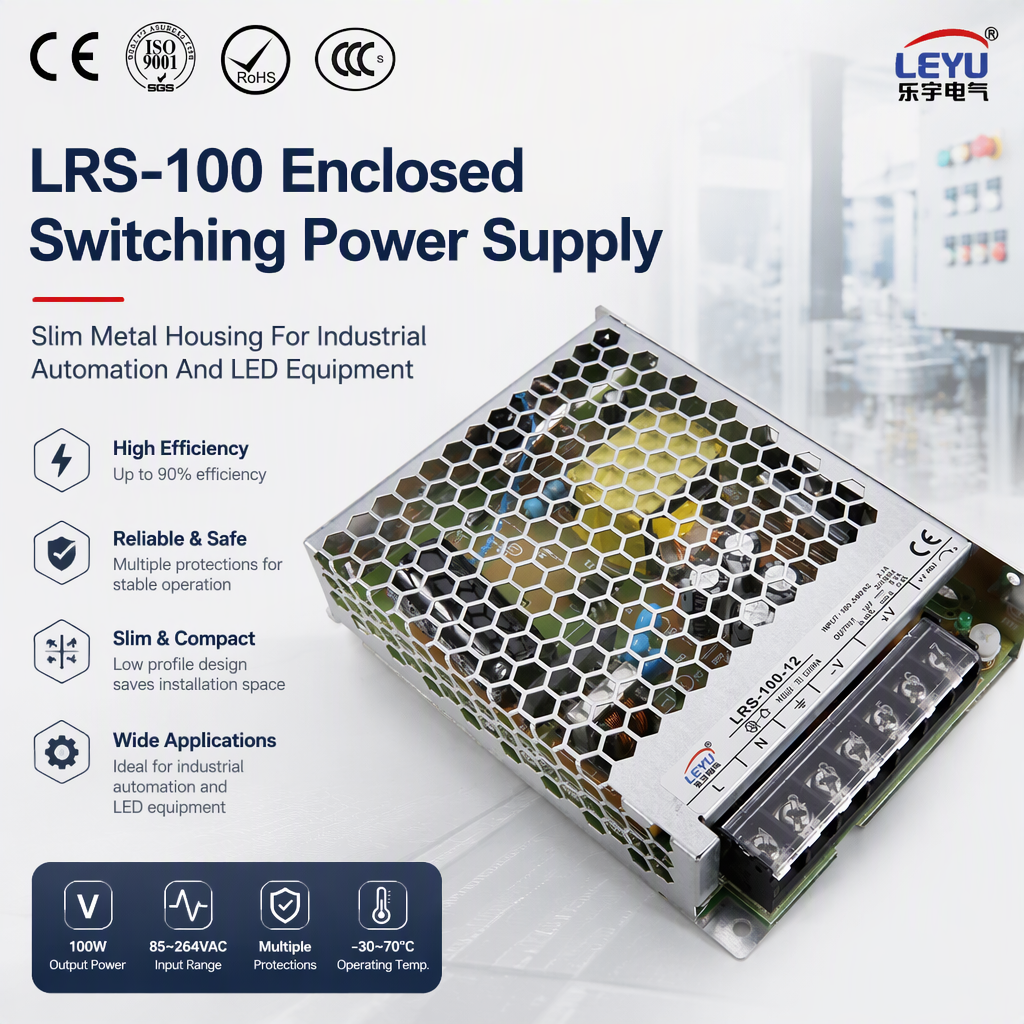
Enclosed Chasis | Compact
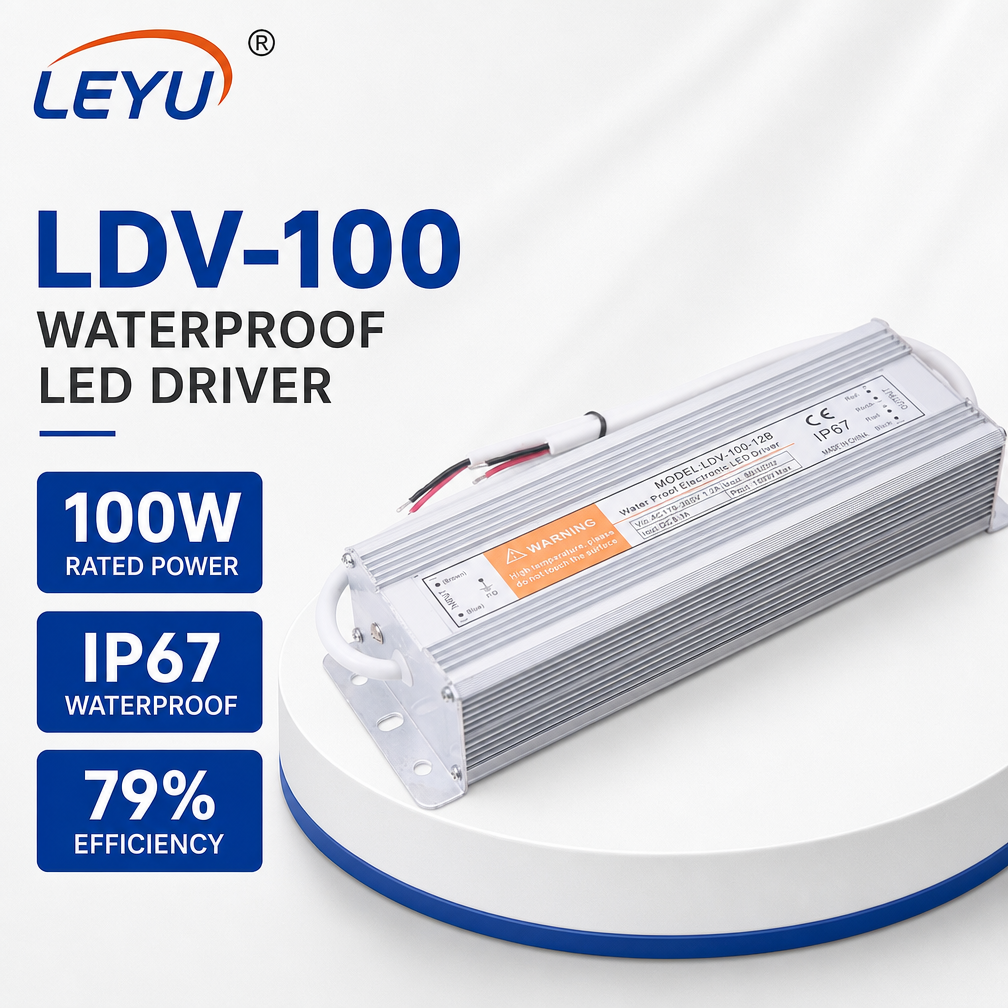
100W Industrial AC/DC Switching Power Supply Wide Voltage Input Single Outputs 60Hz 50Hz Frequency
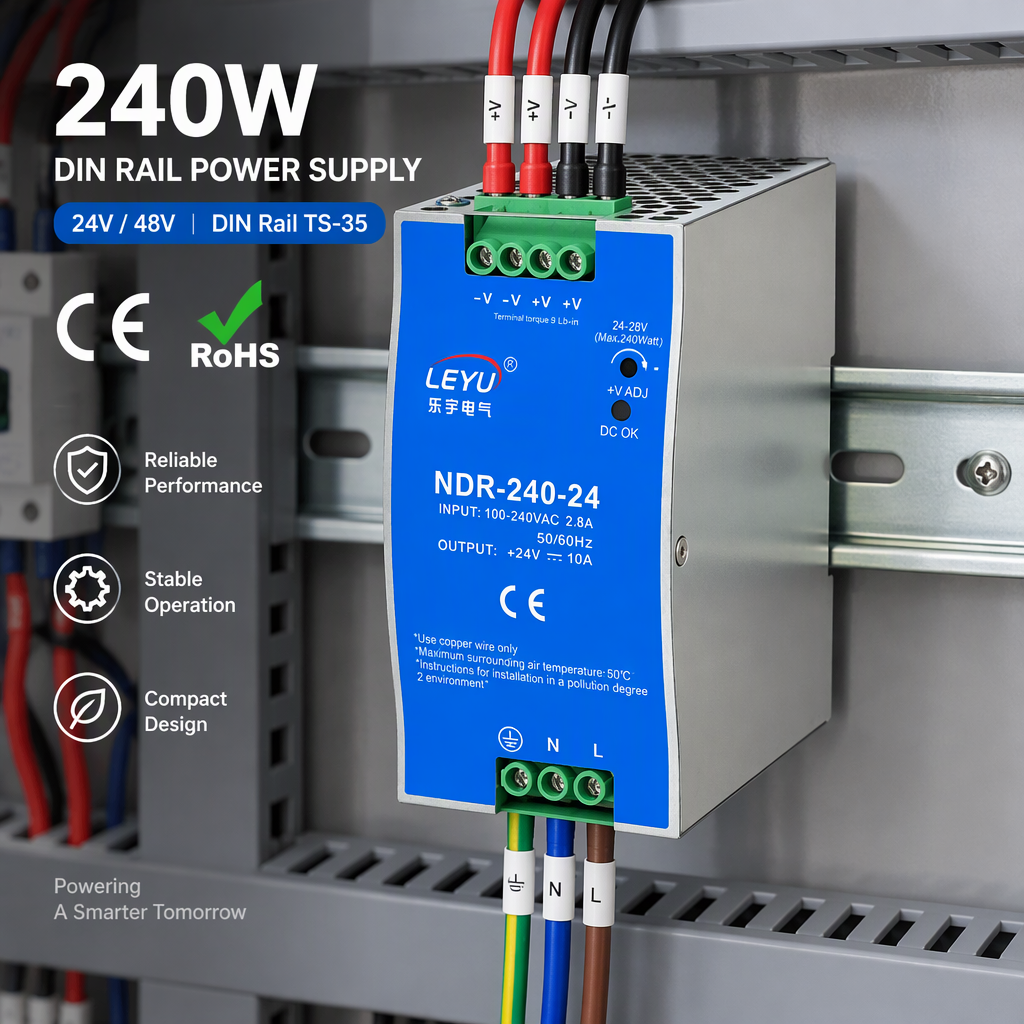
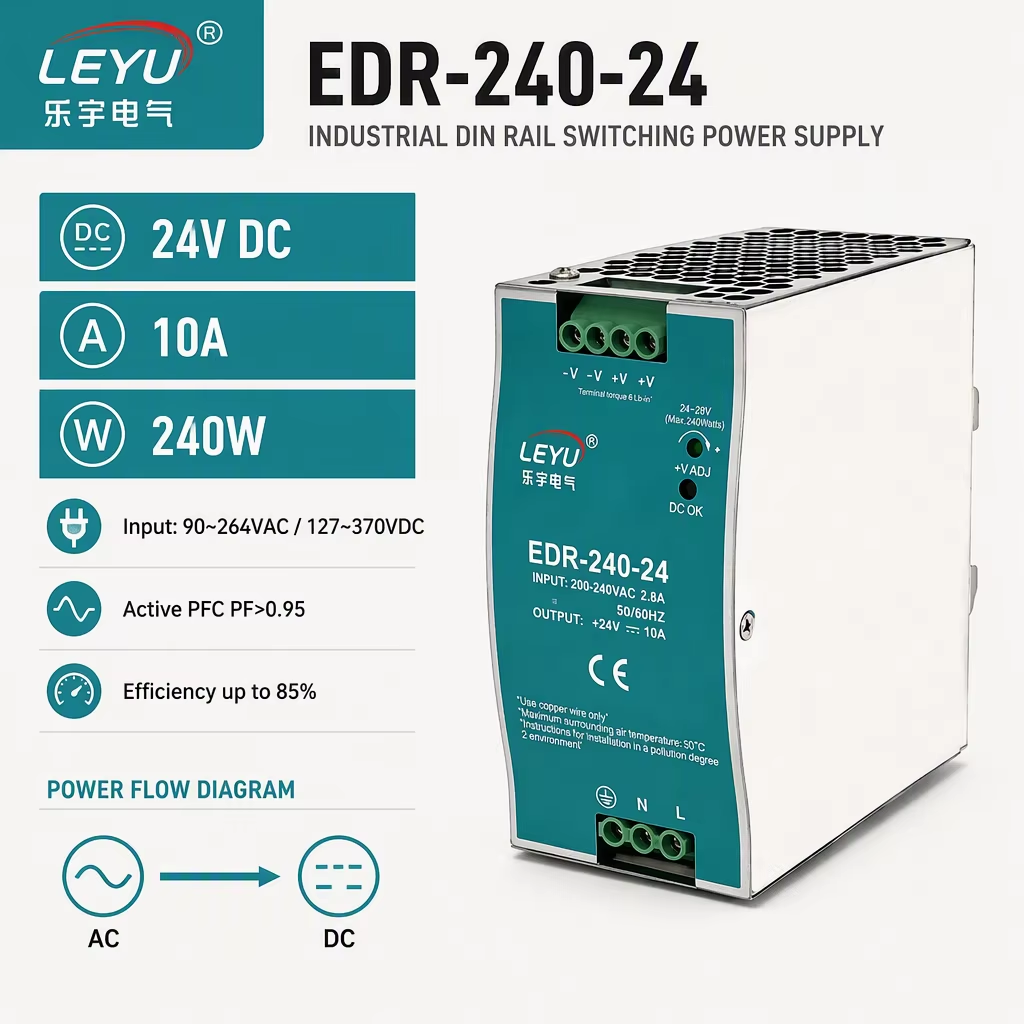
High Dynamic Range | 24V 10A
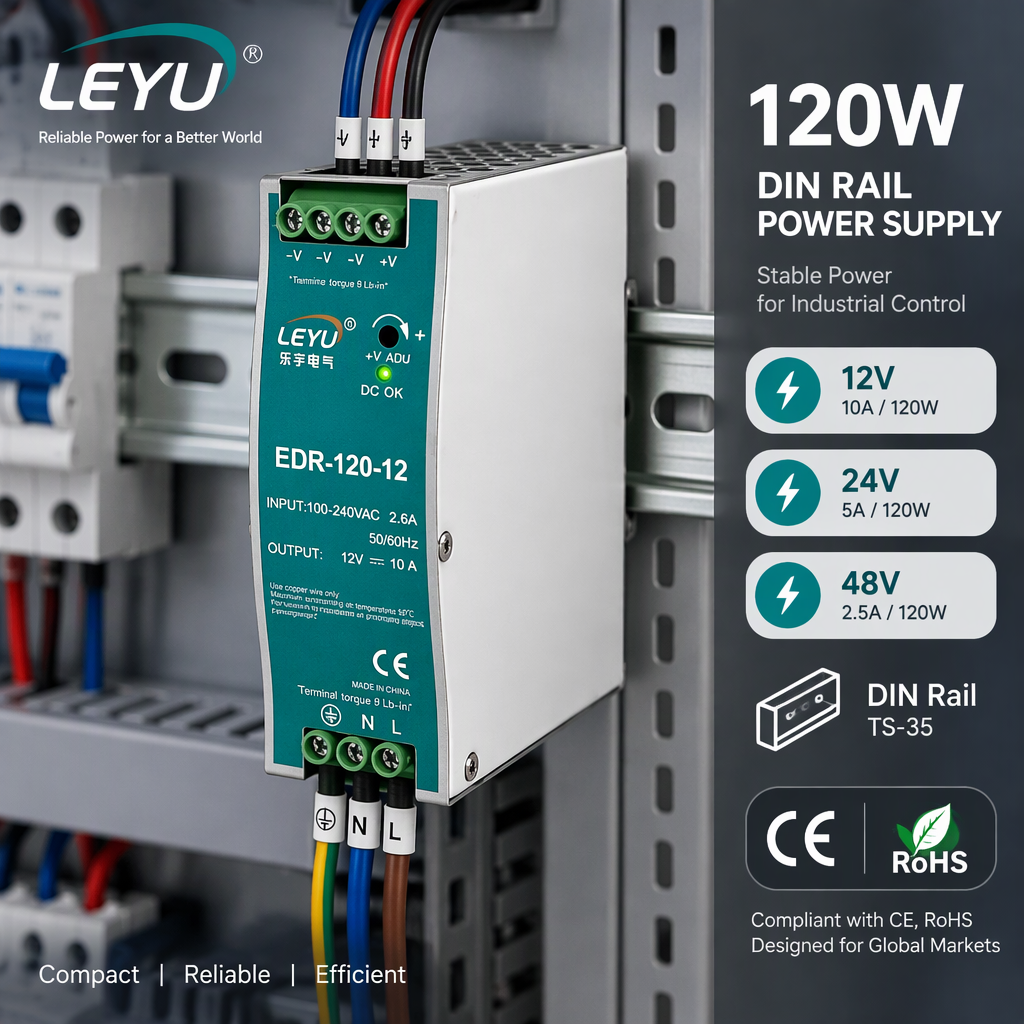
LEYU EDR-240-24 DIN Rail Power Supply 24V 10A 240W AC DC Single Output Active PFC Industrial Automation
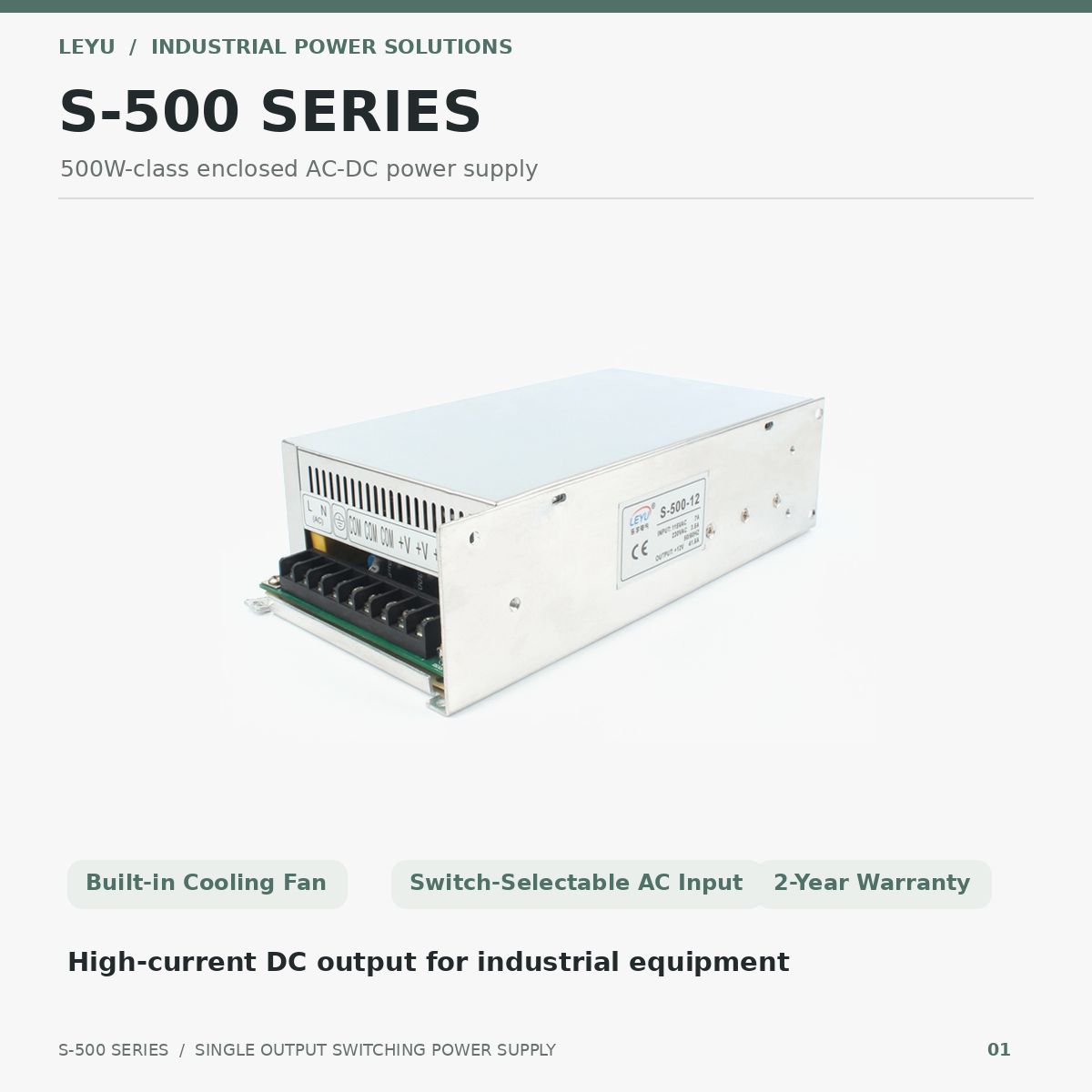
Industrial Powerhouse | 20A
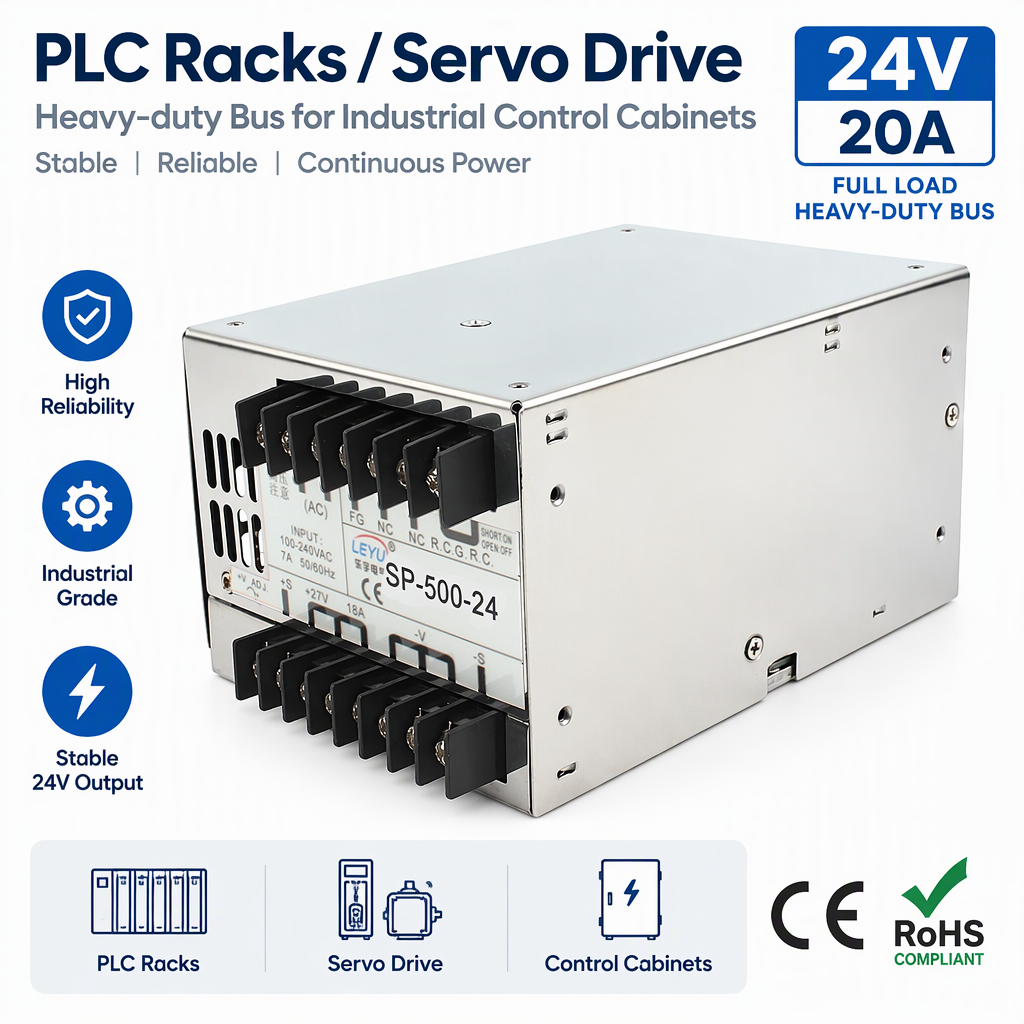
500W 24V 20A Switching Power Supply AC DC Converter Single Output 90-132VAC 180-264VAC Industrial Equipment
Deep Analysis: Engineering Resilient Constant Voltage Topologies for Global Applications
In modern low-voltage solid-state lighting (SSL) arrays, linear luminaires, signage systems, and precision machine controls, the Constant Voltage (CV) LED Driver acts as the fundamental electrical backbone. Selecting an optimized driver requires accounting for electrical transients, harmonic suppression, thermal runaway prevention, and long-range circuit impedence.
Constant Voltage (CV) vs. Constant Current (CC): Electrical Topology Distinctions
A frequent error encountered in industrial lighting procurement is conflating constant current output with constant voltage design. Constant Current drivers dynamically vary their terminal voltage to sustain an unvarying electrical current through direct LED diode strings. Conversely, a Constant Voltage LED Driver produces a rigid, stable potential difference (typically 12V, 24V, or 48V DC) while allowing load current to vary proportionally to downstream demand. CV architectures are mission-critical whenever integrated current-limiting resistors, on-board linear regulator ICs, or parallel-wired strips populate the luminaire board.
Operating a high-density parallel strip light on an unstable voltage rail leads to localized hot-spotting, chromatic shifts, and accelerated lumen depreciation. As temperature increases, forward voltage ($V_f$) across junction diodes decreases; if supply voltage drifts even 5% upward, forward current spikes exponentially, triggering permanent degradation. Hence, precision output stabilization (±1% load regulation) combined with low output ripple voltage (<150mVp-p) represents non-negotiable manufacturing parameters.
Comprehensive Architectural Matrix for Engineering Teams
The comparative matrix below details topological differences critical for OEM hardware specifiers, cabinet builders, and architectural lighting engineers:
| Topological Feature | Enclosed SMPS (e.g. SP-500, S-350) | DIN Rail CV (e.g. EDR / DRP Series) | Waterproof Resin (e.g. LDV-100 IP67) |
|---|---|---|---|
| Primary Deployment | Embedded Machines, Signage Boxes, 3D Printers | Automation Cabinets, Centralized Lighting Racks | Outdoor Facades, Landscape, Damp Industrial Sites |
| Mounting Mechanism | Chassis Bottom/Side Screw Brackets | TS-35/7.5 or TS-35/15 Snap-on Rail | In-line Mechanical Mount / Remote Junction |
| Cooling Methodology | Convection or Integrated DC Fan | Passive Optimized Natural Convection | Thermal Encapsulation Compound Conduction |
| Harmonic Compliance | Active PFC (PF > 0.95, THD < 10%) | Active / Passive Filtered (EN61000-3-2 Cl. C/D) | Built-in Low Ripple EMI Stage |
| Ingress Rating | IP20 Terminal Block Enclosure | IP20 Touch-Proof Screw Terminals | IP67 Hermetically Sealed Silicon/Polyurethane |
Strategic Procurement Trends: The Next 5-Year Horizon (2025–2030)
Procurement teams navigating commercial and industrial supply chains face rapid shifts in energy legislation, material science, and automation interoperability. Sourcing managers must align procurement cycles around these verified industry transitions:
Total Cost of Ownership & 48V Adoption
Procurement is moving decisively from legacy 12V towards high-efficiency 48V CV infrastructure. 48V rails slash line current by 75% compared to 12V, permitting smaller copper wire gauges, mitigating line drop over 50-meter runs, and generating significant capital savings in electrical distribution installations.
Stringent Harmonized Carbon Regulations
Directives across Europe (ErP Lot 21) and North America (DLC 5.1) necessitate minimum standby consumption below 0.5W and dynamic active load efficiency exceeding 93%. Buyers can no longer source basic forward converters lacking high-yield synchronous rectification stages without risking regional customs rejection.
Supply Chain De-risking via Audited Facilities
Systemic freight and manufacturing shocks have made enterprise purchasers abandon pure trading brokers. Buyers require tier-1 audited manufacturing facilities boasting complete on-site SMT, reflow, automatic optical inspection (AOI), and full traceability to guarantee uninterrupted B2B procurement pipelines.
Technological Advancements Transforming Constant Voltage Engineering
The transition toward higher switching frequencies and miniaturized thermal envelopes is revolutionizing power converter topologies. The following advancements represent the bleeding-edge standards built into our latest production iterations:
Gallium Nitride (GaN) Power Stages
By transitioning from classic Silicon MOSFETs to GaN High Electron Mobility Transistors (HEMTs), our design teams reduce switching losses by up to 60%. This yields higher power density, dramatically smaller magnetic cores, and cooler driver operation under continuous maximum ratings.
Smart Control Integration & Telemetry
CV systems increasingly incorporate bi-directional diagnostic interfaces (DALI-2, Zigbee 3.0, and IO-Link). Real-time telemetry monitoring operating hours, internal temperature, energy consumption, and voltage degradation enables preventative industrial maintenance before catastrophic diode failure occurs.
Active Inrush Current Suppression
Cold start inrush currents on high-power banks often trip circuit breakers (MCBs) unnecessarily. Advanced driver engineering integrates active NTC-MOSFET bypass circuits, constraining transient startup peaks below 20A without inducing thermal dissipation loss during nominal operation.
Manufacturing Authority Backed by Verified Industrial Data
Direct-from-factory production lines in Yueqing, Wenzhou—China's electrical capital. We deliver verified capacity, engineering expertise, and traceable quality standards.
TÜV Rheinland Onsite Verified
Our workshop, machinery, and management systems are physically verified by TÜV Rheinland as a genuine Custom Manufacturer. Buyers enjoy transparent supplier audits and authentic compliance documentation.
Comprehensive In-House Production
Equipped with 44 verified staff, high-precision automated SMT pick-and-place lines, reflow soldering tunnels, AOI inspection, and multi-tier aging test racks, ensuring tight process control and fast turnarounds.
Senior Engineering & OEM/ODM Ready
5+ senior electrical engineers, each boasting over 5 years of SMPS specialized design experience. We handle bespoke voltage matching, custom mechanical footprints, thermal optimizations, and private labeling.
Rigorous 8-Step Quality Gate
From 100% incoming component qualification (capacitors, FETs, ferrite cores) through to automated optical inspection and prolonged full-load burn-in cycles, zero defective units leave our facility floor.
Global Trade & Multilingual Support
A professional international export team of 12 specialists serving clients across Europe, North America, Southeast Asia, and the Middle East, guaranteeing quick turnaround for RFQs, compliance files, and freight logistics.
Low MOQ & Strategic Buffer Inventory
Standard enclosed switching models and DIN rail power supplies maintain a 1-piece sampling policy, with immediate safety-stock reserves ready to support rapid OEM pilot trials and urgent field replacements.
Frequently Asked Questions: CV LED Driver & SMPS Sourcing
Technical guidance covering sizing, electrical safety, compliance certifications, and volume manufacturing parameters.
Why must Constant Voltage drivers be de-rated by 20% to 30% in continuous operation?
Operating any switching power supply continuously at 100% of its rated electrical maximum accelerates thermal aging on electrolytic smoothing capacitors, significantly lowering mean time between failures (MTBF). Adhering to the standard 80% continuous load guideline provides critical thermal headroom during extreme ambient summer conditions and effortlessly absorbs transient inrush currents generated when secondary banks cycle on.
What is the functional advantage of Active Power Factor Correction (Active PFC)?
Active PFC aligns the incoming AC phase current with the voltage waveform, elevating power factor values above 0.95 while depressing Total Harmonic Distortion (THD) below 10%. This prevents harmonic feedback onto municipal or factory branch lines, avoids penalty utility tariffs, and ensures strict compliance with European and North American electrical standards (e.g., EN 61000-3-2 Class C/D limits for lighting loads).
How do IP67 waterproof resin drivers differ from standard enclosed metal cases?
Standard enclosed chassis (such as our SP-500 or S-350 series) feature ventilated enclosures optimized for natural convection or forced fan cooling in dry, enclosed environments (IP20). In contrast, IP67 waterproof drivers (like our LDV-100) are hermetically cast in specialized thermal epoxy or polyurethane potting compounds. This compound transfers heat directly to the exterior aluminum housing while totally excluding moisture, humidity, corrosive salt mist, and mechanical vibration.
What specific factory testing protocols are performed prior to release?
Every single unit manufactured at Keldan progresses through our documented 8-step quality protocol: incoming raw component verification (IQC), Surface Mount Technology placement with automated reflow, Automated Optical Inspection (AOI), manual post-solder checks, fine electrical calibration, 100% dynamic full-load thermal burn-in aging, high-pot isolation withstand testing, and final QA pre-shipment signoff.
What are the minimum order quantities (MOQ) and lead times for OEM/ODM projects?
For standard catalog products (DIN rail modules and enclosed industrial models), evaluation samples are available from 1 piece. Customized OEM designs—encompassing custom output rails, dedicated wiring harnesses, private laser etching, or modified enclosures—feature realistic minimum order thresholds tailored per project scope. Typical pilot runs ship within 10 to 18 business days following engineering design verification.
Can Keldan configure dual or multi-rail custom voltage outputs?
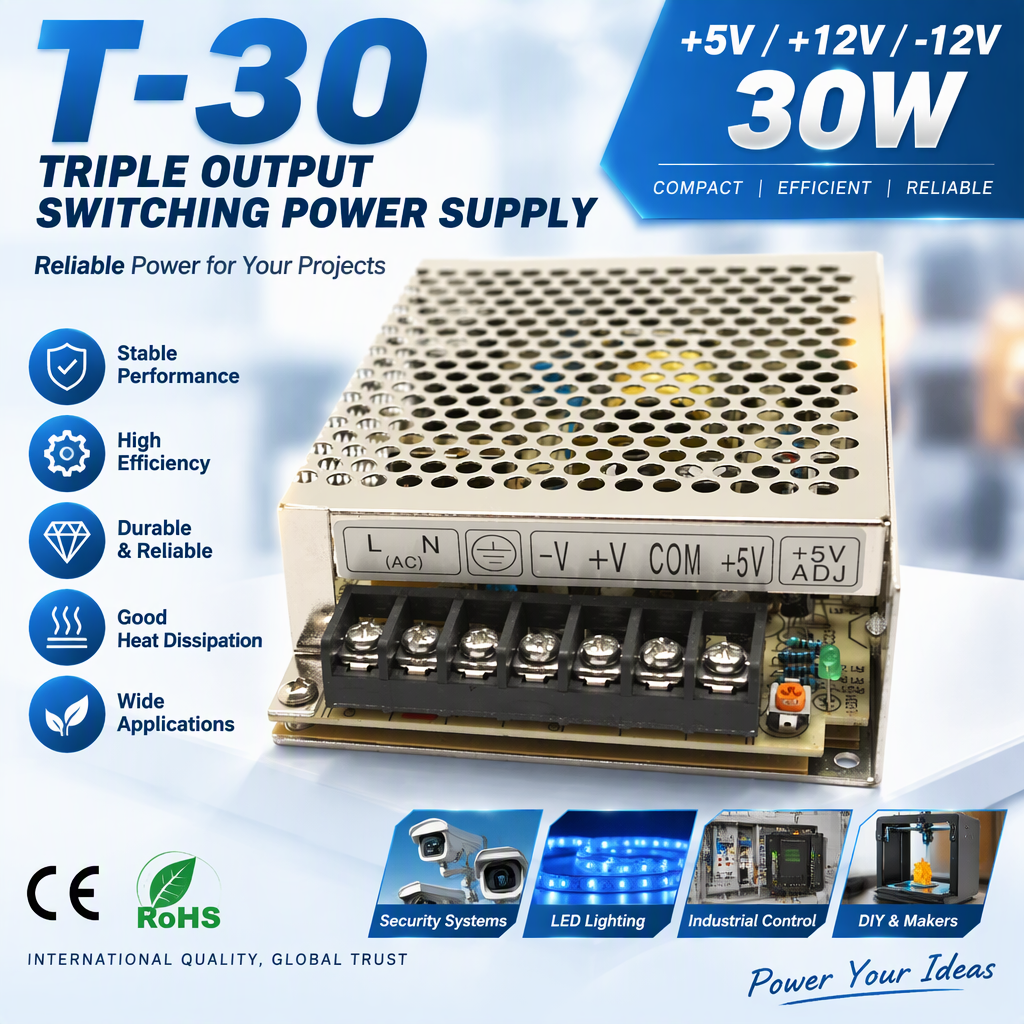
Yes. In addition to our popular single-rail units (12V, 24V, 36V, 48V), our Yueqing engineering department routinely designs and manufactures dual and triple-rail converters (such as our T-30 model featuring simultaneous +5V, +12V, and -12V DC lines) designed specifically for complex automated testing apparatus, PLC systems, and mixed signal instrumentation.
Ready to Engineer Your Power Supply Infrastructure?
Submit your electrical specifications, target volume, and certification requirements. Our senior application engineers will supply detailed datasheets, compliance dossiers, and competitive factory-direct quotations.
Get a Quote