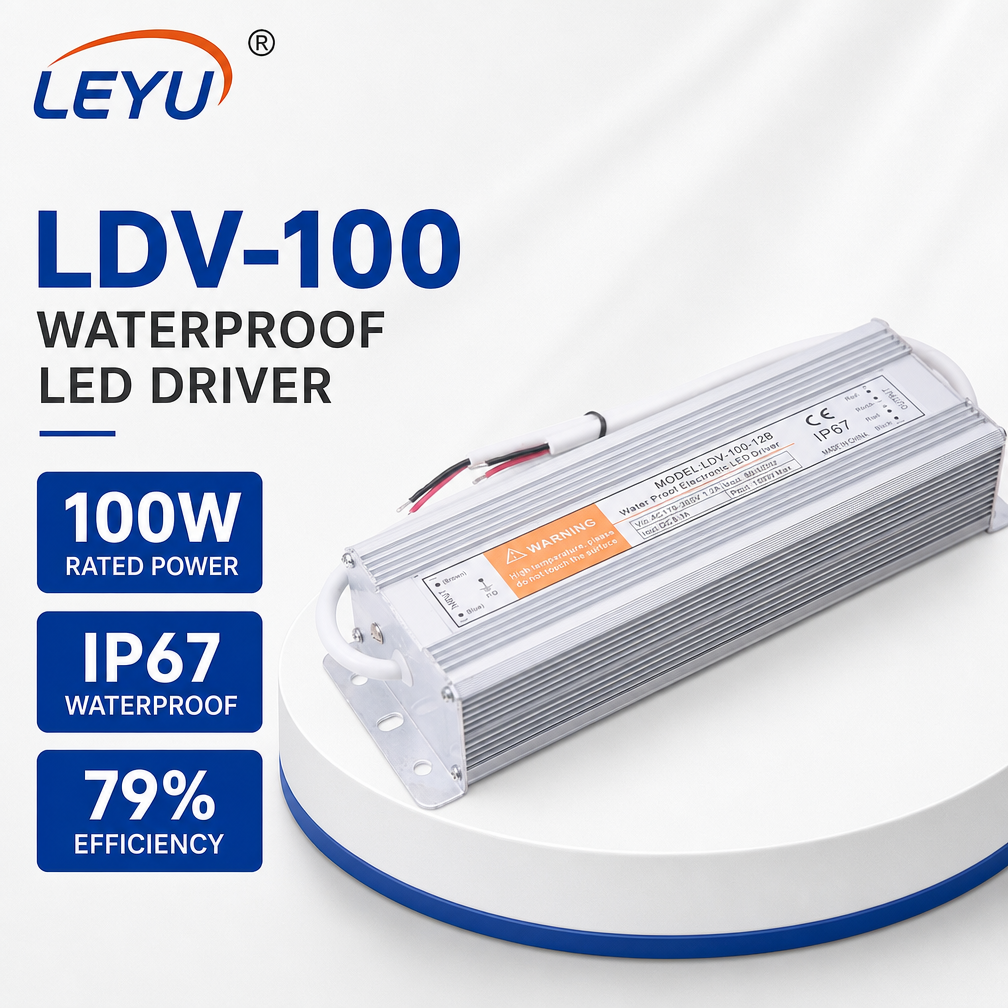
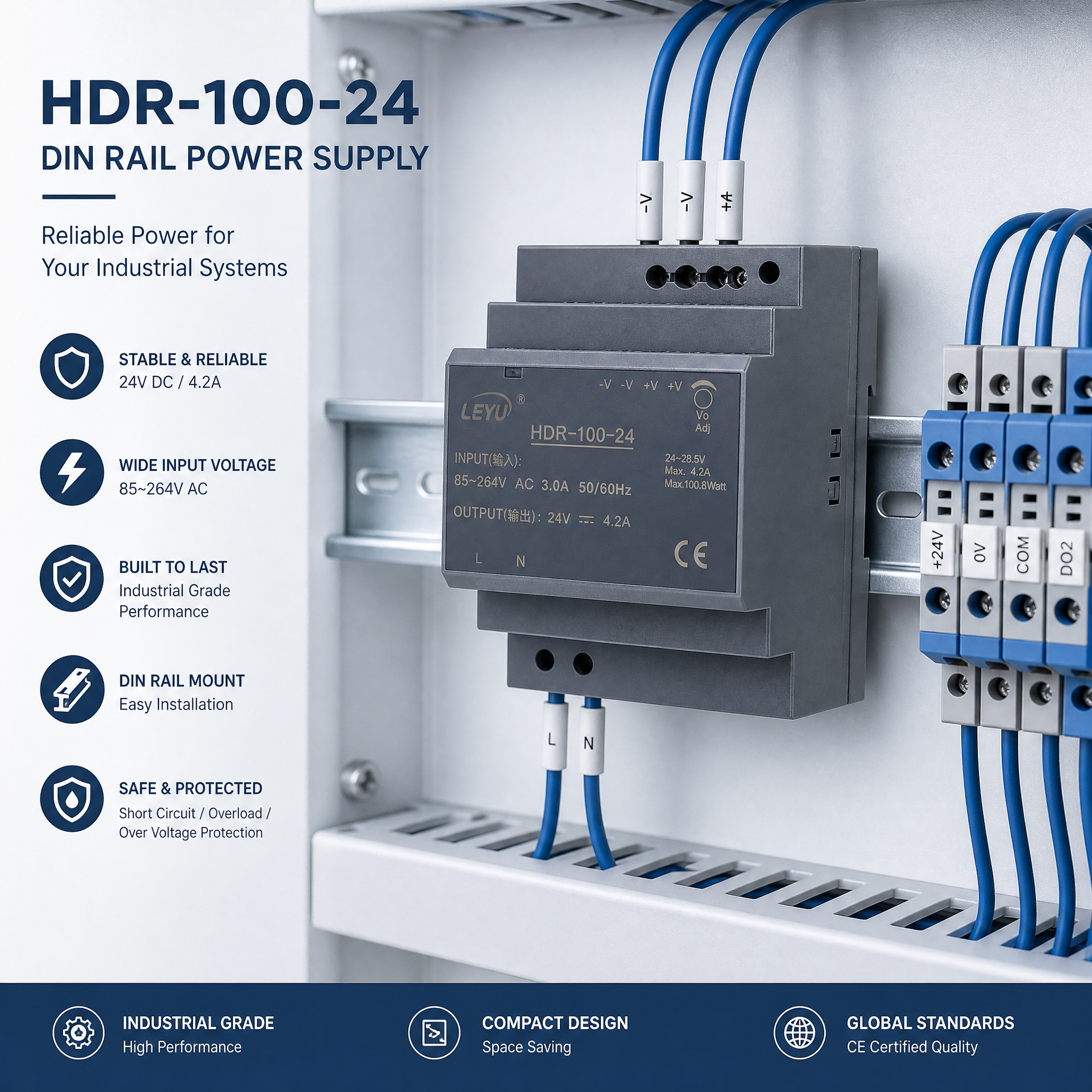
LDV-100 100W IP67 Waterproof LED Power Supply 12V 8.3A 24V 4.2A AC DC Switching Adapter
IP67 Enclosure
12V / 24V Output
Outdoor Rated
Engineered to deliver ultra-stable ripple mitigation, broad input voltage tolerance, and continuous full-load operating profiles under rigorous ambient demands.
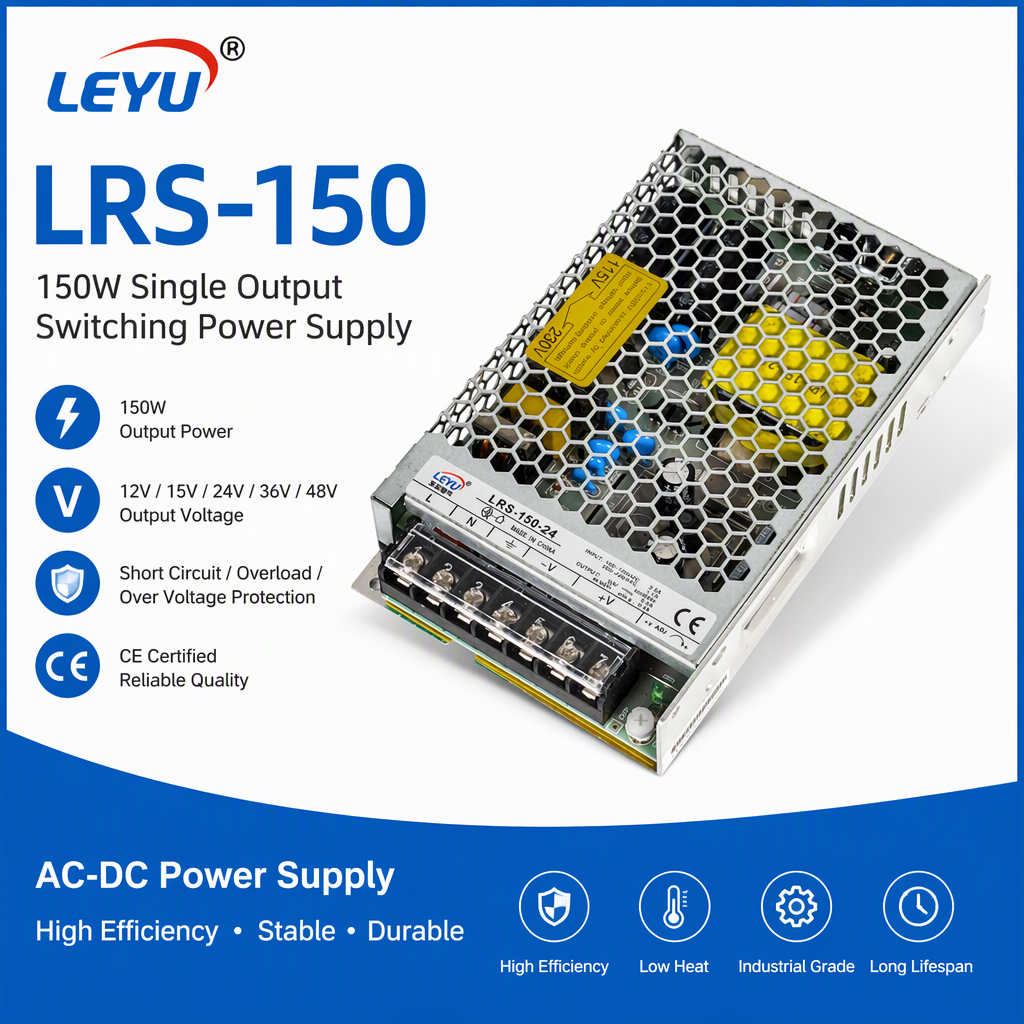

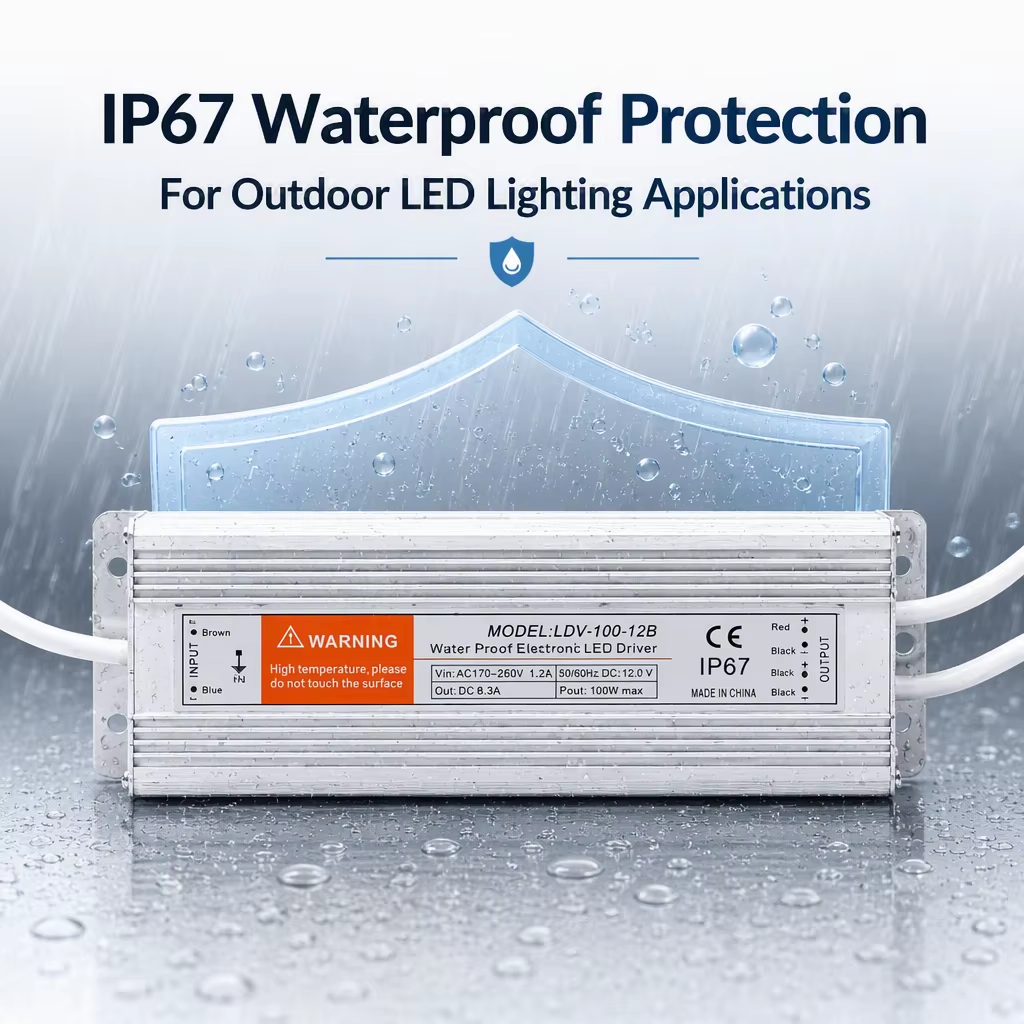
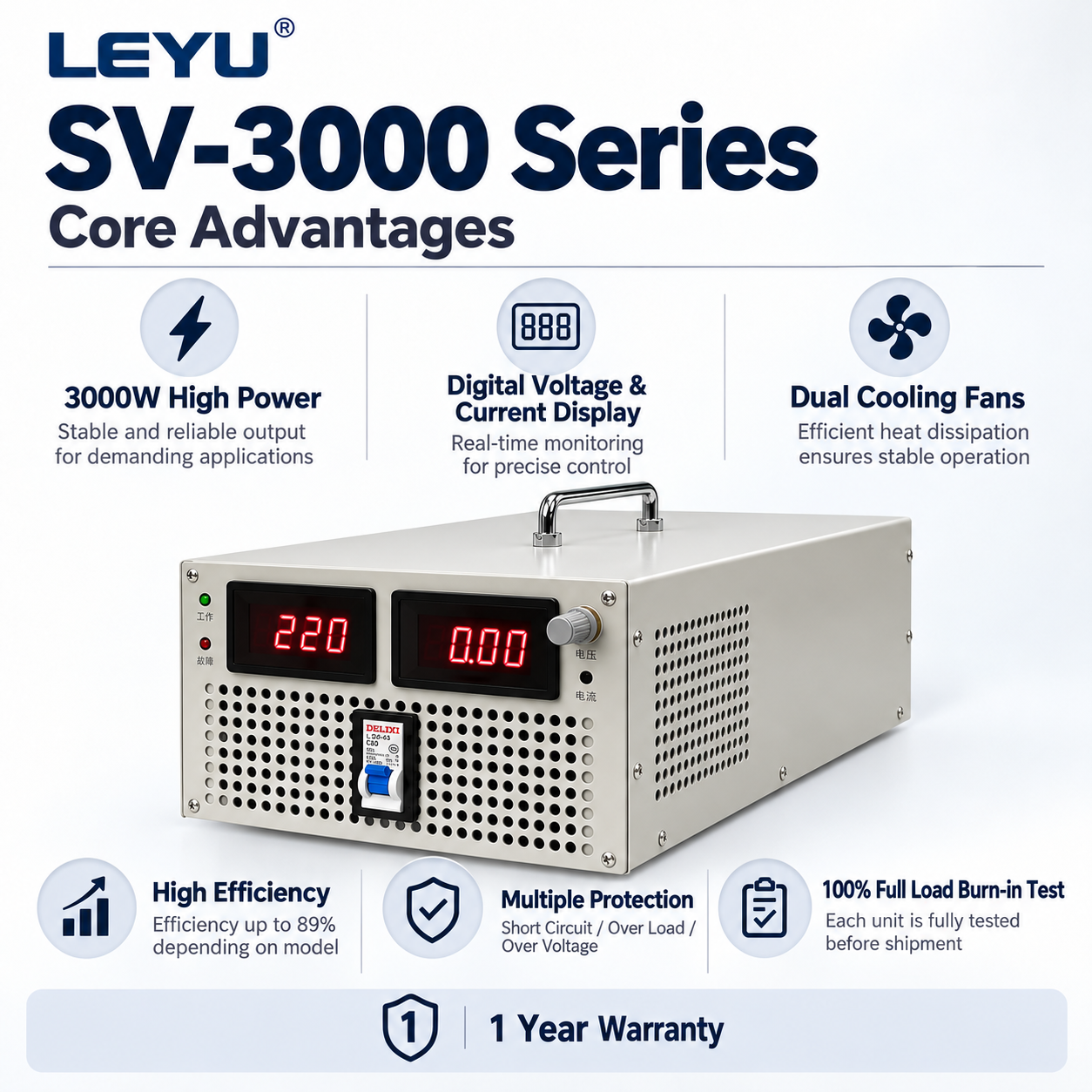
Operating from Yueqing, Zhejiang—the epicenter of China's electromechanical engineering industry—Yueqing Keldan Technology delivers audited switch-mode topologies for tier-1 industrial systems worldwide.
Every regulated DC power unit passes an unbroken chain of precision stages: automated SMT pick-and-place, controlled-temperature multi-zone reflow soldering, automated optical inspection (AOI), and dual-stage manual debugging before entering elevated-temperature burn-in chambers.
Our power supplies carry full CE compliance documentation with heavy industrial electromagnetic compatibility (EMC EN 61000-6-2/4) certifications. Units maintain minimal electrical switching noise, preventing EMI contamination across adjacent control circuits and sensitive industrial bus networks.
Backed by an in-house engineering team with an average of 5+ years of specialized power conversion design, we facilitate direct modifications of PCB layouts, non-standard voltage trims (3.3V to 300VDC), potting configurations, remote telemetry, and tailored mechanical housings for panel builders.
Understanding shifting silicon architectures, Active Power Factor Correction (PFC), and the systemic move toward ultra-high thermal efficiency in mission-critical applications.
Conventional silicon MOSFET topologies face thermal saturation and efficiency bottlenecks when pushed beyond 200kHz switching frequencies. Wide bandgap semiconductors, notably Gallium Nitride (GaN) and Silicon Carbide (SiC), operate at elevated frequencies with near-zero reverse recovery losses, reducing inductor volumes by up to 40% and shrinking housing footprints without heat penalties.
Legacy analog PWM architectures are systematically conceding market share to DSP-controlled digital power loops. Modern industrial installations mandate microsecond dynamic response, programmable multi-stage volt/amp profiles for complex electro-chemical battery banks, and fieldbus communication (MODBUS-RTU, CANopen) for proactive predictive maintenance analytics.
Global electrical grid standards—particularly IEC/EN 61000-3-2—strictly limit current harmonic distortion generated by switch-mode loads above 75W. Advanced Active Power Factor Correction circuits are standard in high-tier exporters' designs, reducing apparent power draws, minimizing neutral-wire thermal overloading, and slashing factory energy billing.
| Evaluation Metric | Legacy Linear DC Supplies | Standard Commercial SMPS | Industrial Regulated SMPS (Keldan) |
|---|---|---|---|
| Operating Efficiency | 40% – 55% (High heat dissipation) | 75% – 84% (Average efficiency) | 88% – 94.5% (High-efficiency stages) |
| Power Density (W/in³) | Low (Heavy iron-core transformer) | Moderate (Standard bulky format) | Ultra-High (Compact 1U / TS35 Form Factors) |
| Input Voltage Window | Narrow (±10% nominal AC) | Selectable switch (110V/220V) | Universal 85–264VAC (Active Stabilization) |
| Mean Time Between Failures (MTBF) | ~20,000 Hours (Thermal degradation) | ~50,000 Hours (Commercial grade caps) | > 250,000 Hours (105°C Long-life Capacitors) |
| Integrated Safety Protections | Basic fuse, thermal switch | Overload, Basic Over-voltage | Hiccup/Constant Current, OVP, OLP, OTP |
Enterprise procurement teams in North America, Europe, and the APAC region are reshaping vendor audit rubrics around total cost of ownership, modular scalability, and compliance integrity.
Purchasing teams are moving past upfront BOM price comparisons. When power supplies fail in remote wind turbines, offshore telecommunications, or robotic manufacturing lines, replacement overheads and line downtime exceed product acquisition costs by a factor of 50. Industrial procurement frameworks prioritize components rated for extended MTBF, long-life 105°C capacitors, and audited burn-in records.
Intermediary traders are increasingly bypassed in favor of verified manufacturing facilities. Direct engagement with export manufacturers provides engineering transparency, rapid turnaround on sample revisions, verifiable supply chain documentation for minerals and REACH/RoHS compliance, and guaranteed continuity for multi-year production runs.
High-reliability sectors—including cloud data banks, edge computing enclosures, and continuous chemical electrolysis—are standardizing on N+1 active current sharing redundancy. Procurement demands focus on dynamic oring diodes, internal MOSFET switches, and compact hot-swappable rail topologies that allow modules to be exchanged without interrupting downstream loads.
Our Yueqing application engineers are on standby to evaluate your voltage profiles, mechanical constraints, and international compliance criteria. Connect instantly with our technical export division.
Clear, direct answers regarding circuit topologies, transient load handling, safety thresholds, and export logistics.
Unregulated DC power supplies rely on standard transformers and passive rectification; their output voltage fluctuates substantially in direct response to line voltage sags and load changes. In contrast, regulated DC supplies integrate continuous closed-loop feedback systems that modulate high-frequency pulse widths (PWM). This keeps output voltages stable within ±1% or tighter tolerances across universal AC input swings (85–264VAC) and dynamic 0–100% current steps.
Inductive devices like DC motors, solenoids, relays, and magnetic brakes generate heavy inrush currents during startup—often reaching 300% to 500% of nominal rating. Standard practice dictates sizing the continuous supply rating with at least 25–30% overhead margin, or selecting units engineered with constant-current overload limiting rather than immediate hiccup shutdown. Adding reverse back-EMF suppression diodes across inductive loads protects sensitive switching transistors against voltage spikes upon de-energization.
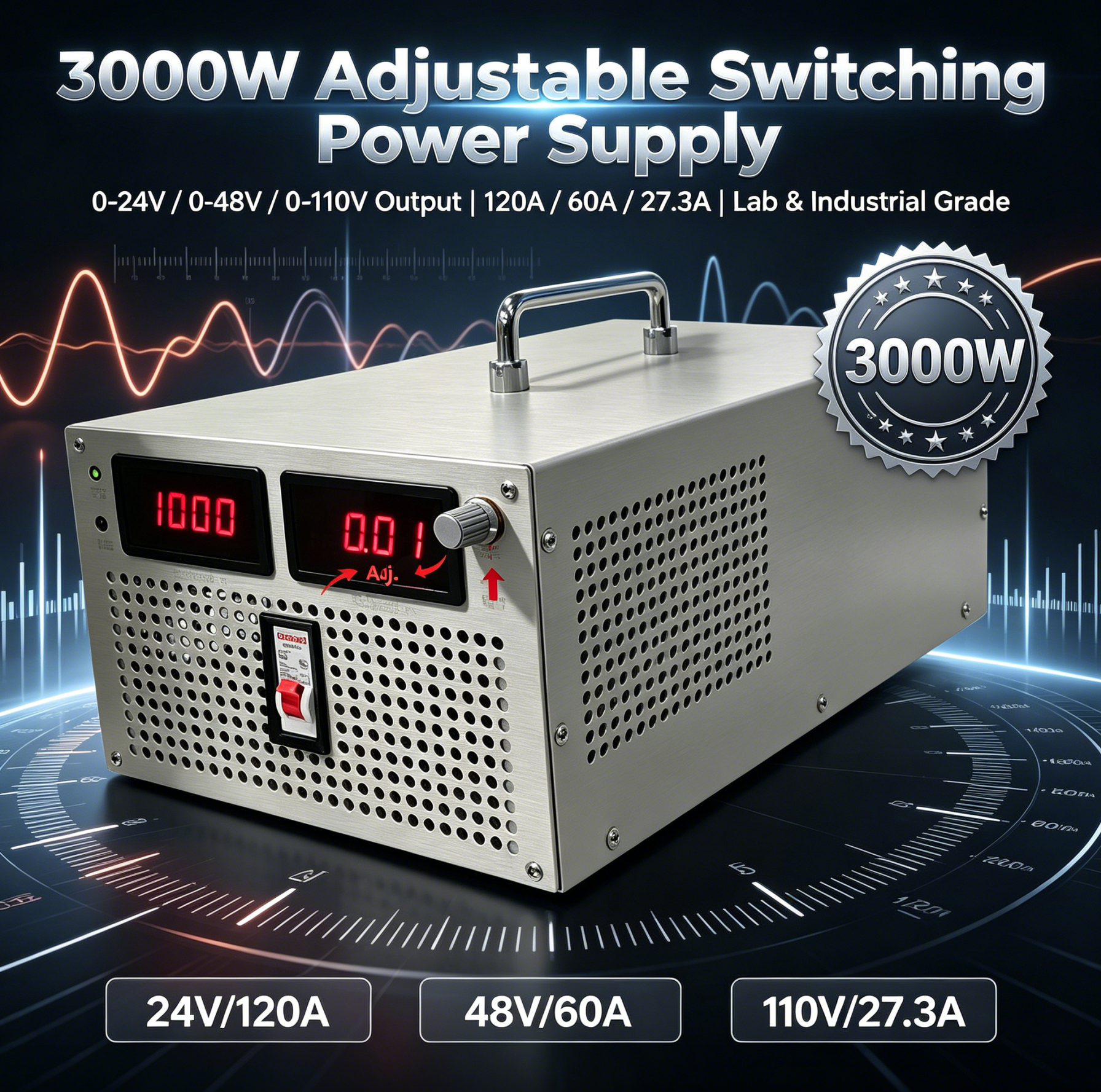
In Constant Voltage (CV) operation, the power supply maintains a fixed voltage (e.g., 24VDC) while output current varies according to load resistance. In Constant Current (CC) mode, the supply dynamically adjusts voltage downward to clamp output current to a defined limit (e.g., 60A). High-wattage models like our 3000W adjustable series feature automatic CV/CC transition, essential for battery charging algorithms and electro-chemical plating where runaway current would damage cell chemistry or electro-deposition substrates.
Ripple and noise represent undesirable AC remnants on the DC output rail caused by internal high-frequency switching and rectifier harmonics. High ripple (>150mVp-p) causes timing jitter in microcontrollers, signal corruption in analog sensors, measurement errors in laboratory instrumentation, and audible hum in audio/video setups. Our industrial switching power units feature multistage LC output filtering to keep ripple below 80–100mVp-p under full continuous load.
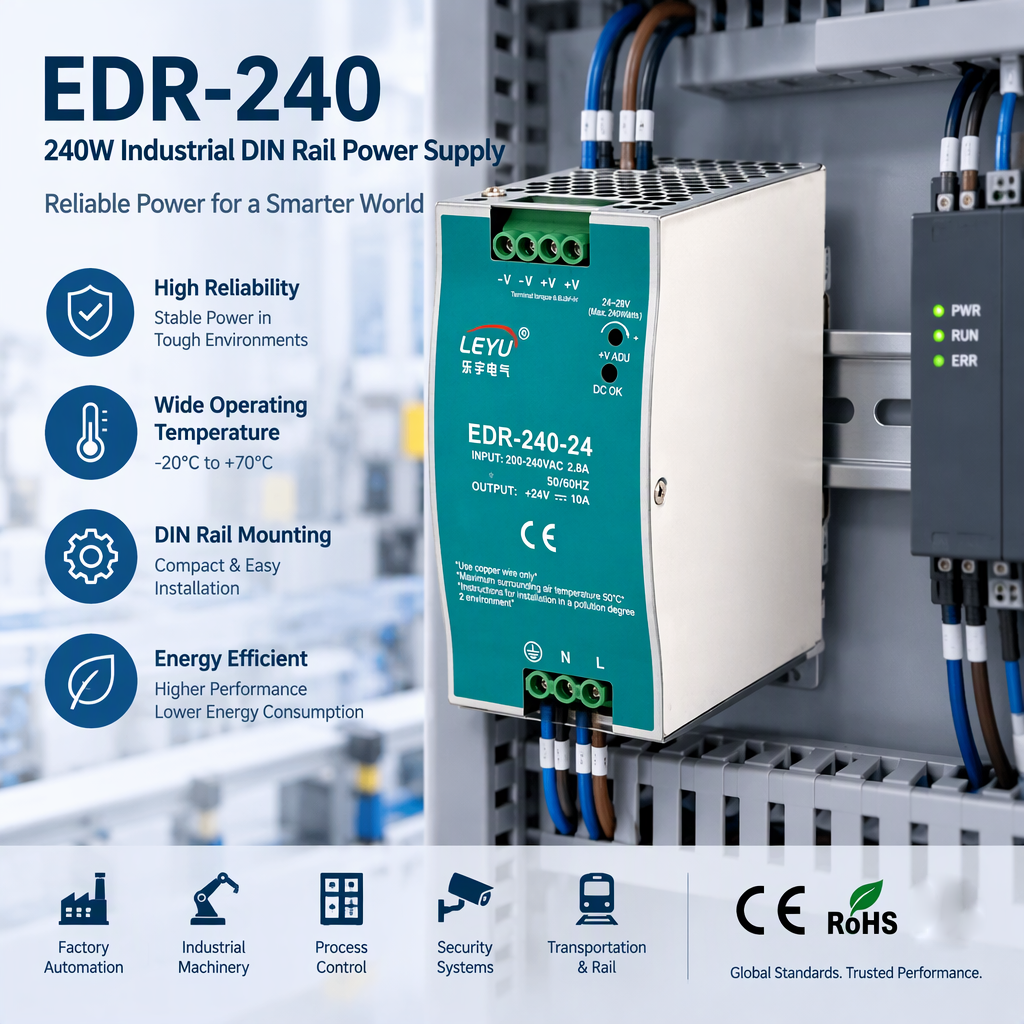
For standard catalogue items such as LRS-series SMPS and TS-35 DIN rail units, sample orders start from 1 piece for engineering evaluations, with regular wholesale production thresholds starting at 10 to 15 pieces. Customized OEM builds (modified voltage rails, conformal coatings, customized silkscreens) typically hold a low barrier of 50–100 pieces. Standard lead times average 7–14 business days, supported by buffer stocks of core magnetic transformers and IC controller sets.
Switch-mode power supplies generate internal waste heat proportional to efficiency loss (100% minus efficiency). Enclosed passive convection-cooled units operate up to 40°C or 50°C without de-rating, but must shed ~2.5% of usable power for every additional degree Celsius up to 70°C. Units placed in unventilated NEMA or IP66/67 cabinets require either de-rating by 20–40%, external heat-sinking, or integrated ball-bearing cooling fans configured for automatic thermal actuation.
