Engineered Industrial Converters & Power Modules for Trondheim
Tested for dynamic electromagnetic interference mitigation, extreme thermal ranges, and seamless DIN-rail or panel deployment across Norwegian industrial sites.
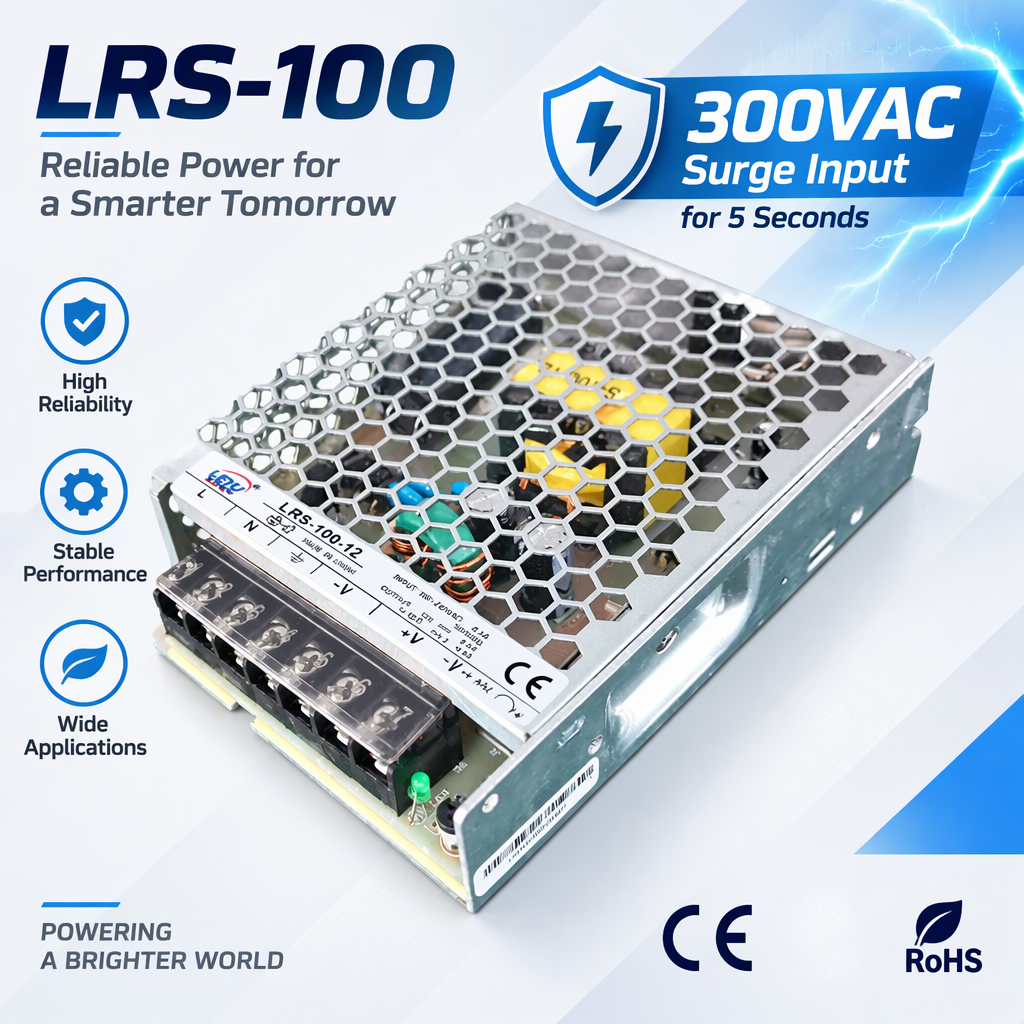
100W Industrial Switching Power Supply 300VAC Surge Input 5s 12V 24V 48V AC DC Converter with Overload Protection
- Input Surge: Withstands 300VAC for 5s
- Outputs: 12V, 24V, 48V Regulated
- Protection: Hiccup mode, Overload, OVP
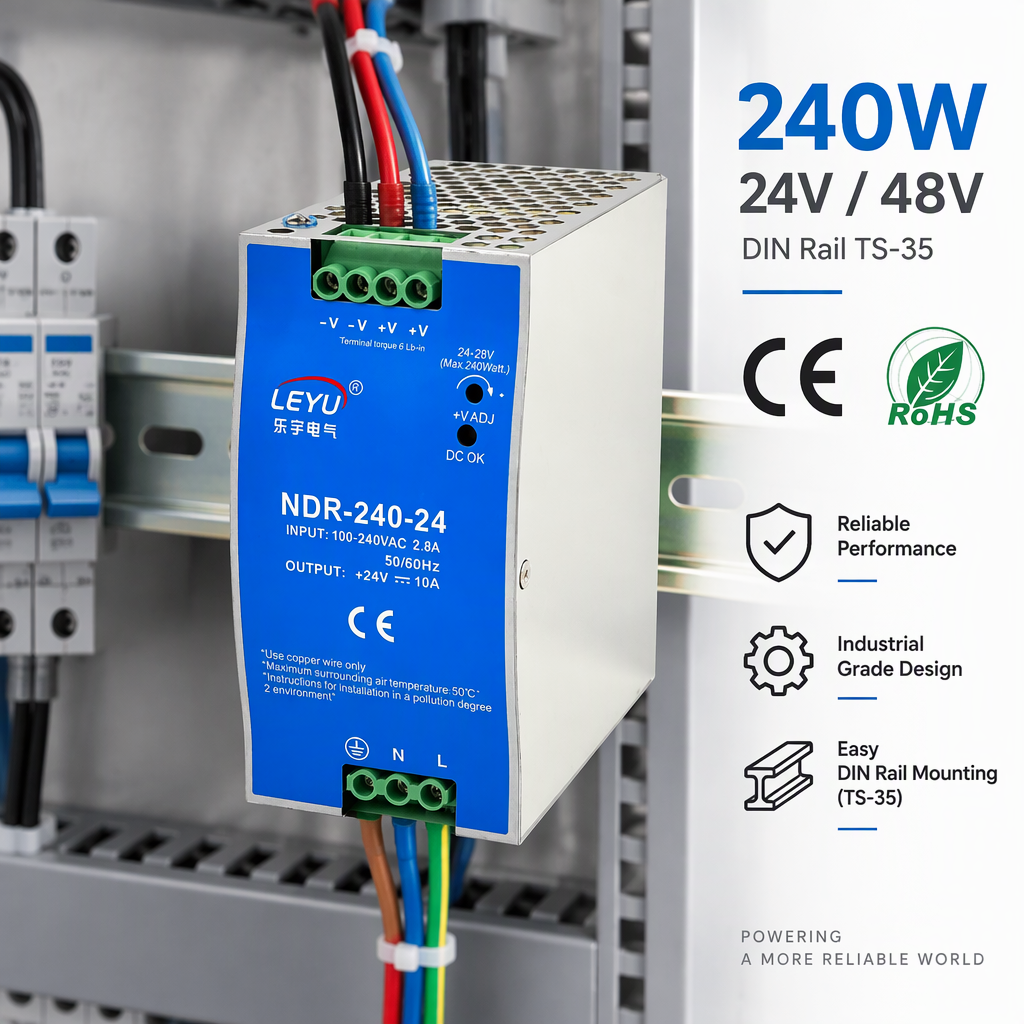
NDR-240 240W DIN Rail Power Supply 90-264VAC Universal Input with Active PFC 24V 10A 48V 5A Industrial Switching Power Supply
- Active PFC: PF > 0.95 Industrial Standard
- Output Specs: 24V@10A / 48V@5A
- Form Factor: TS-35/7.5 or TS-35/15 Rail
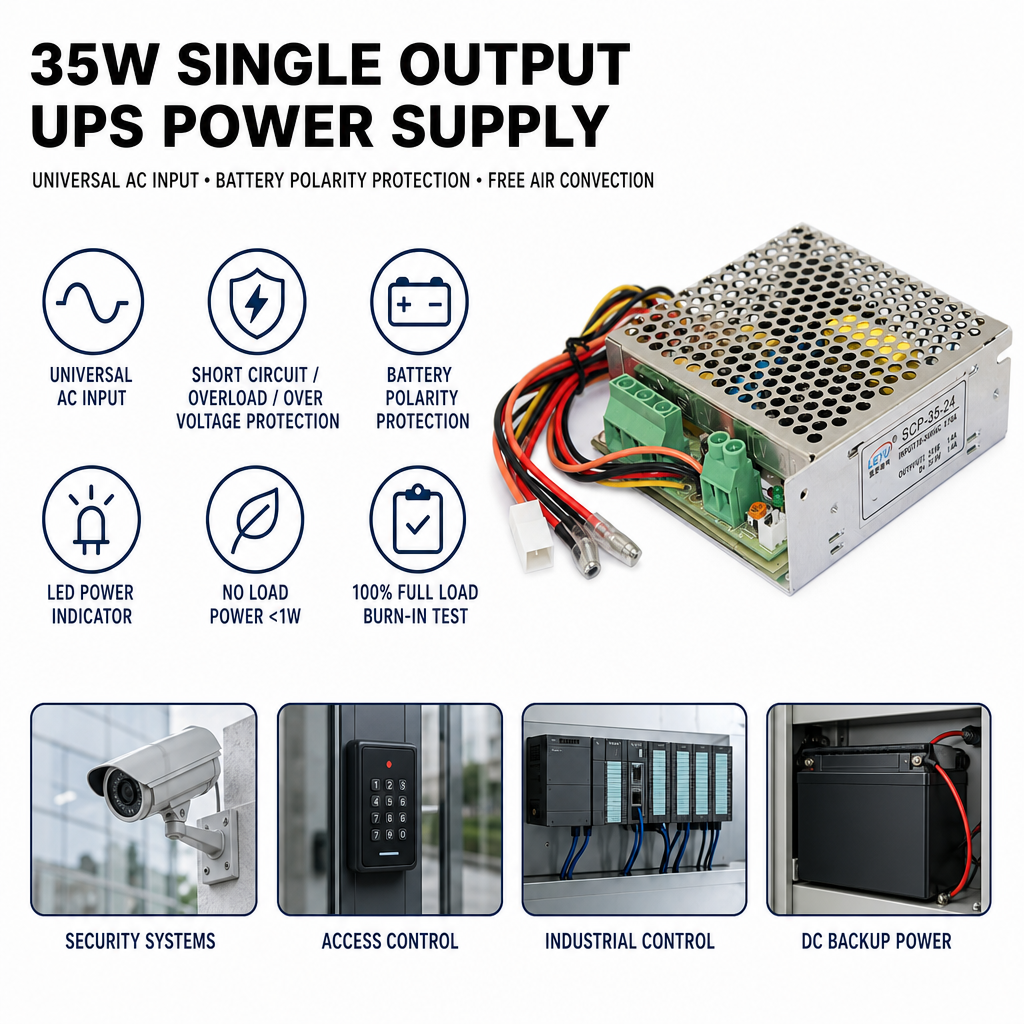
SCP-35 35W Mini UPS Power Supply 13.8V 2.6A / 27.6V 1.4A with Battery Charger AC to DC for CCTV Camera Router Diesel Heater
- Dual Function: DC Supply & Auto Float Charger
- Battery Cutoff: Zero reverse discharge
- Applications: Cold-climate IoT, CCTV, Heaters
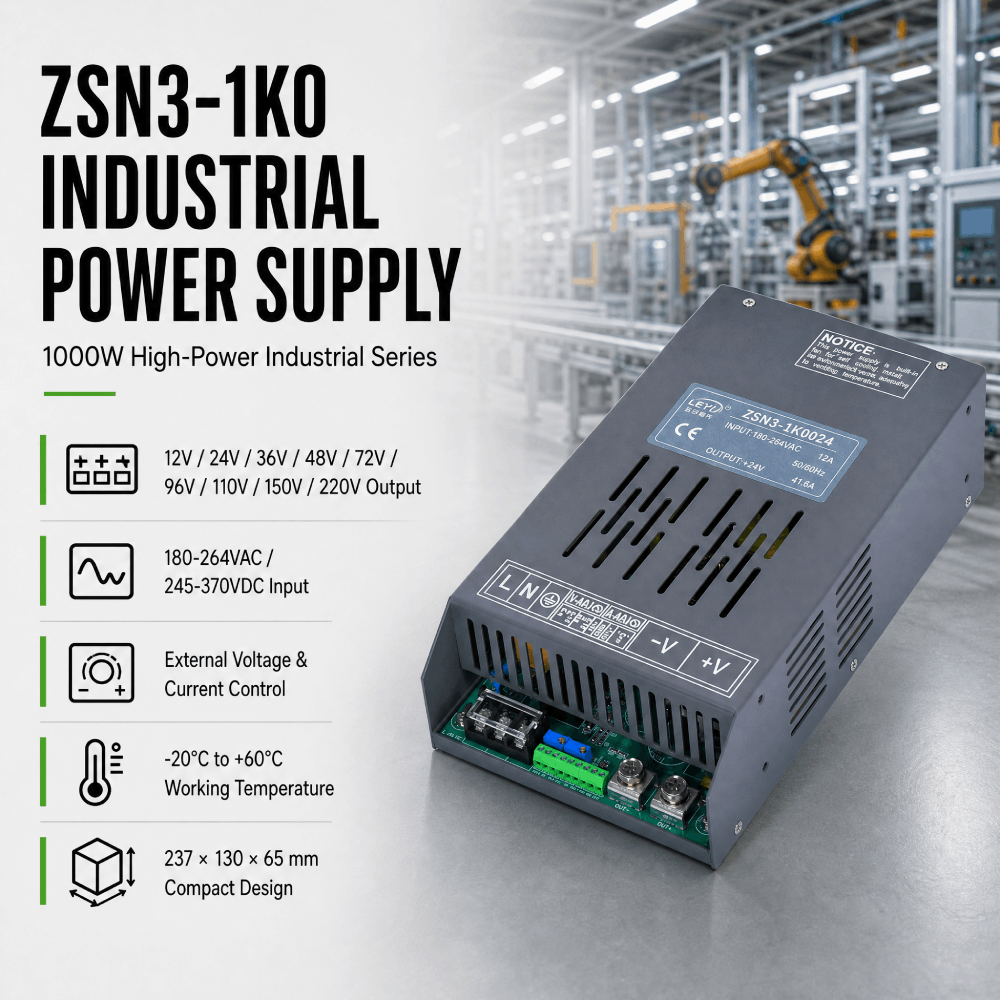
ZSN3 1000W Programmable Variable DC Power Supply AC to DC 12V 24V 48V 110V 220V Adjustable SMPS for Laser Lab Use
- Digital Precision: 0-100% Volts/Amps Tuning
- Digital Bus: RS485/Modbus Programmable
- Target Field: NTNU Labs, Photonics R&D
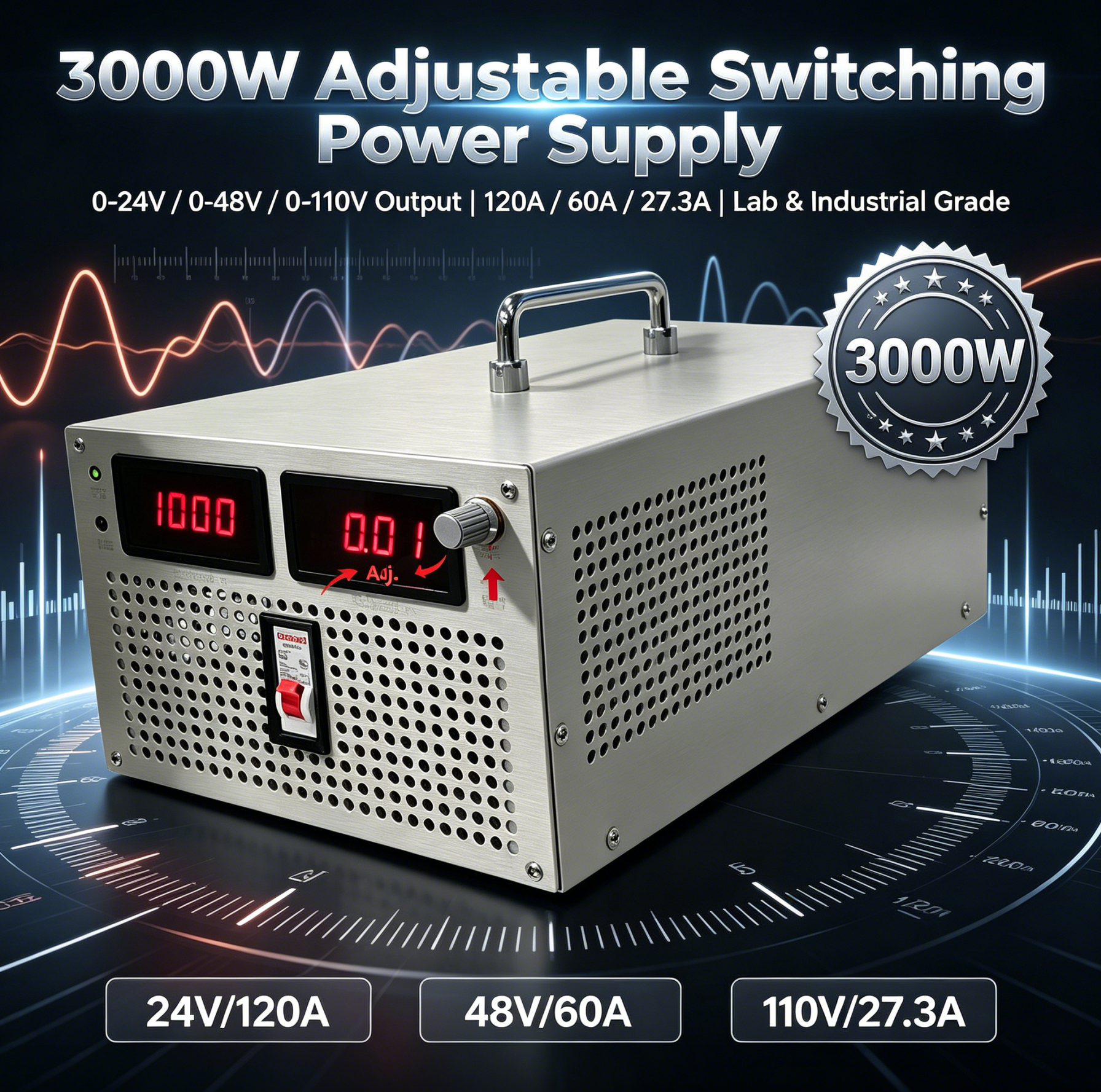
3000W High Power Lab Bench Power Supply 0-24V 0-48V 0-110V Variable AC DC Converter for Industrial Testing Aging
- Heavy Duty: 3kW Continuous Duty Cycle
- Microprocessor Controlled Regulated Rail
- Protection: Thermal Derating, Crowbar OVP
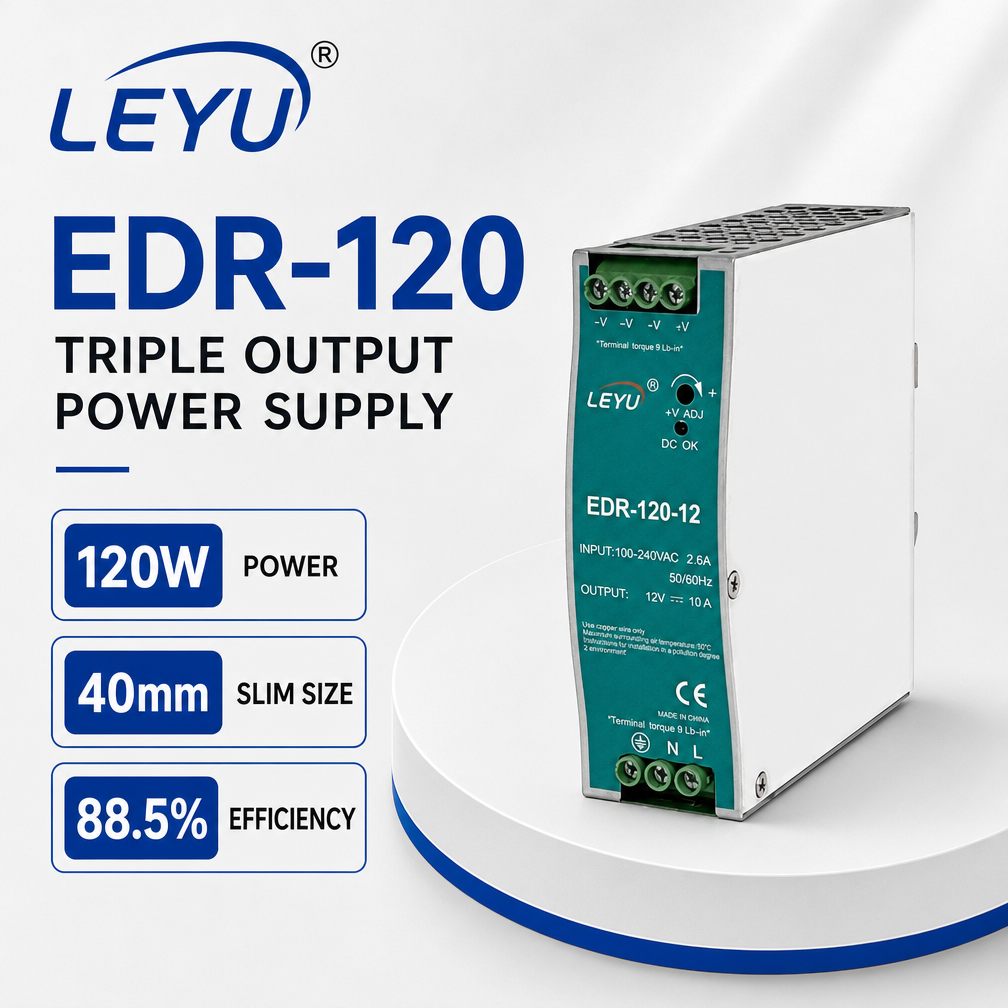
EDR-120 120W Industrial DIN Rail Power Supply 12V 10A 24V 5A 48V 2.5A AC DC Switching Power Supply for PLC Control Cabinet
- Slim Profile: 40mm Installation Width
- Standard Voltage: 24V@5A Low Ripple Output
- EMC Compliance: EN 55032 Class A/B
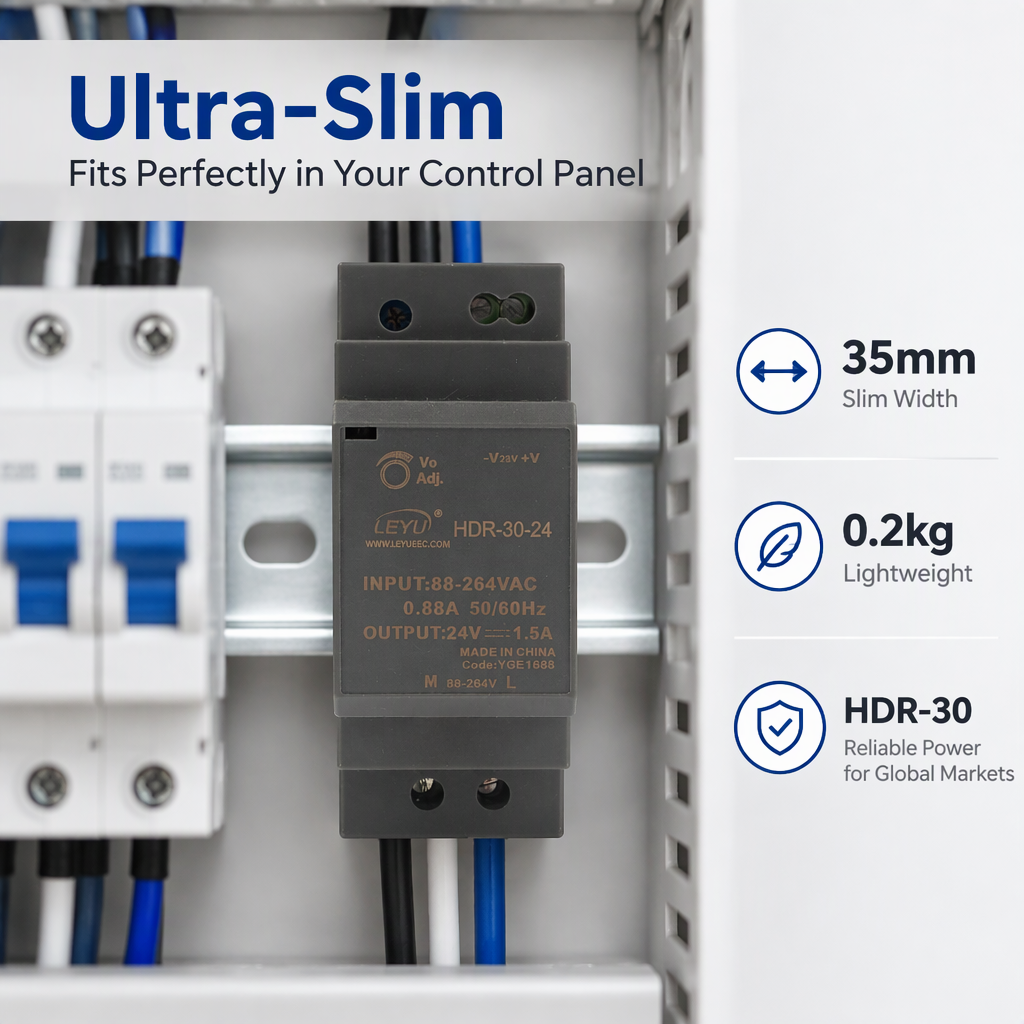
Ultra Slim 30W DIN Rail Switching Power Supply 12V 2A 24V 1.5A 35mm Width for Narrow Control Panels
- Ultra-Compact: 35mm Modular Enclosure
- No-Load Loss: < 0.3W Eco Standby
- Class II Isolation: No PE Earth Required
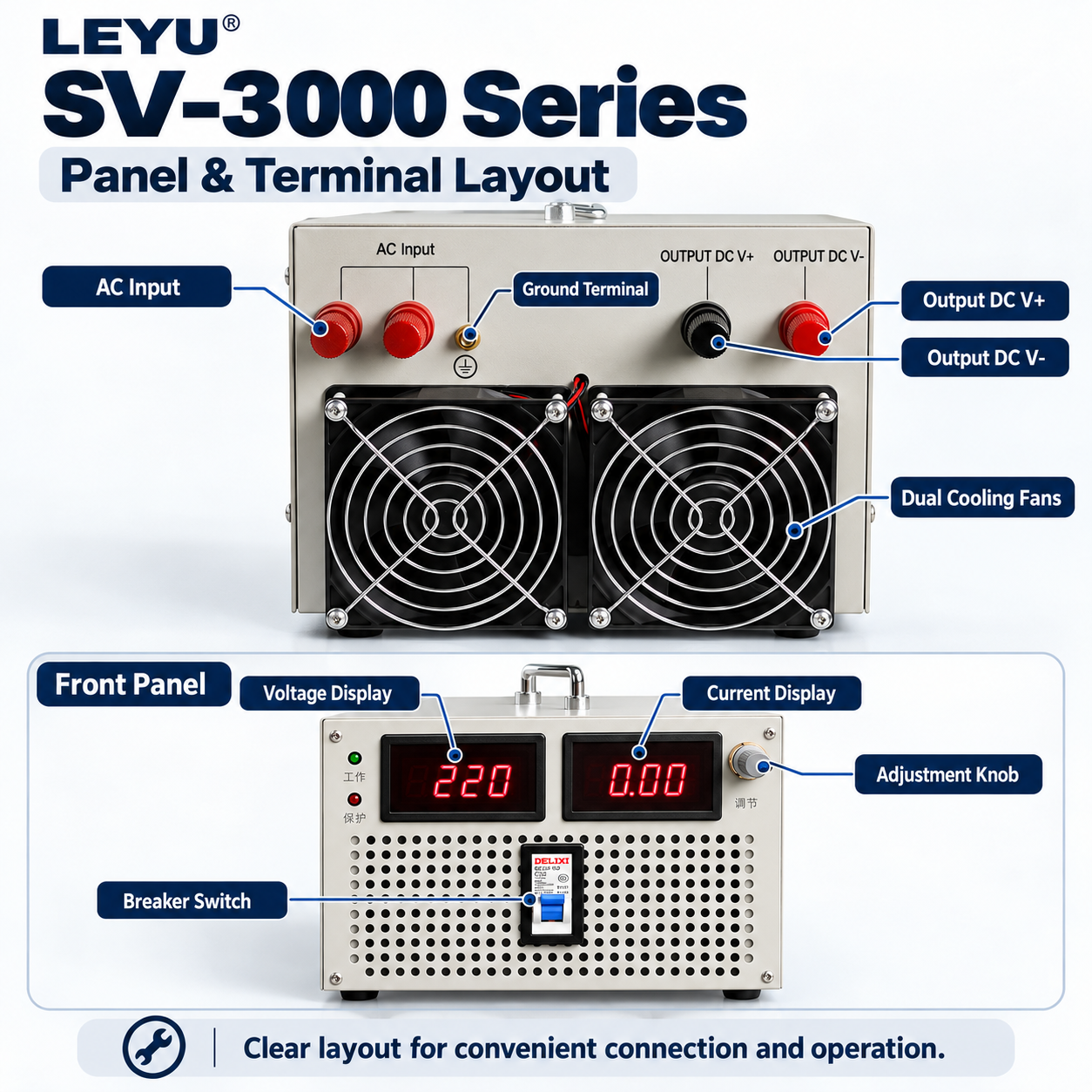
SV-3000 3KW Industrial Variable Power Supply 120A 60A for Electroplating Electrolysis & Laser Equipment AC 220V Input
- High-Current Output: Up to 120A DC Rail
- Regulated Switching: High-frequency resonant
- Industrial Surface Treatment & Laser Labs
Engineering High-Integrity Isolated DC-DC Conversion for Trondheim’s Industry 4.0
Trondheim holds an exceptional position in the Scandinavian high-technology landscape. Recognized as Norway's premier innovation capital—anchored by SINTEF, the Norwegian University of Science and Technology (NTNU), and the thriving maritime-tech cluster along the Trondheimsfjord—the city drives cutting-edge breakthroughs in subsea robotics, autonomous marine operations, renewable offshore aquaculture, and electrified smart-grid infrastructures. However, operating sophisticated sensitive electrical instrumentation in Mid-Norway presents harsh challenges: profound temperature swings down to -30°C, high galvanic corrosion risks from salt-laden coastal atmospheres, inductive back-EMF spikes from maritime traction winches, and transient overvoltages common in decentralized hydropower distribution lines.
As a verified high-volume manufacturing plant and direct global exporter, Yueqing Keldan Technology Co., Ltd. fills an essential procurement void for engineering contractors, system integrators, and panel builders in Trøndelag. While domestic Scandinavian component distribution channels often involve high price markups, long backorders, and inflexible off-the-shelf topologies, our direct manufacturing model pairs strict TÜV Rheinland-certified manufacturing processes with bespoke engineering agility. Whether designing wide 4:1 (9-36VDC or 18-75VDC) input stages for battery-buffered marine electronics or active power factor corrected (Active PFC > 0.95) DIN-rail modules for smart automation cabinets, we ensure our Trondheim partners receive industrial power solutions meeting the highest international benchmarks.
Tailored Deployment Across Central Norway’s Key Sectors
How Keldan’s isolated converters and switching power architectures serve specific regional industrial hubs in and around Trondheim.
Maritime & Subsea Robotics (ROV/AUV)
Deployed within autonomous underwater vehicles and maritime exploration equipment tested in the Trondheimsfjord. Wide-input isolated DC-DC converters step down fluctuating onboard 48V/110V DC battery power rails into low-noise 12V and 24V bus lines, safeguarding acoustic modems, sonar transducers, and subsea navigation processors against hazardous ground faults and switching transients.
Aquaculture & Offshore Fish Farming Telemetry
Feeding barges and offshore containment pens positioned along coastal Trøndelag rely on isolated power systems for environmental sensors, remote camera networks, and automated feed blowers. Conformal-coated power supplies resist salt spray, high humidity, and wide ambient temperature swings, mitigating corrosion-induced failure modes.
Regional Grid Substations & Hydropower Automation
In mid-Norway’s extensive hydroelectric generation network, isolated DIN rail DC-DC modules and NDR/EDR power units convert substation DC auxiliary battery banks (typically 110V or 220V DC) into isolated, regulated 24VDC rails. These energize RTUs, SCADA transceivers, and protective relays with EN 61000-4 surge immunity.
Electric Vessels & Shore-to-Ship Infrastructure
With Norway pioneering electric ferries and harbor decarbonization, shore-power connection cabinets and onboard battery energy storage systems (BESS) require robust auxiliary power isolation. Keldan's modules provide galvanic separation between charging infrastructure management boards and high-capacity battery traction banks.
Laboratory Automation & NTNU Academic Spin-Offs
University labs and deep-tech incubators in Gløshaugen require precise bench and programmable power modules (such as the ZSN3 and SV-3000 series). These deliver low-ripple, fully adjustable power outputs for semiconductor characterization, advanced pulsed laser drivers, and high-frequency magnetics prototyping.
Standard Industrial vs. Arctic Marine-Grade Isolated Architectures
Selecting power conversion hardware for projects in Trondheim demands careful technical differentiation. Commercial off-the-shelf converters designed for benign office or indoor industrial setups frequently degrade or fail when subjected to Norway's cold starts, condensation cycles, and heavy industrial inductive surges. The comparative matrix below highlights key engineering differentiators embedded in Keldan's manufacturing specs:
| Design Parameter | Generic Commercial Converter | Keldan Isolated Industrial Spec (Trondheim Standard) | Norwegian Engineering Benefit |
|---|---|---|---|
| Galvanic Isolation Rating | 500 VDC to 1000 VDC basic | 2000 VAC to 3000 VAC Reinforced Isolation | Prevents ground loops between marine hulls, shore power, and control PLCs. |
| Operating Temperature | -10°C to +50°C (Unverified cold start) | -40°C to +70°C (Guaranteed cold start at -30°C) | Reliable outdoor winter start-up in non-heated enclosures across Trøndelag. |
| PCB Surface Protection | Uncoated or partial single lacquer | Dual-layer Conformal Coating (Salt-Mist & Condensation Proof) | Resists moisture, coastal marine salt atmosphere, and subsea condensation. |
| Input Voltage Window | Standard ±10% or narrow 2:1 | Ultra-Wide 4:1 Range (9–36VDC, 18–75VDC, 43–160VDC) | Handles deep battery discharges and alternator charging fluctuations without drops. |
| EMC / Immunity Norms | EN 55022 Basic Class A | EN 61000-6-2 (Industrial Immunity) & EN 55032 Class B | Eliminates high-frequency noise interference with sonar, radio, and sensitive transducers. |
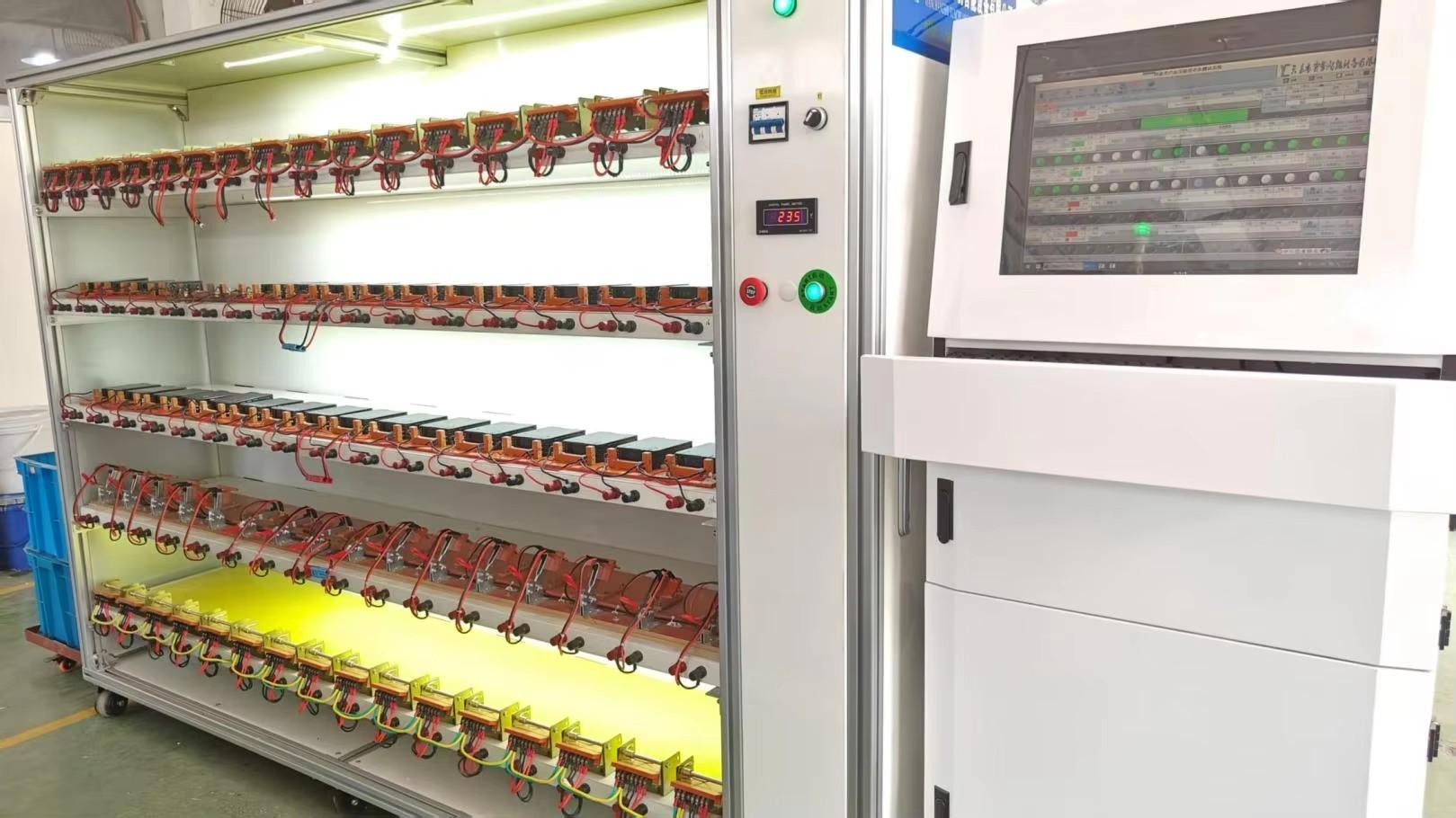
| Burn-In & Quality Audit | Batch spot checks (AQL 1.0) | 100% Thermal Chamber Full-Load Burn-In + AOI Inspected | Drastically lowers field service callouts in remote offshore installations. |
Emerging Power Electronics Trends Shaping Trondheim's Technical Demands
The industrial electronics landscape across Trøndelag is advancing rapidly, propelled by national green taxonomy guidelines and strict EU climate directives. Three distinct technological transitions are redefining regional DC-DC and SMPS procurement:
1. Transition to 48V/380V DC Microgrids
Driven by energy efficiency programs in aquaculture barges and high-capacity data centers in Central Norway, facility managers are transitioning away from multi-stage AC distribution toward direct DC microgrids. Isolated DC-DC converters act as fundamental nodes, stepping intermediate 380VDC or 48VDC distribution rails down to precision voltages without cumulative rectifier loss.
2. Wide-Bandgap (SiC & GaN) Miniaturization
Subsea autonomous vehicles (AUVs) operate under stringent mass and payload volume limitations. Keldan's development pipelines integrate advanced magnetic planar transformers and high-frequency switching stages, enabling high power densities that free up critical interior hull volume for scientific sensor payloads.
3. Life-Cycle Carbon Accounting & Circularity
Nordic tenders increasingly mandate transparency regarding supplier production standards and equipment longevity. Standardizing on high-MTBF components (electrolytic capacitors rated for 105°C long-life operation) reduces replacement cycles, supporting low total cost of ownership (TCO) and circular sustainability metrics demanded by Norwegian procurement bodies.
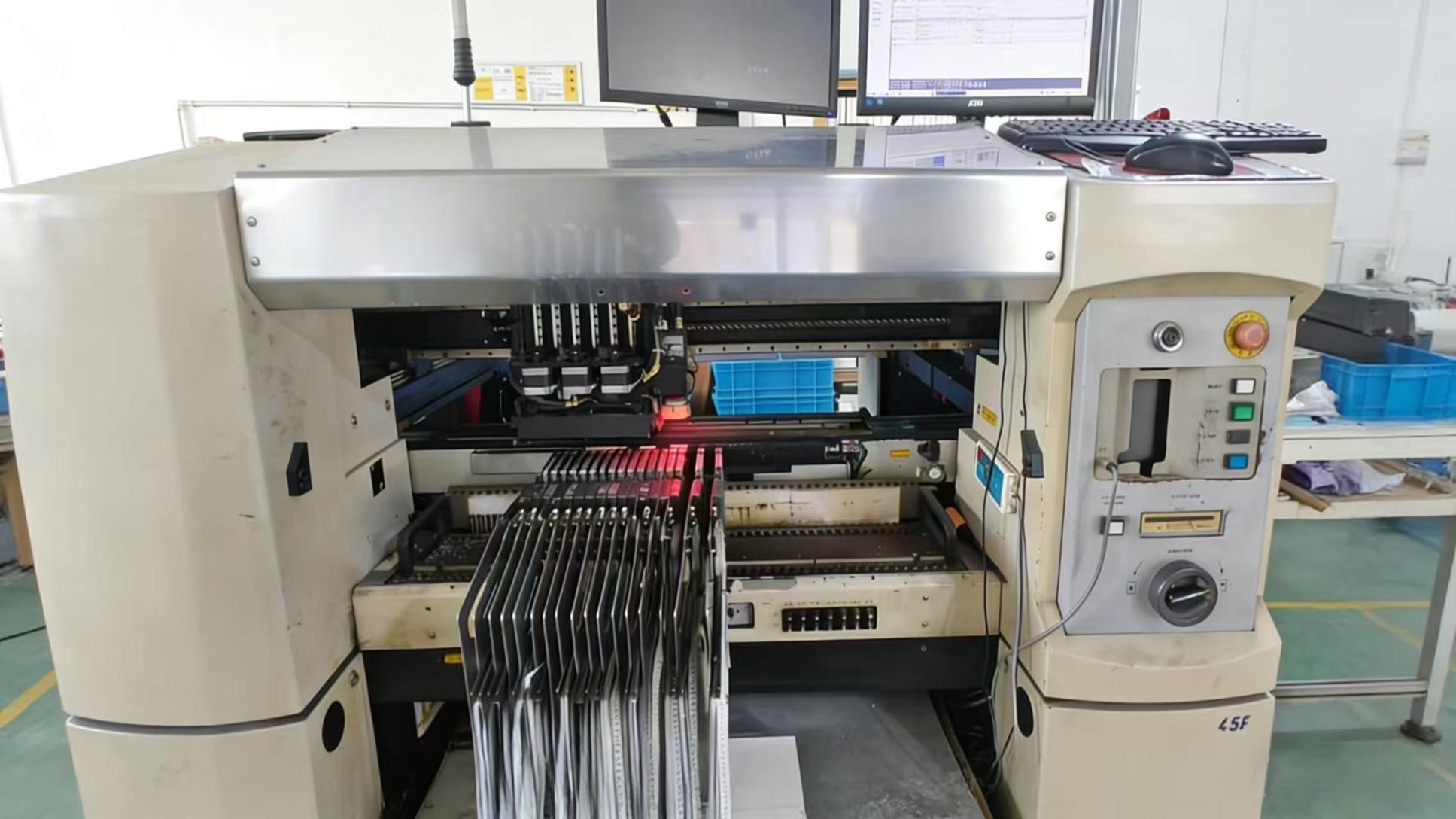
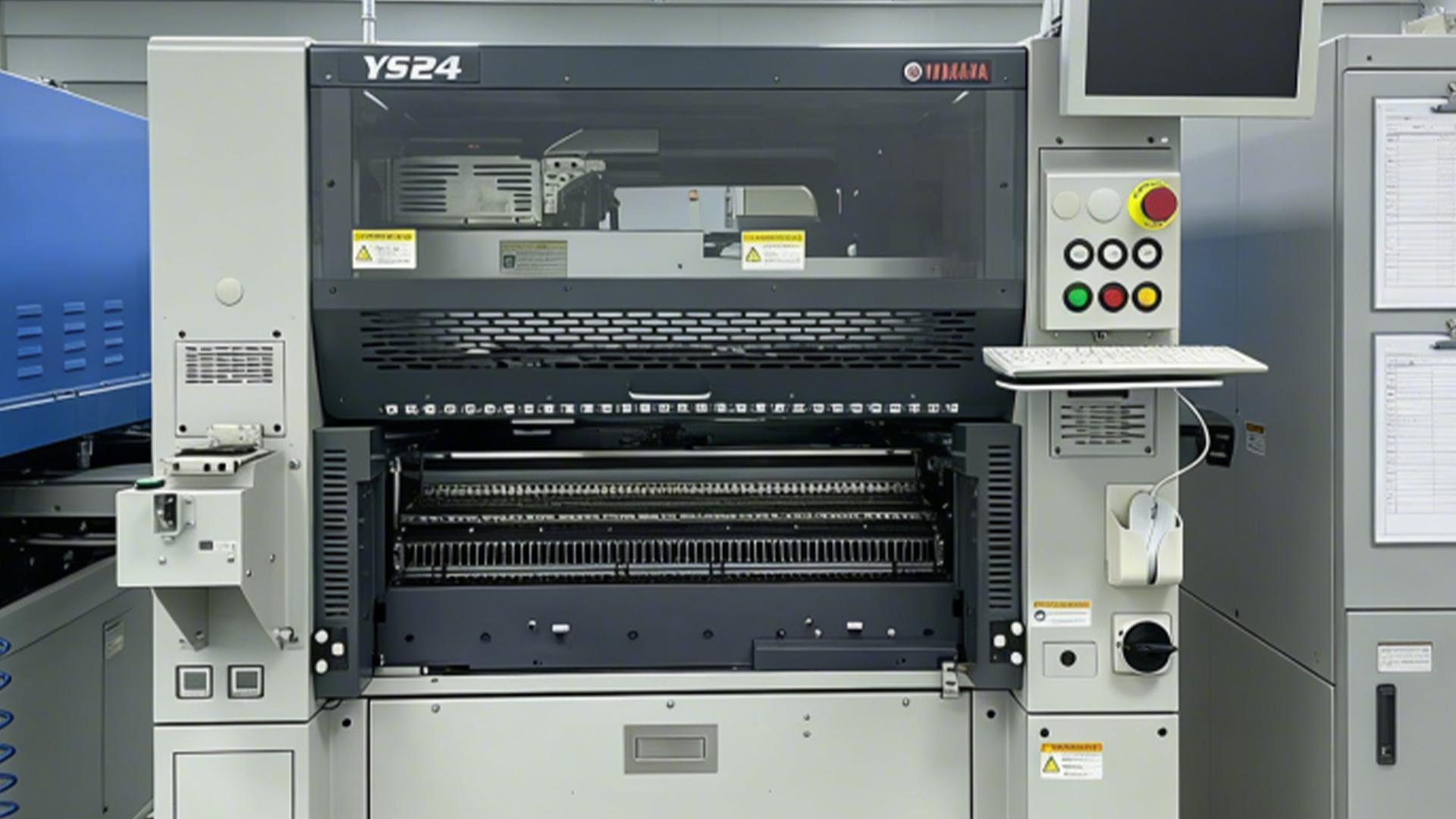
Inside Our Yueqing Manufacturing Lines: Audited by TÜV Rheinland
Transparency is the cornerstone of international B2B partnerships. Every power supply and converter shipped to Trondheim is engineered and inspected under rigorous, documented quality regimes.
Custom OEM/ODM Engineering
Supported by 5+ senior power electronics engineers, we modify mechanical enclosures, tune input/output voltage thresholds, embed communication ports (CAN/RS485), and fabricate custom wiring harnesses tailored to your project requirements.
Traceable Component Supply Chain
Incoming quality control (IQC) rigorously screens vital active components, high-frequency inductors, and 105°C long-life capacitors against verified supplier parameter sheets to prevent latent early-life field defects.
Dedicated Export Compliance
Our experienced multilingual international trade team oversees seamless door-to-door or door-to-port logistics, providing full documentation (CE declarations, RoHS certificates, test reports, EUR.1 customs documentation) directly to Trondheim.
Frequently Asked Questions by Trondheim Engineering Buyers
Addressing critical certification, maritime integration, cold-temperature validation, and logistical queries.
How do Keldan’s isolated DC-DC converters comply with Norwegian and EU safety standards?
Can your power modules handle cold-soak start-ups in Central/Northern Norway (-25°C to -40°C)?
How does your factory protect against high humidity, coastal fog, and saline air along the fjords?
What are the minimum order quantities (MOQ) and lead times for shipping to Trondheim?
Can you provide custom input voltage ranges, such as stepping down subsea tether voltages?
What testing procedures are applied to ensure power supply reliability before dispatch?
Accelerate Your Next Power Engineering Project in Trondheim
Connect directly with our engineering division to discuss your custom input/output voltage parameters, mechanical enclosure constraints, thermal environments, and volume supply schedules.
