Essential Power Electronics for Solar Inverter Cabinets & PV Infrastructure
From DIN rail auxiliary supplies powering intelligent solar tracking controllers and telemetry gateways, to ultra-clean benchtop supplies for laboratory inverter verification, explore our production models engineered for European solar installations.
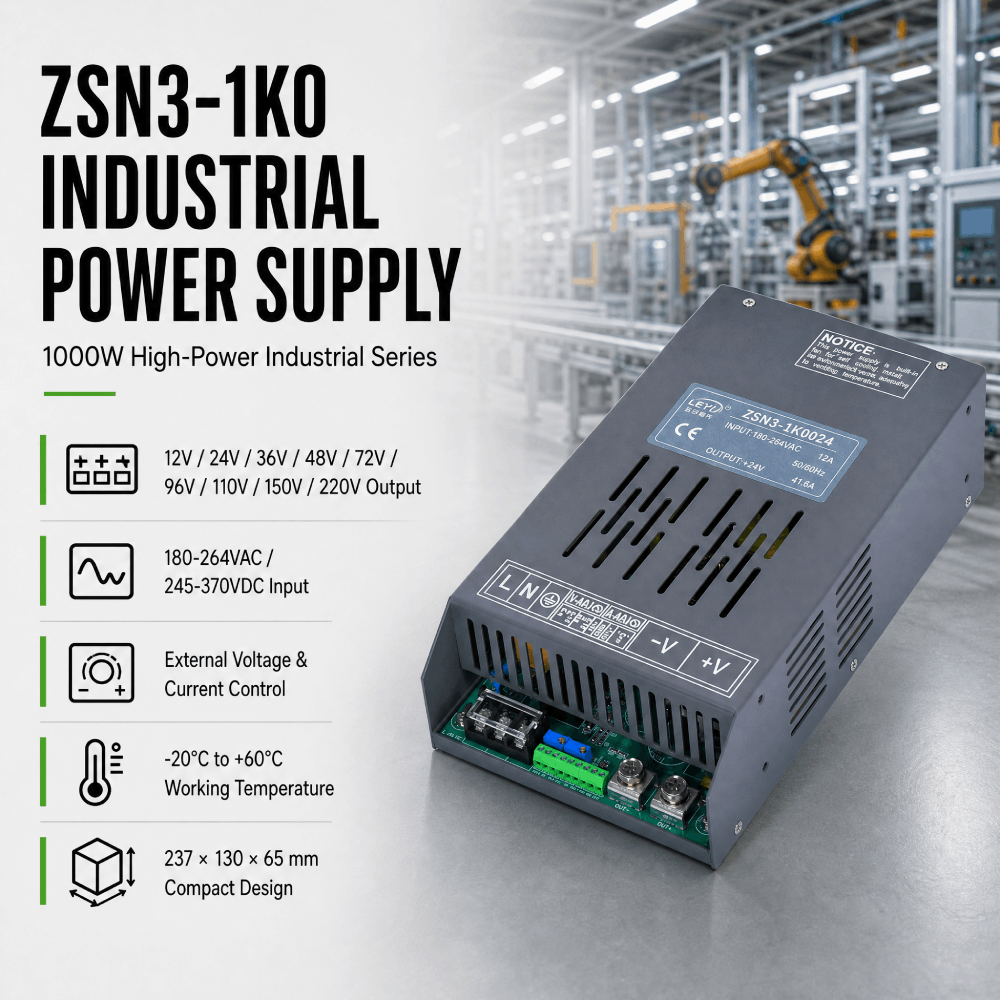
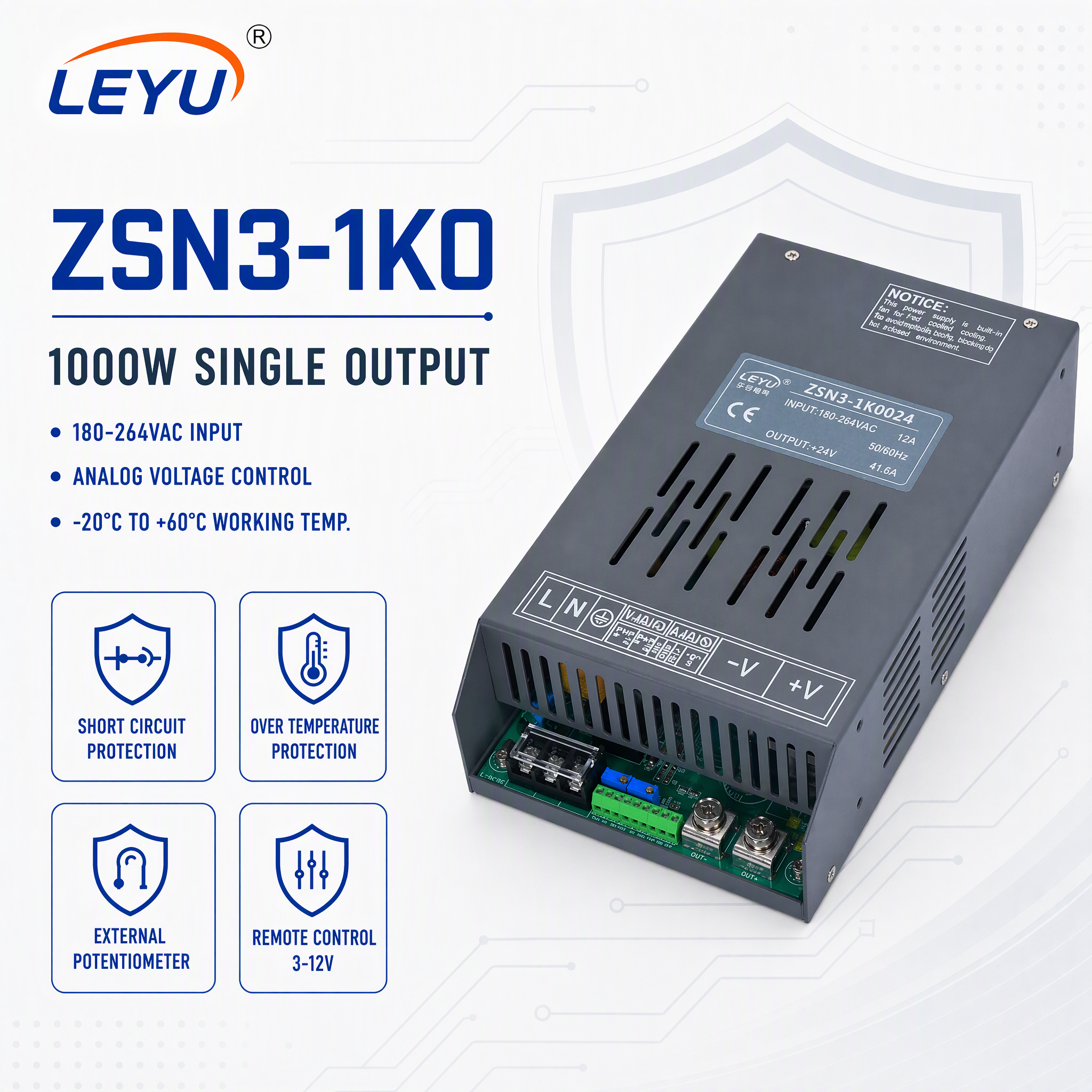
Fuente De Alimentacion Variable 1000W AC DC 24V 41.7A Adjustable Power Source for Laser Lab Use
Navigating the Baltic Photovoltaic Transformation: Technical Demands for Lithuania
As the Republic of Lithuania accelerates toward full energy independence through the National Energy Independence Strategy and finalizes the desynchronization of the Baltic grid from the Russian BRELL system to synchronize with the Continental European Network (CEN), the country's solar inverter architecture faces strict operational standards.
Lithuania has distinguished itself as one of Europe's most dynamic solar markets, driven largely by its groundbreaking "Gaminantis Vartotojas" (Producing Consumer / Prosumer) framework and the rapid expansion of geographically dispersed remote solar parks (nutolę saulės parkai). However, achieving sustainable Return on Investment (ROI) and meeting grid codes under Baltic operating conditions requires solar inverters and auxiliary power subsystems engineered specifically for the regional power environment.
Unlike Southern European installations where thermal management primarily counters ambient heat degradation, solar inverter systems deployed across Vilnius, Kaunas, Klaipėda, and Šiauliai must endure extreme continental thermal oscillations. Winter temperatures frequently plummet to -25°C to -30°C, which can trigger brittle component fractures, electrolytic capacitor desiccation, and DC bus startup lockups if inverters are not equipped with industrial-grade low-temperature power stages. When spring arrives, high solar irradiance occurs concurrently with cold ambient temperatures, producing photovoltaic module voltages that push maximum power point tracking (MPPT) voltage ceilings to their theoretical limits.
BRELL Decoupling & CEN Frequency Stability
Synchronizing with Continental Europe demands rigid synthetic inertia, Low-Voltage Ride-Through (LVRT), High-Voltage Ride-Through (HVRT), and dynamic reactive power control (Q(U) and P(U) modes) conforming strictly to EU Regulation 2016/631 (RfG).
ESO Grid Compliance & Rapid Telemetry
Lithuanian Distribution System Operator (ESO - Energijos Skirstymo Operatorius) enforces tight anti-islanding parameters, strict total harmonic distortion (THD < 3%), and encrypted telemetry via Modbus-TCP and IEC 60870-5-104 protocols for remote curtailment.
Sub-Zero Cold Boot & Conformal Protection
High relative humidity from the Baltic coastline paired with sub-freezing winters introduces condensation risks inside outdoor inverter combiner enclosures. Automated pre-heating circuits and Class 3C2/3C3 conformal PCB coatings are non-negotiable.
Localized Application Scenarios Across the Lithuanian Energy Landscape
Our OEM/ODM solar inverter platforms, pure sine wave power inverters, and auxiliary DC/DC subsystems are engineered to resolve specific installation challenges encountered across Lithuania's commercial, residential, and agricultural sectors.
Remote Prosumer Utility Parks (Nutolę Parkai)
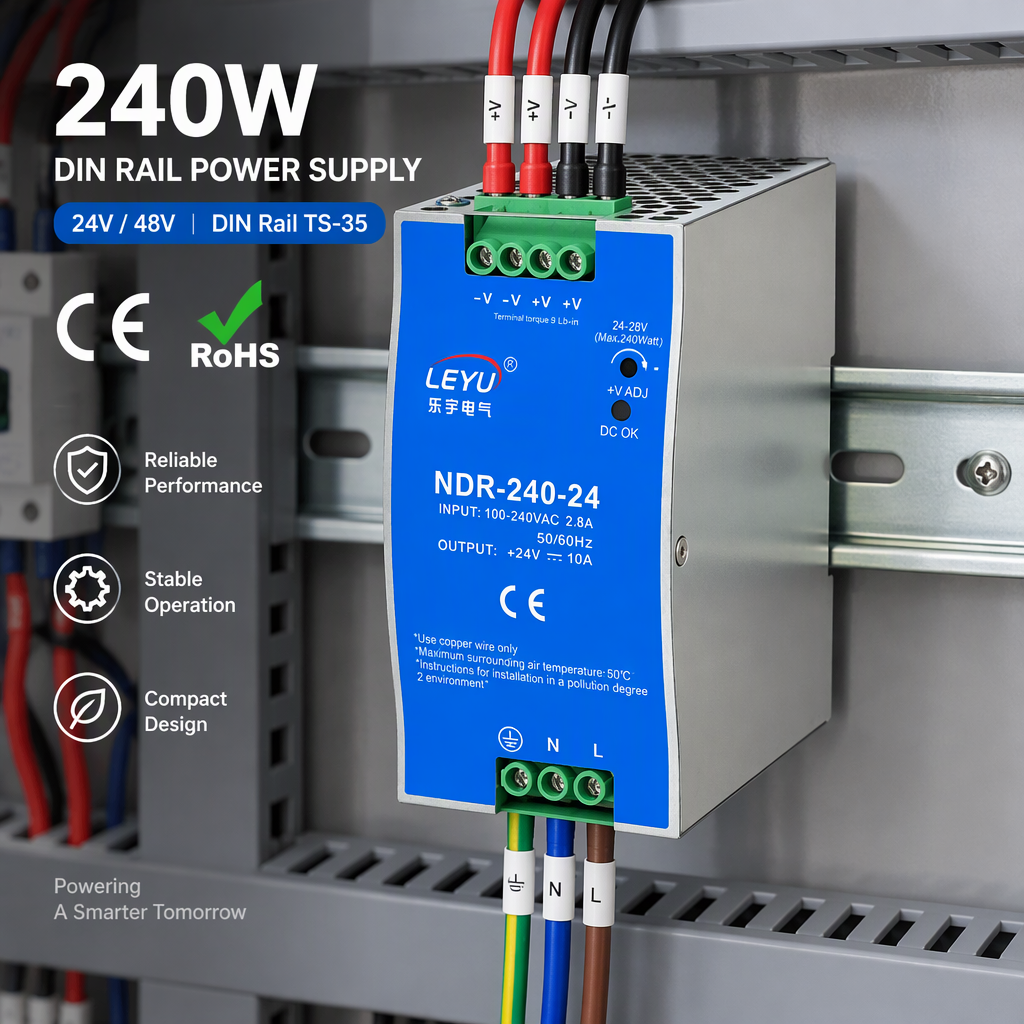
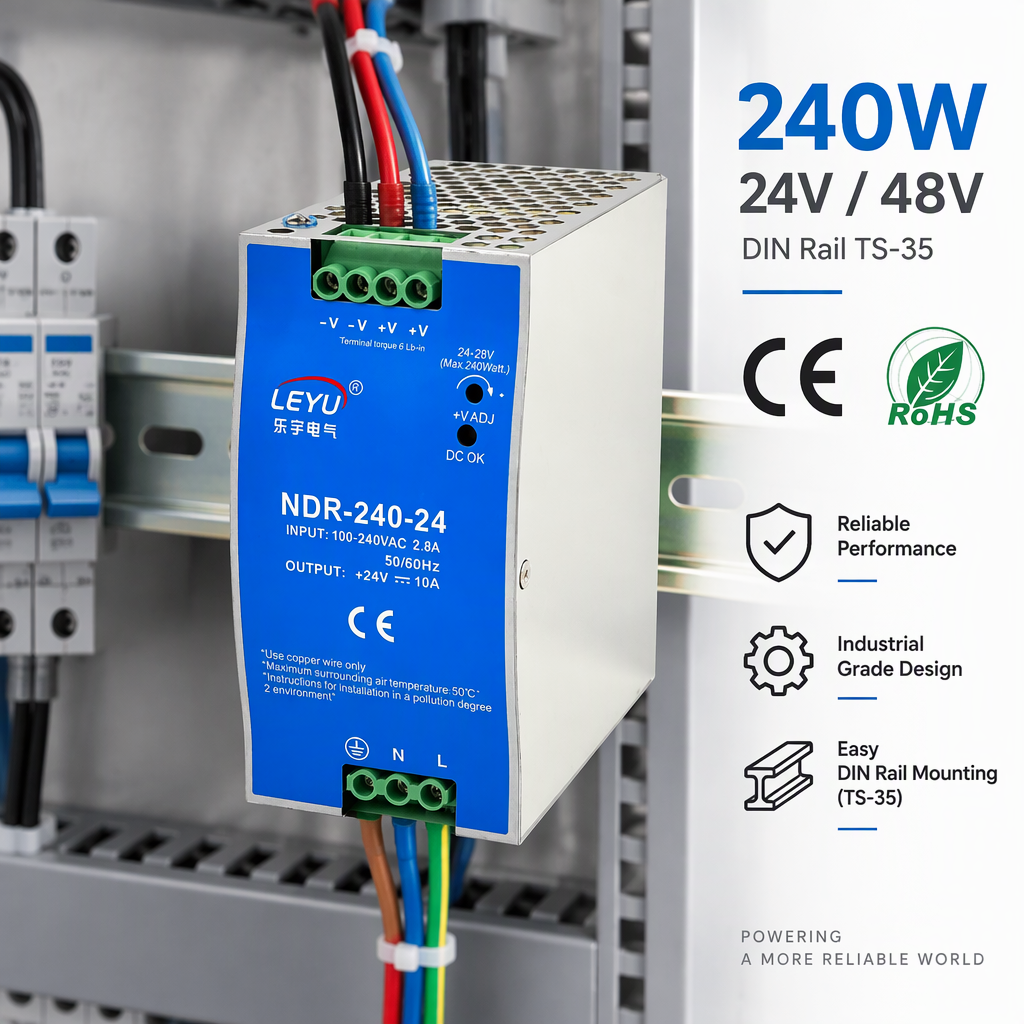
Thousands of apartment dwellers in Vilnius and Klaipėda purchase fractional capacity in large-scale solar farms located in Utena or Alytus. These remote MW-scale installations require central and high-capacity string inverters outfitted with multi-channel MPPT to handle ground-level snow reflection (albedo effect from bifacial panels) and robust auxiliary switching supplies like our NDR-240 for uninterrupted SCADA data logging.
Commercial Rooftop & Industrial Logistics Centers
The extensive logistics corridors along the Via Baltica (Kaunas free economic zones - FEZ) feature massive flat roofs. Inverters deployed here operate alongside heavy variable-frequency drives and robotics. Active PFC power supplies (PF > 0.95) within the inverter control cabinets eliminate electromagnetic cross-talk and harmonic distortion on the shared AC bus.
Agrivoltaics & Rural Baltic Off-Grid Microgrids
Lithuanian agricultural enterprises increasingly integrate ground-mounted solar with livestock and grain processing. Rural fringe grids often experience voltage sags. In hybrid installations, our pure sine wave inverters with intelligent battery-charging management ensure zero-millisecond transfer for critical ventilation, milking stations, and cold storage facilities.
Technological Evolution: Meeting Lithuania's 2030 Renewable Mandates
Lithuania's National Energy and Climate Plan (NECP) targets generating 100% of its domestic electricity consumption from renewable resources by 2030, a dramatic leap from regional dependence. This aggressive buildout is altering hardware expectations for solar inverter procurement:
| Technological Vector | Lithuanian Regulatory / Climate Driver | OEM/ODM Hardware Adaptation | Compliance Metric |
|---|---|---|---|
| Battery Storage (BESS) DC-Coupling | Mandatory peak-shaving incentives & negative day-ahead pricing on Nord Pool exchange | High-voltage DC/DC bidirectional converter stages (600V–1000V bus) for seamless LiFePO4 integration | EN 50549-1 / VDE-AR-N 4105 |
| Grid Synchronization (CEN) | Desynchronization from Russian IPS/UPS BRELL network to ENTSO-E Continental grid | Advanced Digital Signal Processor (DSP) firmware supporting synthetic inertia and fast fault current injection (FFCI) | Litgrid Grid Code 2025 |
| Sub-Zero Cold Boot Architecture | Continental Baltic frost cycles (-30°C minimums) with prolonged snow cover | Low-ESR solid capacitors, embedded PTC auxiliary pre-heaters, and wide-temp industrial DIN supplies | -40°C to +70°C Rated |
| Cybersecure Communication | Lithuanian National Cyber Security Centre (NKSC) critical infrastructure directives | Encrypted hardware root of trust, zero non-European cloud dependencies, isolated RS485/Modbus-TCP stacks | IEC 62443 Certified |
Why Baltic Solar Developers & Panel Builders Partner with Keldan
Based in Yueqing, Wenzhou—the premier hub for precision electrical engineering—Yueqing Keldan Technology Co., Ltd. delivers verified manufacturing excellence, backed by rigorous third-party certifications and comprehensive OEM/ODM custom capabilities.
TÜV Rheinland On-Site Verification
Unlike trading intermediaries, our manufacturing facility has been physically audited and verified on-site by TÜV Rheinland. We maintain transparent quality audit trails covering incoming silicon inspection, surface mount placement accuracy, and full trace validation.
Engineering-Led OEM/ODM Capability
Staffed by 5+ senior power electronics engineers, each with over five years of specialized switch-mode and inverter design experience. We support custom output voltages, private labeling, specialized form-factor enclosures, and custom firmware parameterization.
Full European Regulatory Alignment
All power units, DIN rail power supplies, and inverters carry verified CE markings and conform to Low Voltage Directive (LVD 2014/35/EU) and Electromagnetic Compatibility Directive (EMC 2014/30/EU), with full test laboratory reports available upon request.
Industrial Manufacturing & Testing Workflow
Every power conversion unit leaving our facility undergoes a standardized 8-step quality lifecycle designed to eliminate infant mortality and withstand harsh European climatic field environments.
Incoming Material IQC
Rigorous parameter checking of incoming MOSFETs, IGBTs, electrolytic capacitors, and magnetic cores against approved component libraries.
Automated SMT Placement
High-precision automated pick-and-place surface mount technology guarantees micron-level component positioning on heavy-copper PCBs.
Controlled Reflow Soldering
Multi-zone thermal profile management ensures uniform eutectic solder joint formation without thermal shock to delicate semiconductors.
AOI Optical Inspection
Automated Optical Inspection scanners inspect 100% of boards for solder bridging, dry joints, tombstoning, and component polarity errors.
Manual Assembly & Thru-Hole
Certified technicians mount heavy magnetic transformers, heat-sink arrays, and terminal blocks with precise mechanical torque calibration.
Precision Calibration
Real-time dynamic adjustment of DC output voltages, active PFC timing loops, overcurrent triggers, and thermal protection boundaries.
100% Full-Load Burn-In
Extended thermal aging run under 100% continuous electrical load inside specialized burn-in chambers to eliminate infant mortality.
Final OQC & Hi-Pot Testing
High-voltage dielectric withstand (Hi-Pot) testing, earth ground continuity checks, packaging integrity, and CE serialization sign-off.
Frequently Asked Questions by Lithuanian System Integrators & EPCs
Direct answers addressing technical compliance, logistics, minimum order quantities, and customization protocols for the Baltic market.
How do Keldan solar inverters and auxiliary units comply with Lithuanian ESO grid connection requirements?
Our solar inverters and power conversion architectures can be configured to comply fully with European standard EN 50549-1 and the specific technical conditions mandated by Energijos Skirstymo Operatorius (ESO). This includes user-configurable protection parameters for Under/Over Voltage (U<, U>), Under/Over Frequency (f<, f>), Loss of Mains (RoCoF / Vector Shift anti-islanding), and power curtailment via digital inputs or RS485 / Modbus-RTU. Full laboratory test reports and declarations of conformity are provided with sample shipments for pre-approval with local grid operators.
What measures are taken to guarantee cold-weather reliability during Baltic winters (-30°C)?
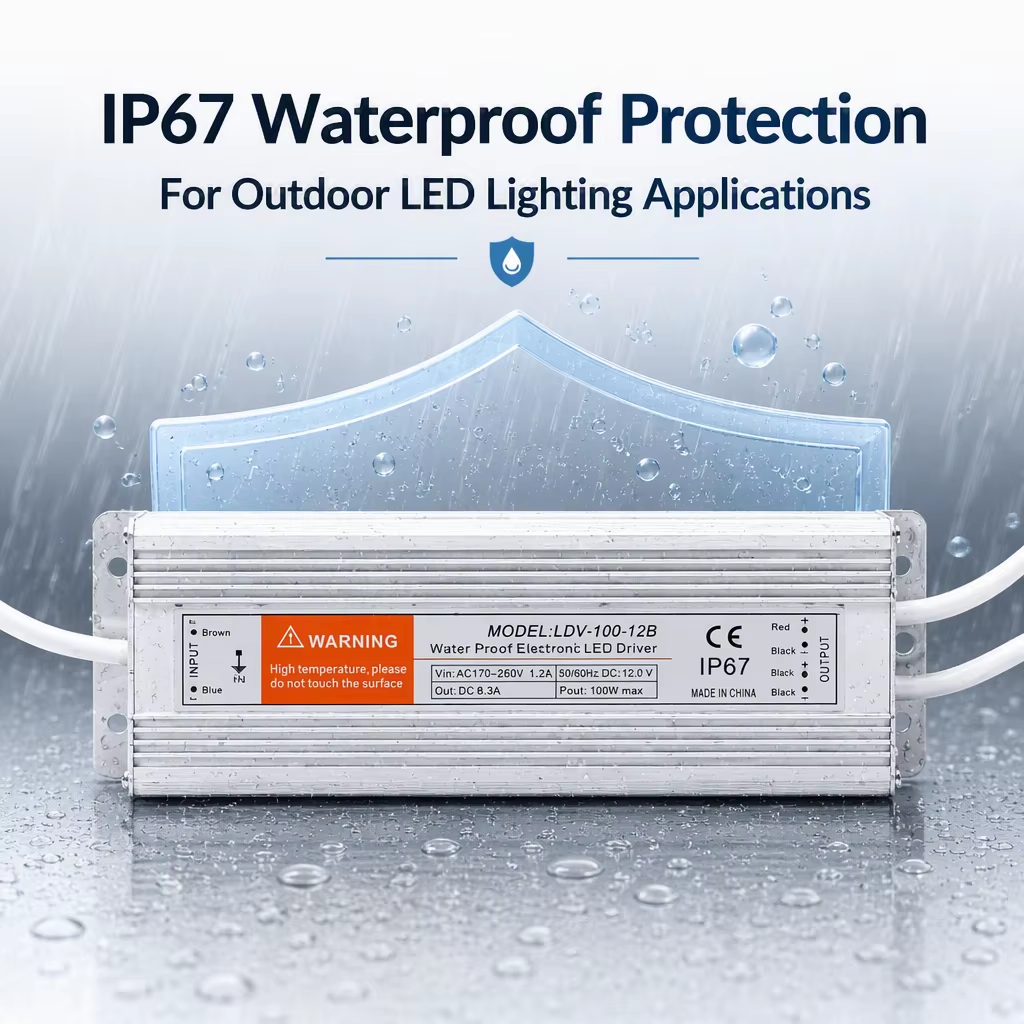
Standard commercial-grade power components frequently fail below -10°C due to electrolyte freezing and phase shifts. For our Lithuanian and Northern European OEM lines, we utilize industrial-grade temperature components, low-ESR solid-state capacitors, and specialized magnetic core formulations tested for cold start-up at -30°C. Furthermore, for outdoor combiner and inverter enclosures, our IP67-rated subsystems and conformal-coated PCBs prevent moisture condensation bridging when temperatures rapidly fluctuate between freezing night air and solar heat gain during daytime operation.
Is Yueqing Keldan Technology a genuine manufacturer or an export trading intermediary?
Yueqing Keldan Technology Co., Ltd. is a verified, custom manufacturing enterprise. Our manufacturing plant in Yueqing, Zhejiang, China, has been verified on-site by TÜV Rheinland. We operate our own automated surface mount (SMT) lines, reflow ovens, AOI testing benches, manual assembly workstations, and full-load burn-in aging racks. Lithuanian buyers are welcome to review our official TÜV audit reports or schedule a live video walk-through of the production floor with our engineering management.
What is the standard Minimum Order Quantity (MOQ) for Baltic B2B buyers and OEM private labels?
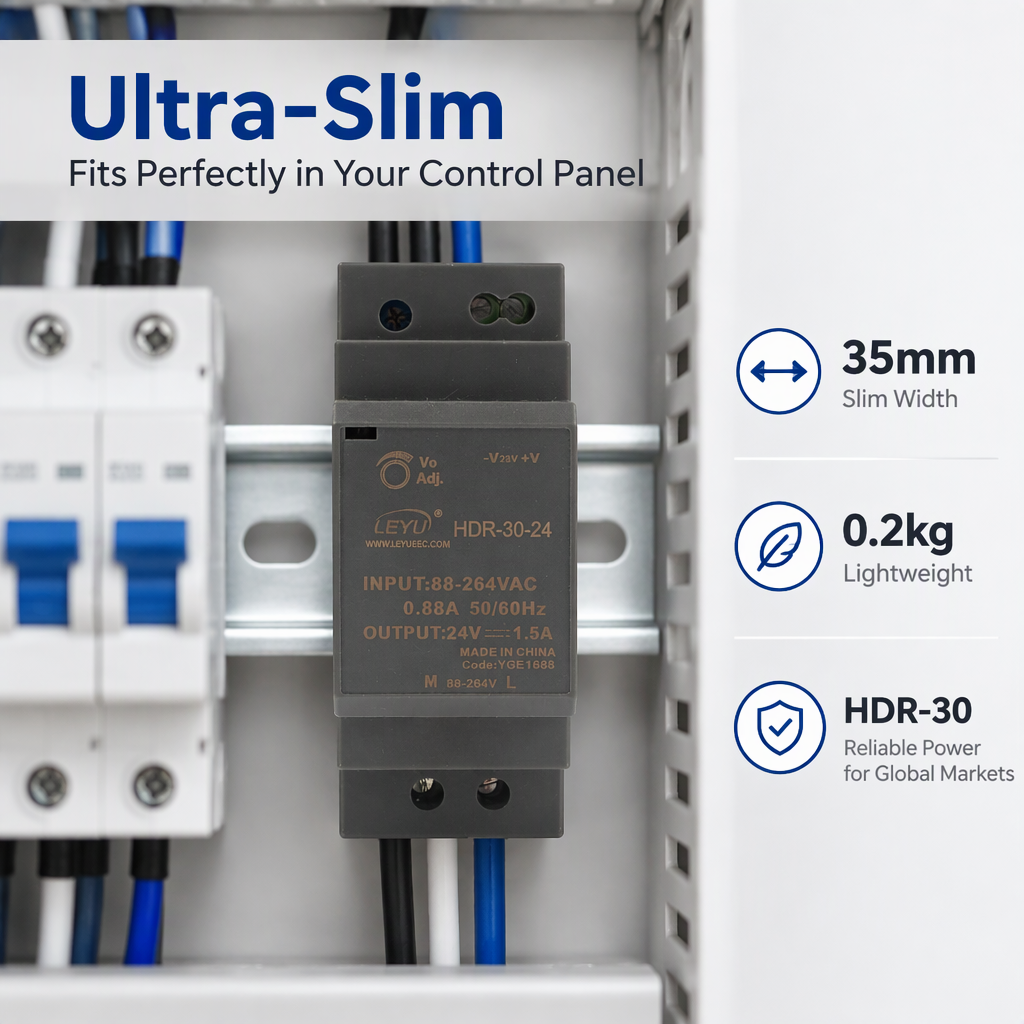
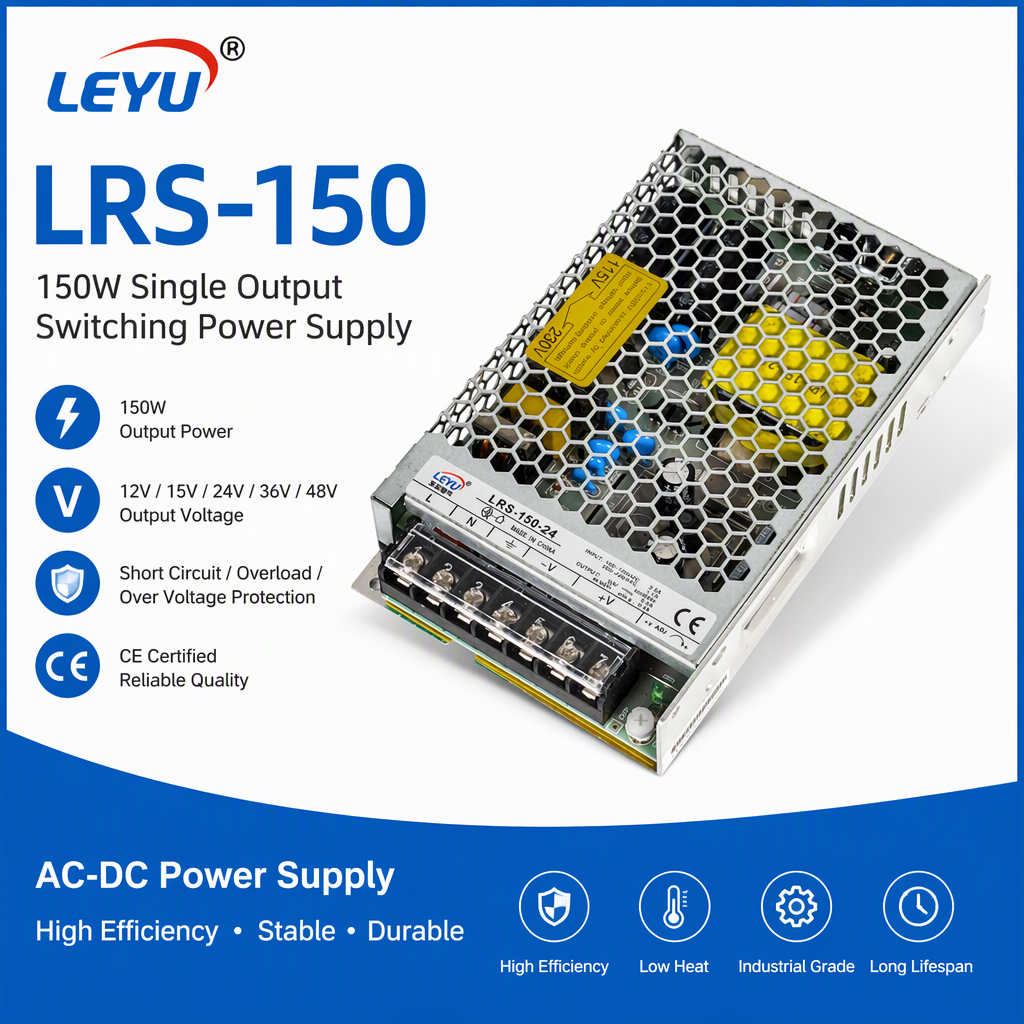
We understand that system integrators and panel builders need flexibility for prototyping and pilot installations. Standard catalog power supplies (such as our ultra-slim DIN rail models and LRS switching series) can be ordered with an MOQ as low as 1 to 10 units for testing and evaluation. For bespoke OEM/ODM projects involving custom private-label silk screening, custom enclosure powder coating, or proprietary firmware voltage ranges, MOQs typically range from 50 to 100 units depending on the complexity of mechanical customization.
Why is Active PFC (Power Factor Correction) critical in commercial solar and automation cabinets?
Lithuanian industrial facilities operate under strict grid harmonic standards enforced by Litgrid and ESO. Standard power supplies without power factor correction generate high reactive currents and harmonic distortion (THD), leading to unexpected breaker trips and penalties. Our units, such as the 240W Industrial DIN Rail PSU with Active PFC and the NDR-240, maintain a Power Factor > 0.95 across universal input voltages (90–264VAC). This ensures minimal line losses, protects sensitive microcontrollers, and conforms strictly to EN 61000-3-2 harmonic limits.
How are warranty claims, field maintenance, and spare parts managed for installations in Klaipėda and Vilnius?
We offer comprehensive 24- to 36-month standard factory replacement warranties on our industrial power conversion and inverter lines. For European project partners, we supply replacement buffer spares (typically 1–2% on bulk container shipments) directly with the main consignment. In the rare event of a component failure, our 12-person export engineering team diagnoses root causes via high-resolution photos and diagnostic data within 24 hours, dispatching expedited replacements via air freight (DHL/FedEx) to prevent solar plant downtime.
What logistics routes and DDP customs services are available for shipping to Lithuania?
We regularly handle trade shipments to European destinations, including Klaipėda Seaport (FCL/LCL ocean freight) and Vilnius International Airport (air cargo). For urgent project batches, European rail freight via the China-Europe Railway Express reaches Baltic logistics terminals in 18–22 days. Our export department handles complete documentation, including CE Declarations of Conformity, Commercial Invoices, Packing Lists, Certificates of Origin, and optional DDP (Delivered Duty Paid) terms through certified EU customs clearance agents.
Can Keldan develop customized DC-to-DC converters or auxiliary voltages for battery storage enclosures?
Yes. Custom power engineering is the foundation of our ODM service. We routinely modify output voltages (such as non-standard 36V, 48V, 72V, or 110V DC rails), integrate specialized optocoupled alarms (DC OK relay contacts), incorporate remote shutdown logic, and configure programmable bench supplies like our ZSN3 1000W series for laser laboratories, testing institutes, and battery cell balancing benches across Lithuania and the greater EU.
Accelerate Your Solar & Power Electronics Projects in Lithuania
Whether you require customized DIN rail power modules for solar combiner cabinets, OEM private-label inverters conforming to ESO specifications, or technical datasheets and sample evaluations, our engineering team is ready to assist.
